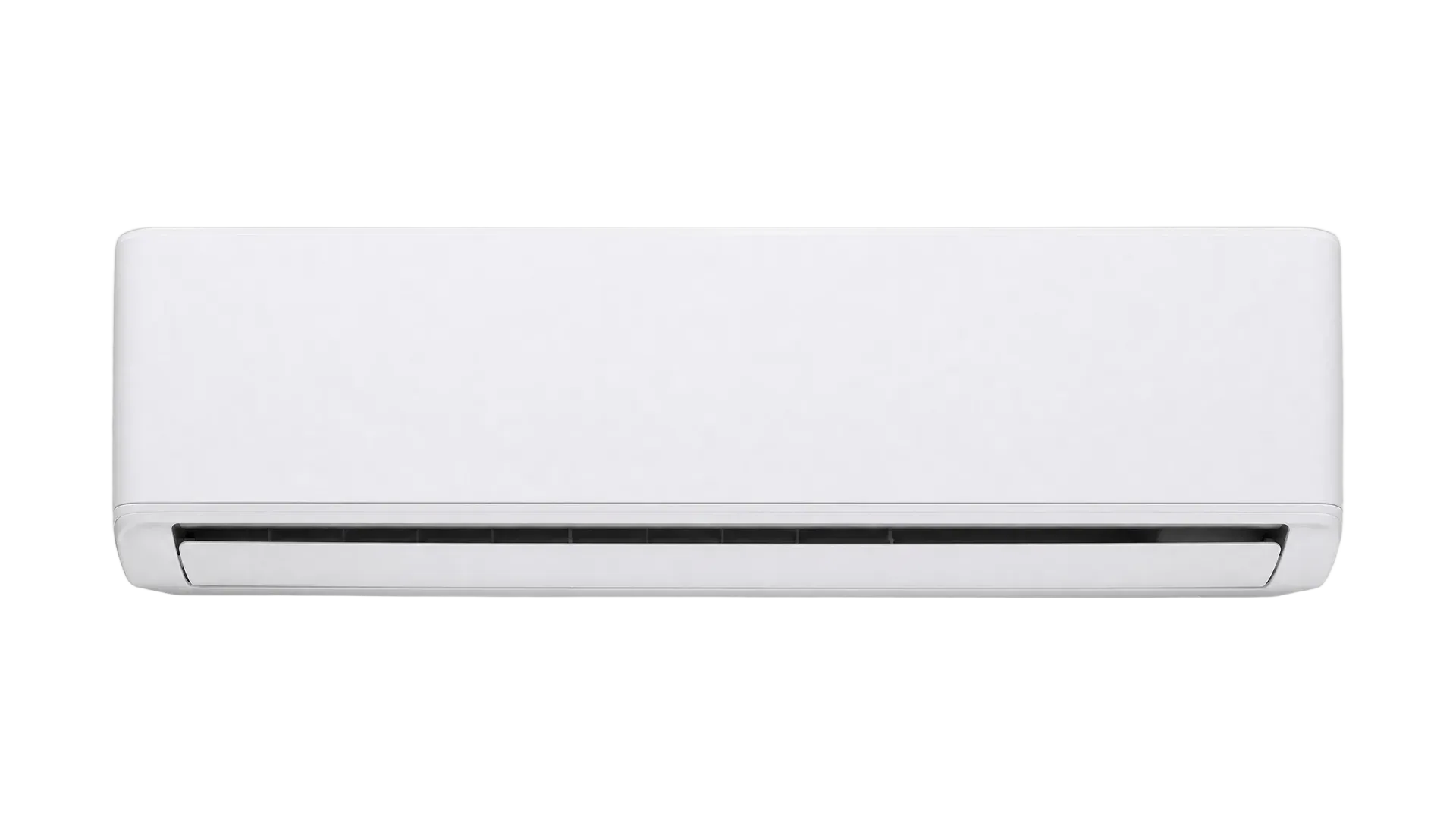

Running clean
This is what a mini split looks like when the filters and coil are clear. Air moves through it without a fight, so it keeps the room comfortable through a sticky July evening without running nonstop.
Clean the filters on your mini split yourself about once a month, more often if you run it all summer with the windows shut. Iowa summers get sticky, and a mini split pulls that moisture out of the air constantly, so the filters load up with dust and fuzz fast. A clogged filter makes the unit work harder and cuts how well it dries the air. Beyond the filters, have the indoor coil, the outdoor unit, and the drain line looked at once a year, usually in spring before the humid months start. Mold and mildew build up inside the coil over time, especially with how much condensation an Iowa summer produces, and a dirty outdoor unit struggles to shed heat efficiently. Most homes here heat with gas, so the mini split likely runs hardest from late spring through early fall. That stretch of heavy use is exactly when a dirty system loses capacity and runs longer than it should to keep up.


The filters are the part you see. Behind them is the part that does the actual work. A mini split pulls air across an indoor coil, and that coil is what pulls the moisture and heat out of your house. Filters catch most of the dust, but not all of it. Over a sticky Iowa summer, some of that dust gets past and settles on the coil fins. Once the fins are coated, the coil can't move air the way it's built to, and your mini split starts working harder to do the same job. The blower wheel sits right behind the coil, and it picks up its own problem: a thin, sticky film from everyday indoor air. That film builds up over a season and throws the wheel out of balance, which you might notice as noise before you notice anything else. None of this is reachable from the filter slot. A technician has to pull the housing off the indoor unit to get at the coil and the blower wheel directly. Outside, the condenser coil has its own exposure, sitting outdoors and collecting grass clippings and cottonwood fluff all summer, which makes the compressor push harder to move the same amount of heat. And there's a condensate line running from the indoor unit, carrying away the water the system pulls from the air. In a humid Iowa summer, algae can grow in that line and clog it.




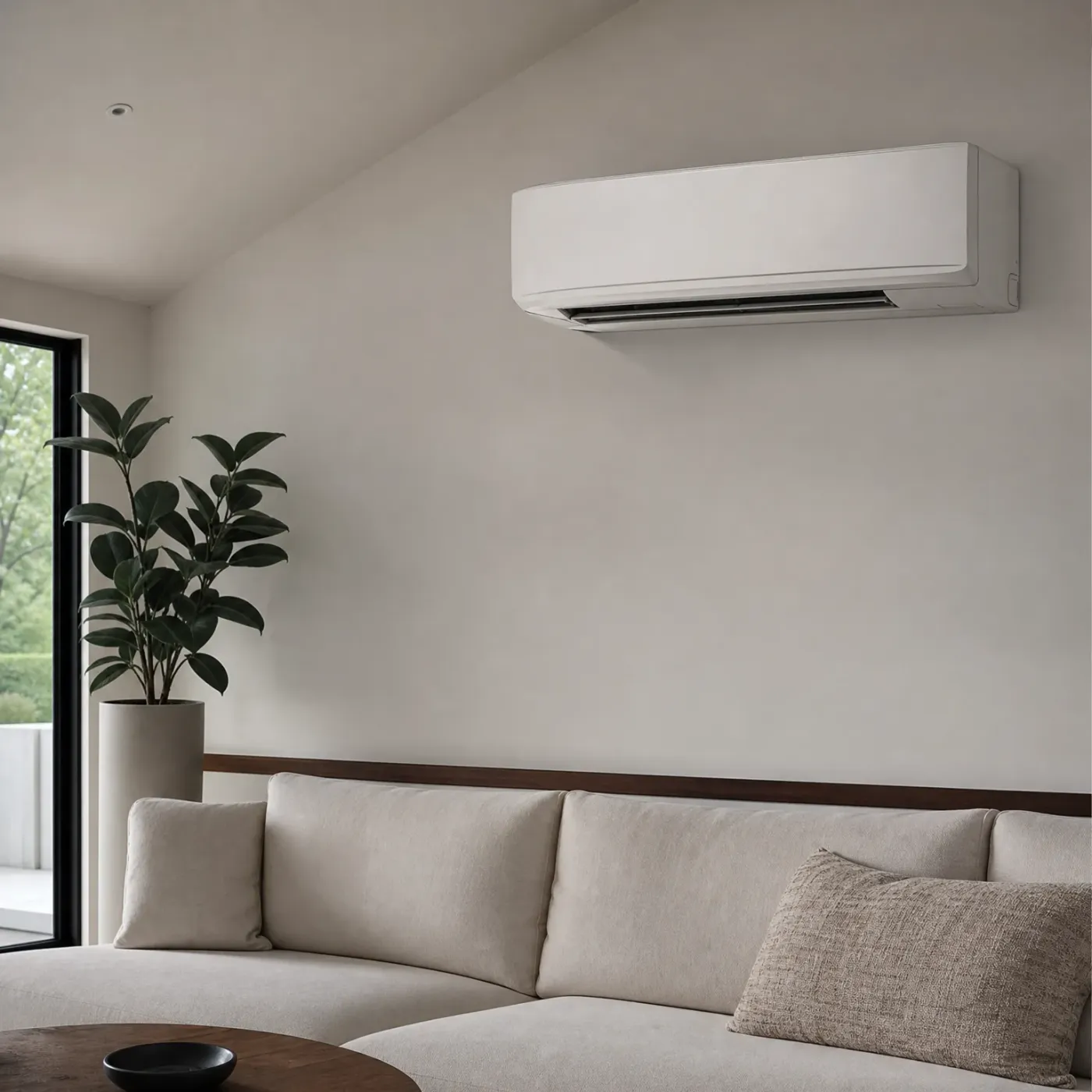
A licensed local pro takes the request for your mini split tune-up.
Skip calling around to set up a mini split tune-up.
There's no charge for the request.


The technician pulls the front housing off the indoor unit.
The filters come out first for a closer look.
The coil gets washed clean of dust and grime.
The blower wheel gets wiped down to clear caked-on dirt.
You'll notice it first on the muggy afternoons. The air coming out feels less cold, or the unit runs long stretches without the room ever catching up. Sometimes there's a musty smell when it kicks on, or water shows up where it shouldn't, pooling near the indoor unit or dripping down the wall below it. The fan might sound like it's working harder than it should for the temperature you set. None of that means the unit is failing. It usually means the filters or the coil behind them are coated enough to choke the airflow. Left alone through a full Iowa summer, that buildup makes the system work harder for less cooling, and a clogged drain line can back up and leave water damage behind.

This is what a mini split looks like when the filters and coil are clear. Air moves through it without a fight, so it keeps the room comfortable through a sticky July evening without running nonstop.

That grime on the housing isn't just the outside. The staining on the wall above it is a sign the unit is struggling, and the dust you can see points to a coil behind it that's just as caked.
At 13.62 cents a kilowatt-hour, every extra hour your mini split runs to catch up on a muggy night shows up on the bill. A unit fighting a dirty coil or clogged filter pulls more power to move the same air, so keeping it clean is what keeps that rate from costing you more than it has to.
EIA-861 2025 statewide residential average
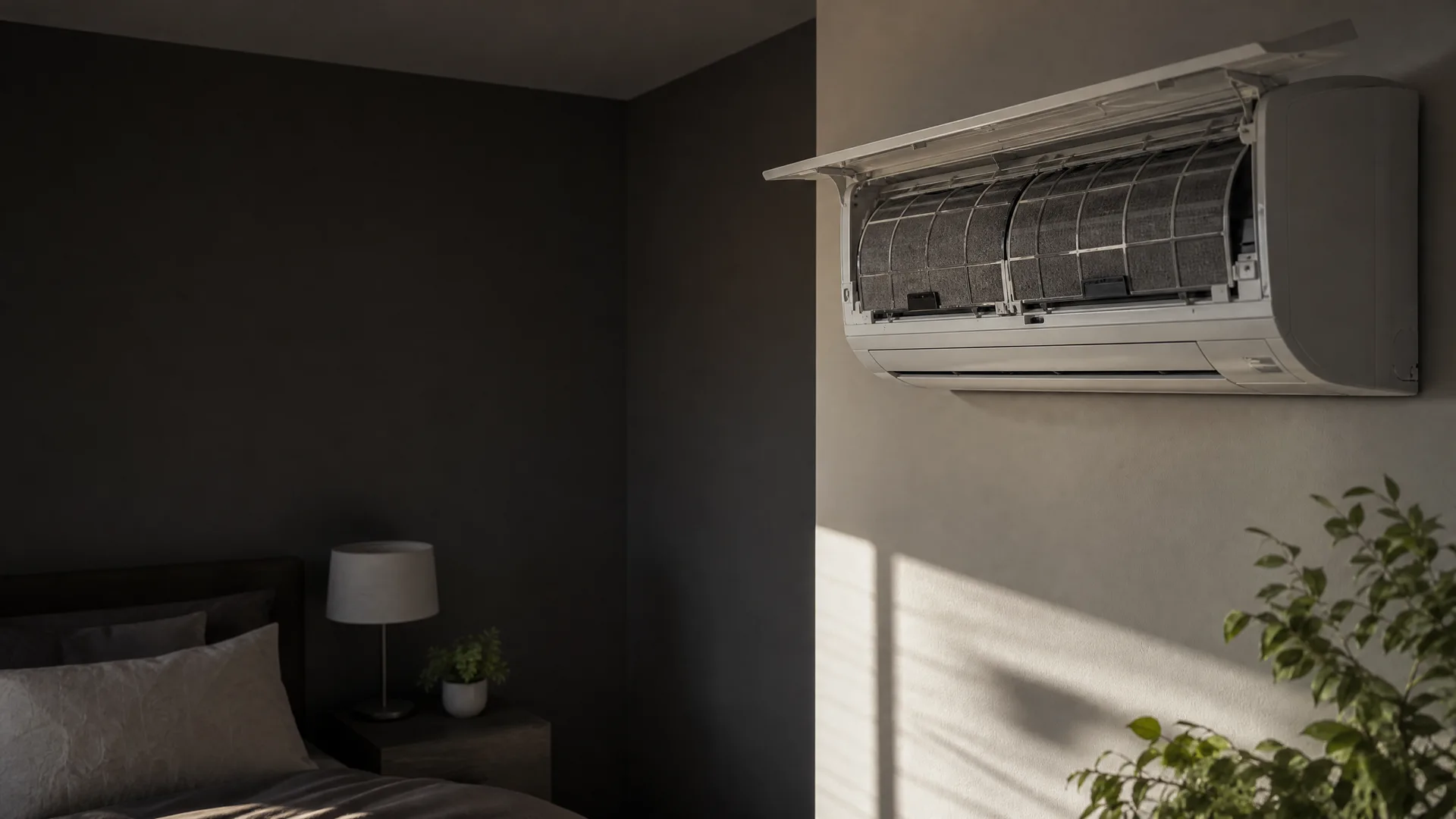
It is one of those spring mornings when the sun is up early but the air still has a chill to it. You pulled the front cover off the bedroom mini split to take a look before the weather turns, and the filter screen behind it is grey with a season's worth of dust. You wipe a finger across it and it comes away dirty. The unit has been sitting quiet most of the spring, just a fan running some mornings, but you know what is coming. Once June gets sticky you will want this thing pulling moisture out of the air every day, and it cannot do that well breathing through a screen packed with dust and fuzz.

Wipe down the filters yourself about once a month through the summer. Get the coil, the blower wheel and the drain line looked at by someone who does this work before the sticky months start. That's the whole answer.
If you'd rather not spend an evening looking up who services mini splits around you, calling a few, and explaining the same thing twice while you compare quotes, you don't have to. Answer a couple of questions here and a licensed Iowa contractor who works on these units all season, the kind who knows what a coil looks like after a summer of humidity, will reach out. Just the one call, not five.



Skip the calls to every shop
The pro who reaches out is licensed in Iowa.
