






An outdoor central air conditioning unit mounted on a concrete pad beside a blue-sided house at sunset.

AC Maintenance in Burlington, IA

Tell us about the job

Takes about a minute. No obligation.

Tune-up, service, or cleaningCentral ACDes Moines County, IA
Step 1 of 2

What ZIP code is the job in?

Short cycling is one of the clearest signs. The system kicks on, runs a few minutes, shuts off, then starts again soon after. That pattern usually points to a dirty coil or a refrigerant charge that's drifted low, and it makes the compressor work harder than it should. Warm air from the vents when the thermostat is calling for cool is another one, along with ice forming on the outdoor unit's lines. A musty smell when the system starts up often means moisture sitting somewhere it shouldn't, usually in the ductwork or around the coil. None of these mean the system is about to fail, but they're the kind of thing a maintenance visit catches before it turns into a repair.

4 months
June through September, your air conditioner is on duty
84°F
the average summer afternoon it cools against
34 hail events
in ten years, and hail bends the fins on outdoor coils
88 wind events
in ten years, and wind drives debris into outdoor units
Isometric cutaway illustration of a single-story house showing interior ductwork and an air handler connected by lines to an outdoor condenser unit on a pad beside the building.
Your air conditioner works hardest from June through August.

NOAA nClimDiv, 1991–2020 normals

Cooling in Des Moines County runs June through September.

Have the system checked in May, before it has to work.

The weather here is nothing special for an AC, which is exactly why once a year is enough

146 severe weather events from 2015 to 2024
15% of homes statewide lost power a day or more in 2024
88 damaging wind events from 2015 to 2024

A coil that never gets cleaned keeps doing its job, just worse every month. Dust and film build up on the surface and block the heat exchange it's built for, so the system has to run longer to reach the same temperature. That longer runtime wears on the compressor, which is the hardest part to replace in the whole unit. A dirty filter adds to the same problem, since it chokes airflow across the coil and can let the coil frost over even in warm weather. Low refrigerant from a slow leak behaves the same way if nobody checks the charge. None of this shows up overnight. It shows up first as longer runtimes, then as a system that struggles on the hottest days.

Older homes call for a yearly look before summer

Half the homes in Des Moines County were built in 1959 or earlier. A system in a house that old has usually been through several owners, and nobody checked the install date on the way in. A yearly check before summer is how you find out where things stand while a small fix is still a small fix.

Find a contractor
A man seen from behind in a dark work shirt and tan pants carries a worn canvas tool bag up concrete steps toward a dark green paneled front door, with a potted shrub at left.
A gray cylindrical air conditioning condenser unit mounted on a concrete pad next to a light-colored vinyl-sided house exterior.

A real tune-up opens the system up

A quick visit checks that the system runs and cools. A thorough one takes the panel off and looks at why it will or won't keep running. That means pulling the capacitor and testing it under load instead of eyeballing it, washing the outdoor coil instead of rinsing what's visible through the fins, and checking refrigerant charge against the manufacturer's numbers rather than just confirming the lines feel cold. It means checking amp draw on the compressor and fan motor, since a motor pulling more current than it should is wearing out before it quits outright. A real tune-up also means pulling the blower wheel and checking it for caked-on dust, which a surface wipe-down skips entirely. Ask what the visit includes before it starts. If the answer is a filter change and a glance at the thermostat, that's not what keeps a system running for years.

Keep the filter clean

Check the filter once a month through the warm months and swap it when it's gray or caked. A clogged filter starves the coil of airflow, and that's the fastest way to turn a minor issue into a frozen coil or a system that runs long and still can't keep up.

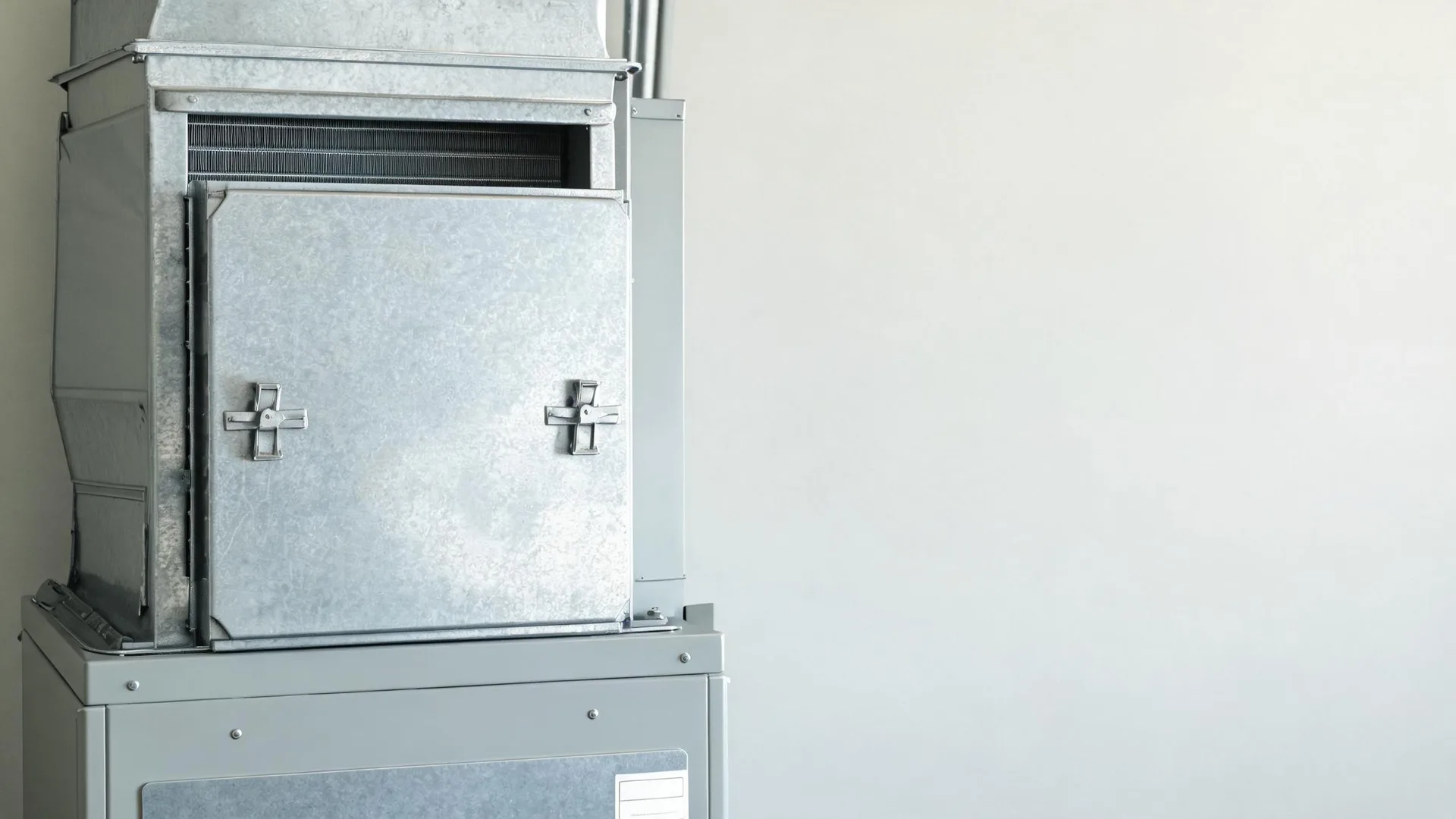
Clear the space around the outdoor unit

Keep grass clippings, leaves and anything else away from the outdoor unit, and leave a clear gap on all sides. That unit needs to pull air through its coil to dump heat outside. Anything pressed up against it or piled on top makes it work harder for the same result.

An outdoor air conditioning condenser unit positioned beside a blue-sided house at sunset.

Book your AC tune-up in May, before homes here start needing cooling in June.

  1. Jan
  2. Feb
  3. Mar
  4. Apr
  5. May
  6. Jun
  7. Jul
  8. Aug
  9. Sep
  10. Oct
  11. Nov
  12. Dec

A tune-up checks the refrigerant charge, cleans the coils, tests the capacitor and tightens the electrical connections.

A real tune-up means someone goes through the system piece by piece, not just confirms it turns on. That starts with the capacitor, since a weak one makes the compressor strain every time it starts up, and a strain like that shortens its life. It covers checking the blower motor and fan motor for wear, testing refrigerant charge against what the manufacturer specs rather than guessing from how the lines feel, and inspecting the condensate drain so it isn't about to back up and overflow. A tech should also check the electrical connections at the disconnect and inside the unit, since a loose connection generates heat and that heat damages wiring over time. Each of these is a small thing on its own. Skipped together for a few years, they're how a system that should run another decade starts failing early.