AC tune-up before summer in Des Moines, IA

Your air conditioner tune-up request goes to a pro who covers Polk County.

Get matched

A tune-up before summer means having a contractor check your air conditioner before the heat sets in, not after it breaks. Des Moines summers get hot and sticky by June, and a system that sat idle since September often has a dirty coil, a low refrigerant charge, or a capacitor that's gotten weak over the winter. None of that shows up until the unit is running flat out on a 90 degree day, which is the worst time to find out. A tune-up catches those things in April or May, while there's still room to get parts ordered or a repair scheduled without waiting in a heat-wave line behind everyone else whose AC quit at the same time. It also means the system isn't straining to cool your house on a weak capacitor or a dirty filter all summer, which is how small problems turn into a compressor replacement by August. Done before the first hot stretch, it's the difference between a planned visit and an emergency one.

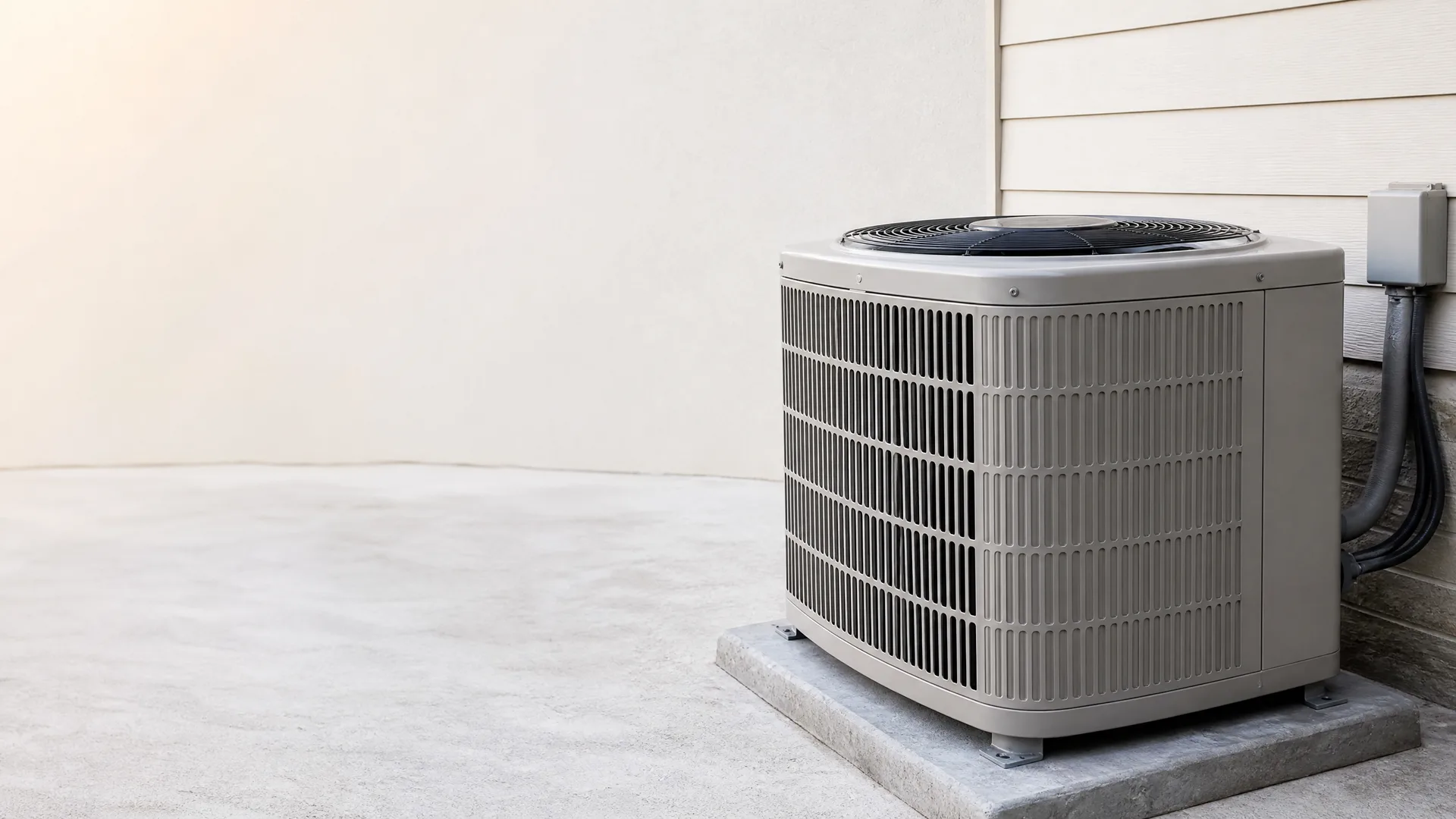
A gray outdoor air conditioning condenser unit sits on a concrete pad beside a light stucco wall and lap siding, bordered by decorative stones and grass.

What a tune-up checks

A contractor checking your air conditioner before summer looks at the refrigerant charge, the condenser coil, and the electrical connections that wear down over months of sitting idle. Low refrigerant makes the system run longer to cool the same house, and a dirty coil forces it to work harder to move heat outside. Catching a loose wire or a failing capacitor now means it gets fixed on a mild April afternoon instead of a 90 degree day in July.

An outdoor air conditioning condenser unit on a concrete pad beside a house with horizontal lap siding and an adjacent stucco wall, with a disconnect box and conduit on the wall.

Why timing matters here

Des Moines can swing from cool mornings to warm afternoons through April and May, which is exactly when a system's weak spots show up without the stress of a full heat wave. Scheduling now means a contractor isn't booked solid the way they are once July hits and every air conditioner in Polk County is running nonstop. It also means any part that needs ordering has time to arrive before you actually need the house cold.

What does a contractor actually do during an AC tune-up?

You want to know what you're paying for before a contractor shows up. "Tune-up" can sound vague, like someone's going to poke around for twenty minutes and call it good. You'd rather know the actual steps, in order, so you can tell whether the visit was thorough or rushed.

A tune-up follows a set order, not a quick look

A contractor starts outside, checking the condenser coil for dirt and the fins for damage, since a blocked coil is the most common reason a system struggles once Des Moines summers turn muggy. Next comes the refrigerant charge, measured against what the manufacturer specifies, because too little or too much makes the compressor work harder than it should. The electrical connections and capacitor get tested, since those wear down from months of sitting idle over winter. Inside, the contractor checks the evaporator coil and the condensate drain, which clogs easily and can back up into the house. Last is the thermostat and airflow, confirming the system cycles the way it's supposed to before the heat sets in.

A gray outdoor air conditioner condenser unit on a concrete pad beside a house with horizontal vinyl siding, surrounded by mulch, flowering shrubs, and lawn.

Running clean

This is what a condenser should look like going into summer: fins clear, cabinet clean, grass and mulch kept back from the sides. Air moves through the coil without resistance, so the system sheds heat the way it's supposed to and doesn't strain to keep up.

A weathered outdoor air conditioning condenser unit on a concrete pad beside a house with light horizontal siding, an electrical disconnect box and conduit on the wall, and mulched soil on either side.

Running dirty

Dirt and grime like this cake the coil fins and block airflow. The unit has to run longer to cool the same house, and the compressor behind that grime wears harder for it. A contractor cleans this during a tune-up before it costs you a July breakdown.

Why does your AC seem weaker every June

You turn it on for the first real warm week and it runs, but the house takes longer to cool than it did last August. Maybe it's blowing but the air isn't as cold as you remember, or it cycles on and off more than it used to. Outside, the condenser has been sitting under months of leaves, cottonwood fluff, and whatever the lawn mower kicked up all last fall. None of that clears itself out. A unit working harder than it needs to runs longer to do the same job, and that strain adds up over a Des Moines summer. Left alone, it's the kind of thing that turns a minor fix into a system down on the first 95-degree day, right when every contractor in Polk County is already booked solid.

A gray-haired man in a dark coat with snow on the shoulders and collar stands smiling in a dimly lit entryway with a paneled front door, lamps, and a framed picture in an adjoining room.
A gray-haired, bearded man in a dark winter coat with snow on the shoulders stands in a doorway of a home interior with a lit lamp, framed pictures, a potted plant and a staircase behind him, and an evergreen wreath at the left edge.
An older man with gray hair and a beard, wearing a snow-dusted dark coat and knit scarf, stands smiling in a dimly lit house entry with a lit lamp, mirror, and a living room with snow visible through the window behind him.
A smiling gray-haired man in a dark wool coat with snow flecks stands in a dimly lit home entryway, with a lit table lamp, potted plant, framed pictures and a living room visible behind him.

Skip the tune-up and the system still runs, most years, until the first hot stretch finds whatever was already wrong with it. A dirty coil or a low charge doesn't announce itself until the house won't cool down.

Get it checked in May and a contractor finds the weak capacitor or the low refrigerant while it's still an easy fix, not an emergency call on a 90 degree day with every other line in Polk County busy too.

Cooling runs June through August

Three months is all your air conditioner has to earn its keep here, June through August. Every one of those weeks matters more because there's no slack later to make up for a system that's been struggling. A unit that's off even a little won't catch up once the heat sets in.

NOAA nClimDiv 1991-2020

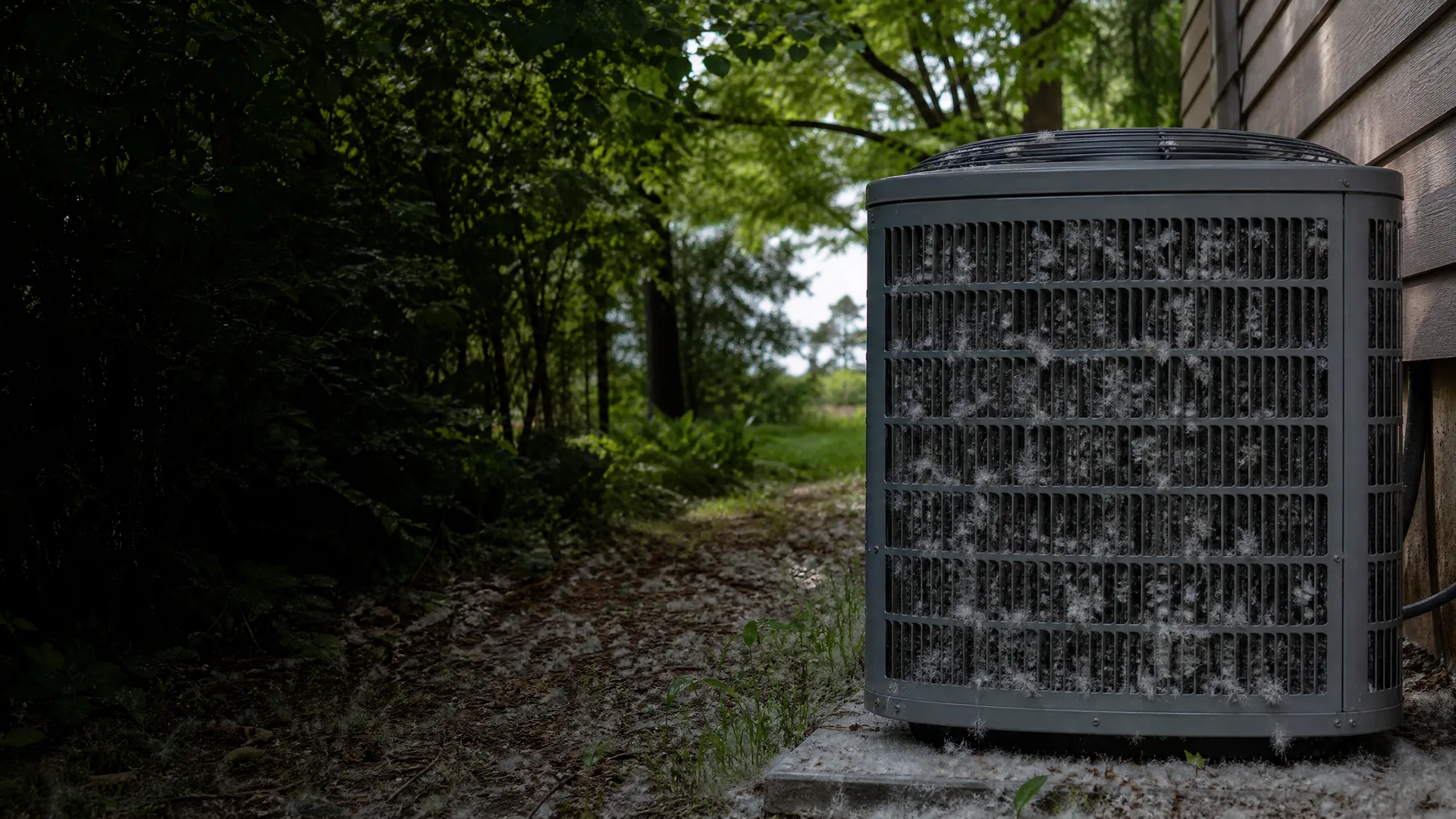
An outdoor air conditioning condenser unit beside a wood-sided house, its coil fins covered with white cottony seed fluff, with a shaded wooded path and green trees behind.

Late May, and the cottonwoods along the side yard are letting go. You notice it when you walk past the condenser to coil up the garden hose: the fins on one side are gone soft and white, packed with fluff the way a dryer vent packs with lint. It's been building for a couple of weeks, drifting off the trees and catching on the cabinet before anyone thought to look. The unit's still running, you can hear it, but the air coming off the top feels thinner than it should. You make a note to deal with it before the first real hot stretch hits and the thing's working twice as hard just to push air through what's stuck to it.


Matched to your air conditioner job

Fill out one form instead of calling around for an air conditioner tune-up.

Asking costs nothing, and the choice to hire stays yours.

Single-story house with gray horizontal lap siding, dark asphalt shingle roof, two front-facing gables, a recessed entry door and white-trimmed windows, fronted by a patchy green and brown lawn under a clear blue sky.

That mugginess you feel walking outside in July isn't just the heat. In Polk County, the dew point averages 63°F across June, July and August, according to NOAA climate data. Your air conditioner has to pull that moisture out of the air before the house feels cool, not just lower the temperature. That's extra work the thermostat doesn't show you. A system low on refrigerant or running on a dirty coil struggles with this part first, so the house feels damp and heavy even when the temperature reading looks fine. That's often the real reason a room feels sticky despite the AC running.

NASA POWER T2MDEW

A woman with hair in a bun sits wrapped in a thick cream blanket in an armchair, an open book in front of her, beside a lit lamp and a frosted window.
An older woman with short gray hair in a cream knit sweater smiles while looking to the side, standing behind a wooden board holding a round loaf of bread, with a dark window and lamp-lit interior behind her.

Inside the cabinet, step by step

  • A contractor checks refrigerant pressure with gauges on the suction line, since a low charge shows up as a pressure reading before it shows up as warm air.
  • The condenser fan motor gets tested under load, because a motor that spins freely by hand can still stall once it's pulling current.
  • Contacts inside the contactor get inspected for pitting, since a pitted contactor can stick closed and run the compressor when the thermostat says stop.
  • The blower wheel gets checked for dust buildup on the blades, which throws it off balance and cuts how much air moves across the coil.
  • Capacitor readings get measured against the microfarad rating stamped on the side, not just checked for a pulse, since a capacitor can test weak long before it fails outright.
  • Drain line gets flushed or checked for a clear path, because a clogged condensate line backs up into the pan and can shut the system down on its own.

Open the cabinet and there's an order to what gets checked, and a reason for each step. The gauges go on the suction line first, because refrigerant pressure tells a contractor what's happening inside the system before the house ever feels warm air. From there it's the moving parts: the condenser fan motor gets run under load, not just spun by hand, since a motor can turn freely sitting still and still bog down once it has to pull current and move air all afternoon. The contactor gets pulled and looked at under a light. Pitting on those contacts means the switch can stick, and a stuck contactor keeps the compressor running even after the thermostat's satisfied, which shows up as a power bill that doesn't match the weather. Inside the air handler, the blower wheel gets checked for dust packed onto the blades. A blower that's out of balance from buildup moves less air across the coil, and less air across the coil means the house takes longer to cool no matter how much refrigerant is in the lines. The capacitor gets tested against the microfarad number stamped right on its side, because a weak reading can sit there for months before the compressor fails to start on a July morning. Last is the condensate line, flushed or checked for a clear path, since a clog backs water into the pan and some systems shut themselves off rather than overflow.

An outdoor air conditioning condenser unit on a concrete pad beside a house with horizontal lap siding, with a conduit and electrical disconnect box on the wall at right.
Before you get your air conditioner maintenance
A gray outdoor air conditioner condenser unit on a concrete pad beside a house with horizontal lap siding, with a wall-mounted disconnect box and conduit to its right and shrubs to the left.
After you get your air conditioner maintenance
  1. A contractor shuts off power to the condenser before touching anything.

  2. The condenser fins get rinsed clean of cottonwood fluff and grass clippings.

  3. Refrigerant pressure gets checked with gauges on the suction line.

  4. The condenser fan motor gets tested under load, not just spun by hand.

A woman stands in the open black front door of a white-sided house with a dark shingled roof while a man in a navy jacket approaches along the walkway, with lantern wall lights, a potted shrub, and flowering garden beds nearby.

Where that leaves you before June

A tune-up before summer comes down to one question: will your air conditioner hold up through June, July and August, or will it quit on the first hot stretch with nobody lined up to fix it. A contractor checking it now catches the dirty coil, the low charge, the weak capacitor while there's still time to deal with it on your schedule instead of the hottest day of the year.

You don't have to find that contractor yourself. No calling around Polk County, no explaining the same thing three times to three different companies, no sorting through quotes trying to guess who's worth the call. You get matched with a contractor who takes on what your system needs, and they reach out to you. The part that's actually a hassle, finding someone, is the part that goes away.

A living room corner with a beige upholstered armchair holding navy and striped cushions, a small round wooden side table with a carved bowl and a potted green plant, a framed landscape picture on a pale wall, built-in shelving, and a curtained window.
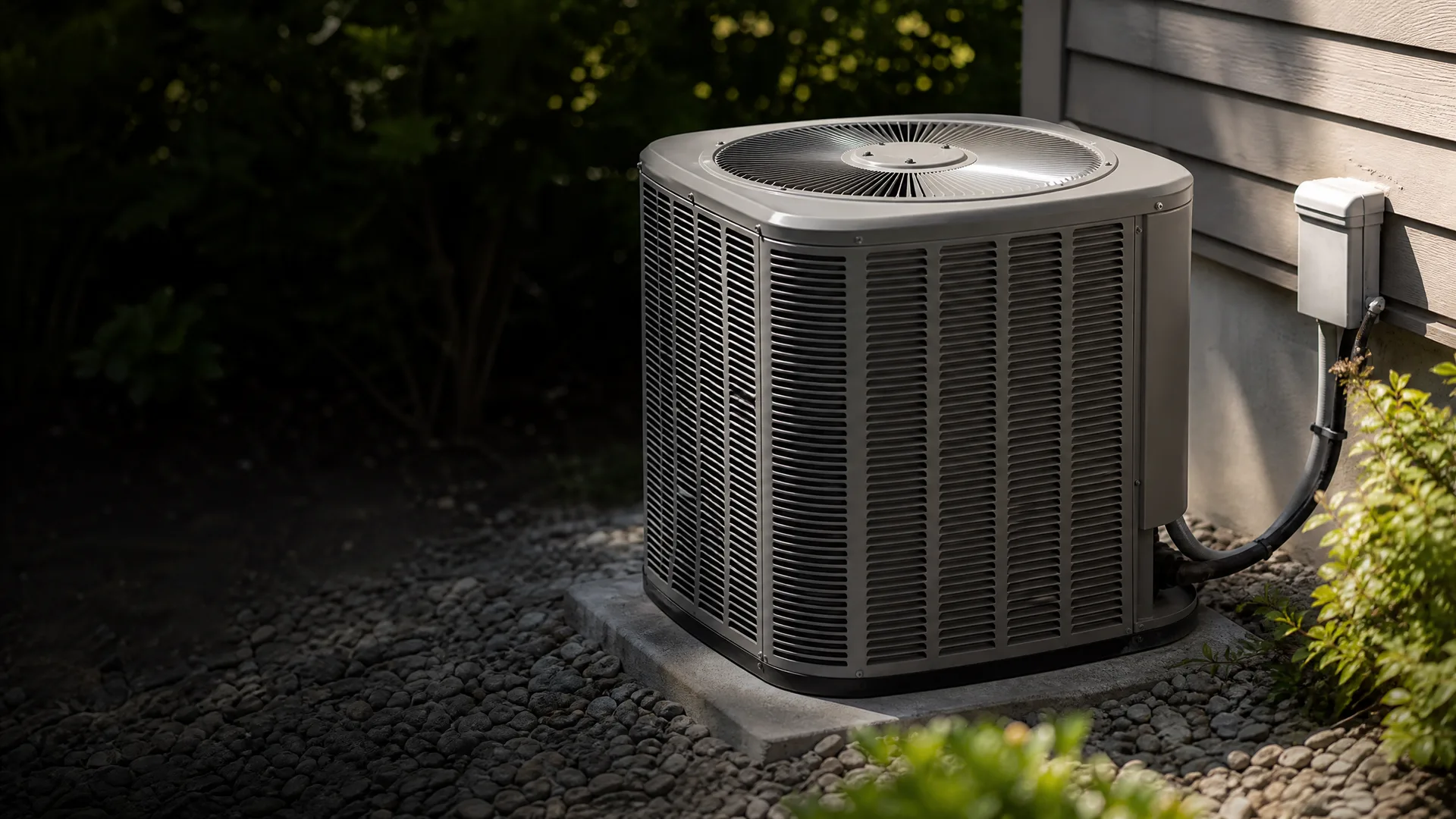
An outdoor air conditioner condenser unit on a concrete pad surrounded by gravel, next to a house wall with horizontal siding, an electrical disconnect box, and conduit, with shrubs nearby.

An air conditioner pro near you

Tune-up, service, or cleaningCentral ACPolk County, IA
Step 1 of 2

What ZIP code is the job in?