






Three lit brick homes on a tree-lined residential street photographed at dusk.

AC Maintenance in Grinnell, IA

Tell us about the job

Takes about a minute. No obligation.

Tune-up, service, or cleaningCentral ACPoweshiek County, IA
Step 1 of 2

What ZIP code is the job in?

Your air conditioner in Grinnell only has to work three months out of the year, June through August. Afternoon highs average around 82 degrees that whole stretch, which is warm but not the kind of heat that pushes a system hard day after day. The bigger job here is heating, since this area sits in a cold climate zone where furnaces do most of the work over the year. That lighter summer duty means your AC isn't fighting the same strain as it would further south. But a unit that sits idle most of the year still needs the coil clean and the refrigerant charge checked before it starts up again. A system that gets looked at once a year tends to run a long time out here.

3 months
June through August, your air conditioner is on duty
82°F
the average summer afternoon it cools against
18 hail events
in ten years, and hail bends the fins on outdoor coils
21 wind events
in ten years, and wind drives debris into outdoor units
Isometric cutaway illustration of a house showing attic ductwork, an indoor air handler, refrigerant lines running outside, and an outdoor condenser unit on a pad.
Your air conditioner works hardest from June through August.

NOAA nClimDiv, 1991–2020 normals

Cooling in Grinnell starts in June and runs through August.

Get the AC checked in May, before it has to work.

Half the homes in Grinnell were built by 1971, old enough that a yearly check matters

Half the homes here were built by 1971
Cooling runs June through August
Summer afternoons average 82°F
The AC survives summer here. Hail is what finds the weak spot.18 hail events hit this county between 2015 and 2024.

Between visits, keep the area around the outdoor unit clear. Grass clippings, leaves, and anything stacked against it block the airflow the coil needs to dump heat. A couple feet of open space on all sides is enough. Check the air filter too, and swap it when it looks gray or clogged rather than on a fixed schedule. A dirty filter makes the system pull harder to move the same air, and that strain adds up over a summer. Inside, keep an eye on the vents, and make sure furniture or rugs aren't covering them. None of this replaces a real check of the refrigerant charge or the electrical components, but it keeps the system from working against itself in the meantime.

Keep up the yearly check

Easy duty still wears parts. A yearly check keeps it going a long time.

Find a contractor
An outdoor air conditioning condenser unit mounted on a concrete pad beside a house, with electrical conduit running to a wall-mounted disconnect box.

What a working AC doesn't tell you

A tune-up starts outside, with the refrigerant charge. Too little and the system loses cooling power without tripping anything you'd notice from inside. The capacitor gets tested under load too, since it can read fine sitting still and still be too weak to start the compressor on a hot afternoon. Inside, a tech pulls the blower wheel and checks it for a buildup of dust and grime that throws it out of balance, something that cuts airflow long before it ever makes a noise. The contactor gets a look as well, since the points on it pit and burn a little every time the compressor cycles on, and enough wear there means it stops closing the circuit at all. None of this shows up from the thermostat. The system can run, cool the house, and still be close to a breakdown that a check would have caught.

The filter decides how hard the coil works

A clogged filter starves the indoor coil of airflow. Starved of airflow, that coil can get cold enough to frost over, and once ice builds up on it, cooling drops off even though the compressor is running flat out.

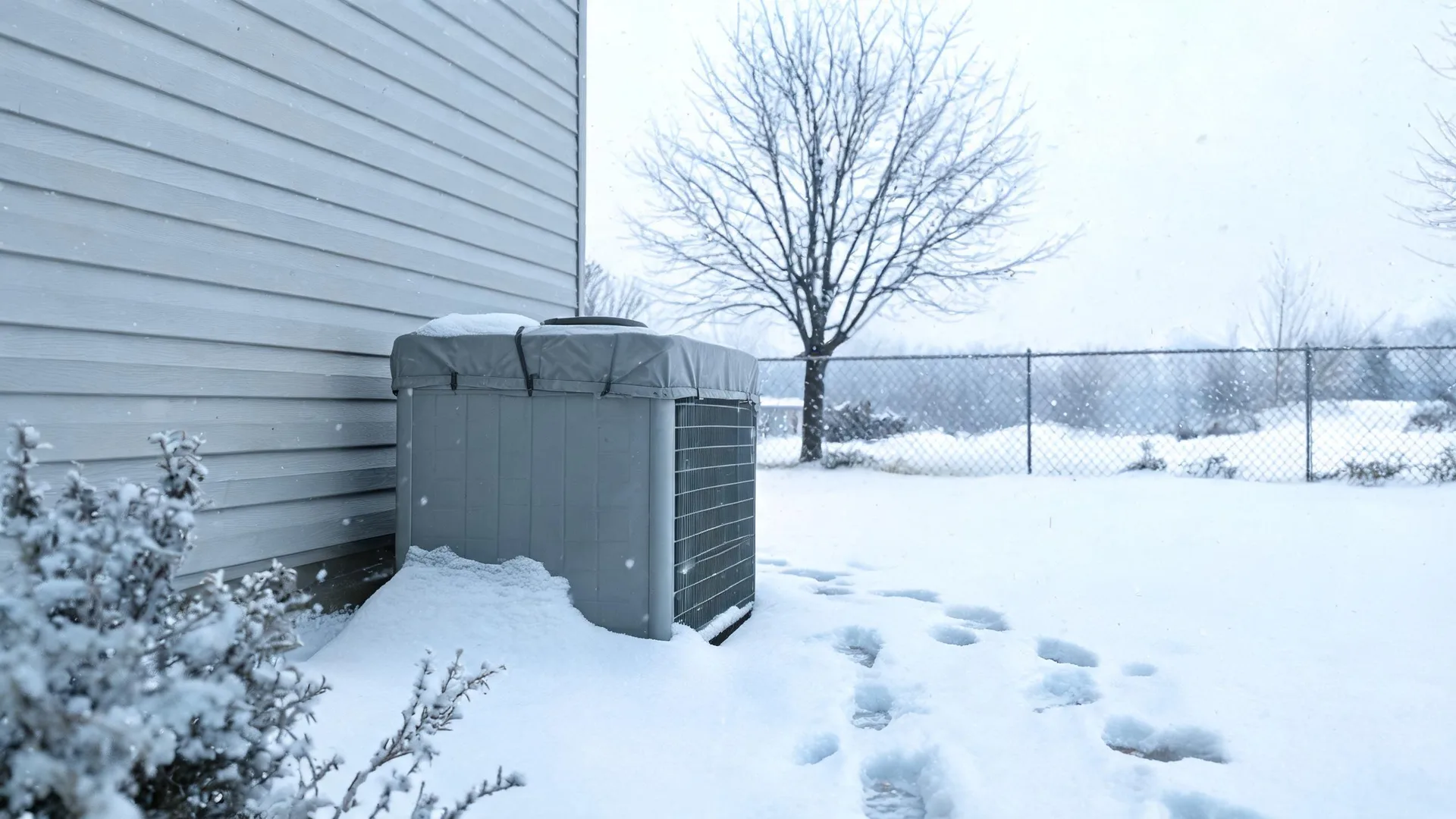
A clogged drain backs up into the house

The indoor coil sheds water as it pulls moisture from the air, and that water leaves through a drain line. When algae or dirt clog that line, the water has nowhere to go but back up into the drain pan, and from there onto the floor or ceiling below.

An outdoor central air conditioning unit mounted on a concrete pad beside a blue-sided house at sunset.

Book your AC tune-up in May, before homes here start needing cooling in June.

  1. Jan
  2. Feb
  3. Mar
  4. Apr
  5. May
  6. Jun
  7. Jul
  8. Aug
  9. Sep
  10. Oct
  11. Nov
  12. Dec

A tune-up checks the refrigerant charge, cleans the coils, tests the capacitor and tightens the electrical connections.

A tune-up also covers things a homeowner never sees from the thermostat. The tech checks the refrigerant lines for oily residue, which is usually where a slow leak shows itself before the charge drops low enough to matter. The condenser fan motor gets checked for play in the bearing, since a motor that wobbles on its shaft will keep running for a while before it seizes. Electrical connections at the disconnect box and inside the unit get tightened, because a loose connection generates heat right at that spot, and heat there damages the wire insulation over time. The condensate pan gets a look too, for rust or standing water that points to a drain already partway blocked. A good tune-up treats the system as a set of parts that wear on their own schedule, not as one thing that's either running or broken.