






A quiet suburban street at twilight featuring two-story brick homes with illuminated windows and large trees lining the sidewalk.

AC Maintenance in Oelwein, IA

Tell us about the job

Takes about a minute. No obligation.

Tune-up, service, or cleaningCentral ACFayette County, IA
Step 1 of 2

What ZIP code is the job in?

AC in Fayette County runs about three months a year, June through August. May is the month to get it looked at, before that first stretch of real heat asks anything of the system. A tech can check the refrigerant charge, test the capacitor and clear the condenser coil while there's still time to order a part if one is failing. Wait until June and the check gets booked the same week the unit is working hardest, right when other homeowners are calling too.

3 months
June through August, your air conditioner is on duty
80°F
the average summer afternoon it cools against
24 hail events
in ten years, and hail bends the fins on outdoor coils
43 wind events
in ten years, and wind drives debris into outdoor units
Isometric cutaway illustration of a single-story house showing interior ductwork and an air handler connected by lines to an outdoor condenser unit on a pad beside the building.
Your air conditioner works hardest from June through August.

NOAA nClimDiv, 1991–2020 normals

Three months of real work a year is not much to ask of a condenser.

Light duty still means a yearly check, since most failures here trace back to age or a part nobody looked at.

Half the homes here are old enough that nobody's checked this system in years

Half the homes here were built by 1954
Cooling runs June through August
Summer afternoons average 80°F

The spring check is also a chance to look at the condenser itself, not just what's running inside it. The unit sits outside year round, and Fayette County has seen its share of damaging wind and hail. A tech checking the refrigerant charge and capacitor can look over the coil fins and cabinet at the same time, while there's still time to fix what the weather did before the heat sets in. Age is still the main thing to watch for in a system that's gone unchecked for years. But a storm can age a condenser just as fast as time does.

If nobody's checked your system, this spring is the time to start

Half the homes in Fayette County date to 1954 or earlier. If yours is one of them and nobody can say when the AC was last looked at, book the spring check now while there's still time to order a part if one turns up weak.

Find a contractor
A man in a cap, dark long-sleeve shirt and tan pants walks up concrete steps toward a green front door, carrying a canvas tool tote, with a potted shrub beside the entry.
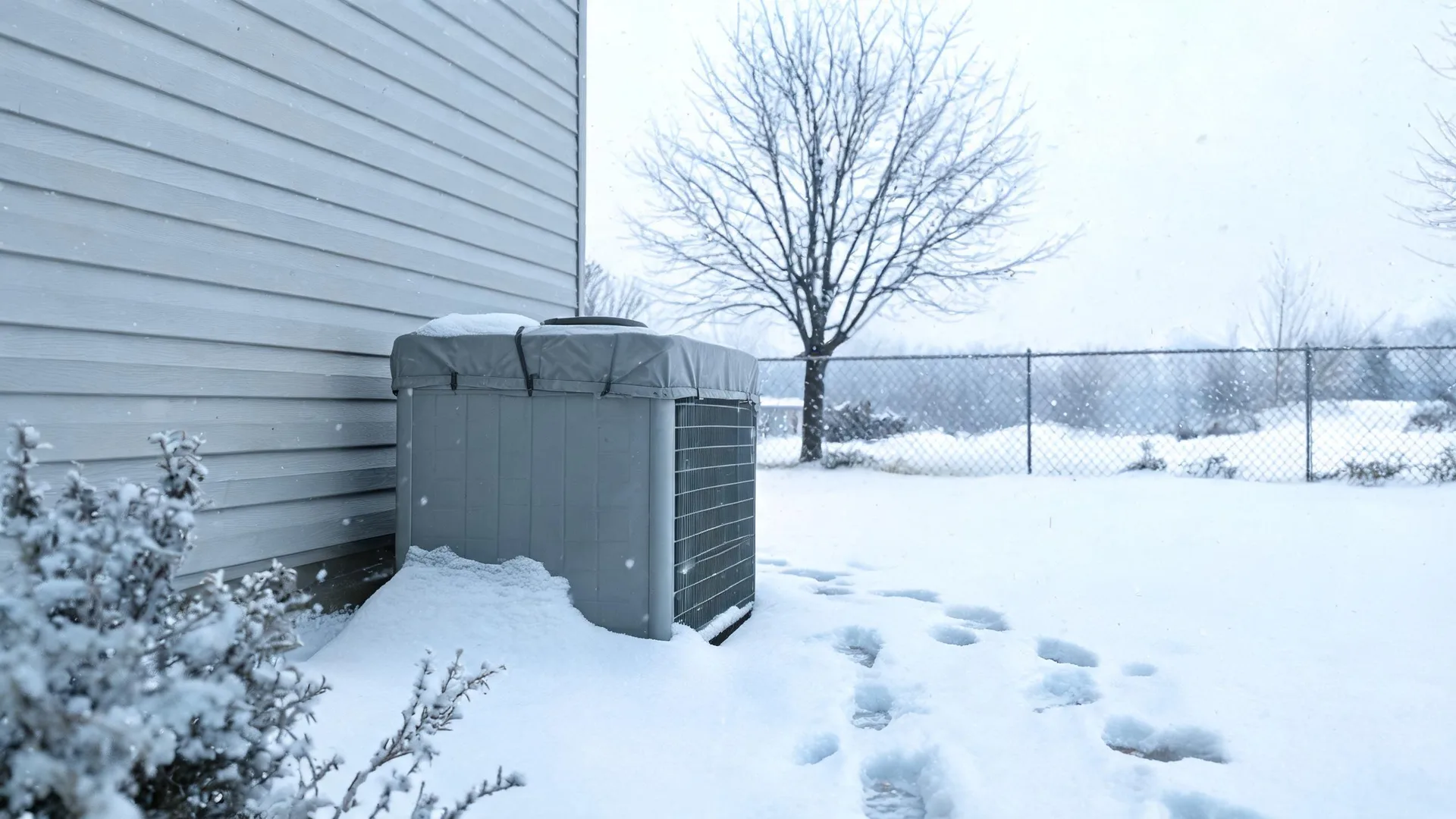
A gray cylindrical air conditioning condenser unit mounted on a concrete pad next to a light-colored vinyl-sided house exterior.

What you can do yourself

A clean filter is the one thing worth checking on your own. Pull it out and hold it up to the light. If you cannot see through it, rinse it or swap it out, and check it again partway through summer since a dirty filter forces the blower to work harder for the same cooling. Outside, keep grass clippings and leaves clear of the condenser cabinet so air can pass through the coil fins. After any storm, walk out and look for bent fins or debris sitting on top of the unit. Inside, make sure furniture or rugs are not covering the vents. None of this replaces a tech checking the refrigerant charge or testing the capacitor, but it keeps the system running the way it was built to between now and the next check.

The coil has to stay clean to move heat at all

The indoor coil absorbs heat from the air passing over it, and the outdoor coil has to release that same heat outside. A film of dust on either one acts like insulation, so the system runs longer and still falls short of the temperature set on the thermostat.

The drain line is the part nobody thinks about until it backs up

Cooling the air pulls moisture out of it, and that water has to leave through a drain line and pan under the indoor coil. Algae and dirt can clog that line, and when it backs up the water has nowhere to go but into the cabinet or the ceiling below it.

An outdoor air conditioning condenser unit mounted on a concrete pad next to a blue-sided residential house at sunset.

Book your AC tune-up in May, before homes here start needing cooling in June.

  1. Jan
  2. Feb
  3. Mar
  4. Apr
  5. May
  6. Jun
  7. Jul
  8. Aug
  9. Sep
  10. Oct
  11. Nov
  12. Dec

A tune-up checks the refrigerant charge, cleans the coils, tests the capacitor and tightens the electrical connections.

A tune-up is more than a glance at the thermostat setting. A tech starts by checking refrigerant charge against what the system calls for, since too little means the coil can't pull enough heat out of the air, and too much runs the compressor harder than it should. The capacitor gets tested under load, not just looked at, because a capacitor can read fine sitting still and still fail the moment the compressor tries to start. Electrical connections get checked for looseness and corrosion, since a loose connection heats up and eventually fails right there. The condenser fan motor gets checked for play in the bearings and for drawing the right amperage. Blower operation gets checked on the indoor side too, along with the condensate drain, since a clogged drain backs up water long before anyone notices the air isn't cold enough. None of this is guesswork. Each reading gets compared against what the manufacturer specifies for that unit, and a reading outside that range is the part that gets flagged before it fails outright.