A lit brick residential street at dusk showing a row of two-story homes with covered porches and mature trees.

AC Maintenance in Tipton, IA

Tell us about the job

Takes about a minute. No obligation.

Tune-up, service, or cleaningCentral ACCedar County, IA
Step 1 of 2

What ZIP code is the job in?

The coil gets to do its job

A dirty condenser coil cannot shed heat the way it should, so the system works harder to cool the same air. A dirty evaporator coil can even ice over. Once that happens the unit may blow warm air until the ice melts off. A yearly cleaning keeps both coils doing what they are built to do.

Small problems get caught early

A weak capacitor does not announce itself right away. Neither does a low refrigerant charge or a motor bearing starting to wear. Left alone, a failing capacitor can take the compressor down with it. Caught during a routine check, most of these are a simple fix instead of a system replacement.

3 months
June through August, your air conditioner is on duty
82°F
the average summer afternoon it cools against
45 hail events
in ten years, and hail bends the fins on outdoor coils
63 wind events
in ten years, and wind drives debris into outdoor units
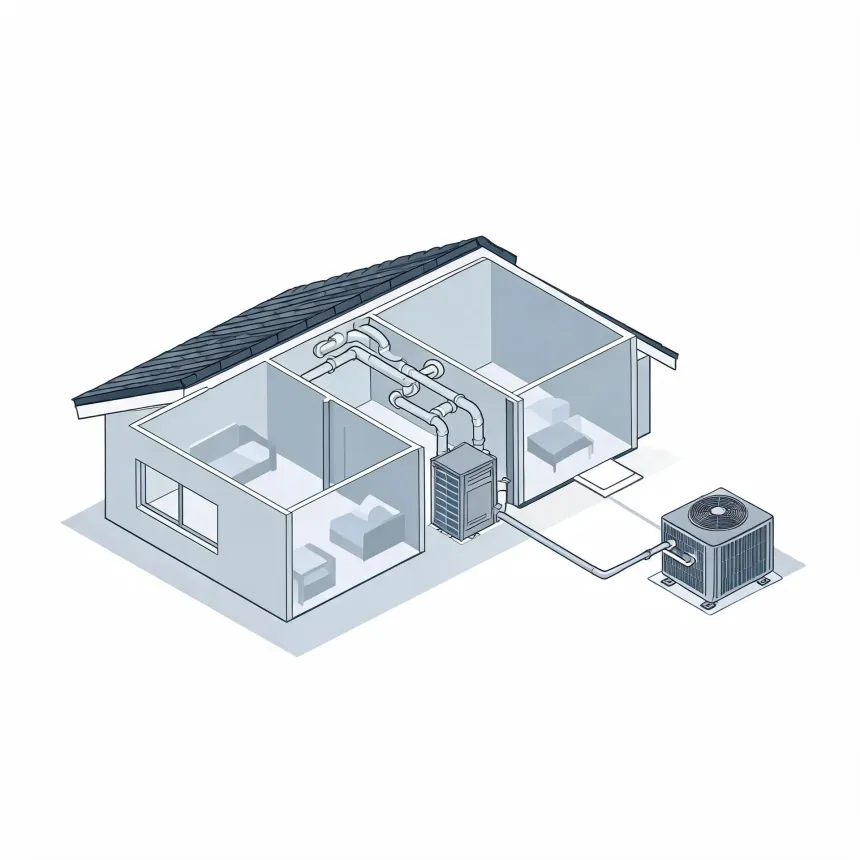
Isometric line illustration of a cutaway single-story house showing interior rooms, ductwork, an indoor air handler or furnace, and a refrigerant line running to an outdoor condenser unit on a pad.
Your air conditioner works hardest from June through August.

NOAA nClimDiv, 1991–2020 normals

Cooling runs about three months here, June through August.

One visit before summer covers the season this system actually works.

Half the homes here were built before the AC maintenance habit was

Half the homes here were built by 1965
Cooling runs June through August
Summer afternoons average 82°F

Cooling in Cedar County starts in June and runs hardest straight through August. May is the month to get it checked, before the first real heat wave asks the compressor and coils to do their job. A unit that sits idle most of the year doesn't show its weak points until it's already running flat out. Booking the visit in May means whatever a contractor finds gets fixed before the house needs the system, not during the week it does.

Book the yearly check before summer arrives

Schedule the check before summer, same as every year. If the system in your house dates back with it, a look at the capacitor and the refrigerant charge now is what keeps a small problem small.

Find a contractor
A man in a cap, dark sweatshirt and tan work pants, seen from behind, climbs porch steps toward a dark green paneled door while carrying a canvas tool bag.
An outdoor air conditioning condenser unit mounted on a concrete pad beside a house, with electrical conduit running to a wall-mounted disconnect box.

What you can watch between visits

Between visits, the main thing worth doing is keeping the air filter clean. A clogged filter starves the system of airflow, and that shows up as weak cooling, longer run times, or ice forming on the evaporator coil. Check it monthly and replace it when it looks gray or matted. Outside, keep the condenser unit clear. Grass clippings, leaves, and anything growing up against the cabinet block airflow across the coil, and the system has to work harder to get rid of heat. A few feet of open space around it is enough. Inside, keep an ear out for anything that sounds different, a new rattle, a hum that was not there before, or the unit cycling on and off more than it used to. None of that is something to fix yourself, but it is worth noting so a contractor can check it at the next visit.

The drain line is doing more than it looks like

Warm air passing over a cold evaporator coil leaves water behind, and that water has to go somewhere. The condensate drain carries it out. Algae and dust build up inside that line over time, and once it clogs, the water backs up into the drain pan and from there into the house. A clean filter means less dust gets pulled into that moisture in the first place.

Airflow problems show up as cooling problems

The filter, the coils and the drain all depend on air and water moving where they should. Block one and the system does not just lose a little efficiency, it starts hiding damage. A coil running wet and dirty corrodes faster than a clean one. Catching the buildup before it causes that kind of wear is most of what a maintenance visit is for.

Aerial view of a gray central air conditioning condenser unit on a concrete pad next to a house with vinyl siding.

Book your AC tune-up in May, before homes here start needing cooling in June.

  1. Jan
  2. Feb
  3. Mar
  4. Apr
  5. May
  6. Jun
  7. Jul
  8. Aug
  9. Sep
  10. Oct
  11. Nov
  12. Dec

A tune-up checks the refrigerant charge, cleans the coils, tests the capacitor and tightens the electrical connections.

A proper tune-up starts with the electrical side. A contractor checks the capacitor's readings against what the unit calls for, looks at the contactor points for pitting, and checks wire connections for heat damage. From there it is refrigerant. Pressures get checked against the system's charge, and the lines get checked for the oily residue that signals a slow leak. The blower gets pulled apart too, wheel and motor both, since a wheel caked in dust moves less air no matter how strong the motor is. Thermostat calibration gets checked last. A unit can be mechanically sound and still run wrong if the thermostat is reading the temperature incorrectly.