






A illuminated two-story red brick house on a quiet residential street at dusk, flanked by mature trees under a deep blue evening sky.

AC Maintenance in Washington, IA

Tell us about the job

Takes about a minute. No obligation.

Tune-up, service, or cleaningCentral ACWashington County, IA
Step 1 of 2

What ZIP code is the job in?

Between visits, the filter is the one thing worth your attention. A dirty filter chokes airflow across the indoor coil, and that makes the whole system work harder to move less air. Check it by pulling it and holding it up to a light. If you can't see light through it, swap it or wash it if it's the reusable kind. Outside, keep the condenser clear of grass clippings, leaves and anything growing against it, and give it room on all sides so it can breathe. Beyond that, leave the refrigerant level, the electrical connections and the condensate drain to a contractor who can test and clean them properly.

3 months
June through August, your air conditioner is on duty
83°F
the average summer afternoon it cools against
32 hail events
in ten years, and hail bends the fins on outdoor coils
49 wind events
in ten years, and wind drives debris into outdoor units
Isometric line illustration of a cutaway house showing interior rooms with furniture, ductwork leading to an indoor air handler, and an outdoor condenser unit connected by a line set.
Your air conditioner works hardest from June through August.

NOAA nClimDiv, 1991–2020 normals

The condensate drain can clog with algae and dust over time, and most systems have a float switch that shuts the unit off when water backs up.

A tripped float switch is doing its job, keeping water off your ceiling or floor, so clearing the drain line matters as much as changing the filter.

Half the homes here were built by 1964, old enough that a yearly check is how problems get caught small

Half the homes here were built by 1964
Cooling runs June through August
Summer afternoons average 83°F
June is when it starts workingCooling in Washington County runs June through August. Book the check in May.

If the AC in your house hasn't been looked at in a year or more, that's the visit to schedule. A yearly check gives a contractor a chance to catch a weak capacitor or a coil going dirty before it leaves you without cooling when you need it. It also gives you a read on where things stand if you've never had the system serviced since moving in. Ask whoever comes out how old the unit actually is. That one number tells you more about what to expect going forward than almost anything else about the house.

Catch it while it's small

If your system has been in the house a long time, a yearly check is how you catch problems while they're small.

Find a contractor
An outdoor air conditioning condenser unit mounted on a concrete pad surrounded by gravel, photographed against a partly cloudy blue sky.

The system tells you before it quits

An air conditioner doesn't fail all at once. It tells you first. A unit that runs longer than it used to, or cycles on and off more than it should, is already working harder to do the same job. Weak cooling at the vents, ice on the indoor coil, or a hum from the outdoor unit that wasn't there before are all signs the system is under strain before it quits outright. A capacitor weakens slowly, so the compressor and fan motor start to struggle long before either one stops. Left alone, that strain spreads. A motor working against a bad capacitor runs hotter, and heat is what shortens the life of the parts around it. None of this shows up by looking at the thermostat. It shows up when someone opens the cabinet and checks the parts that do the work.

Dirt doesn't stay on the surface

A dirty coil or a low refrigerant charge makes the compressor run longer to move heat out of the house. That longer runtime pushes the compressor to work near its limit instead of cycling on and off the way it's built to. Compressors are not built to be serviced. When one fails, it gets replaced, not repaired.

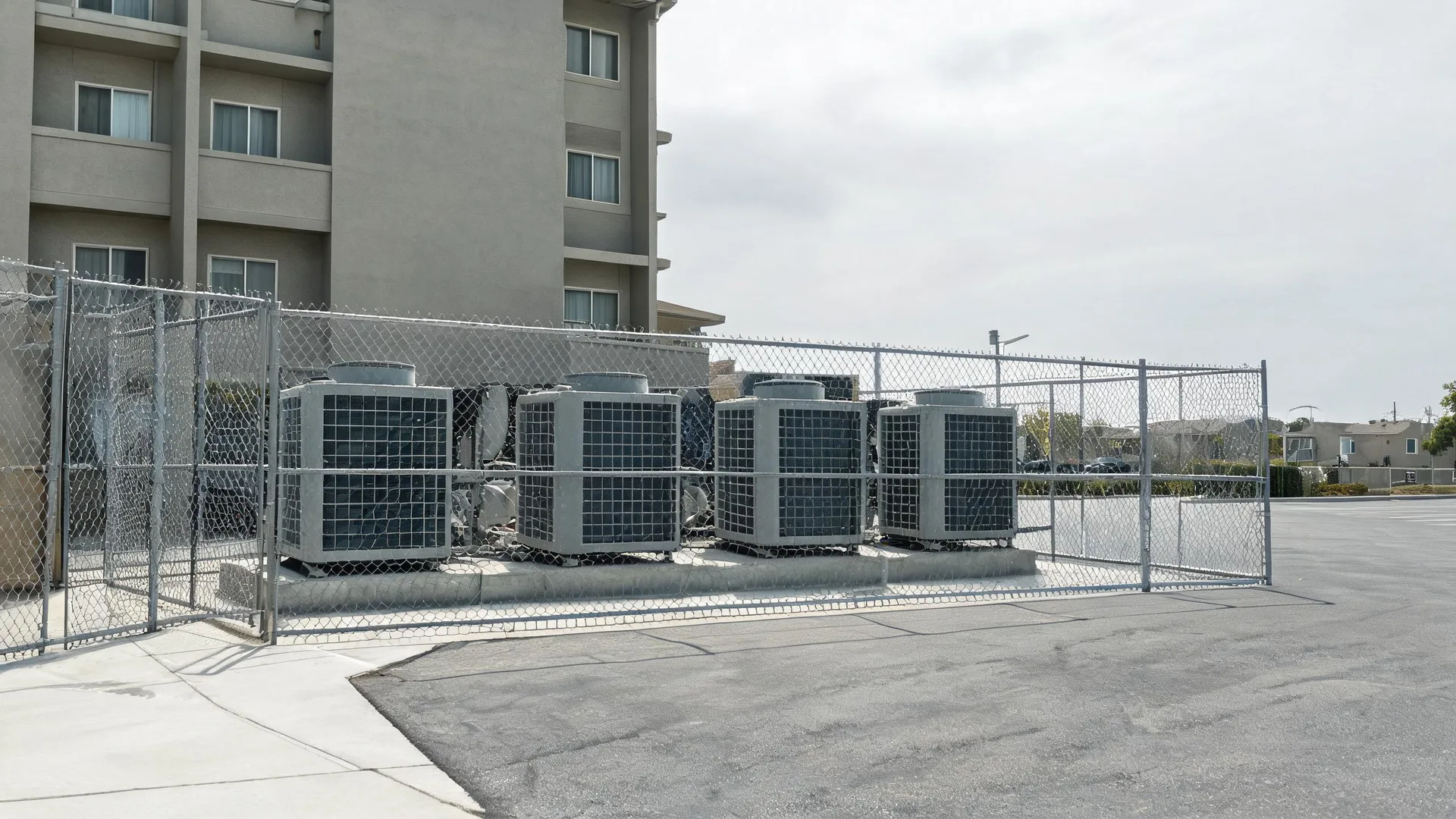
Skipped visits don't show up right away

A system low on refrigerant or choked by a dirty coil still cools the house. It just runs longer and strains the parts to do it. That's what makes a skipped visit feel harmless at first. The wear is real even while the house still feels fine, and it shows up in the pressures and the current draw a contractor checks, not on the thermostat.

Overhead view of an air conditioning condenser unit on a concrete pad next to a house with asphalt shingle roofing and vinyl siding.

Book your AC tune-up in May, before homes here start needing cooling in June.

  1. Jan
  2. Feb
  3. Mar
  4. Apr
  5. May
  6. Jun
  7. Jul
  8. Aug
  9. Sep
  10. Oct
  11. Nov
  12. Dec

A tune-up checks the refrigerant charge, cleans the coils, tests the capacitor and tightens the electrical connections.

A tune-up starts outside, with the condenser coil. A contractor washes it clean of the dirt and grass that build up between visits, since a dirty coil can't shed heat the way it's built to. Refrigerant gets checked against the system's charge, not just topped off, because too much is as hard on the compressor as too little. The capacitor and contactor get tested under load, not just looked at, since a capacitor can read fine sitting still and still be too weak to start the compressor on a hot day. The blower wheel gets checked for dirt buildup, electrical connections get tightened, and the condensate drain gets cleared. Each piece is routine on its own. Skipped together for a few years, they're how a system ends up running hard and still falling short.