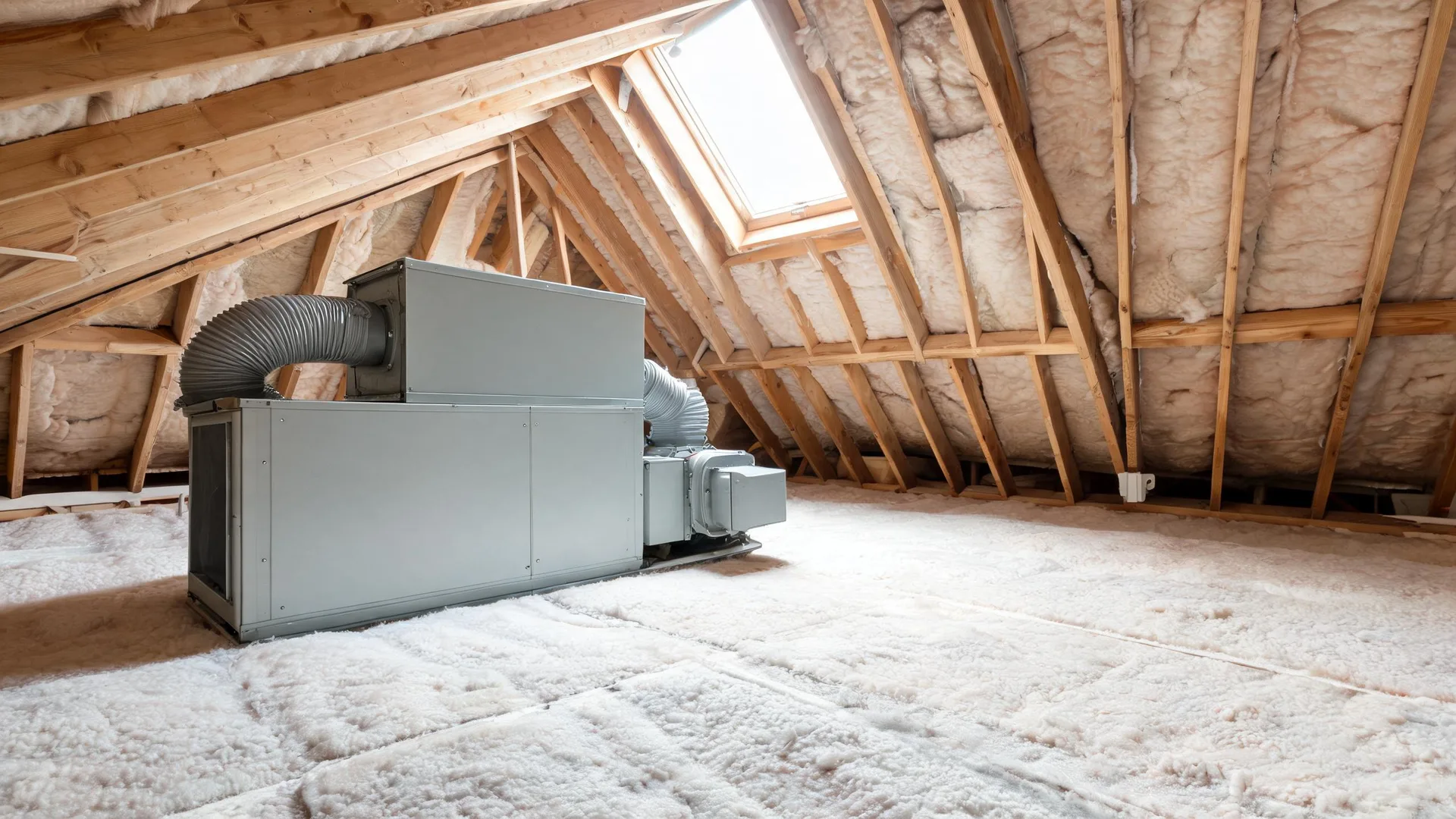
The filter is yours to change
Check it monthly and swap it when it looks gray or clogged. A dirty filter chokes airflow to the evaporator coil, and that's the one failure point on this list you don't need a tech for.
Takes about a minute. No obligation.
A tune-up starts with the refrigerant charge, and that's the one thing you can't see or guess at from inside the house. Too little and the coil can't pull heat out of the air the way it should. Too much and the compressor works harder than it has to, which shortens its life. A tech checks that charge against what the system calls for and adjusts it if it's off. They'll also pull the panel and look at the capacitor, the part that gives the compressor and fan motor the kick they need to start. A weak one still lets the system run, so you'd never know until the day it doesn't. Same with the condenser coil outside. Dirt and grass clippings build up on the fins where you'd never think to look, and once it's coated, the system can't shed heat the way it needs to. None of this shows up as a problem until the compressor is straining to keep up, and by then you're looking at a repair instead of a wipe-down.
NOAA nClimDiv, 1991–2020 normals
Cooling in Dallas County starts in June and runs through August.
Book the tune-up in May, before the system has to work.




A few signs tell you the system needs a look before it quits outright. Warm air out of the vents when the thermostat is set low is one. So is the system running longer than it used to, or cycling on and off more than it should, because both point to it struggling to keep up with what it used to do without trouble. Listen for anything new too. A hum that wasn't there before, a rattle, a hiss near the lines. None of these mean the system is about to fail, but they mean something inside it has shifted, and a tech can usually find it before it turns into a breakdown on the hottest day of the summer.
It starts running hard in the first month of the season here. Book the check the month before.
Find a contractor
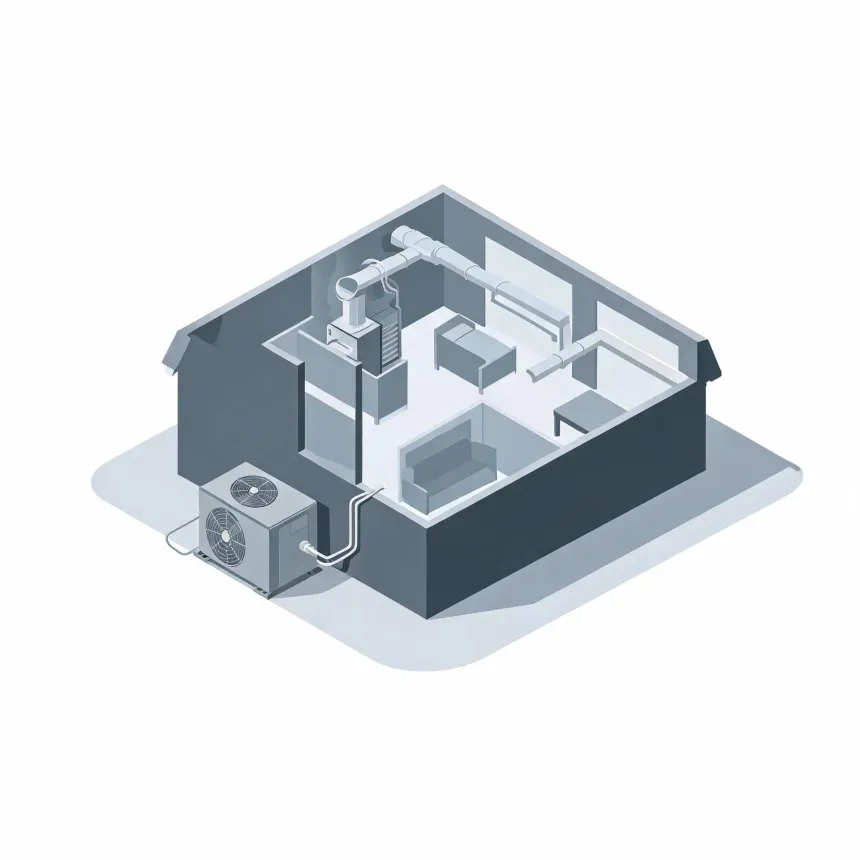
The filter is the only part of this system you're meant to touch, and it's doing more work than it looks like. Air has to pass through it before it ever reaches the evaporator coil, and once that coil is coated in dust, it can't pull heat out of the air the way it should. The system runs longer to do the same job, and the coil can ice over, which blocks airflow even further. Outside, the condenser coil has the same problem in reverse. It needs open fins to shed the heat that got pulled out of the house, and dirt and clippings packed into those fins make the compressor work harder to get rid of it. Then there's the drain line, which nobody thinks about until it clogs. Condensation has to go somewhere, and when that line backs up, water finds the nearest low point instead, usually a pan or a ceiling. None of these failures announce themselves. They just make the system work harder for the same result until something gives out.
Check it monthly and swap it when it looks gray or clogged. A dirty filter chokes airflow to the evaporator coil, and that's the one failure point on this list you don't need a tech for.
Grass clippings, leaves and mulch piled against the condenser block airflow to the coil. Keep a couple feet of open space around it and hose off the fins when you see buildup, gently, from the inside out.
A tune-up checks the refrigerant charge, cleans the coils, tests the capacitor and tightens the electrical connections.
A full tune-up also means checking the blower motor and blower wheel, since that's what pushes air through the ducts and across the evaporator coil. Dust and debris build up on the wheel over time and throw it slightly out of balance, so it has to work harder to move the same amount of air. The tech checks the electrical connections too, looking for anything loose or corroded at the disconnect box and the contactor, since a bad connection creates resistance, and resistance creates heat. They'll test the thermostat's calibration against the actual temperature in the room, because a thermostat reading a few degrees off tells the system to run longer than it needs to. Last, they check static pressure in the ductwork, which tells them whether the system is breathing the way it was designed to or straining against a restriction somewhere in the line.