Running the way it should
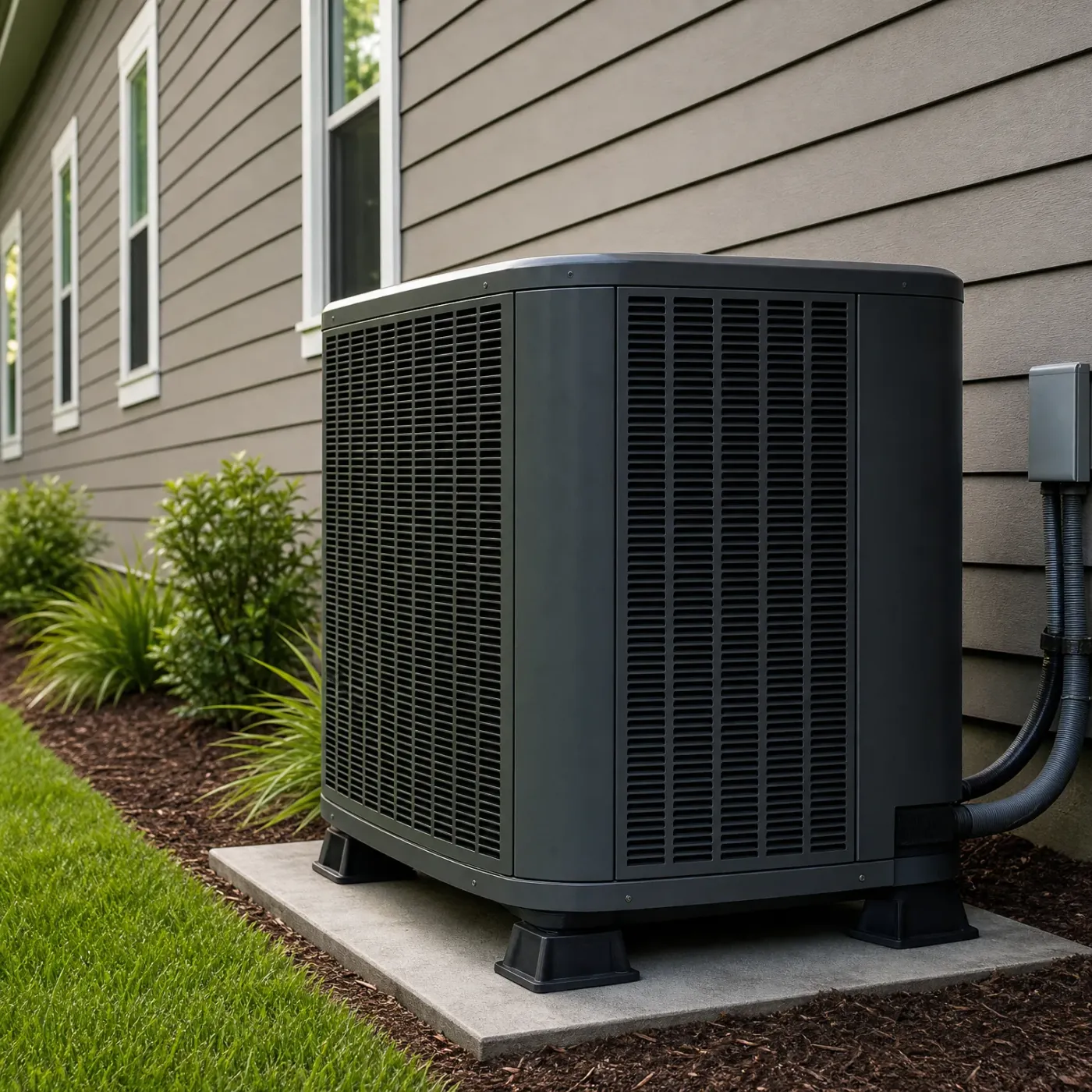
This is a heat pump keeping up with its job, outdoor unit clear, lines intact, disconnect box sealed up. Right here is where a tune-up pays off: a technician catches the weak part before it becomes the failed part.

Your heat pump works harder in Iowa than it would somewhere with milder weather. It's pulling heat out of cold winter air and pushing heat out of sticky summer air, both. Before you book a tune-up, you want to know what's actually getting checked, not just hear "maintenance" and hope for the best.
A heat pump tune-up covers the refrigerant charge, the outdoor coil, the indoor coil, the defrost cycle, and the electrical connections that keep the compressor running. Because your heat pump switches between heating and cooling instead of doing just one job, a technician checks it in both modes rather than one. That matters more here than it would with a furnace or a standalone AC unit, since the same equipment carries you through humid summers and cold winters. A low refrigerant charge or a dirty outdoor coil shows up as higher bills and weaker performance in whichever season comes next. Catching it before that season starts is the point of the visit.

A heat pump runs the refrigerant cycle backward to heat your home instead of cooling it. The reversing valve is what makes that switch happen. A tune-up checks that it shifts cleanly between modes, since a valve that sticks can leave you with a system blowing cold air in January or warm air in July without any obvious reason why.

Your outdoor unit has to shed frost in winter and reject heat in summer, so the coil gets used every month of the year instead of sitting idle half the time like it would with a furnace and separate AC. A tune-up includes checking that coil for dirt and bent fins, since airflow problems there show up as higher bills in both January and July.

This is a heat pump keeping up with its job, outdoor unit clear, lines intact, disconnect box sealed up. Right here is where a tune-up pays off: a technician catches the weak part before it becomes the failed part.

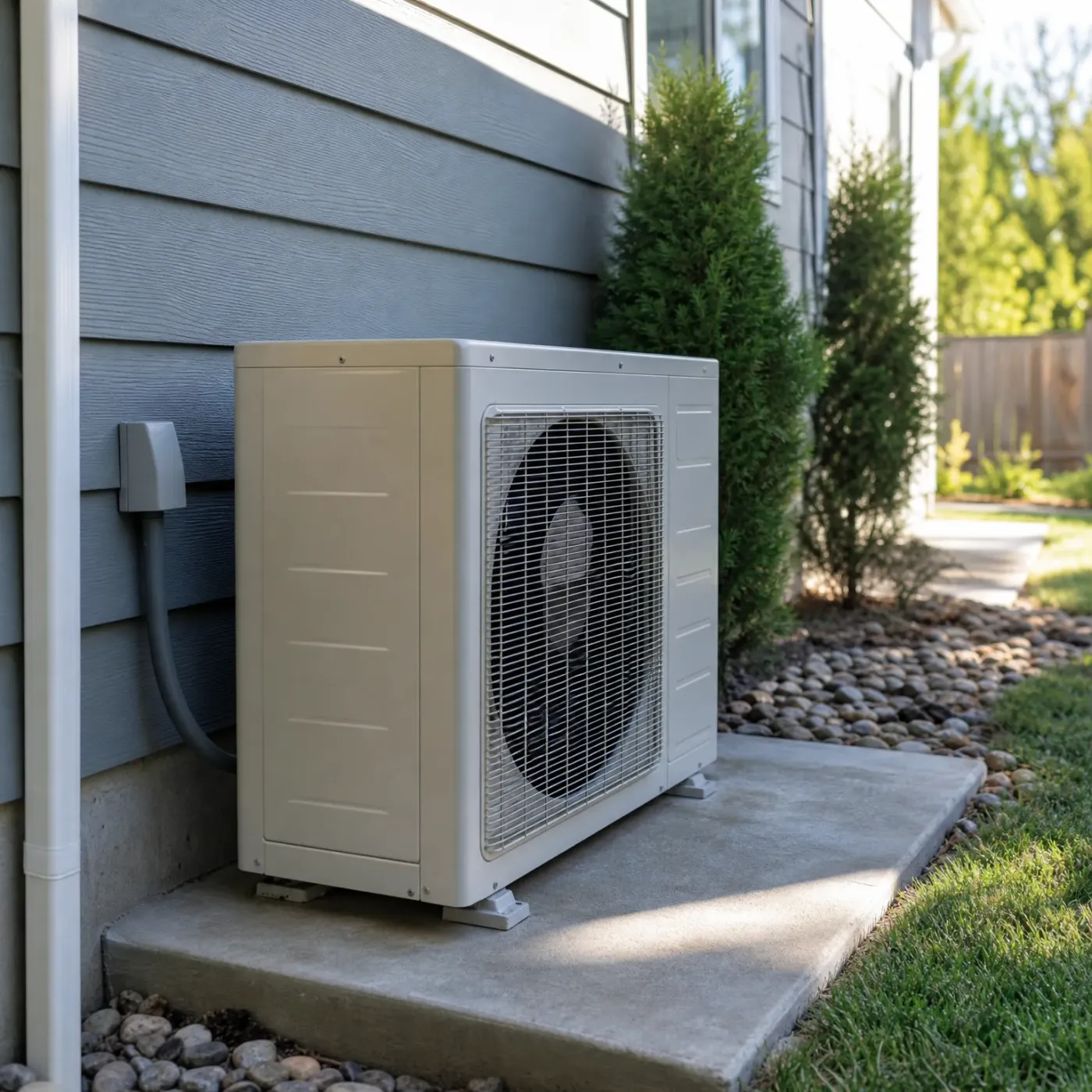
Lines that sweat, ice on the unit in summer, a disconnect box that rattles loose. None of these stop the system outright, but they tell you it's working harder than it should, and that shows up on your power bill before it shows up as a breakdown.




Skip calling around to set up a heat pump tune-up.
One request and finding someone for the tune-up is handled.
You only hire the pro if you want to.
Short cycles that start and stop more than they used to. Air from the vents that feels cooler than it should on a hot afternoon, or not quite warm enough on a cold morning. A smell like something's burning dust when it first kicks on after sitting idle. Ice built up on the outdoor unit that doesn't melt off on its own. A hum or click from the outdoor unit that wasn't there before. Any of these can mean a part is already working harder than it should, and a system running on a strained part tends to use more power to do the same job, then fail at the worst time, a July heat wave or a January cold snap.

Coils free of debris, grass and rock borders kept back from the cabinet, nothing crowding the sides. Air moves through the unit the way it's supposed to, in both directions, so it doesn't have to work past its own buildup to keep your house at temperature.

Dirt packed into the coil fins blocks airflow before the refrigerant lines ever reach the wall. The unit pulls more power to move the same amount of heat, and a coil this dirty is usually a sign nobody's looked at it in a while.

A heat pump moves a fixed amount of refrigerant through its lines, and that amount is set at the factory to match the system's design. A tune-up checks that charge with gauges, measuring pressure on both the high and low side of the line set. Too little refrigerant and the system can't pull enough heat out of January air or push enough heat out of July air. Too much, and it can flood the compressor with liquid refrigerant that was never meant to be there. Either way, the compressor is working against conditions it wasn't built for, and that's the part that costs the most to replace.
Low charge is usually a sign of a slow leak somewhere in the lines, not a one-time event, so a technician will look for where it's escaping rather than just topping it off. Finding that on your own means locating a contractor who works on heat pumps specifically, not just furnaces or standard AC, then explaining the system and waiting on a callback. Once you send the request here, that search is off your plate.


A dew point averaged across June, July and August here runs 62°F, per NOAA climate data. That's thick, sticky air, the kind where a cold drink sweats on the table. Your heat pump has to pull that moisture out of the air along with the heat, and the two jobs compete for the same equipment. On the muggiest afternoons you may notice the air coming out of the vents is cool but the house still feels damp, because the system is running long enough to drop the temperature but working harder to wring out the humidity. A tune-up looks at whether the coil and airflow can still keep up with that load.
NASA POWER T2MDEW county cells weighted by homes




You start by searching for someone who works on heat pumps, not just furnaces or straight AC. You call a few, ask if they're free before summer gets sticky, and wait on callbacks that may or may not come. You explain the same thing to each one: what the system is, how old it might be, what you've noticed. Then you compare what they quote against each other with no way to know if either number is fair. If the first one can't come for three weeks, you start over with the next name on your list.
You answer a few questions about your heat pump and your house, once. That goes out to a contractor who already works on heat pumps in Iowa, so you're not the one checking whether they know the equipment. You're not calling around, not repeating yourself, not sitting with three quotes trying to guess which one is honest. The search part of this is done. What's left is the actual tune-up, and that part was always going to take the time it takes.
At that rate, a heat pump running down a bad capacitor or a dirty coil shows up fast on your bill, since it pulls more power to move the same air. Keeping it tuned is what keeps the draw where it should be.
EIA-861 2025 statewide residential average
A heat pump tune-up in Iowa checks the reversing valve, the refrigerant charge, and the coils, the parts that carry the heaviest load through a sticky summer and a cold winter both. That's the whole answer. What's left is finding someone qualified to do it, and that's the part that eats your afternoon: searching for a contractor who actually works on heat pumps instead of furnaces alone, calling a few numbers, asking who's free before the humidity sets in, waiting on callbacks, explaining the same system twice to two different people, then sorting through quotes that don't quite match. Send the form here and that search is done. You're not left sorting through names or wondering who'll actually pick up the phone. The tune-up itself still takes a technician's time on-site, gauges on the lines, a real look at the valve and the coils. But the part where you hunt for who's going to do it is off your plate the moment you send this.
One form instead of hunting for a pro who does heat pump tune-ups.
Asking costs nothing, and the choice to hire stays yours.