




Heat pump not cooling in Marshalltown, IA

Get a heat pump pro

A heat pump that won't cool in a Marshalltown summer is not something to let ride. Muggy stretches here push the system hard, and when it's blowing warm air instead of cold, the cause could be a stuck reversing valve, a refrigerant leak, or an outdoor unit that's lost its airflow. Guessing which one wastes time you don't have on a hot day. What you get here is a match with a licensed contractor who works in Marshall County and sees this equipment every summer, so the call isn't a stranger showing up blind. It's one contractor, not a handful competing for your business, and they'll reach out to you directly to sort out what's actually wrong with your system. That's a faster path back to cool air than working through the problem on your own, and it puts someone local and familiar with heat pumps on the job instead of leaving you to guess at it.

Why is my heat pump not cooling my house in Marshalltown?

You walk in from the heat and the house feels just as sticky as outside. The thermostat says it's running, maybe even set low, but the air coming out of the vents isn't cold. In a Marshalltown summer, with the humidity sitting heavy for weeks at a stretch, that's a problem you notice fast and want fixed fast, not something to wait out over a few more warm nights.

Your heat pump is likely stuck in the wrong mode or losing refrigerant

A heat pump cools by reversing the flow of refrigerant, and that switch happens at a part called the reversing valve. When it sticks, the system keeps heating or does neither well, even with the thermostat set to cool. A low refrigerant charge causes the same kind of failure: the coil can't pull enough heat out of the air, so what comes through the vents is barely cooler than the room. Both problems get worse the harder the unit runs, and a muggy Marshalltown stretch asks a lot of it. A dirty outdoor coil can mimic the same symptoms by blocking the heat exchange the system depends on to cool at all.

A woman wrapped in a knit blanket sits on a gray sofa in a living room, looking toward a bright window with houseplants and an armchair in the background.
A woman with long dark hair in a green knit sweater sits on a couch indoors, smiling and looking toward a window with a blurred room behind her.
A woman with dark hair in a bun wearing a cream knit sweater sits on a gray sofa in a bright living room, looking off to the side.
A woman in a gray cowl-neck sweater sits on a light sofa with cushions, smiling and looking to the side, with a kitchen and window visible behind her.

Call Now or Wait It Out

Call for repair now

  • If the outdoor unit is running but the air inside is warm, a contractor can check the reversing valve the same day.
  • A low refrigerant charge means a leak somewhere in the line set, and that leak won't seal itself over time.
  • Letting a heat pump run low on charge for weeks can put extra strain on the compressor, which costs far more to replace than to protect.
  • A frozen outdoor coil needs to thaw and get diagnosed before the system runs again, not just switched off and on.
  • Humidity climbs fast in a Marshalltown house once the system stops pulling moisture out of the air, and that shows up in how the rooms feel within a day or two.
  • A local contractor who services heat pumps all summer has likely seen the same failure on another unit on your block.

Wait and watch

  • If the system is still pulling some cool air and the house isn't climbing past a few degrees, a short wait to see if it's a one-time trip is reasonable.
  • Breakers trip and thermostats glitch sometimes without a real mechanical fault behind them, so a reset is worth trying first.
  • Waiting through a stretch of 90-degree days with no cooling risks the compressor running hot if it cycles on and off without fixing the underlying issue.
  • A reversing valve stuck mid-cycle won't fix itself, so watching and waiting only delays a repair that still has to happen.
  • The longer refrigerant leaks out, the lower the charge gets, and a system that's just low now can run dry later in the summer.
  • Once indoor humidity sets in on a muggy stretch, it tends to linger in the house until the cooling actually comes back on.
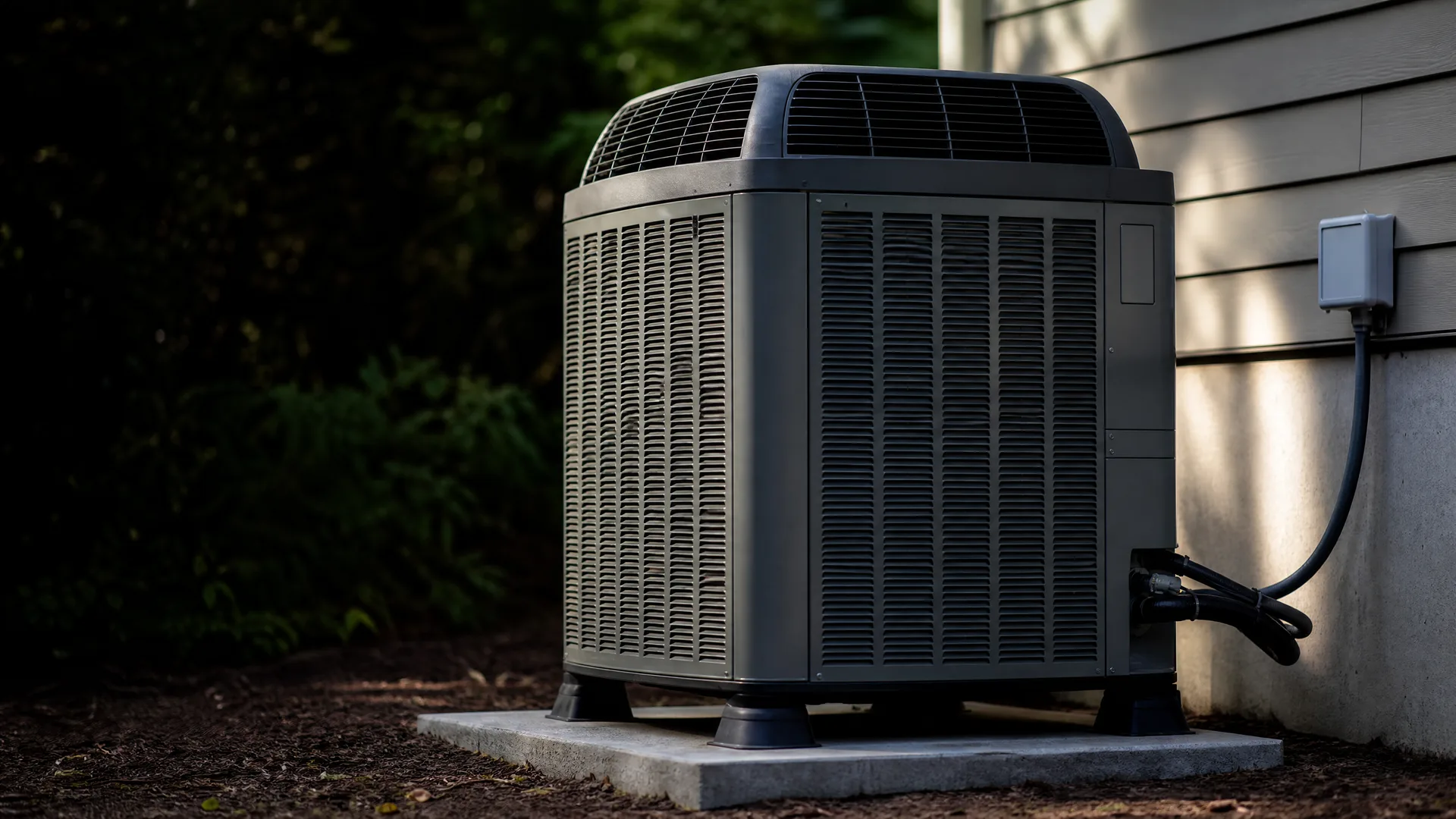
A gray outdoor air conditioner or heat pump unit on a concrete pad beside a house with horizontal lap siding, with conduit and refrigerant lines running up the wall and green shrubs and mulch at left.

Running the way it should

This is a heat pump doing its job, set on a solid pad with the lines running clean into the house. Air out of the vents matches the thermostat. The outdoor fan turns, the coil stays clear, and the system cycles off once the house reaches temperature.


An outdoor air conditioning condenser unit sits on a concrete pad beside a white horizontal-siding house, with a gray electrical disconnect box and insulated refrigerant lines on the wall, mulch and green shrubs to the right, and a concrete slab in the foreground.

Struggling in the heat

This unit is older and weathered, and that wear shows in how it runs. The outdoor fan may labor, the coil may be coated with dirt or ice, and the conduit and lines into the house are more exposed to years of Marshall County weather. A system like this is more likely to fall behind once the humidity sets in.

What does Marshall County weather ask of your heat pump?

  • Winter nights average 14°F

    Overnight lows near 14°F mean your heat pump leans on backup heat most winter nights, and that backup heat doesn't fix a reversing valve that's already failing.

  • Heat runs October through May

    Eight months of heating calls means the reversing valve switches directions constantly, and that's usually the part that sticks when a heat pump quits cooling in summer.

  • Cooling runs June through August

    Three months of cooling isn't long, but a muggy Marshalltown summer with no cold air is a stretch no one in the house can wait out.

NOAA nClimDiv 1991-2020

A gray outdoor condenser unit on a concrete pad beside a light-colored lap-sided house, with a wall-mounted disconnect box and conduit, dark mulch, and a green shrub to the right.

Clear fins, clean lines

The outdoor unit sits on its pad with open fins and a clear path for air to move through the coil. The disconnect box and lines are intact, nothing blocking airflow in or out. A unit like this can move the heat it's built to move.

A dirty outdoor air conditioner condenser unit with debris on its coil grille, sitting on a concrete pad beside a light-colored horizontal siding wall, with bare dirt ground in front and a shrub at right.

Grille packed with debris

Dirt, grass clippings and plant matter have built up across the grille until the fins behind it barely show. Airflow through a coil this clogged drops off, and the system has to work harder to move the same amount of heat. Left this way, it adds strain to parts already doing the job.

A woman stands smiling in the open front doorway of a single-story brick house while a man in a dark cap and long-sleeved shirt, seen from behind out of focus, faces her from the walkway.

What a warm house costs you in July

A heat pump stuck on warm air doesn't just make the living room uncomfortable. It runs the compressor the whole time it's trying to hit a setpoint it can't reach, and that compressor doesn't get a break until someone shuts the thermostat off or shuts it down for good. If there's a slow refrigerant leak behind it, every day running low charge adds wear to a compressor that's expensive to replace on its own. Humidity climbs too, since a system that isn't cooling right isn't pulling moisture out of the air either, and a sticky house at night is its own kind of hard to sleep through.

A contractor who works heat pumps in Marshall County through the summer has likely seen this exact complaint more than once this week. They'll know what questions to ask before they even get to your door, what part on your model tends to go first, and whether the fix is quick or something that needs ordering. Getting matched with one contractor means one visit, one person who already has a read on the problem, not a string of callbacks while you wait in a warm house.

Interior corner with sheer white curtains at a window, a brown upholstered sofa in the foreground, and a wooden multi-drawer cabinet holding a round ceramic vase with leafy branches.
  1. The reversing valve fails to switch the refrigerant flow direction.

  2. The outdoor coil keeps acting like a heating coil instead of cooling.

  3. Refrigerant comes back to the indoor coil warm, not cold.

  4. The indoor coil blows warm air through your vents.

An older woman with gray hair in a patterned knit sweater smiles while looking to the side in a dimly lit kitchen, with a round loaf of bread on a wooden counter in the foreground and a lit oil lamp and potted plant on a windowsill behind her.
A woman with hair in a bun sits on a couch holding a sleeping child, both wrapped in a chunky knit blanket, in a dimly lit room with a lamp and bookshelves behind.

Get matched with a heat pump pro in Marshall County

A heat pump that won't switch over to cold air in the middle of a Marshalltown summer usually points to one of a few things: a reversing valve stuck in heating mode, a refrigerant leak slowly draining the charge, or an outdoor coil too dirty to move heat out of the house. None of these get better with time, and a compressor running flat out against a setpoint it can't reach is wearing itself down with every hour it stays that way. Sorting out which one you've got takes someone who works on heat pumps in this area every season, not just furnaces in the winter, since the reversing valve and the cooling cycle are the parts that go unused eight months a year here and fail quietly. A local contractor who knows this equipment can look at your unit directly instead of guessing over the phone. Your request goes to one contractor who services Marshall County, so you're dealing with a single call back, not a string of them while your house sits warm.

How the reversing valve actually fails

  • A reversing valve has a small solenoid coil that shifts a slide inside the valve body to change flow direction.
  • If that solenoid loses power or sticks, the slide stays put and the system keeps running in heating mode no matter what the thermostat calls for.
  • A failed run capacitor can keep the outdoor fan from spinning, so the coil overheats and the whole unit short cycles.
  • Low refrigerant charge shows up as frost on the outdoor coil even in July heat, a sign a contractor checks before adding any refrigerant.
  • A contractor can test reversing valve voltage with a meter in minutes, which tells them whether the valve or its solenoid is the problem.
  • Outdoor coils packed with cottonwood or grass clippings block airflow the same way a dirty filter blocks air moving through the ducts inside.

The reversing valve is what lets one heat pump heat your house in January and cool it in July. Inside the valve body is a slide, and a small solenoid coil sits on top of it. When the thermostat calls for cooling, that solenoid gets power and pulls the slide over, which changes which direction refrigerant flows through the system. If the solenoid burns out or the slide gets stuck from corrosion or debris, nothing moves. The system keeps running the only way it knows how, which is heating mode, no matter what you set the thermostat to.

That's one failure. There are others that look similar from inside the house but come from a different part entirely. A run capacitor that's gone weak won't give the outdoor fan motor the jolt it needs to start spinning, and without that fan moving air across the coil, the unit can overheat and shut itself off, then try again a few minutes later. Low refrigerant shows up differently still, as frost forming on the outdoor coil even when it's ninety degrees outside, which is the opposite of what you'd expect and exactly why a contractor checks for a leak before topping off the charge. And an outdoor coil packed with cottonwood fluff or grass clippings chokes airflow the same way a dirty filter chokes the air moving through your ducts, just on the outside unit instead of the inside one. A meter on the reversing valve's solenoid tells a contractor in minutes which of these is actually going on.

An outdoor air conditioning or heat pump condenser unit on a concrete pad beside a house with horizontal vinyl siding, a gray electrical disconnect box and conduit on the wall, and a concrete walkway in the foreground.
Before you get your heat pump repair
A dark gray outdoor condenser unit on a concrete pad beside a house with beige horizontal siding, with a gray electrical disconnect box and conduit on the wall, mulch beds, a hosta plant, a shrub, and mowed lawn in front.
After you get your heat pump repair
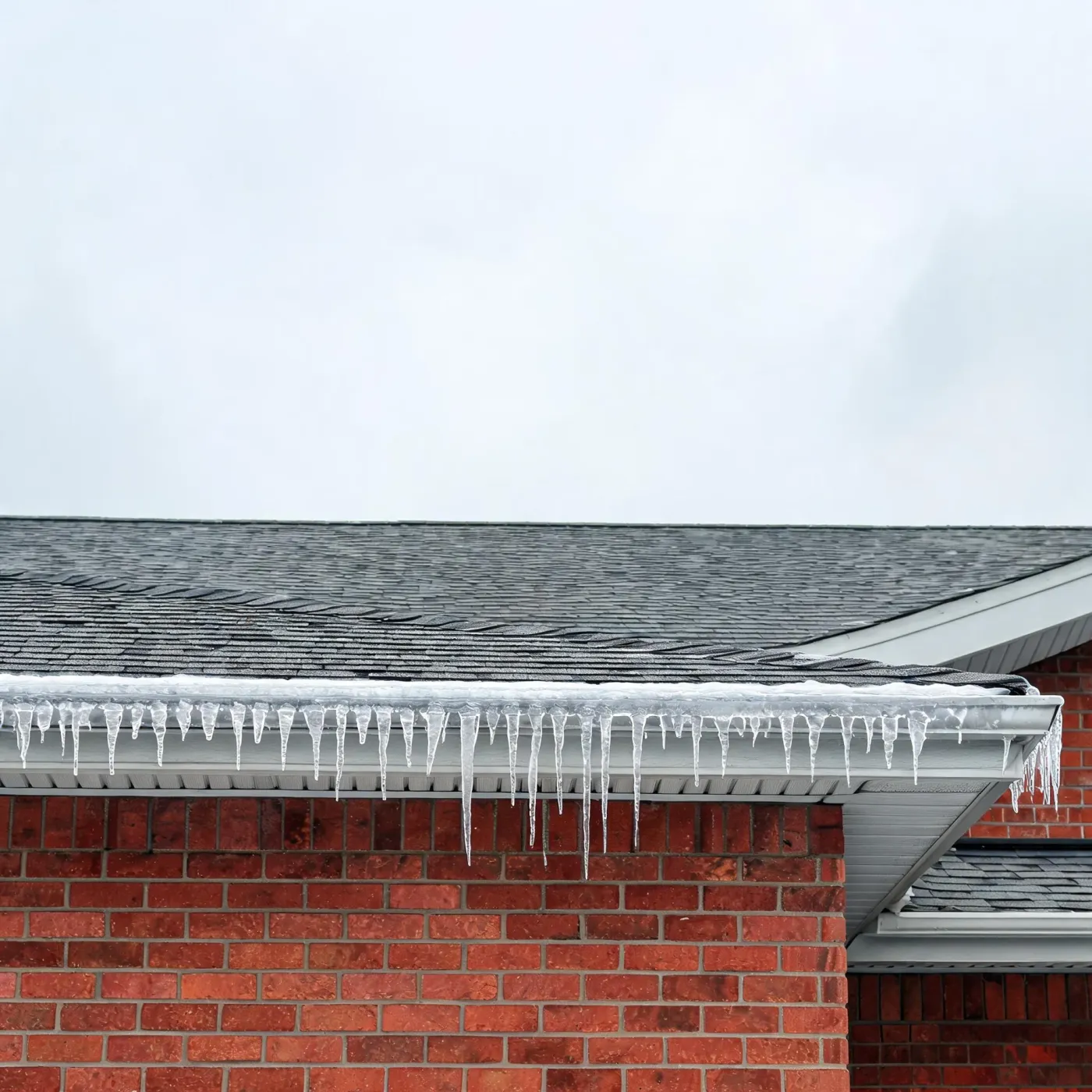
Icicles hanging from a white gutter along the edge of a gray shingled roof on a red brick house, under an overcast sky.

Winter nights here average 14°F, and that cold is what wears on the reversing valve long before summer shows it. Every time that valve switches your system from heat back to cool, or the other way, it's moving a slide that's been sitting at the far end of its travel for months in the cold. Metal that cold doesn't move as easily, and a valve that gets forced through that switch winter after winter is more likely to stick the next time it's asked to change direction. So when your heat pump won't give you cold air in July, the groundwork for that failure was likely laid on one of those 14°F nights back in January.

NOAA nClimDiv 1991-2020

A heat pump blowing warm air in a Marshalltown summer almost always traces back to the reversing valve, a refrigerant leak, or a coil that's lost its airflow, and none of those get better on their own. Someone who works on these systems all year in Marshall County has seen this exact problem plenty of times, through winters that strain the reversing valve and summers that finally show the damage. You'll get matched with one licensed local contractor, not a handful of companies competing for your callback, and that contractor can look at the outdoor unit, check the charge, and tell you straight what's failing. Until then, the house stays sticky and the compressor keeps working harder for less cooling. The fix usually isn't complicated once someone's hands are on the unit. Getting the right person out to look at it is the part that moves this forward.

An outdoor air conditioning or heat pump condenser unit on a concrete pad beside a house with horizontal siding, with a wall-mounted disconnect box and refrigerant lines, and dark shrubs to the left.

Find a heat pump repair pro in Marshall County

RepairHeat PumpMarshall County, IA
Step 1 of 2

What ZIP code is the job in?