



A gray tabby cat sleeps curled up on a dark gray bed in a dimly lit modern bedroom with warm ceiling cove lighting and a wall-mounted air conditioning unit.

Mini Split Installation in Council Bluffs, IA

Tell us about the job

Takes about a minute. No obligation.

New system or replacementMini-splitPottawattamie County, IA
Step 1 of 2

What ZIP code is the job in?

Gas heats most homes in Pottawattamie County, about seven in ten. A mini split doesn't replace that furnace, it works alongside it. Most installs here are for a room the furnace and ducts don't reach well, or for cooling in a house that never had central air. The mini split handles that one space on its own thermostat, year round if you want it to. If your home is one of the fifth that already runs on electric heat, it can carry more of the load, but the furnace homes are where most of this work happens.

8 months
October through May, your system heats
4 months
June through September, it cools
16°F
the average winter night it heats against
84°F
the average summer afternoon it cools against
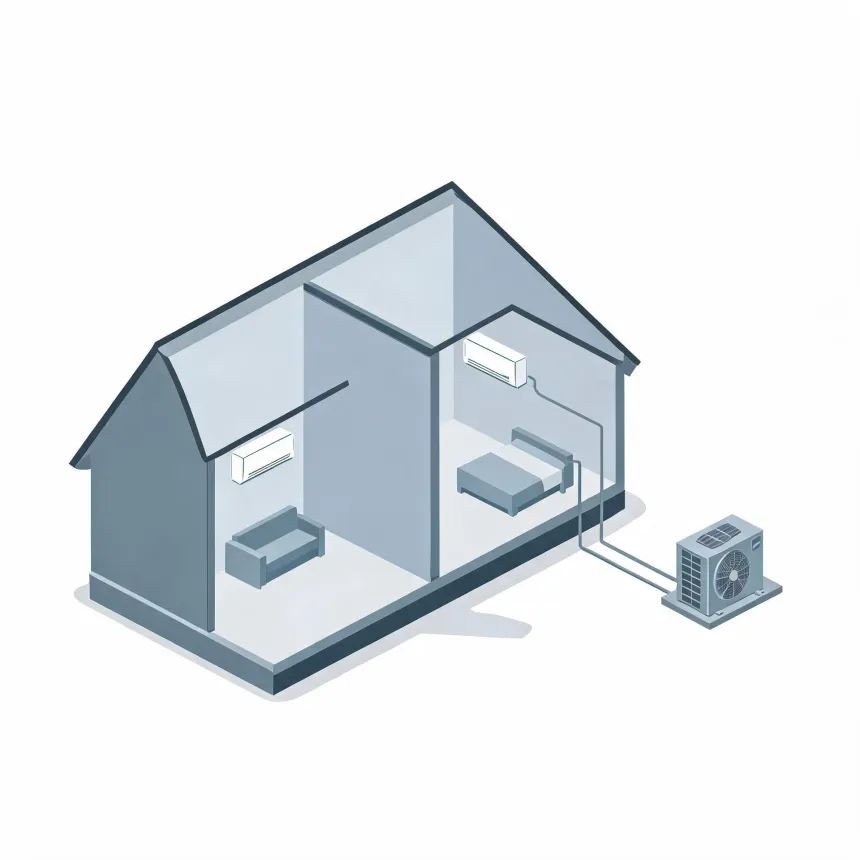
Isometric grey illustration of a cutaway house showing two rooms with wall-mounted indoor air conditioning units connected by lines to an outdoor condenser unit beside the building.
Your system heats October through May and cools June through September.

NOAA nClimDiv, 1991–2020 normals

Half the homes in Pottawattamie County were built in 1967 or earlier.

A mini split going into a house that old has to work with the walls and the room it has, not a layout built for it.

Four months of cooling, nothing extreme, a standard mini split does the job

Cooling runs June through September
Summer afternoons average 84°F
56 damaging wind events from 2015 to 2024

A mini split is a straightforward piece of equipment. One outdoor unit, one or more indoor heads, a line set between them. Nothing about Pottawattamie County asks it to be more than that. Pick the size that matches the room, get the installation right, and it runs the way it's built to run. Severe weather here is mostly a power question, not an equipment one. If a storm knocks power out, the mini split stops like everything else in the house and starts again on its own once power is back. That's a reason to get the installation right the first time, not a reason to size up.

Cheap power here means fit matters more than efficiency rating

Electricity here runs 13.4 cents a kilowatt-hour, below the national average. A high-efficiency mini split will still cost less to run than one that's undersized or poorly matched to the room, but it won't pay for itself the way it might somewhere with higher rates. What matters more is getting the unit sized to the space and the installation done right.

Find a contractor
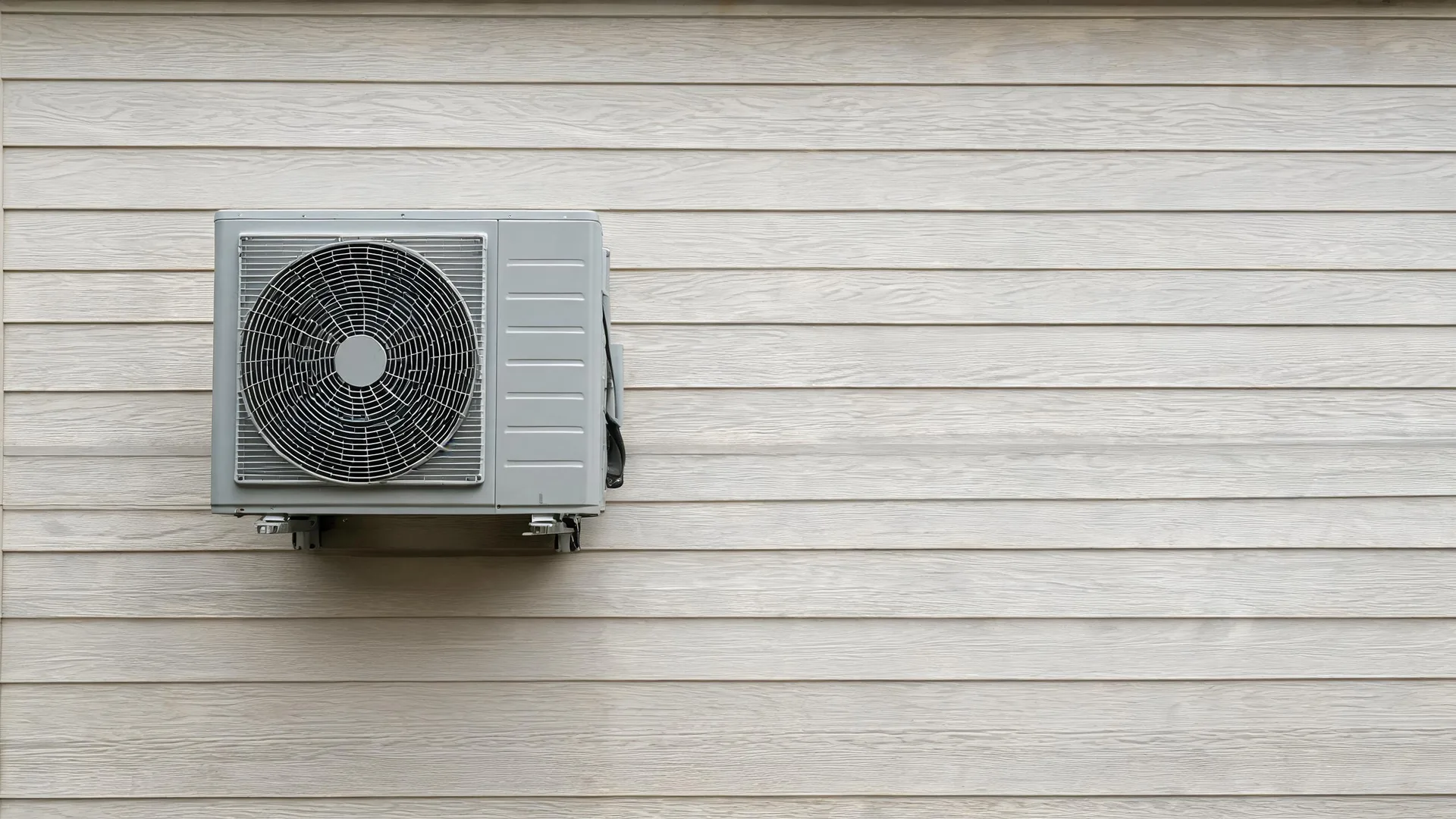
A white mini-split air conditioner outdoor condenser unit mounted on metal brackets against a beige stucco exterior wall, with a blue sky and scattered clouds in the background.

Install before June and it's ready when the heat is

Cooling here runs June through September, about four months. Installing before June means the unit gets sized, placed and tested before the first hot stretch, not during it. The outdoor unit needs the right spot. The line set has to be routed through the wall cleanly. The charge and airflow need a tech who can take the time to get them right. All of that goes better without a heat wave pushing the schedule.

Ask what size they're putting in, and why

A mini split is sized to the room, not guessed at. A contractor should walk the space, check the windows and the ceiling height, and tell you the number they landed on and how they got there. One that's too big cools the room fast then shuts off before it pulls the moisture out, leaving the air clammy. One that's too small runs constantly and never quite catches up. If the answer is a flat number with no mention of the room itself, keep asking.
Ask who services it once it's in

The indoor head has a filter that needs regular cleaning, and the outdoor unit needs clear space around it to breathe. Beyond that, a mini split can hold a refrigerant charge for years without trouble if it was charged right at installation. Ask who you call if the line set develops a leak or the head stops responding to the thermostat. The company that installs it should be the one that stands behind the work, not a separate number you have to track down later.

The efficiency number on a mini split's label tells you how much heat it moves for the power it uses. A higher rating means it does more work per unit of electricity, nothing more than that. It isn't a measure of how cold it can get a room or how fast. Units with the same rating can still feel different in the same space if one is sized wrong for it. The rating is worth comparing when you're choosing between models that would otherwise suit the room equally well. It's one factor to weigh, not the one that decides whether the installation is right.

Installation starts with a walk-through, not drilling. The tech looks at where the indoor head will go, where the outdoor unit will sit, and the shortest clean path between them through the wall. That path matters. Every bend in the line set is a spot refrigerant has to move through, and a straight run performs better than one with turns. Once the spot is marked, the wall gets a hole bored for the line set, the drain line and the power cable to pass through together. The outdoor unit gets mounted and leveled. The indoor head gets hung on its bracket. The lines get connected and sealed at both ends. Then the lines get vacuumed to pull out air and moisture before the system is charged, because any moisture left behind causes problems later. Last comes the test. The tech runs it in both modes, checks that the drain line actually drains, and confirms the head answers to the thermostat the way it should.