A row of dark-sided single-story houses among large deciduous trees, with a trimmed hedge in the foreground and a mown lawn crossed by a paved path.

Mini Split Installation in Marshalltown, IA

Tell us about the job

Takes about a minute. No obligation.

New system or replacementMini-splitMarshall County, IA
Step 1 of 2

What ZIP code is the job in?

Gas heats most of this county

Utility gas heats 57.8% of occupied homes in Marshall County. Electricity and LP gas make up most of the rest. A mini split doesn't replace a gas furnace. It works alongside one, handling cooling and the mild days in spring and fall when the furnace would be overkill.

What this means for the install

If your home heats with gas, a mini split goes in as a second system. The installer sizes it for the rooms it covers, not the whole house. The furnace stays in place and keeps handling the cold months.

8 months
October through May, your system heats
3 months
June through August, it cools
14°F
the average winter night it heats against
82°F
the average summer afternoon it cools against
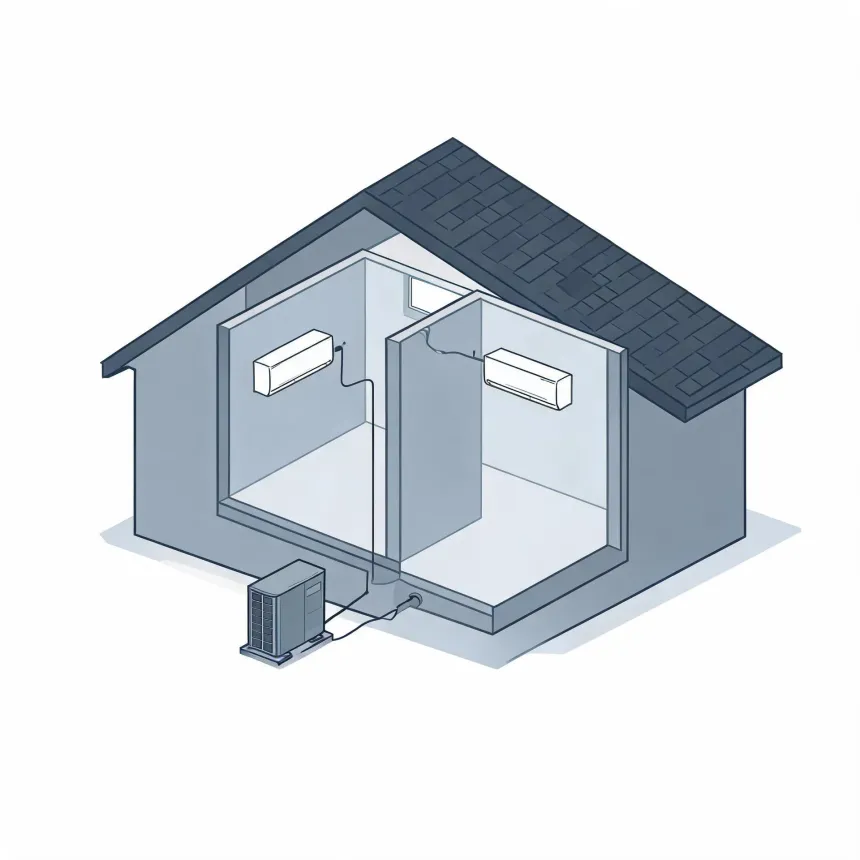
Isometric line illustration of a cutaway house with two rooms, each with a wall-mounted indoor air conditioning unit connected by lines to an outdoor condenser unit on the ground outside.
Your system heats October through May and cools June through August.

NOAA nClimDiv, 1991–2020 normals

Summers here run about three months, June through August, with afternoon highs averaging 82°F.

A standard mini split handles that fine. There's no reason to size up or pay for more cooling capacity than this county asks for.

Half the homes here were built before the duct system a new install has to work with

Half the homes here were built by 1958
Cooling runs June through August
Summer afternoons average 82°F

Marshall County is in zone 5A, a cool zone where heating is the bigger load. Any mini split installed here still has to meet the federal minimum for split-system heat pumps. That's 14.3 SEER2 for cooling and 7.5 HSPF2 for heating, and it applies to units built from 2023 on. Ductless systems get no lower bar. The equipment has to clear that floor before an installer even looks at your rooms. A federal tax credit is available for qualifying heat pump installations, and it's worth checking the system you're considering against it.

Have it installed before June

Cooling in Marshall County runs June through August. Putting the mini split in before June means it's tested and ready when the first hot days hit, not scheduled around them.

Find a contractor
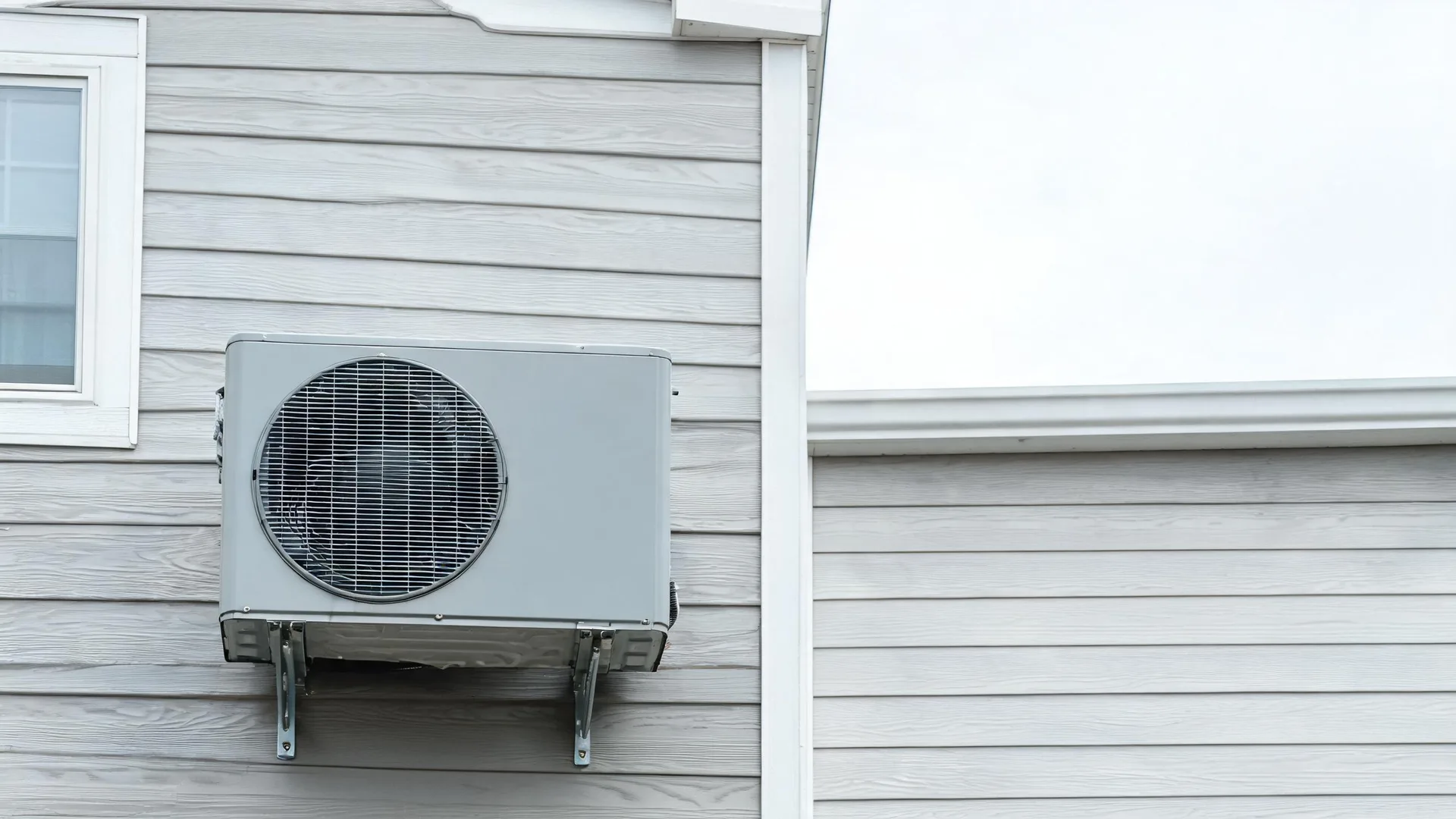
A white mini-split air conditioner outdoor condenser unit mounted on metal brackets against a beige stucco exterior wall, with a blue sky and scattered clouds in the background.

No ducts to work around

A mini split doesn't connect to the ductwork at all, so the age of the duct system doesn't limit where it can go. Each indoor head mounts on a wall or ceiling and runs on its own line set back to the outdoor unit. That's worth knowing if you've already ruled rooms out because the ducts don't reach them or don't move enough air. An installer can place heads based on the rooms you want covered, not on what the existing duct layout allows.

How many zones, and who controls each one

Every indoor head is its own zone with its own thermostat. One system might cover just the living room, another might run several heads off a single outdoor unit for the whole main floor. More zones means more comfort control, but also more indoor heads to clean and service. Ask how many zones the quote covers and whether that matches the rooms you actually want conditioned.

What happens if one head needs service

On a multi-zone system, the indoor heads share one outdoor compressor. If that outdoor unit fails, every zone goes down at once. A problem with a single indoor head, a clogged drain line or a failed fan motor, usually only takes out that one room. Ask whether the system quoted is one outdoor unit running several heads, or separate systems, since that changes what a single breakdown costs you in coverage.

The SEER2 and HSPF2 numbers on the label tell you how much heat a mini split moves for the electricity it uses, one rating for cooling and one for heating. A higher number means it moves more heat per unit of power, nothing about how big a space it can cover. That part comes from sizing the heads to the rooms, not from the rating. A pair of systems with the same label can still feel different to run if one is sized wrong for the space it's in. The rating is also measured under set lab conditions, so it's a way to compare one unit against another, not a promise of what you'll see on your own power bill. Ask what the rated numbers are for the specific unit in your quote, not just the model line, since efficiency can vary within the same series.

Installation starts with the outdoor unit and where the line set will run between it and each indoor head. The installer marks where the line passes through the wall, usually behind where the indoor head will hang, then runs the refrigerant lines, power, and drain line through that opening. The outdoor unit gets set on a pad or mounted bracket with clearance on all sides so it can draw air through the coil. Once both ends are in place, the lines get connected, and the system is evacuated with a vacuum pump to pull out air and moisture before any refrigerant moves through it. That vacuum step matters more than it looks. Moisture or air left in the lines causes problems later that are a lot harder to trace than they are to prevent up front. After that, the installer charges the system, powers it on, and checks that every zone is calling for heat or cooling correctly before calling the job done.