

An outdoor air conditioner condenser unit on a concrete pad beside a house with horizontal lap siding, with a wall-mounted disconnect box, conduit and refrigerant lines, gravel and plants nearby.

It's off your list after this

When to replace an AC unit in Marshalltown, IA

An air conditioner that's struggling by July in Marshalltown doesn't get easier to live with in August. This page gets into the signs that mean repair won't hold, the age where replacement starts making more sense, and what to weigh before you decide. Once you've got that, send the form and skip the part where you're the one calling around for someone to look at it.

Let a pro reach out

Most central air conditioners last 12 to 15 years, and by the end of that stretch, a Marshalltown summer will find every weakness one has. If your unit is in that range and the compressor is struggling or it's low on refrigerant, replacing it usually makes more sense than repairing it again. The humidity here is the real test. A unit that's losing capacity won't just run longer, it'll leave the house feeling damp even when the thermostat says it hit the set temperature. That's a sign the system can't keep up anymore, not just a filter or a thermostat problem. If the unit is under 10 years old and the repair is minor, fixing it is usually the better call. Past that age, with a compressor or coil failure, you're often paying for a repair that buys a season or two before something else goes.

A dim bedroom with a bed in the foreground, a radiator against the wall, and a box fan set in a sunlit window with sheer curtains and green trees outside.

It's almost nine and still bright outside, that long June evening light that makes the heat feel like it will never let up. The box fan in the window is just pushing the warm air around. Upstairs holds the heat worse than the rest of the house, and tonight it's not moving. You've kicked the sheet to the floor. Your phone says it's 84 in the room. Downstairs the AC is running, you can hear it kick on through the floor vents, but whatever cool air it's making isn't finding its way up here, or isn't coming fast enough to matter before morning.

Repair It or Replace It

Repair

  • A single part failure, like a failed capacitor or a stuck contactor, is a straightforward fix on a unit that's otherwise sound.
  • If the unit is under 10 years old and this is its first real breakdown, repair usually gets you through the rest of the summer and beyond.
  • A low refrigerant charge from a small leak can often be patched and recharged without replacing the whole system.
  • If the compressor and coil are both still in good shape, there's no reason to replace parts that aren't failing.
  • A repair bill that's a fraction of what a new system would cost is worth paying, especially on a unit that's been reliable.

Replace

  • Once the compressor itself is failing, that's the heart of the system, and replacing just the compressor rarely makes sense on an older unit.
  • A unit past 12 to 15 years that needs a major repair is a bad bet against a Marshalltown summer that isn't going to get milder.
  • Refrigerant leaks that keep coming back point to a coil wearing out, not a one-time fix.
  • If the unit has needed a service call every summer for the past few years, the pattern matters more than any one repair.
  • A new unit runs on a current SEER2 rating, which matters here given how much power costs in Marshall County.
  • Replacing before the unit fails outright means you're not without air conditioning during the week it's hardest to live without.
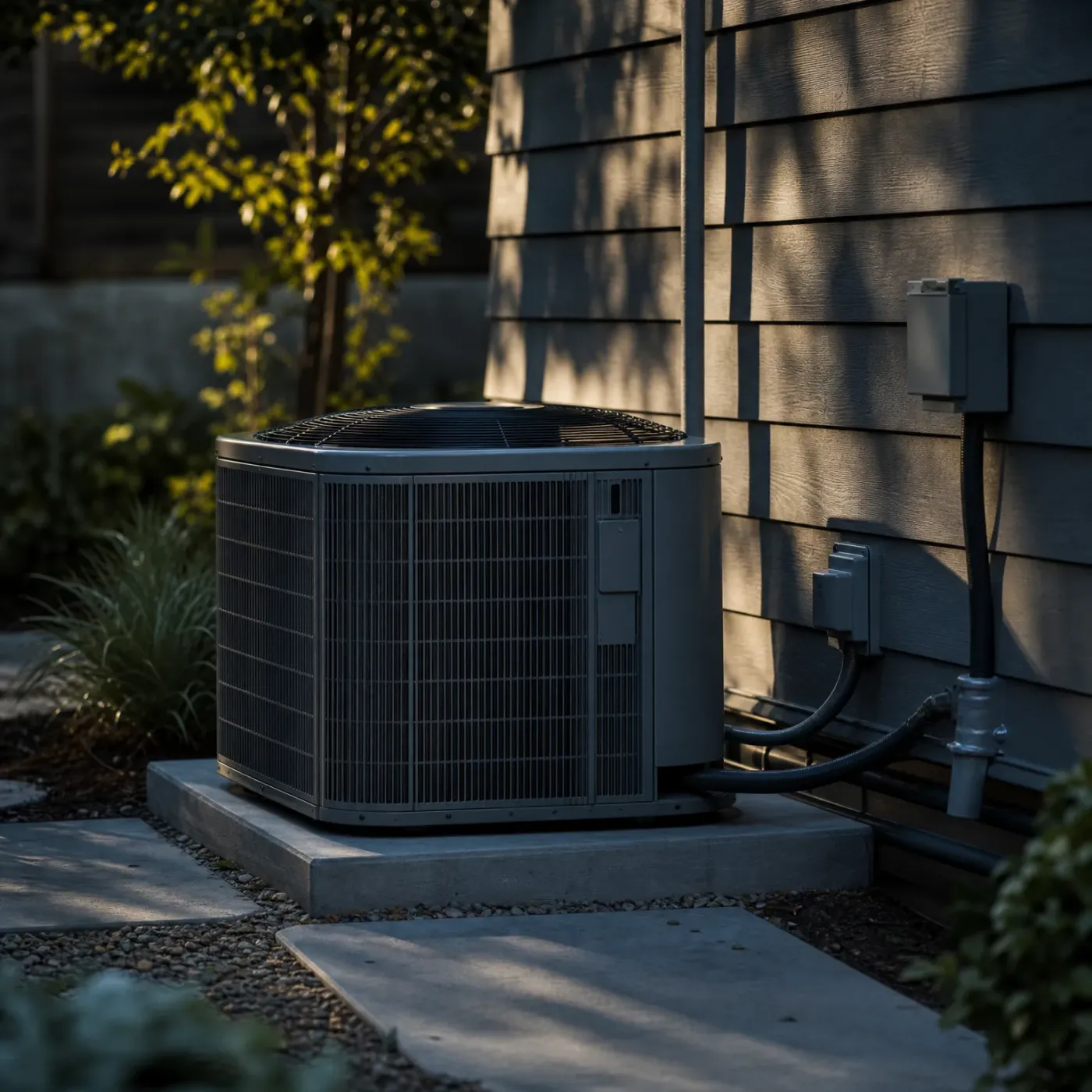
A gray outdoor air conditioner condenser unit on a concrete pad beside a house with horizontal lap siding, with a wall-mounted disconnect box and conduit at left and a green shrub and mulch bed at right.

Running the way it should

This is a unit doing its job: the disconnect box wired in clean, the pad level, nothing straining. If yours looks like this and keeps the house cool through a Marshalltown summer without short cycling or warm spots, there's no reason to touch it yet.


An outdoor air conditioner condenser unit on a concrete pad beside a house with horizontal lap siding, with a conduit running to a gray electrical disconnect box on the wall.

Showing its age

Same setup, same wall, but something's off. Maybe it's the noise it makes on startup, or the ice on the line, or the fact that it ran all last August and still couldn't keep up. A unit that looks fine but performs like this is telling you where it stands.

A man in a green sweater reclines in an armchair with his eyes closed and a slight smile, beside a window with plants, a small table holding a mug and folded newspaper, and bookshelves behind him.
A man in a gray sweater leans back with closed eyes in a brown leather armchair beside a wooden side table holding a dark mug and a folded newspaper, with bookshelves and a window seat behind him.
A man with greying hair and a dark sweater leans back on an armchair with his eyes closed and a slight smile, in a living room with a bookshelf, plant, folded newspaper and mug on a wooden table.
A man in a gray sweater reclines in a brown leather armchair with his eyes closed, beside a wooden side table holding a mug, a folded newspaper and a potted plant, with a bookshelf and sunlit window behind him.

Stop chasing an air conditioner pro

A dying AC doesn't wait for a convenient week. It usually quits on the hottest stretch of the summer, when every contractor in Marshall County is already booked solid and the phone just rings through to voicemail. Normally that means working your way down a list: calling around, waiting on callbacks, explaining the same thing about the compressor or the age of the unit to three or four different people, then sitting with quotes that don't line up with each other. Send the request here and that part is done. It goes to one contractor who installs AC units in Marshalltown, not a handful competing for your number, and you're not the one chasing anybody down. With a system on its way out, the house only gets harder to live in the longer it waits. Getting someone lined up now is what keeps a bad week from turning into a bad month.

What a SEER2 rating changes

A new central air conditioner sold today carries a SEER2 rating, a measure of how much cooling it gets out of the electricity it uses. An old unit from the early 2000s is running at a fraction of that efficiency. With power as expensive as it is in Marshall County, that gap shows up on the bill every month from May through September, not just on the hottest days. It's one of the few numbers you can hold a quote up against and check for yourself.

What refrigerant leaks tell you

Refrigerant doesn't get used up the way fuel does. A unit low on it has a leak somewhere in the coil or the line set, and topping it off only buys a little time before it runs low again. Older units also used R-22, which is no longer produced, so recharging one gets harder and pricier to source each year. A compressor working against a persistent leak runs hotter and wears faster, which is usually what ends up failing next.

An outdoor air conditioning condenser unit on a concrete pad beside a house with horizontal siding and a concrete foundation, with dry brown leaves on the ground to either side.
Before you get your air conditioner installation
A gray outdoor air conditioning condenser unit on a concrete pad beside a house with horizontal lap siding, with a wall-mounted disconnect box and conduit, and shrubs to the left.
After you get your air conditioner installation

Age 12 to 15

A unit in this range that's starting to struggle is nearing the end most central air conditioners reach. Replacing it now means skipping another summer of wondering if it'll hold.

Hand it over

One bad part

A failed capacitor or stuck contactor on a unit that's otherwise under 10 years old is a repair, not a reason to replace it.

Hand it over
A gray-haired bearded man in a navy quarter-zip sweater reclines on a couch with his eyes closed, beside a sunlit window and indoor plants.
A woman with shoulder-length brown hair and a cream knit sweater sits with her eyes closed and a slight smile in a chair beside a window showing orange autumn foliage, with a gray mug on a wooden table and a lit lamp in the background.
  1. Refrigerant stops absorbing heat as the compressor loses capacity

  2. The compressor works harder and draws more current each cycle

  3. Warm spots appear as airflow and cooling capacity fall off

  4. The unit short cycles trying to reach the thermostat setting

Cooling runs June through August

Three months isn't long, but it's three months where the heat doesn't let up, and your AC has to run close to flat out most afternoons to keep the house livable. That's a short, hard stretch to get through on a unit that's already struggling.

NOAA nClimDiv 1991-2020

An outdoor air conditioner condenser unit on a concrete pad beside a house with beige horizontal siding and a stone-veneer base, with refrigerant lines running to a gray wall-mounted electrical box, surrounded by dark mulch, a flowering shrub and an evergreen on the left.
This unit is doing its job quietly, cooling the house without strain while the shrubs around it get the regular care a working system doesn't interrupt.
An outdoor air conditioning condenser unit on a concrete pad beside a house with light vinyl siding, an electrical disconnect box and conduit on the wall, bare shrubs and mulch to the right, and a concrete walkway in the foreground.
This unit sits next to bare shrubs and a worn pad, the kind of setup where the next hot stretch finds whatever is already wrong with it.
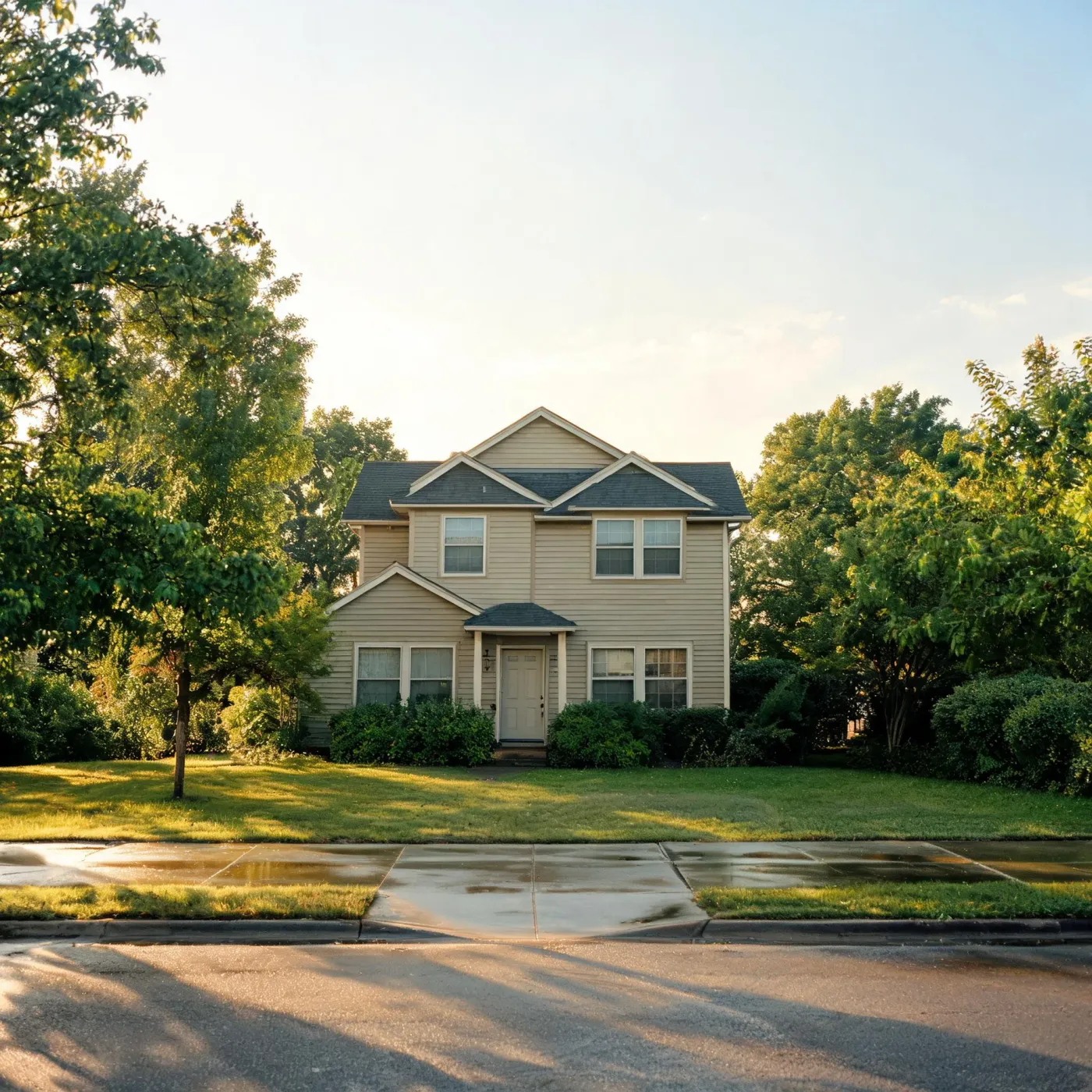
A two-story beige house with horizontal siding and a gray shingled roof, set behind a green lawn with shrubs and large leafy trees, seen from across a wet sidewalk and street in low sunlight.

Marshall County summers run a dew point of 63°F across June, July and August, according to NOAA climate data. That's thick air, the kind where sweat doesn't dry and a box fan just moves the problem around. Your air conditioner has to pull that moisture out of the air before the house actually feels cooler, not just cycle cold air through it. On a unit that's already low on refrigerant or working with a weak compressor, that extra load shows up fast: longer run times, a house that stays clammy even with the thermostat set low, and rooms upstairs that never quite catch up.

NASA POWER T2MDEW

A kitchen interior with a wooden table in the foreground holding a closed laptop, a ceramic mug and a potted plant, with a wood-fronted counter, sink with black faucet, bowl of green fruit, vase of branches and a window showing a sunset sky behind.

So when do you replace it

A unit in the 12 to 15 year range that's struggling, low on refrigerant, or asking for a compressor repair is telling you the next hot stretch will find it again. A unit under 10 years old with one bad part, a capacitor or a contactor, is usually worth fixing. Everything in between comes down to what the repair costs against what you'd be buying, and how much more summer you want to gamble on a system that's already showing its age.

Once you know where your unit falls, the next step is getting someone out to look at it, and that's usually the part that eats the most time. Calling around Marshall County, explaining the same symptoms to three different companies, waiting on quotes that come back on different days in different formats. Send the form instead and that legwork is off your plate. Someone qualified gets in touch, and you're back to deciding instead of searching.

A gray upholstered sofa with a matching cushion sits beside a potted plant and a wooden table holding a small green plant in a stone pot, near a curtained window.
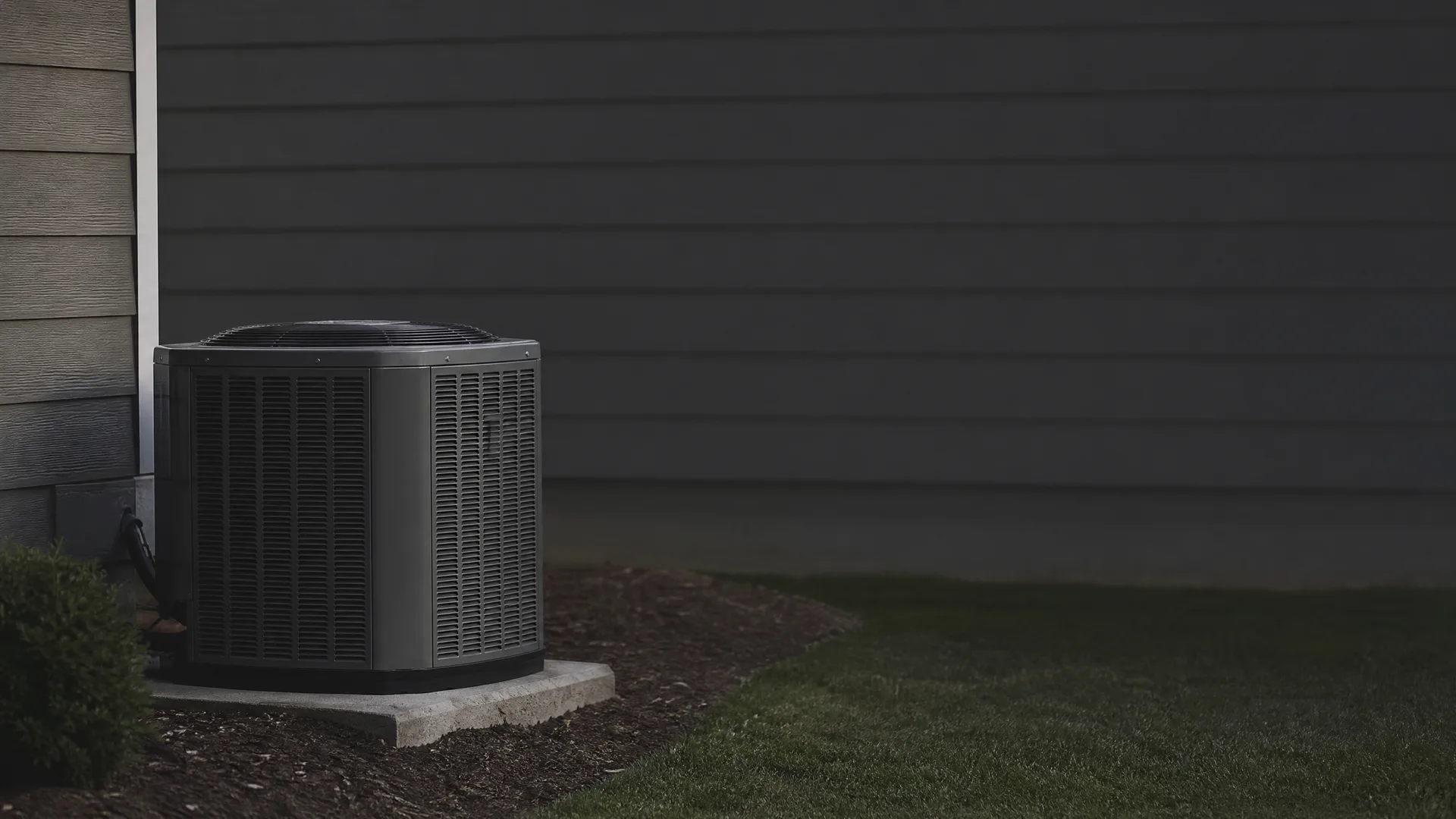
An outdoor air conditioning condenser unit on a concrete pad beside a house with dark horizontal siding, surrounded by mulch, a small shrub, and lawn.

Finding a pro stops being your job

Describe the project once instead of to every installer.

New system or replacementCentral ACMarshall County, IA
Step 1 of 2

What ZIP code is the job in?