

Why your heat pump blows cold air in an Iowa winter

RepairHeat PumpIowa
Step 1 of 2

What ZIP code is the job in?

Why is my heat pump blowing cold air in the winter?

Cold air coming out of the vents when it's near freezing outside feels like something is badly wrong, especially when you're used to catching problems early. Before you assume the unit is broken, it helps to know what a heat pump is actually doing in an Iowa winter, because some of what feels wrong is normal, and some of it isn't.

Some cold air is normal, but air that stays cold means the heat pump isn't keeping up

A heat pump moves heat from the outside air into your house instead of burning fuel to make it. That outside air is thinner on heat when it's in the 20s or teens, so the air coming out of your vents is naturally cooler than what a gas furnace puts out, even when the system is working fine. That's normal and it's by design. What's not normal is air that stays cold for long stretches, a unit that runs constantly without warming the house, or ice building up on the outdoor unit that doesn't melt off. That points to a real problem, something low on refrigerant, a stuck reversing valve, or a defrost cycle that isn't completing, and it needs a look before the next cold snap.

A gray outdoor condenser unit on a concrete pad beside a house with gray lap siding, connected by conduit and refrigerant lines to a wall-mounted disconnect box, with a green shrub and mulch bed at left.

Normal defrost cycle

When frost builds up on the outdoor coil, the unit switches into defrost mode for a few minutes to clear it. During that time it blows cool air inside, then goes back to heating. This is routine on a cold Iowa morning and corrects itself.


An outdoor air conditioning or heat pump condenser unit on a concrete pad beside a house with horizontal vinyl siding, a gray electrical disconnect box and conduit on the wall, and a concrete walkway in the foreground.

Something else is wrong

If the air stays cold well past a few minutes, or the outdoor unit looks caked in ice or grime like this one, the heat pump isn't recovering on its own. That points to a refrigerant or control problem a contractor needs to look at.

Defrost Cycle or Something Wrong

Normal defrost cycle

  • Frost on the outdoor coil triggers defrost automatically, and the unit clears it in a few minutes before switching back to heat.
  • You'll feel cool air during this stretch because the system is pulled off heating to run the defrost, not because it quit.
  • It happens more often on cold, damp Iowa mornings when frost forms fast on the coil.
  • The outdoor fan may pause or the unit may hum differently during this cycle, and that's expected.
  • Once defrost ends, warm air returns within a few minutes without you doing anything.

Needs a repair call

  • Cold air that runs on and on, well past a few minutes, points to a stuck reversing valve or a defrost control board that isn't switching back.
  • If the outdoor unit is caked in ice rather than light frost, the defrost cycle isn't working as it should.
  • A thermostat set to emergency heat by mistake will blow air that never warms up, since that mode bypasses the heat pump entirely.
  • Warm air that never comes regardless of how long you wait usually means the compressor isn't running at all.
  • A refrigerant leak will show up as a heat pump that runs constantly but never gets the air past lukewarm.
  • If this is happening on more than one cold morning in a row, it's past what a normal defrost cycle explains.
A gray outdoor heat pump unit on a concrete pad beside a house with gray horizontal siding, with conduit and an electrical box on the wall and a shrub at left.

How the reversing valve works

A heat pump makes heat by reversing the flow of refrigerant through a valve, pulling warmth from the outside air even when it's cold and pushing it inside. If that valve sticks in the wrong position, the system keeps running but stays set to cooling mode. The outdoor fan and compressor are working, air is moving through your vents, and none of it is warm. This is a mechanical failure, not a cycle the system will correct on its own.

An outdoor air-source heat pump unit with a dark grille stands on a concrete pad beside a white wall and wood-clad facade, surrounded by gravel.

What the thermostat shows you

Most thermostats display a small snowflake or flame icon telling you which mode the system is actually running, separate from what you set it to. If you've asked for heat and the display still shows the cooling icon, or a fan icon with no flame, that's the system telling you the call for heat isn't reaching the compressor the right way. Checking that display takes a few seconds and tells you more than how the air feels at the vent.

What are you noticing with your own system

You've probably got a thermostat set to 70 and vents that feel closer to outside air. Maybe the outdoor unit is running nonstop instead of cycling. Maybe you hear it kick on and the air never warms up, even after twenty minutes. Some houses see ice building up on the outdoor unit and staying there instead of melting off. None of that is normal once you're past a quick defrost cycle. Left alone, a stuck reversing valve or a failing component means the house leans harder on backup heat or doesn't get warm at all, and in an Iowa cold snap that's not something to wait out.

A smiling man in a blue denim shirt over a white tee sits at a light stone kitchen counter with a grey mug and a bowl of oranges and bananas, with pendant lights and shelving behind him.
A smiling bearded man in a grey long-sleeved shirt sits at a kitchen counter with a dark mug, with a dining table, pendant light and glass doors onto greenery behind him.
A bearded man in a dark green knit sweater smiles and looks off to the side while standing at a kitchen counter with a white mug of coffee, with open shelving, a potted tree, and a dining table near large windows behind him.
A man with dark curly hair in a dark green sweater stands smiling and looking to the side in a kitchen with white cabinets, a potted plant, a stone countertop with a ceramic mug, and a dining area with framed art in the background.

Hand off the search today

Describe what your heat pump is doing once, in one form.

Sending the form costs nothing.

Auxiliary heat and what stops it working

  • Auxiliary heat is a backup heater, usually electric strips, that kicks in when the heat pump alone can't keep up on a cold Iowa day.
  • If the thermostat is stuck on "emergency heat" instead of "auxiliary" or "auto", the heat pump shuts off entirely and that backup heater carries the whole load.
  • A thermostat set to jump several degrees at once can call for aux heat even when the heat pump could have handled it on its own.
  • Low refrigerant charge keeps the heat pump running without ever reaching a comfortable output, so the air feels cool even though the system never stops.
  • A failed contactor or capacitor can keep the outdoor fan or compressor from starting, leaving only the indoor blower pushing unheated air through the vents.
  • Dirty outdoor coils trap frost and slow heat transfer, which can push the unit into defrost more often and stretch out the time you feel cool air.

Every heat pump in Iowa has a backup built in, because there are mornings the outdoor air is too cold for the heat pump alone to keep a house at 70. That backup is usually a set of electric strips in the indoor unit, and it's supposed to step in only when the heat pump needs the help. The thermostat decides when that happens. Set it to "emergency heat" and you take the heat pump out of the picture entirely, the strips do all the work, and the power bill shows it even though power here is cheap. Set it to "auto" or "aux" and the system is supposed to share the load the way it was designed to. A thermostat schedule that jumps from 65 to 70 in one move reads as a big demand, and the system can respond by leaning on the strips instead of letting the heat pump catch up on its own, which is often the quieter fix. None of that explains cool air that never warms up. That points somewhere else, usually refrigerant running low or a contactor or capacitor that won't let the outdoor fan or compressor start. In either case the indoor blower keeps moving air, it just isn't heated air, and that's worth a look before the strips end up carrying a job the heat pump should be doing.

Power costs 13.62 cents per kilowatt-hour statewide

At 13.62 cents a kilowatt-hour, those electric strips in auxiliary heat cost more to run than the heat pump itself. If yours is stuck on aux or emergency heat instead of cycling back to normal, you'll notice it on the next bill before you notice anything else.

EIA-861 2025 statewide residential average

Fix it yourself first

Check the thermostat mode before anything else. If it's set to emergency heat, switch it to auxiliary or auto and give the system a few minutes to respond. Look at the outdoor unit too. If the coil is buried in ice rather than a thin layer of frost, or snow is packed around the base, clear what you can reach without forcing anything. Replace the filter if it's been a few months. These take minutes and cost nothing, and they solve the problem often enough that it's worth ruling them out before you decide the unit itself has failed.

When it needs a contractor

If the thermostat is already set right and the outdoor unit is clear, something inside the system is likely the cause, and that's not something to open up yourself. A stuck reversing valve, a failed defrost sensor, or a refrigerant leak all produce the same cold air you're feeling, and each needs tools and training to diagnose correctly. Instead of calling around Iowa to find someone who works on heat pumps, checking reviews, and explaining the same symptoms more than once, you can send one form and let a licensed contractor get back to you.

An outdoor air conditioning condenser unit on a concrete pad beside a house with horizontal siding and a concrete foundation, with refrigerant lines running to a wall-mounted disconnect box and shrubs at left.
Before you get your heat pump repair
A gray outdoor air conditioner or heat pump unit on a concrete pad beside a house with horizontal lap siding, with conduit and refrigerant lines running up the wall and green shrubs and mulch at left.
After you get your heat pump repair
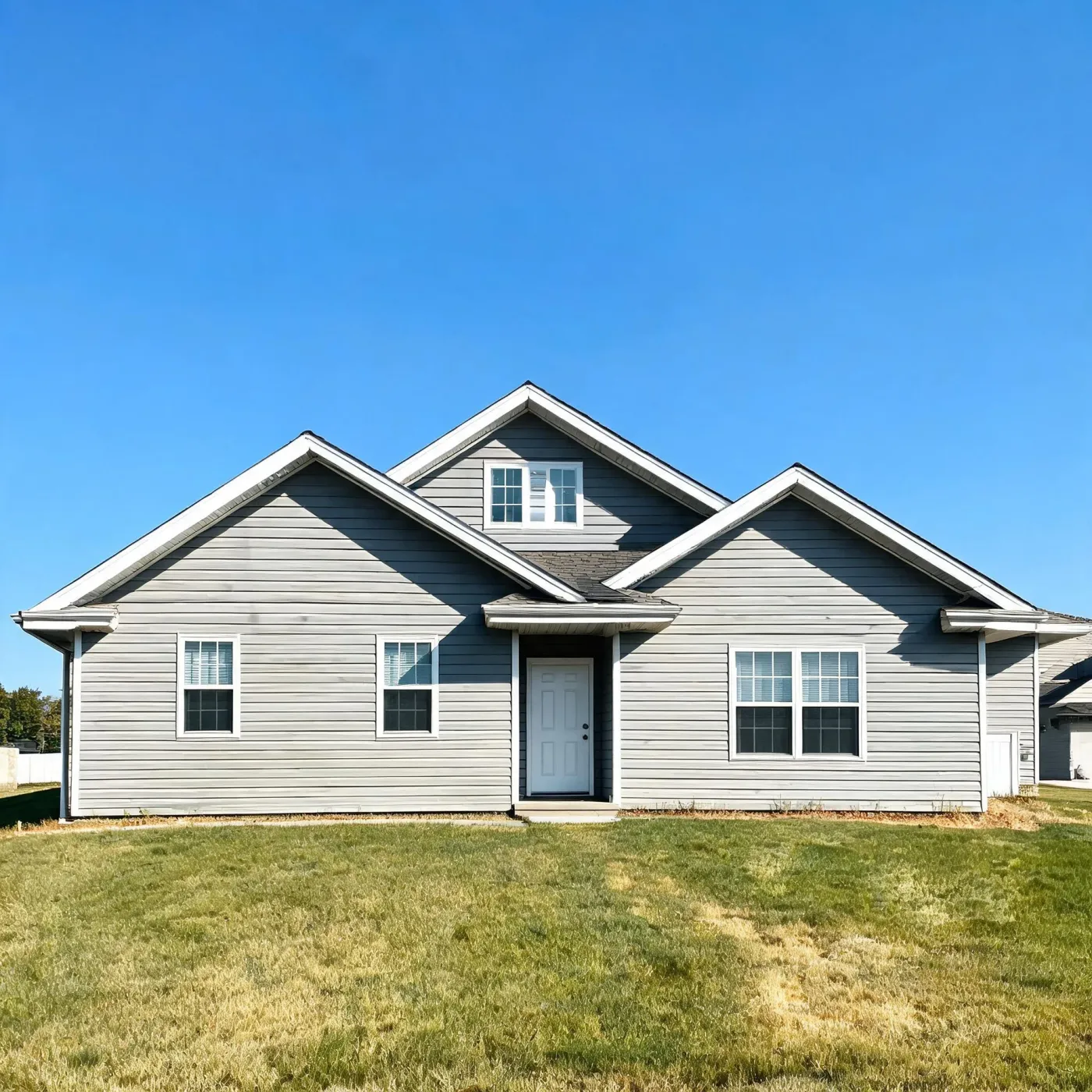
Single-story gray horizontal-siding house with multiple front gables, a white front door, white-trimmed windows, and a mown lawn under a clear blue sky.

Summer here runs humid, with a dew point averaging 62°F across June, July and August according to NOAA climate data. That same outdoor unit now stuck blowing cold air in January spent its summer pulling heavy, wet air down to a comfortable level, and all that moisture pulled through the coil leaves mineral and dirt buildup behind once it dries. A coil that goes into winter already coated doesn't shed frost as cleanly during a normal defrost cycle, so it can stay in defrost longer or trip into it more often, and more of what you feel at the vents is cool air instead of heat.

NASA POWER T2MDEW county cells weighted by homes

A few minutes of cool air during a defrost cycle is normal and corrects itself. Cool air that doesn't stop, a thermostat stuck on emergency heat, or an outdoor unit buried in ice is not. Once you know which one you're looking at, the next step is getting someone qualified to look at the reversing valve, the defrost control, or whatever else is keeping your system from switching back to heat. Sending the form means you're no longer the one tracking down a contractor, making calls, and explaining the same problem twice. That part is handled from here. What's left is getting your heat pump back to actually heating your home through the rest of this Iowa winter.

A bearded man in a dark t-shirt sits on a light sofa, smiling and looking down toward a laptop screen visible at the bottom edge of the frame, with a blurred living space behind him.
A bearded man in a plaid flannel shirt stands indoors looking out a condensation-covered window at a snowy landscape, with a speckled mug on the sill and kitchen shelves behind him.

Hand off the heat pump problem

A stuck reversing valve, a thermostat set wrong, or iced-over coils won't sort themselves out, and the same cold air that's uncomfortable now gets expensive fast once aux heat takes over the job. Send the form and you're done hunting: no scrolling through contractor listings, no calling around to ask who works on heat pumps, no explaining the cold air and the ice and the thermostat setting over again to each one. A licensed contractor gets the details once and takes it from there.

Skip the calls

Fill out one short form instead of calling around.

You're not committing to anything by asking.