



Why your mini split isn't cooling in Iowa

A white wall-mounted mini-split air conditioner indoor unit with a horizontal louvered air outlet, shown against a plain light gray background.
Hand off my repair

A mini split that runs but doesn't cool is usually low on refrigerant, iced up on the outdoor coil, or stuck with a dirty indoor filter blocking airflow. In Iowa, the heat and humidity from June through August push the system hard every day, and a unit that was marginal in May can fall behind once it has to run for hours at a stretch. A refrigerant leak means the system is moving less heat out of your house no matter how long it runs. Ice on the outdoor unit usually means something is restricting airflow or refrigerant flow, and the coil needs to thaw before a technician can find the cause. A clogged filter or a blower losing speed can also starve the indoor unit of airflow, so it blows but the air isn't cold. Each of these needs a technician to open the system up and check pressures and airflow directly, since the fix depends on which one it is.

A woman in a dark gray sweater reclines on a couch with her eyes closed and a knit blanket over her lap, an open book resting face-down in front of her, with a lit table lamp and shelving blurred in the background.
A bearded man in a dark navy sweater over a collared shirt smiles and looks off to the side while seated at a dinner table with a glass of red wine, a lit candle, and a plate of food in the foreground of a dimly lit room.

A mini split that keeps running without cooling the room is usually failing somewhere in a chain you can't see from the thermostat. The compressor outside has to pull refrigerant through the line set at the right pressure, and even a small leak at a flare fitting lets that charge drop low enough to stall cooling well before any alarm goes off. Inside, the coil needs to stay just cold enough to pull moisture out of the air. Too cold, and that moisture freezes into a sheet of ice that blocks airflow instead of helping it. The indoor unit also depends on reading the room correctly. If the sensor near the intake gets bumped or covered by the filter, the system thinks the job is done when it isn't. Water has to drain somewhere too. A clogged condensate line can back up into the unit, and on some models that alone is enough to shut cooling off. Outside, the fan has to move air across the condenser coil to get rid of the heat pulled from inside, and cottonwood fluff or grass clippings packed into that coil slow the whole exchange down.

Why It Runs But Doesn't Cool

  • The outdoor unit's compressor pulls refrigerant through the line set, and a slow leak at a flare fitting can drop the charge low enough to stop cooling long before it ever triggers an alarm.
  • Warm, humid air moving across a coil that's too cold forms ice instead of condensation, and that ice sheet blocks airflow until the indoor unit just blows room-temperature air.
  • The indoor unit reads room temperature at its own intake, so a thermostat sensor knocked out of place or covered by a filter can tell the system to stop before the room is actually cool.
  • A clogged condensate drain line backs water up into the indoor unit, and some models shut cooling down entirely rather than let that pan overflow.
  • The outdoor fan has to pull air across the condenser coil to release the heat the indoor unit collected, and a coil packed with cottonwood or grass clippings cuts that exchange down fast.
  • Most mini splits run on an inverter-driven compressor that adjusts speed to the load, and a failing control board can leave it stuck at low speed even when the house needs full output.
A wall-mounted mini-split air conditioner indoor unit with a discolored cream plastic casing and dusty outlet vanes, installed high on a plain light-colored interior wall near the ceiling.
Before you get your mini split repair
A white wall-mounted mini-split air conditioner installed high on a beige interior wall near the ceiling molding, with a light curtain and curtain rod at the left edge.
After you get your mini split repair

Why a dirty filter matters most here

The indoor unit pulls room air through a filter before it ever reaches the coil. When that filter clogs with dust, the coil behind it doesn't get enough airflow to do its job, and the system can start icing up even on a hot, humid August afternoon. Iowa summers mean the blower is running long hours, pulling air through that filter every one of them. A filter that's fine in May can be packed solid by July. It's the simplest thing to check and the easiest thing to miss.


What low refrigerant does over time

A mini split is charged with a set amount of refrigerant at install, and it isn't meant to burn through any of it. If the charge is low, usually from a slow leak somewhere in the line set, the system has less refrigerant to carry heat out of your house. It'll run, the fan will blow, and the air coming out will feel lukewarm instead of cold. Left alone, a low charge tends to get lower, and the compressor works harder to move what's left, which shows up on your power bill before the unit quits altogether.

A smiling bearded man in a dark blue henley shirt sits leaning back on a light grey sofa in a living room, with a bowl of popcorn on a wooden coffee table and a large window behind him.
A bearded man in a dark quarter-zip sweater sits smiling on a brown sofa in a dimly lit living room, with a bowl of popcorn and a mug on a table in the foreground and a potted plant near a window behind him.
A smiling man with graying dark hair and a beard, wearing an olive sweater, sits on a sofa in a living room beside a bowl of popcorn on a wooden table.
A smiling man in a dark green henley shirt sits on a gray sofa in a living room with a lit table lamp, wooden shelving unit, and a bowl of popcorn in the foreground.

Hand off the search today

Describe what your mini split is doing once, in one form.

You're not committing to anything by asking.

A mini split stuck at the same room temperature all afternoon is still running up your power bill, even on cheap Iowa electricity, because the compressor keeps working without moving any heat out of the house.

Left alone, a low charge or an iced coil doesn't fix itself. The ice just builds through another muggy day until the system trips off and you lose cooling entirely.

Power costs 13.62 cents per kilowatt-hour statewide

At 13.62 cents a kilowatt-hour, running a mini split that's lost its charge or iced over costs you the same power either way, since the compressor keeps drawing current even when it isn't cooling the room. A repair that gets it moving heat again is what stops that waste.

EIA-861 2025 statewide residential average

A white wall-mounted mini-split air conditioner unit installed high on a light gray interior wall near the ceiling, with a white-framed window and green foliage visible at the left edge.

Working the way it should

Air comes out of the vents noticeably cooler than the room, and the room actually comes down to the temperature on the thermostat. The unit cycles off once it gets there, instead of running nonstop through a sticky Iowa afternoon.

A dusty white wall-mounted mini-split air conditioner installed high on a beige interior wall below a molded ceiling trim.

Running but not keeping up

The filter behind the front panel is caked with dust, and the case itself is grimy. Airflow is choked before it reaches the coil, so the unit runs and runs without the room ever catching up.

Is your mini split running but the room still feels warm?

You've probably noticed the unit never shuts off. It runs straight through the afternoon and the air coming out of the vents feels barely cooler than the room itself. Some owners find ice built up on the outdoor unit, or notice the indoor coil sweating and dripping where it shouldn't. Others just feel the house holding at 80 degrees no matter how long the thing runs. If this keeps up through a sticky Iowa summer, the compressor is still drawing power the whole time without actually cooling anything, and whatever's wrong with it now isn't likely to fix itself.

Two-story house with beige horizontal siding, gray shingled gable roofs and a covered front entry, with an outdoor air conditioning unit beside it and a partly dry grass lawn in front under a clear blue sky.

A summer dew point averaging 62°F across June, July and August, per NOAA climate data, is the kind of heavy, sticky air that makes a mini split work for every degree it delivers. The coil has to pull more moisture out of the air before the room feels any cooler, so a unit already low on refrigerant or fighting a dirty filter falls further behind on a muggy day than it would on a dry one. You'd notice it most in the evening, when the air outside stays thick and the room never quite catches up to the number on the thermostat.

NASA POWER T2MDEW county cells weighted by homes

What You Can Try vs What Needs a Pro

DIY fixes

  • Rinsing the outdoor coil with a garden hose clears surface dirt, but it won't touch a refrigerant leak or a failing sensor behind it.
  • Swapping the indoor filter is something any homeowner can do in a few minutes and it's worth checking first if airflow feels weak.
  • Turning the unit off to let ice melt off the coil buys you a few hours of normal cooling before the same ice comes back.
  • Clearing leaves and grass clippings away from the outdoor unit helps it breathe, but it won't fix a charge that's already low.
  • Resetting the breaker sometimes gets a tripped unit running again, though it does nothing for the reason it tripped in the first place.

Needs a licensed contractor

  • Finding a slow leak at a flare fitting takes gauges and a leak detector, tools that aren't sitting in a garage.
  • Adding refrigerant without knowing the exact charge for your system can leave it undercharged or overcharged, and either one keeps it from cooling right.
  • A coil that keeps icing over points to something upstream, low airflow or low charge, that needs to be found before the ice stops coming back.
  • Opening the line set to check pressures means handling refrigerant under pressure, work that requires certification to do legally.
  • A compressor that runs but moves no heat could be failing internally, and that diagnosis takes equipment a homeowner doesn't have on hand.
  1. Low refrigerant lets the indoor coil run too cold for the air passing over it

  2. Moisture in that air freezes onto the coil instead of draining away

  3. Ice builds up and blocks airflow, so less air reaches the room

  4. The compressor keeps running, but no more heat leaves the house

A wooden table in the foreground holds a closed laptop and a ceramic mug of coffee, with a spindle-back wooden chair behind it, a beige wall with paneled wainscoting, a window at left, and a kitchen counter with a cutting board, bowl of fruit and greenery at right.

A mini split that won't cool down comes back from one of three problems

Low refrigerant, an iced coil, or a clogged filter. That's what's behind a mini split that runs all afternoon without bringing the room down to temperature. A tech can tell which one it is in a visit, and fix it so the unit actually cycles off again instead of running straight through a sticky Iowa evening.

Finding that tech is the part you can hand off. Instead of searching around, calling a few places, explaining the same thing about ice on the coil or a filter you already checked, and sorting through quotes to see who actually works on your brand, you send one form. The rest of that legwork stops being yours to do.

A wooden table holding a stone vase with a bare branch, two stacked books and a small dark bowl, beside a window with green foliage outside and a sofa in the dim background.
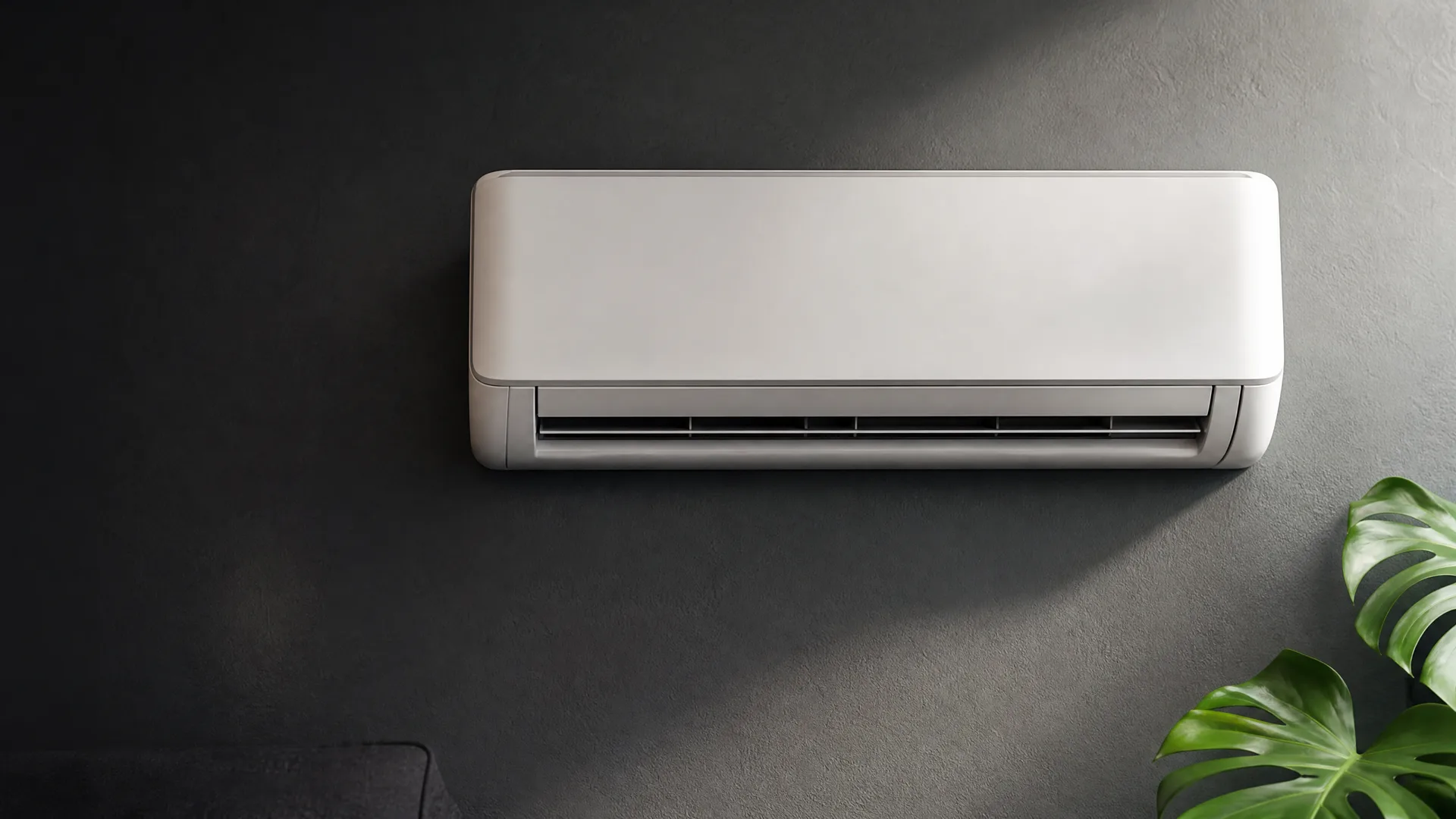
A white wall-mounted mini-split air conditioner on a dark grey textured wall, with a monstera plant leaf at the lower right corner.

Hand off the mini split problem

RepairMini-splitIowa
Step 1 of 2

What ZIP code is the job in?