Why your mini split freezes up in Iowa

Tell a local repair pro what your mini split is doing.

Get a mini split pro

Why does my mini split keep freezing up?

Summer here gets sticky, and your mini split is the thing keeping everyone comfortable through it. So when you walk by and see ice building up on the indoor unit, or the coil, it's worrying, especially if it's running flat out on a hot, humid day and still not cooling the room right. You want to know what's causing it and whether it needs a repair.

Low refrigerant or restricted airflow is almost always the cause

A mini split freezes when the coil gets too cold, and that happens one of two ways. Either refrigerant is low, often from a slow leak, and the coil can't absorb heat the way it should. Or air isn't moving across it the way it needs to, usually because the filter is clogged or the blower isn't pulling enough air through. Iowa's humid summers make this worse. Humid air carries more moisture, and once the coil drops below freezing, that moisture turns to ice fast and builds up with every hour the unit keeps running. Once ice forms, the system cools even less, so it keeps running harder and the ice keeps growing. That cycle doesn't fix itself. It needs a technician to find out which of the two is happening and correct it.

A two-story cream-colored house with horizontal siding and a gray hipped roof, flanked by large green trees and shrubs, with a concrete walkway crossing a lawn to a wet street in the foreground.

Summer air in Iowa holds a lot of moisture. The dew point averages 62°F across June, July and August, according to NOAA climate data. That moisture matters more to your mini split than the heat does. The indoor coil has to pull all that water out of the air it cools, and if the airflow across it is weak, or the refrigerant charge is low, the coil gets too cold and the moisture freezes onto it instead of draining away. Once ice starts building, it blocks airflow further, so more ice forms. You'll notice the room not cooling the way it used to, or the unit running without much air coming out, even as ice shows up on the coil or the lines outside.

NASA POWER T2MDEW county cells weighted by homes

A woman with long blonde hair in a light blue shirt leans back on a beige sofa with her eyes closed, in a softly lit living room with cushions and a blurred plant and shelf in the background.
A woman with long dark hair in a gray knit sweater sits on a gray sofa with a cushion, looking toward a window in a living room with framed pictures and a lamp in the background.
A woman with long dark hair in a light grey knit sweater sits on a sofa indoors, looking to her right, with a framed landscape picture, a potted plant and a curtained window behind her.
A woman with long dark hair leans back against a gray sofa with her eyes closed, in a living room with a curtained window, a potted plant, and a dark screen in the background.

Your mini split moves heat out of the house by running cold refrigerant through the indoor coil. Warm room air passes over that coil, gives up its heat, and leaves cooled and dried. That only works if enough air keeps moving across the coil. Cut the airflow, whether from a clogged filter, a coil matted with dust, or a fan that's failing, and the coil has nothing to absorb the cold fast enough. It drops below freezing and the moisture in the air turns to frost right on the metal. A low refrigerant charge does the same thing from a different angle. Less refrigerant means lower pressure in the coil, and lower pressure means a colder coil even when airflow is fine. Once frost starts, it builds on itself. Ice takes up space, air has an even harder time getting through, and the coil gets colder still. That's why a problem that starts small can end with a block of ice covering the whole indoor unit within a few days of running.

Why the Coil Ices Over

  • Refrigerant runs colder than the air around it, so the indoor coil sits below freezing when something keeps the system from absorbing heat the way it should.
  • A dirty air filter or a coil caked with dust blocks airflow, and when less warm air passes over the coil, it can't stay above freezing.
  • A low refrigerant charge, usually from a slow leak, drops the pressure in the coil low enough that it frosts even with good airflow.
  • Running the unit on a low fan setting for long stretches lets ice build gradually, so it often shows up after days of use rather than hours.
  • Once ice forms, it narrows the space air can pass through, so the problem feeds itself until a contractor clears it and finds the cause.
  • A failing blower motor or a stuck fan can cut airflow the same way a dirty filter does, and it won't clear up by itself.
A white wall-mounted mini-split air conditioner on a beige interior wall, with a curtained window on the left and wood flooring with a light rug below.
Air moves freely through a clean filter and coil, so the indoor unit holds steady even on the muggiest July afternoon.
A white wall-mounted mini-split air conditioner indoor unit installed near the ceiling on a plain light-colored wall, with its horizontal outlet vent and louvers visible.
Dust on the casing usually means dust inside too, choking airflow until the coil drops below freezing and ices over.
A dim room with a wall-mounted mini-split air conditioner above a water stain running down the gray wall to a towel on the wood floor, with a black shelving unit, a desk with a lamp and potted plant by a window, and an office chair at right.

You're at the desk in the office around two in the afternoon, the sun hard on the window, when you notice the wall under the indoor unit looks wrong. A streak of water has run down from the housing, dark against the paint, pooling at the baseboard. You grab a towel and get down to blot it before it soaks in, and that's when you see the drip is steady, not a one-time thing. The unit's been running most of the day against the sticky heat outside, and now this. You stand back up, towel in hand, looking at the wall, trying to decide how bad it is and whether it can wait. Someone who knows these units would know in a glance.

A local pro for your mini split repair

Send the request today and let a mini split pro reach out to you.

Asking costs nothing, and the choice to hire stays yours.

Running it nonstop isn't the problem

Keeping a mini split on all day during a sticky stretch doesn't freeze the coil by itself. These systems are built to run for hours at a time without trouble. What causes the ice is something blocking airflow or holding back refrigerant while it runs, not the number of hours on the clock. A unit that's been on since morning should still be moving warm air across the coil and dry air back into the room, the same as it did at nine.


Low refrigerant freezes the coil fast

A mini split that's lost refrigerant through a slow leak can't absorb heat the way it's supposed to. Pressure inside the coil drops, and the coil itself gets colder than it should, cold enough to freeze the moisture right out of the air passing over it. This isn't something a filter change fixes. It takes a gauge set to check pressures and find where the charge is going, then the leak has to be sealed before more refrigerant is added.

A dusty, discolored wall-mounted mini-split air conditioner indoor unit on a plain white wall, with its horizontal louvers and vent grille visible.
Before you get your mini split repair
A white wall-mounted mini-split air conditioner on a beige interior wall, next to a window with sheer white curtains and green foliage outside.
After you get your mini split repair

Running it low to cool faster

Dropping the temperature further than you need doesn't cool the room any quicker, but it does make the indoor coil work harder than it has to. A mini split set too low can pull the coil temperature down far enough that moisture on it freezes before the unit has a chance to cycle off. The thermostat setting isn't the real problem by itself. It's usually paired with weak airflow from a dirty filter or a low refrigerant charge, so the coil can't shed that cold fast enough. Set where it needs to be, with the filter clean and the charge right, a mini split holds a steady temperature without icing over.

Letting a small problem sit

A mini split that's iced over once and gets wiped down tends to ice over again, because whatever caused it the first time is still there. A low refrigerant charge doesn't fix itself. A clogged filter doesn't clean itself. Left alone, the ice keeps building, water keeps running down the wall, and the compressor keeps working against a coil it can't properly use. A contractor who looks at it once can find the filter, the airflow or the charge issue before it costs more to fix, and before a sticky July afternoon turns into a unit that won't cool the room at all.

An older woman with gray hair in a bun and glasses, wearing a beige knit sweater, smiles while looking to the side in a warmly lit kitchen, with a loaf of bread on the counter in the foreground and a snowy scene outside the window.
A woman with dark hair in a bun sits wrapped in a chunky knit blanket on a couch with a child resting his head on her shoulder, eyes closed, beside a lit lamp and bookshelf indoors.

Still blowing warm air with ice on the coil

A frozen coil can't absorb heat, so the air coming out feels weak or room temperature. Running it longer won't fix that. The ice has to melt and the cause has to be found first.

Find a pro near me

Clean coil, steady airflow

When the coil is clear, the unit pulls humidity out of the air and keeps cooling it the way it's meant to, even during a stretch of 90-degree days.

Find a pro near me
A man in a dark blue shirt stands in an open front doorway of a stucco and wood-clad house, facing a blond woman seen from behind in the foreground on a stone walkway.

A frozen coil doesn't stay a one-day problem

Once ice builds on the coil, it keeps building until something changes. The unit you're counting on to keep the house livable through a sticky July stretch starts blowing weaker air, then water starts showing up where it shouldn't, on the wall, the floor, the trim below the indoor unit. Shutting it off and hoping the ice melts on its own might buy you an afternoon, but the airflow problem underneath is still there when you turn it back on, and so is the moisture.

You don't have to figure out whether it's the filter, the coil, or something in the refrigerant line before you do anything about it. Send in what you're seeing, the ice, the water, how long it's been running that way, and you'll be matched with a contractor near you who handles mini splits and can take it from there. That part stops being something you have to sort out yourself.

Interior corner of a living room with a beige upholstered sofa and dark cushion in the foreground, a ceramic vase of leafy branches on a dark side table by a curtained window, a framed picture on the wall, and a wood-surround fireplace at right.
A white wall-mounted mini-split indoor unit installed high on a gray interior wall, with a sofa, dark table and window visible in an adjoining room to the right.

What a working mini split looks like

The casing stays clean and the vents sit open and clear. Air comes out steady and cold, no streaking down the wall, no pooling at the baseboard below the unit.

A wall-mounted mini-split air conditioner indoor unit with a dusty beige casing and dark louvered vent, installed near the ceiling on a plain beige wall.

What a struggling one looks like

Yellowing and dust on the casing usually mean dust inside too, on the filter and across the coil. That buildup blocks airflow, and a blocked coil is how ice starts to form.

Power costs 13.62 cents per kilowatt-hour statewide

Running a mini split here costs less to operate than it would in most other states, at 13.62 cents per kilowatt-hour. That makes it easy to leave it running through a sticky stretch rather than cycling it off and on, but that extra runtime is exactly what lets ice build up quietly on the coil if airflow is already restricted.

EIA-861 2025 statewide residential average

What the ice tells you

  • A frozen coil almost always traces back to blocked airflow or a low refrigerant charge, not how long the unit ran.
  • Ice has to melt fully before anyone can see what caused it, so shutting the system off is the first step.
  • A dirty filter or coil is something you can check yourself; a low charge needs a gauge and a licensed hand.
  • Letting the ice keep building turns a filter cleaning into a compressor repair as water works into the wall and floor below.
  • Once you send the request, you're done chasing it down, a contractor who handles mini splits in Iowa takes it from there.
  • A unit that's cleared and running right will hold steady air through whatever humidity July brings.

A frozen coil has one of two causes. Either air isn't moving across it the way it should, usually a dirty filter or a coil caked with dust, or the refrigerant charge is low and the coil is running colder than it's built to. Everything else, how long the unit ran, how hot it got outside, how low you had it set, only matters because it pushes one of those two problems further. Shutting the unit off and letting the ice melt completely is what makes the cause visible. Try to diagnose it while there's still ice on the coil and you're guessing. Once it's clear, a dirty filter or a dusty coil is something you can look at yourself. A low charge isn't. That takes a gauge and a licensed hand, because refrigerant work means opening a sealed system. Left alone, the ice doesn't stop where it is. It keeps building, then melting into water that runs down the wall and into the floor below, and what started as a filter you could've rinsed under a tap turns into a repair on the compressor itself. Send the request and that search is over. Someone who works on mini splits in Iowa takes it from there, and you go back to not thinking about it. Cleared and running right, the unit holds steady air no matter how sticky July gets.

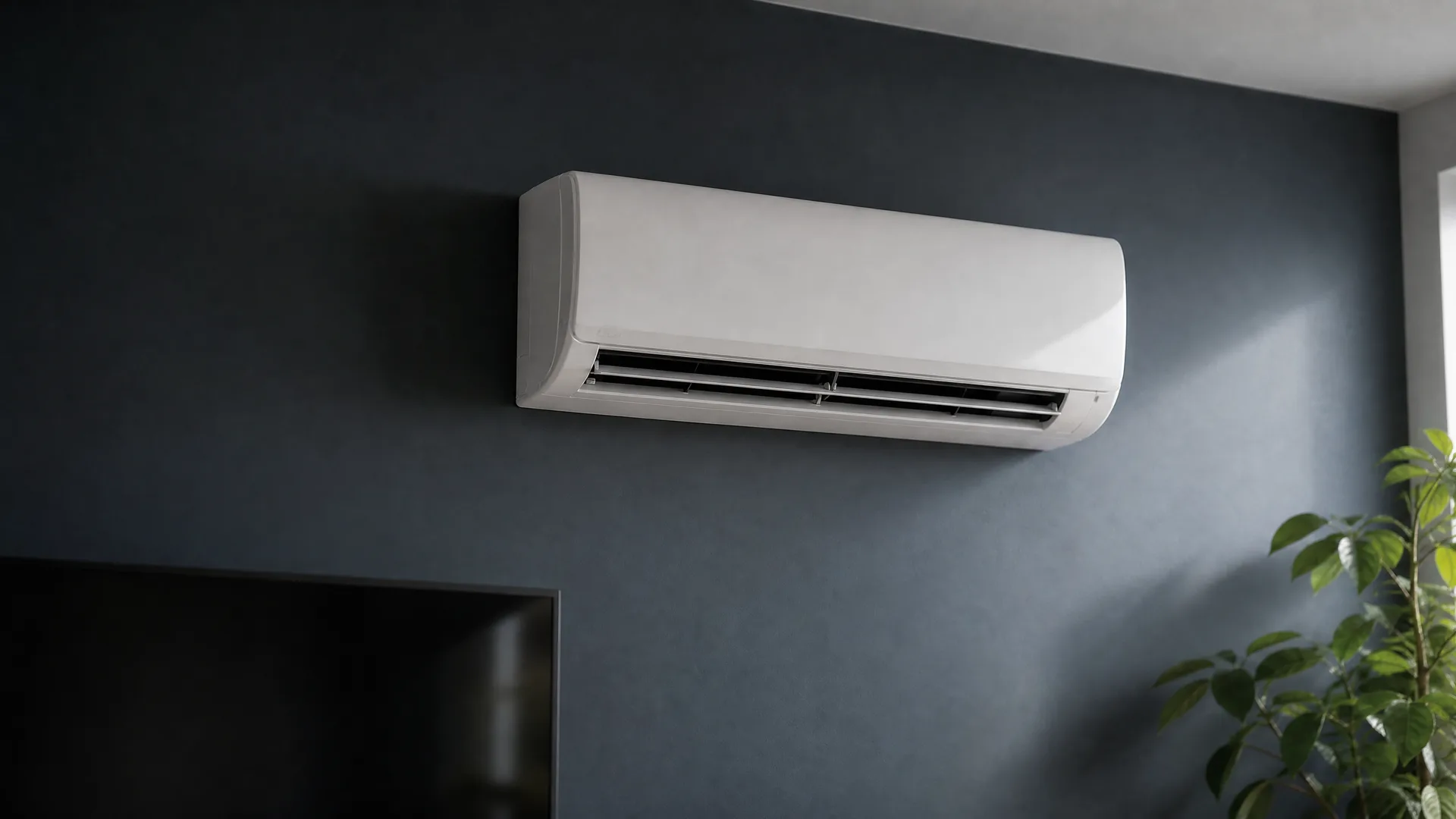
A white wall-mounted mini-split air conditioner on a dark gray interior wall, with a flat screen at lower left and a green leafy plant at lower right.

A pro who works on mini splits

RepairMini-splitIowa
Step 1 of 2

What ZIP code is the job in?