Profile view of a bearded man wearing a dark baseball cap and a dark gray T-shirt against a plain off-white background.

Why your mini split isn't heating in an Iowa winter

RepairMini-splitIowa
Step 1 of 2

What ZIP code is the job in?

Why isn't my mini split heating when it's cold out in Iowa?

Iowa winters push well below freezing, and a mini split that kept the house warm enough in November can feel useless by January. You're standing by the indoor unit wondering if it's broken or if this is just how these systems behave once it's truly cold outside. Since most homes here run on gas heat, a mini split is often the backup or the one room that's always been a little harder to keep warm.

It loses heating capacity as the outdoor temperature drops

A mini split pulls heat from the outside air, and the colder that air gets, the less heat there is to pull. Below about 5 to 15 degrees, depending on the unit, most residential models start losing real output even while running constantly. Some switch to a defrost cycle to clear ice off the outdoor coil, which blows cold air inside for a few minutes at a time. In an Iowa cold snap, that's often what you're feeling: the unit isn't broken, it's working at the edge of what it can do. If it's not keeping up at all, or running nonstop without warming the room, something else is likely wrong and worth having checked.

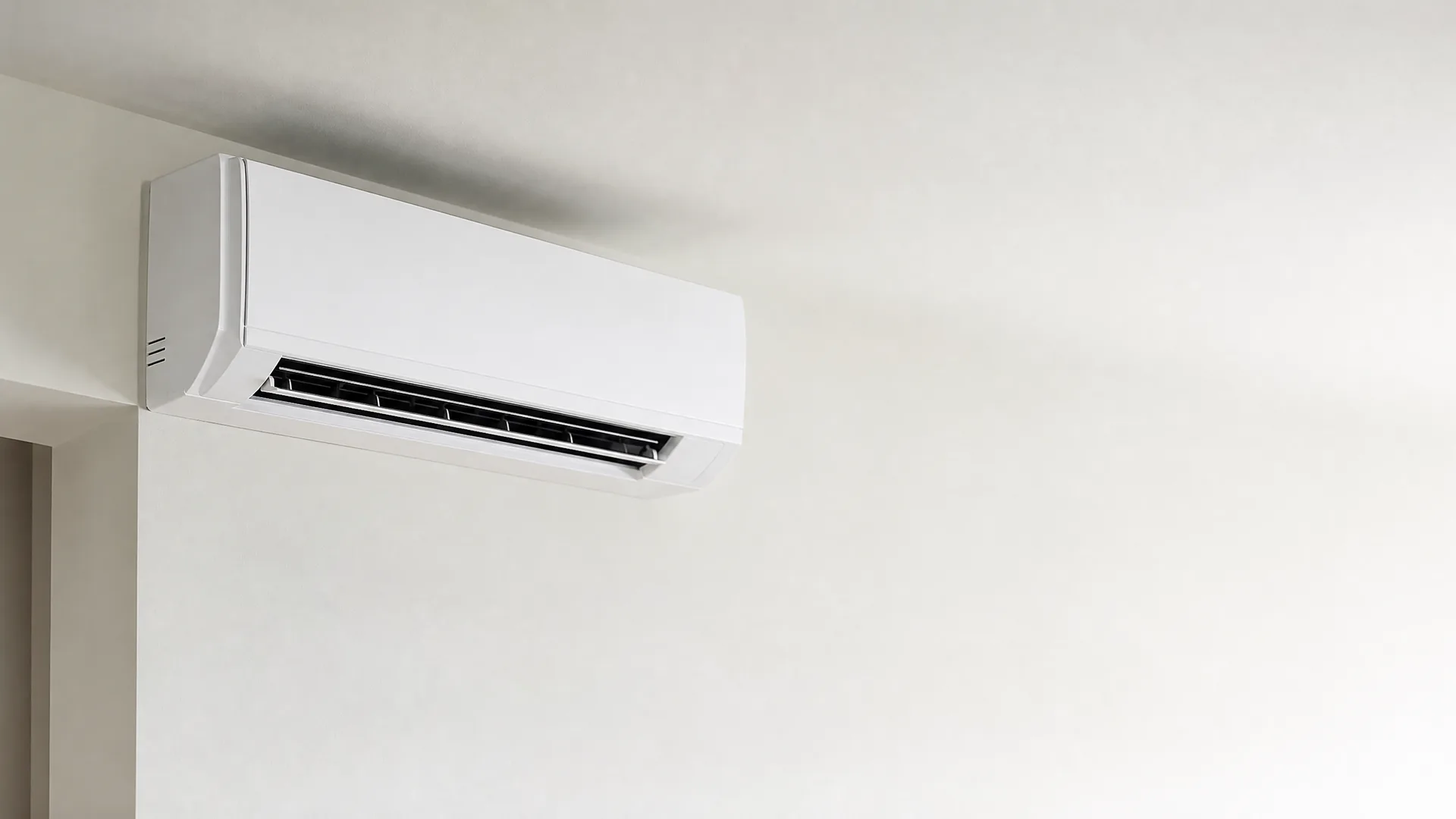
A white wall-mounted mini-split air conditioner unit near the ceiling on a plain light-colored interior wall with open space to the right.

Cold air holds less heat

A mini split pulls heat from the outdoor air and moves it inside. That works fine down to a certain point, but as the temperature outside drops, there's less heat out there to grab. Below 0 to 5 degrees, most systems lose a real share of their heating capacity, and the air coming out of the indoor unit feels cooler even when the system is running correctly. That's the machine, not a fault.

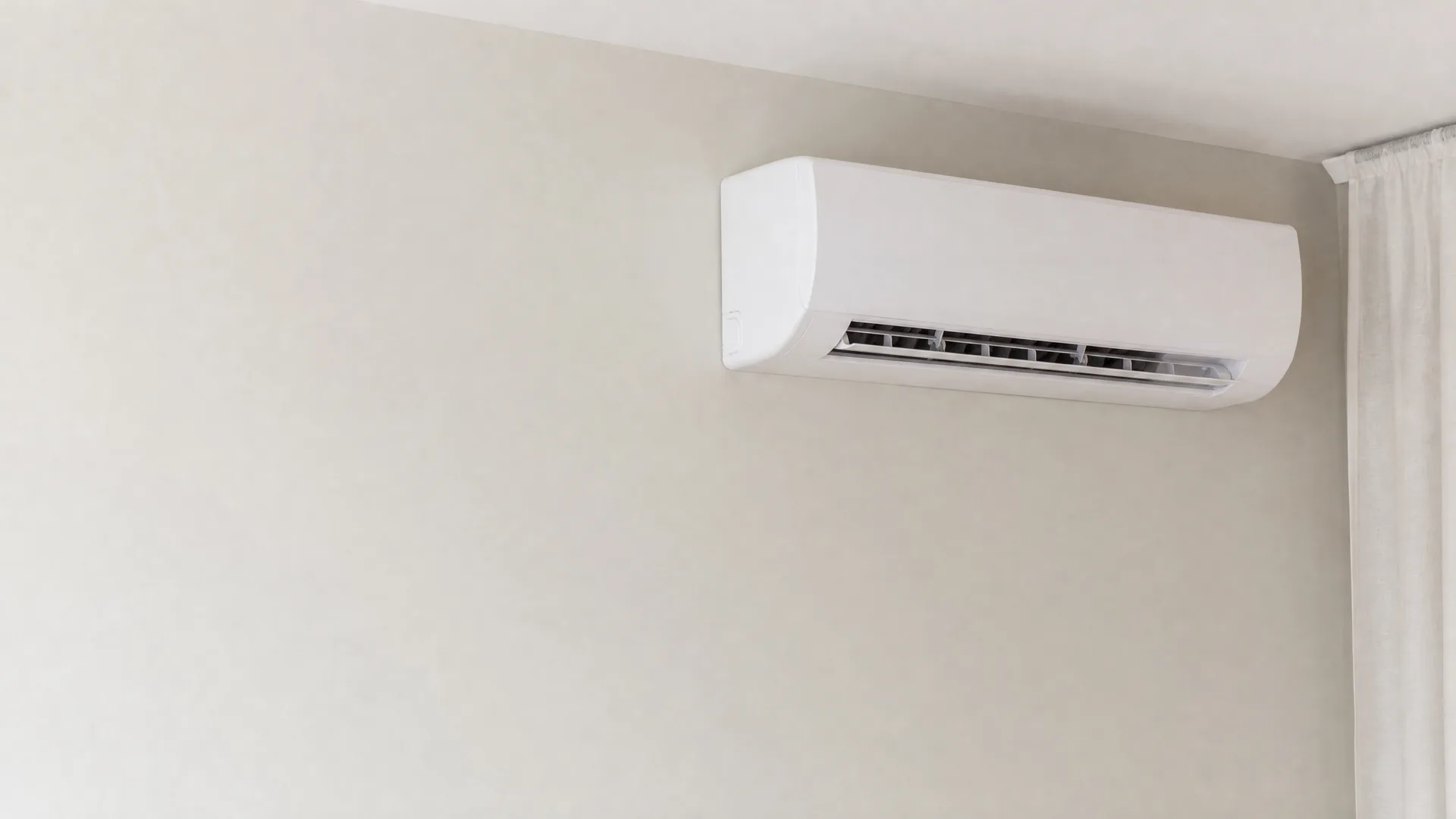
A white wall-mounted mini-split air conditioner unit installed near the ceiling on a plain beige interior wall, with a light curtain at the right edge.

Ice on the outdoor unit

Look at the outdoor unit on a cold morning. Some frost is normal, and the system should clear it on its own through a defrost cycle, pausing heat for a few minutes while it melts the coil clean. If ice is building up thick, or the unit is defrosting constantly without ever catching up, something is off, and a stuck reversing valve or low refrigerant charge is worth having a contractor check.

Live With It or Get It Checked

Running as backup heat

  • Your gas furnace carries the house once it gets into the single digits or below, and the mini split handles the mild stretches in fall and spring.
  • Iowa power is cheap, but a mini split working hard at 10 degrees outside still costs more to run per hour than it does at 40.
  • You get even heat in the room with the indoor unit without the furnace cycling on for just that space.
  • Switching over is usually a matter of setting a thermostat schedule or a cutoff temperature, not a service call.
  • The mini split stops fighting a losing battle against the cold, so it isn't running flat out just to lose ground.

Calling a contractor out now

  • If the unit used to keep up and suddenly can't, that's a change worth checking rather than a new cold-weather limit.
  • A contractor can tell you if the system is actually low on refrigerant or if the outdoor coil is icing up and not defrosting right.
  • Frost built up on the outdoor unit that isn't melting off during the defrost cycle points to a specific fixable problem, not just the weather.
  • You skip calling around to find someone who works on mini splits and explaining the same symptoms more than once.
  • If the system is undersized for the space, a contractor can tell you now instead of you guessing through another cold snap.
A white wall-mounted mini-split air conditioner installed near the ceiling on a light-colored interior wall, with a window and green foliage visible at the left edge.

Running clean, keeping up

A clean mini split like this one can still pull heat from the air down to a real cold snap. The coil stays clear, the airflow stays strong, and the unit gets what warmth there is out of the air and into the room.

A dusty white wall-mounted mini-split air conditioner indoor unit installed high on a beige interior wall below a white ceiling and trim.

Caked with dust, falling behind

Dust and grime across the vents and intake grille choke the airflow before the unit ever gets to work on the cold outside air. A mini split in this shape struggles well before it hits its rated limit, and in an Iowa January that shows up fast.


A woman in a cream cowl-neck sweater stands in a lamp-lit room looking out a window at a snow-covered yard with shrubs and bare trees at dusk.
A woman in a gray turtleneck sweater stands near a large window in a lamp-lit living room, looking out at falling snow and snow-covered conifers.
A woman in a chunky knit sweater stands by a large window looking out at snow-covered ground, with a dimly lit living room containing a gray sofa, framed artwork, shelves and table lamps behind her.
A woman in a gray turtleneck sweater stands in a dimly lit living room with a lamp and bookshelves, looking out a multi-pane window at falling snow.
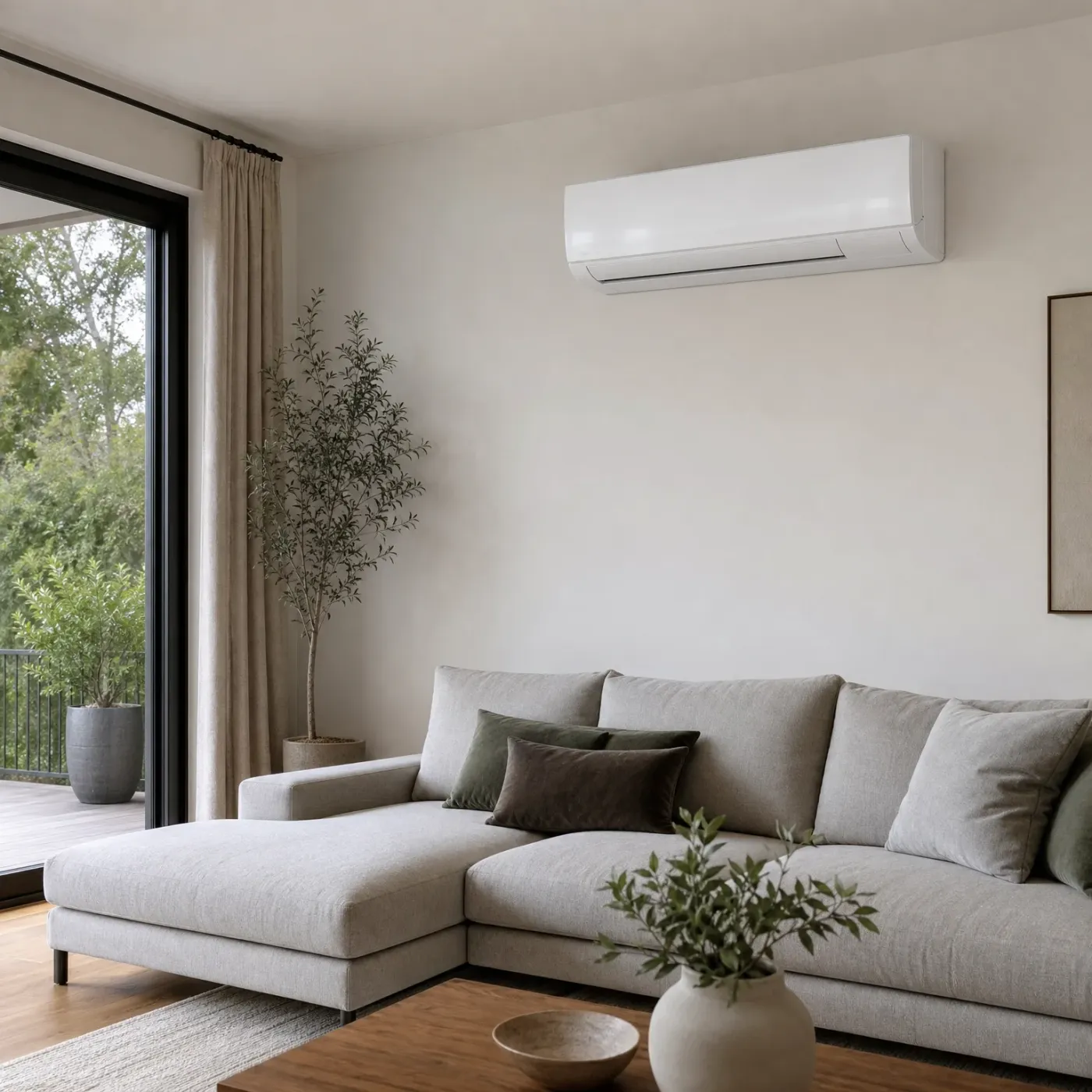
Living room with a grey sectional sofa, wall-mounted white mini-split air conditioner above it, a potted tree beside sliding glass doors with beige curtains, and a wooden coffee table with a vase of foliage in the foreground.

Get your mini split to the right pro

Describe what your mini split is doing once, in one form.

Say what's going on with your mini split, and a pro who works on them reaches out.

Get a mini split pro

You're not committing to anything by asking.

A white wall-mounted mini-split air conditioner on a light gray wall in an empty room with dark wood flooring, white baseboards, a tray ceiling with recessed lights, and a window at the left.
A mini split like this one still has a fighting chance in an Iowa cold snap, if nothing else is working against it.
A wall-mounted mini-split air conditioner indoor unit with a yellowed plastic casing and dark horizontal vent louvers, installed on a plain light-gray wall.
Dust on the coil and grime around the vents make the unit work harder for less heat, right when you need it most.

Inside a heating cycle gone wrong

  • Defrost mode runs when frost builds on the outdoor coil, and it pauses heating for several minutes at a time.
  • During defrost the outdoor fan stops, the system reverses briefly, and cold air can blow inside before warm air returns.
  • A reversing valve stuck or failing keeps the unit in cooling mode or traps it mid-cycle instead of switching back to heat.
  • The outdoor unit needs clear space around it, since snow piled against the coil or vents blocks the airflow it needs to pull in heat.
  • An iced-over outdoor coil that never clears means the defrost cycle isn't finishing, often pointing to a sensor or control board issue.
  • Low refrigerant charge shows up hardest in cold weather, since the system has less margin to begin with when it's already straining to find heat outside.

A mini split in heat mode is still moving heat from outside air into your house, and cold, damp Iowa air leaves frost on the outdoor coil fast. The system has to stop and run a defrost cycle to clear it, sometimes several times an hour when it's cold and humid out. During that cycle the outdoor fan shuts off, the system briefly reverses into cooling to melt the frost, and that's why you can feel a blast of cold air from the indoor unit right before it warms back up. That part is normal. What's not normal is a coil that stays iced over well past when defrost should finish, or a unit that seems to cool instead of heat and never corrects itself. That points to the reversing valve, the part that switches the system between heating and cooling, getting stuck partway through its cycle. A sensor or control board telling the defrost cycle when to start and stop can fail the same way, leaving the coil caked in ice with nowhere for the heat to come from. Snow or ice piled against the outdoor unit makes all of this worse, since the coil needs open airflow to pull any heat out of the air at all. And if refrigerant has leaked out, the system has even less to work with on a cold day, since there's already less heat available outside to begin with. Any one of these can turn a mini split that worked fine in October into one that blows cold air in January.


A bearded man in a plaid flannel shirt stands indoors looking out a window at snow-covered conifers, with a ceramic mug on the wooden sill and wooden cabinets behind him.
A smiling bearded man in a green t-shirt sits on a gray sofa, looking down toward a device at the bottom of the frame, with a bookshelf and a green plant blurred behind him.
A white wall-mounted mini-split air conditioner unit installed high on a light gray interior wall below crown molding, with a bamboo-shaded window at the lower left.

Working as it should

A mini split like this one heats evenly, with warm air moving steadily out of the vane louvers. You don't notice it running because the room just stays comfortable. The casing stays white, the coil inside stays clear, and the unit keeps pulling what heat it can out of the cold Iowa air.

A wall-mounted mini-split air conditioner indoor unit with a dusty, discolored cover, installed near the ceiling on a plain light-colored wall.

Fighting dust and grime

Dust built up on the casing and around the louvers usually means the coil behind it is dirty too. A coil coated in dust can't transfer heat the way a clean one does, so the unit runs longer and still falls short on the coldest days. That's worth a look before you assume the system itself is failing.

Power costs 13.62 cents per kilowatt-hour statewide

At 13.62 cents a kilowatt-hour, running the mini split's backup electric strips or leaning on it hard during a cold snap adds up fast on the bill. That's part of why pairing it with your gas furnace for the coldest stretches makes sense here, and why a mini split that's struggling is worth a look before it runs harder than it should.

EIA-861 2025 statewide residential average

A mini split that stops keeping up once Iowa turns cold usually isn't broken. It's working against physics, or against dirt, or against a furnace that isn't picking up its share of the load. Below freezing, every mini split has less to work with, and the ones that struggle hardest are the ones with a dirty coil, a low charge, or a defrost cycle that's running too often. You don't have to figure out which one it is by yourself, and you don't have to spend your evening calling around, explaining the problem to three different shops, and sorting through quotes that don't tell you much. A contractor who knows these systems and this climate can look at what yours is actually doing and tell you whether it needs a repair, a cleaning, or just a furnace carrying more of the cold snaps. You get matched once, they reach out, and the rest of the figuring out happens from there.


Interior room corner with sunlight from a window, showing peeling paint and damaged plaster on the wall above a white baseboard, a wooden cabinet with a pale bowl on top, hardwood floor and a patterned rug.
Interior corner of a room with tan walls, white profiled baseboard and window trim, a wood-plank floor in sunlight, and green foliage visible through the window.
An empty room corner with cream walls, white baseboard, two windows with deep sills showing green foliage outside, and a wood plank floor lit by sunlight.
Empty room corner with beige walls, white beadboard wainscoting, chair rail and baseboard, a window with green foliage outside, and sunlight casting leaf shadows on the wall above a wood floor.
Sunlit room corner with a multi-pane window, beige walls, white baseboard, wood floor with a woven rug, and a dark wooden cabinet holding a ceramic table lamp below a framed picture.

The right pro for this job

Describe your mini split job once, to one pro.

Connect with a pro

It costs nothing to send, and you don't have to hire anyone.