






AC can't keep up on hot days in Council Bluffs, IA

Fill out one form

Your AC runs hard on the worst days and still can't catch up with a Council Bluffs summer. That usually means something specific is wrong with it, a low charge, a struggling capacitor, a coil that can't shed heat, not that the system is simply overmatched. Finding out which one takes someone who works on these systems around Pottawattamie County every summer and knows what tends to give out when the heat sits on a house for days. Searching around for that, calling a few companies, explaining the same problem to each one, then weighing quotes against each other costs you time you don't have when the house is already warm. This page connects you with one licensed local contractor instead, so you make one call and get one visit, not a string of estimates to sort through. Tell them what the system is doing, or not doing, and let someone who already knows this equipment take it from there.

Why can't my AC keep up when it's really hot out?

You notice it most on the days you need cooling the most. The thermostat is set where it always is, the system is running, and the house still sits five or more degrees above what you asked for. It usually gets worse as the afternoon goes on, then eases up once it cools off outside. That pattern is telling you something about what's actually wrong.

It's losing a fight with the heat outside, and that usually points to a specific problem

A working air conditioner moves heat from inside your house to the outdoor coil, where it has to dump that heat into the outside air. On a 95 degree afternoon in Pottawattamie County, that coil is already working against a much bigger difference in temperature than it was built to handle easily. A system that's low on refrigerant, running on a weak capacitor, or sitting behind a dirty outdoor coil loses ground fast once the heat climbs, because it has less capacity to spare. A healthy system holds the line even on the hottest days. One that falls behind only when it's hot out is usually fine when it's mild, and that gap between the two is the clue a contractor uses to find what's actually failing.

A man with gray-brown hair and stubble in a dark sweater sits on a light-colored sofa in a living room, looking off to the side, with a houseplant, framed picture, shelving and a sunlit window behind him.
A gray-haired bearded man in a dark blue shirt over a white t-shirt sits on a leather sofa in a living room with built-in shelves, a floor lamp, an armchair and large windows, looking off to the side.
A gray-haired man in a dark green sweater sits smiling on a sofa in a sunlit living room, with a houseplant, shelving unit, and dining table visible behind him.
A gray-haired man in a dark green knit sweater sits on a beige sofa with a dark cushion, looking to the side, with a potted plant, shelves and sunlit windows behind him.

Why It's Struggling vs. What Fixes It

Keeps running hot

  • A dirty condenser coil outside can't shed heat the way it should, so the system runs longer and still loses ground once it gets into the 90s.
  • A low refrigerant charge means less heat gets carried out of the house per cycle, and the gap between the thermostat setting and the actual temperature grows as the day heats up.
  • A capacitor that's weakening doesn't fail outright, it just lets the compressor or fan motor run below full strength, which shows up as poor cooling on the hardest days.
  • Return air that's restricted by a clogged filter or blocked vents starves the system of the airflow it needs to pull heat out of the house fast enough.
  • A unit sized for an average Pottawattamie County summer will fall behind once the heat index climbs well past that, even running nonstop.

Fixed and keeping up

  • A cleaned condenser coil lets the system reject heat at the rate it was built for, so it stops losing ground once the sun's been up for hours.
  • Refrigerant brought back to the correct charge restores the amount of heat the system moves out of the house each cycle.
  • A replaced capacitor gets the compressor and fan motor back to full speed, which matters most on the days above 90 when the system has no margin to spare.
  • A clear filter and open vents restore the airflow the coil needs to actually pull heat out of the air passing over it.
  • Once the specific fault is found and corrected, the thermostat setting and the house temperature match again, even on the worst days of the summer.
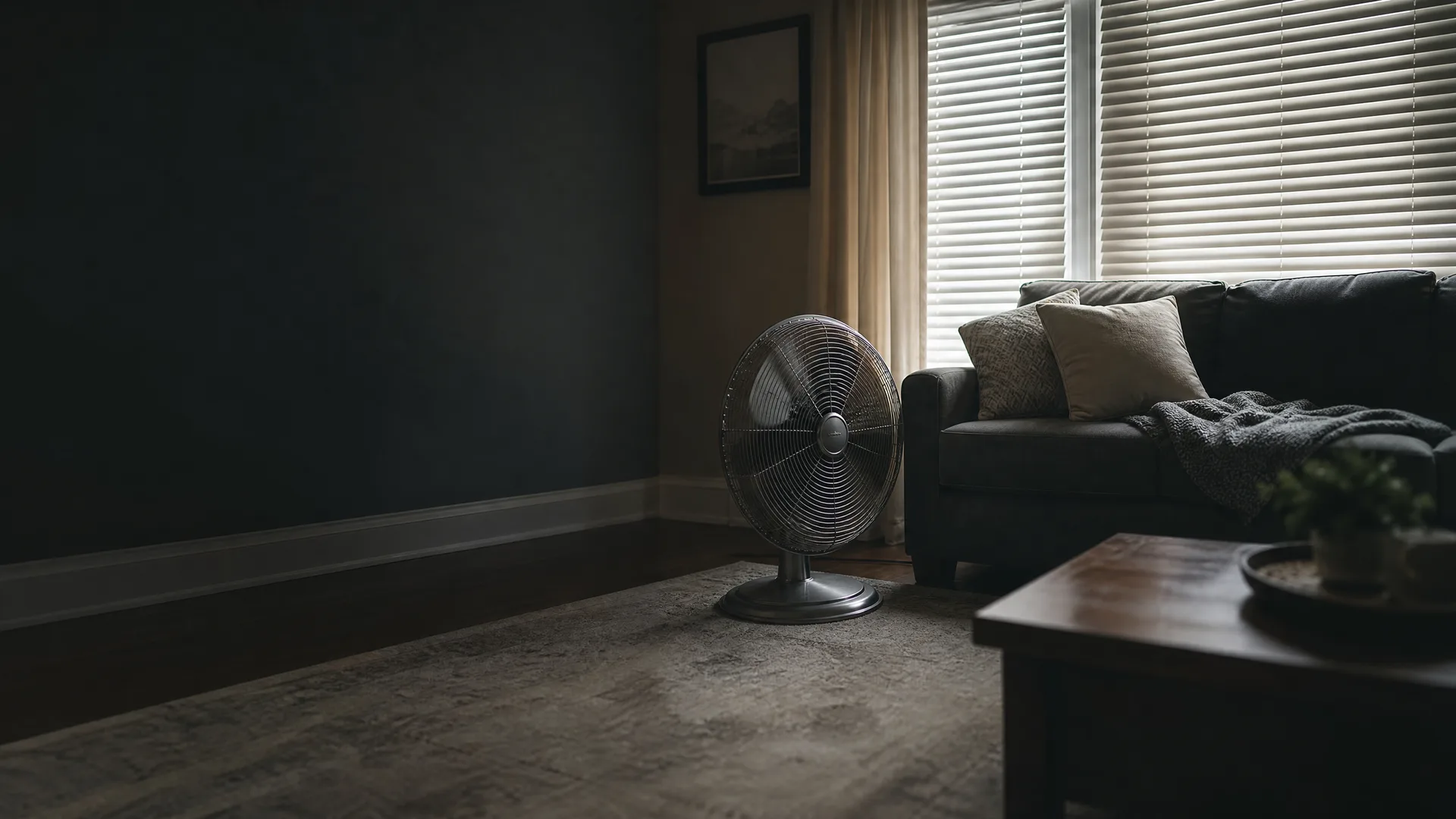
A dimly lit living room with a table fan on a patterned rug, a dark sofa with cushions and a blanket beside blinded windows, a framed picture on the wall, and a wooden coffee table with a potted plant in the foreground.

By three in the afternoon you've given up on the blinds staying open. The sun's been hammering the west side of the house since noon and the living room holds onto it. You've got the floor fan angled at the couch, pulling air across your legs because the vent above you is barely moving anything cold. The thermostat says 74. The room doesn't feel like 74. Outside it's pushing past 90, the kind of Pottawattamie County afternoon where the air itself feels thick, and the system outside has been running since before lunch without much to show for it.

A gray outdoor air conditioning condenser unit on a concrete pad beside a house with horizontal lap siding and a stone veneer base, with a disconnect box and conduit on the wall, mulch bed and shrub to the right, and mowed grass in the foreground.
A clean condenser with good airflow around it can pull heat out of the house all afternoon without losing ground.
An outdoor air conditioner condenser unit on a gray composite pad beside a house with horizontal siding, a concrete foundation, a basement window, and a conduit and disconnect box on the wall.
Dust packed into the coil behind that mesh traps heat in the unit, so it runs longer and the house still stays warm.

What are you noticing around the house right now

You've probably caught a few of these already. The vents are blowing, but the air coming out feels closer to room temperature than cold. Upstairs stays warmer than downstairs no matter how long the system runs. The outdoor unit is loud, or it's running close to nonstop through the afternoon instead of cycling off. Sometimes there's a musty smell near the indoor unit, or you've noticed moisture around it that wasn't there before. None of these mean you need a new system. They mean something inside this one isn't doing its job, and the longer it runs that way on the hottest days, the harder the rest of the system works to cover for it.

A gray outdoor air conditioning condenser unit on a concrete pad beside a house with horizontal gray siding, with a wall-mounted electrical disconnect box and insulated refrigerant lines, and blue hydrangeas in a mulched bed to the left.

Clear lines, clean coil

This condenser sits on its pad with nothing crowding it. The fins are clean, the lines running into the wall are intact, and the disconnect box is mounted clear of the unit. Air moves through it the way it's supposed to, even when the afternoon gets into the 90s.


A gray outdoor air conditioner condenser unit on a concrete pad beside a house with beige horizontal siding, with an electrical disconnect box and insulated refrigerant lines on the wall and dry leaves on the ground.

Rust and dirt working against it

This one has rust eating at the fan shroud and dirt packed into the fins. The conduit to the disconnect still looks fine, but the coil underneath can't shed heat the way a clean one does. On the hottest days, that's enough to fall behind and stay there.

A woman with shoulder-length graying hair in a beige knit cardigan sits in a dark gray armchair near a window, looking to the side with a slight smile, with a bookshelf and potted plants behind her.
A woman with her hair in a bun holds a sleeping child against her chest while both are wrapped in a grey knit blanket on a couch, with a lit lamp and potted plant blurred in the background.

No calling every shop in Pottawattamie County

You already know what's wrong, or close to it. What you don't have is the time to sit on hold with three different companies, explain the thermostat setting and the five-degree gap three separate times, then stack up quotes trying to guess which one actually fixes it versus which one just replaces a part and hopes. One request here goes to one licensed contractor working in Pottawattamie County, someone who's out checking charge levels and condenser coils on days exactly like this one, all summer, and knows which of the two is more likely once you tell them what the house is doing. No fielding calls from a handful of companies at once. Your afternoons are already hard enough with the house running warm and the system not catching up. Handing this off now means the next hot day isn't one you're managing with a fan and the blinds down. It means someone who does this work every season is already looking at your coil and your charge instead of you guessing at it alone.

A central air conditioner is sized to hold a given temperature drop against the outdoor heat, not to keep working at full strength no matter how hot it gets.

Once the coil is dirty or the charge is low, that margin disappears, and the hottest afternoons in Pottawattamie County are exactly when you'll see the house fall behind.

Cooling runs June through September

Four months of that load every year is a lot of hours on a condenser and compressor. A unit that's lost some charge or is running dirty has plenty of chances, June through September, to fall behind on the afternoons you need it most.

NOAA nClimDiv 1991-2020

How the cooling cycle actually works

  • A compressor pushes refrigerant through the system in a set cycle, and every part of that cycle depends on the one before it.
  • The expansion valve meters refrigerant into the indoor coil, and too much or too little throws off how much heat the coil can absorb.
  • The reversing of state, liquid to gas inside and back to liquid outside, is how the system actually moves heat rather than just blowing air.
  • A contactor pulls in to start the outdoor unit each cycle, and a pitted or worn one can cause the condenser to run intermittently or not at all.
  • The outdoor fan has one job, pulling air across the condenser coil, and if it slows down the whole system loses its ability to reject heat.
  • Suction line temperature tells a technician more about the charge than the thermostat ever will, since it shows what's happening in the cycle itself.

A central air system is a loop, and every piece of it depends on the piece before it. The compressor starts the cycle by pushing refrigerant through the lines at high pressure. That refrigerant reaches the indoor coil as a liquid, where the expansion valve has to meter it in at the right rate. Too much and the coil floods, too little and it starves, and either way the coil can't absorb the heat it's supposed to. Inside that coil the refrigerant changes from liquid to gas, pulling heat out of the air moving across it. That gas travels back out to the condenser, where the outdoor fan pulls air across the coil so the refrigerant can give up that heat and turn back into a liquid. The whole system only works because of that reversal, liquid to gas and back again, not just from air getting pushed around.

Two parts outside tend to cause the trouble nobody sees from indoors. The contactor is what pulls in to start the outdoor unit on every single cycle, and once the contacts get pitted, the condenser starts running intermittently or skips cycles outright. The outdoor fan has to keep moving air across the coil at the right speed, and a motor that's slowed down lets heat build up in the unit instead of leaving it. A technician checking any of this reads the suction line temperature first, since it shows what's actually happening in the cycle rather than just where the thermostat sits.

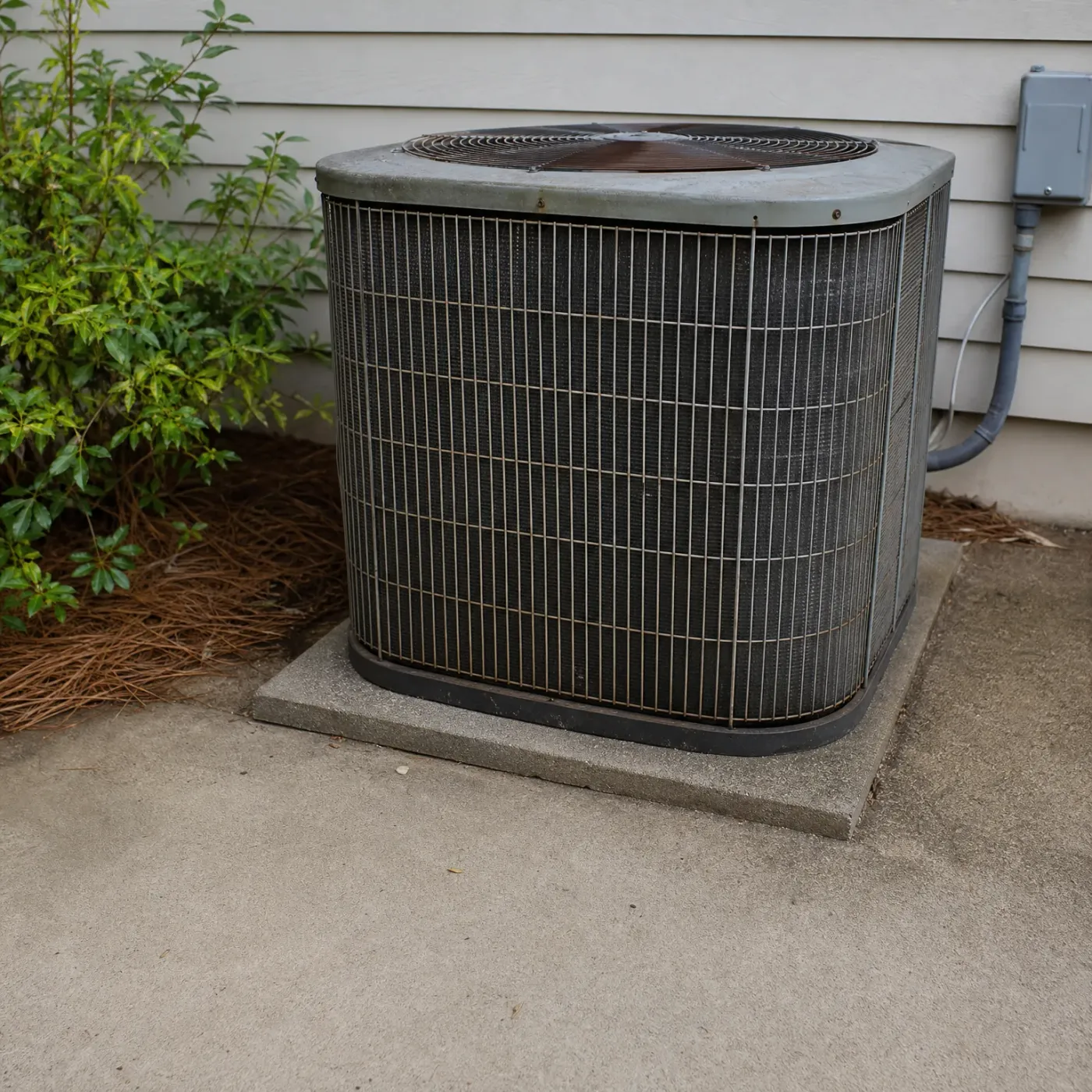
An outdoor air conditioner condenser unit on a concrete pad beside a house with horizontal lap siding, with a gray electrical disconnect box and conduit on the wall and a green shrub over pine-needle mulch at left.
Before you get your air conditioner repair
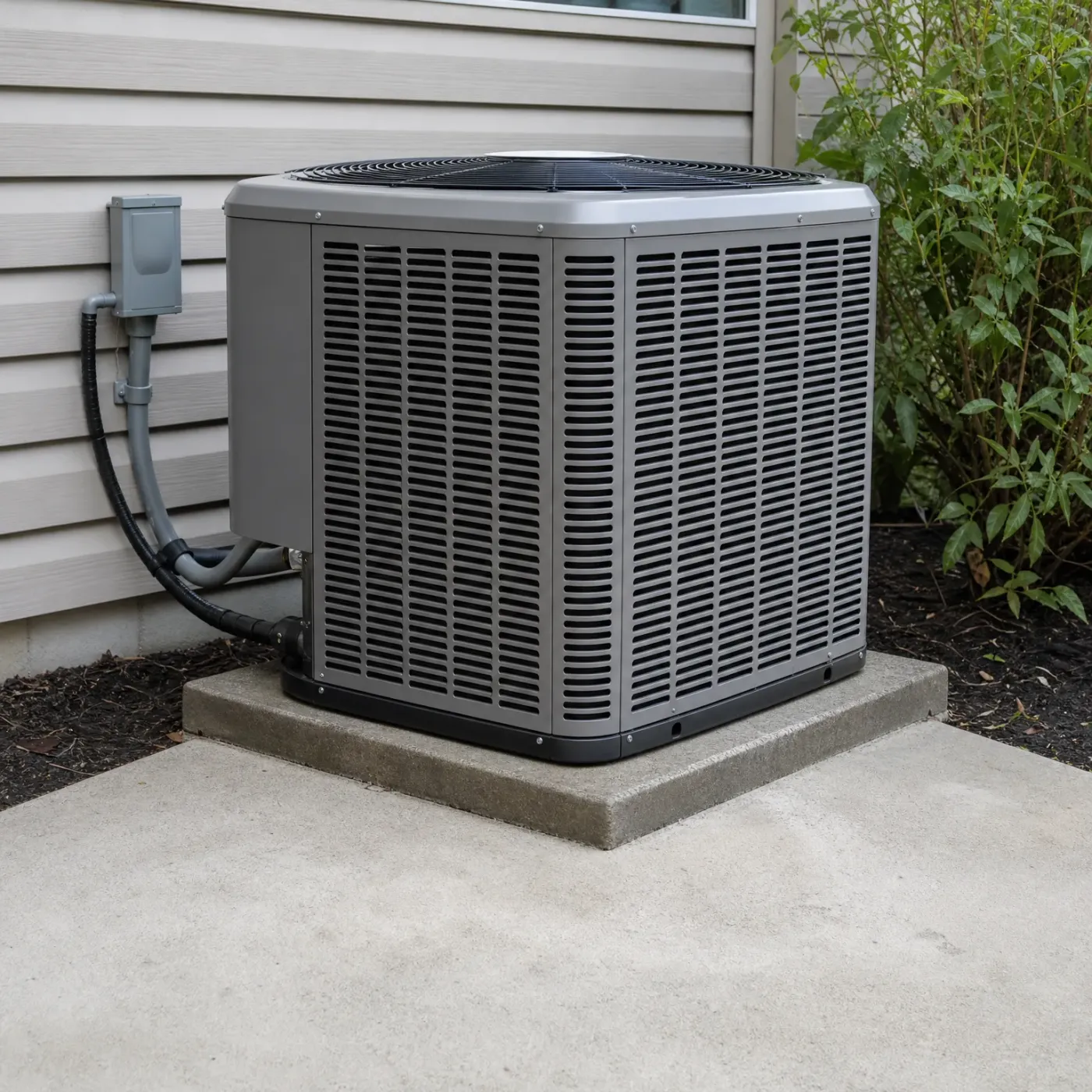
A gray outdoor air conditioner condenser unit on a concrete pad beside a house with light vinyl siding, with an electrical disconnect box and conduit on the wall and a leafy shrub with dark mulch to the right.
After you get your air conditioner repair
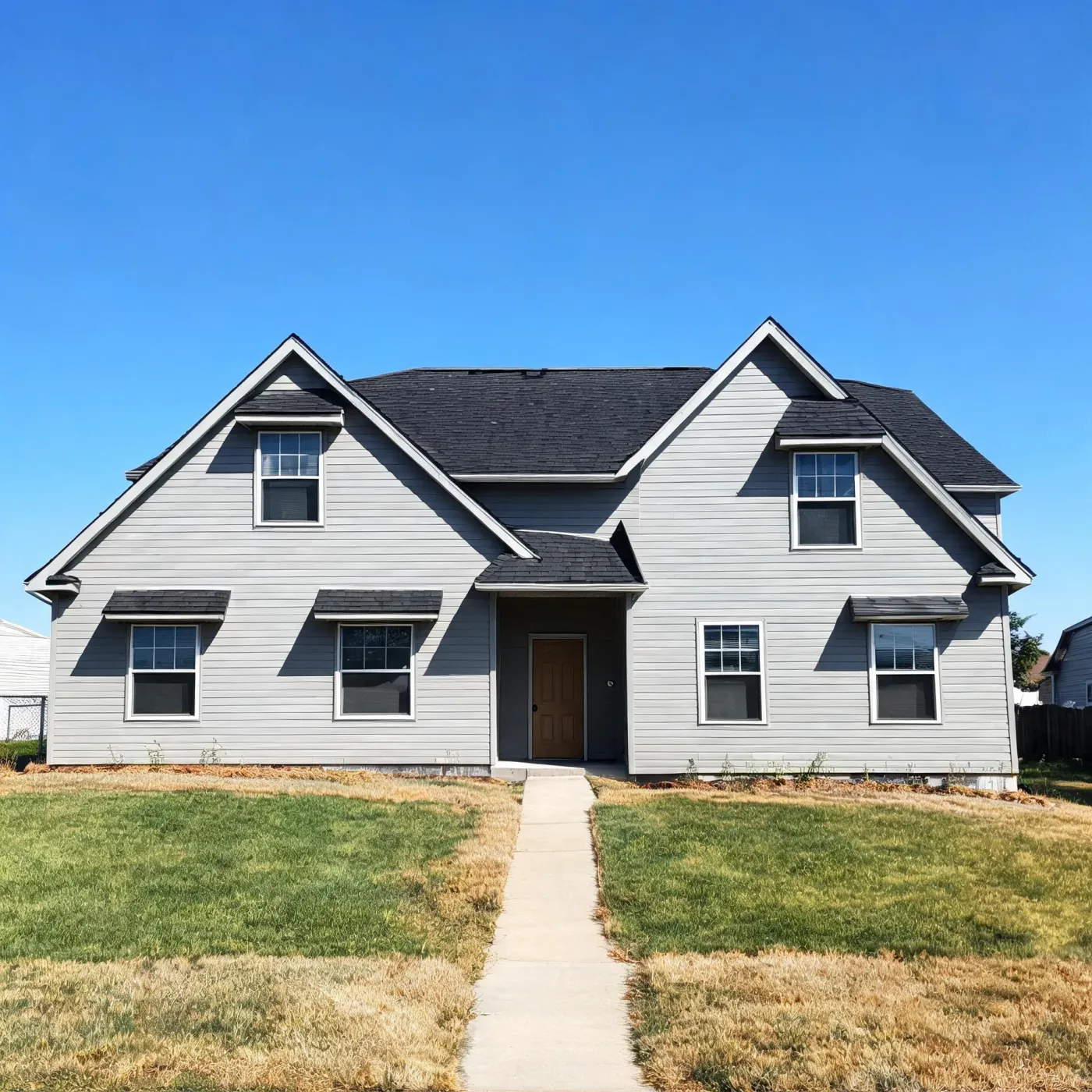
A two-story gray horizontal-siding house with dark shingled gable roofs, a brown front door, and a concrete walkway crossing a patchy green and dry lawn under a clear blue sky.

The weather service puts the summer dew point here at 62°F across June, July and August, averaged over Pottawattamie County. That's heavy, damp air, the kind that makes 85 feel worse than it should. Your AC has to pull that moisture out of the air before the house actually feels cool, and that's on top of lowering the temperature. A coil that's coated in dust or a system running low on charge struggles more with air this wet, because it's doing two jobs at once and losing ground on both. On a dry 85-degree day the same system might hold its own. Here, it often doesn't.

NASA POWER T2MDEW

A system falling behind on the hottest days almost always has a reason you can find and fix: a dirty coil, a low charge, a capacitor that's weakening. That's the straight answer. What it isn't is a sign you need a new system, at least not until someone's actually checked. A contractor who works on air conditioners around Pottawattamie County all summer has seen this exact complaint more times than almost any other, the house that won't come down those last five degrees once it gets into the 90s, and knows which of those few things it usually is before they even open the panel. You'll get matched with one contractor, licensed and local, not a handful of companies competing for the callback. No repeating the thermostat setting and the five-degree gap to a different voice each time. One visit, one person who knows this equipment, looking at your unit instead of guessing over the phone.

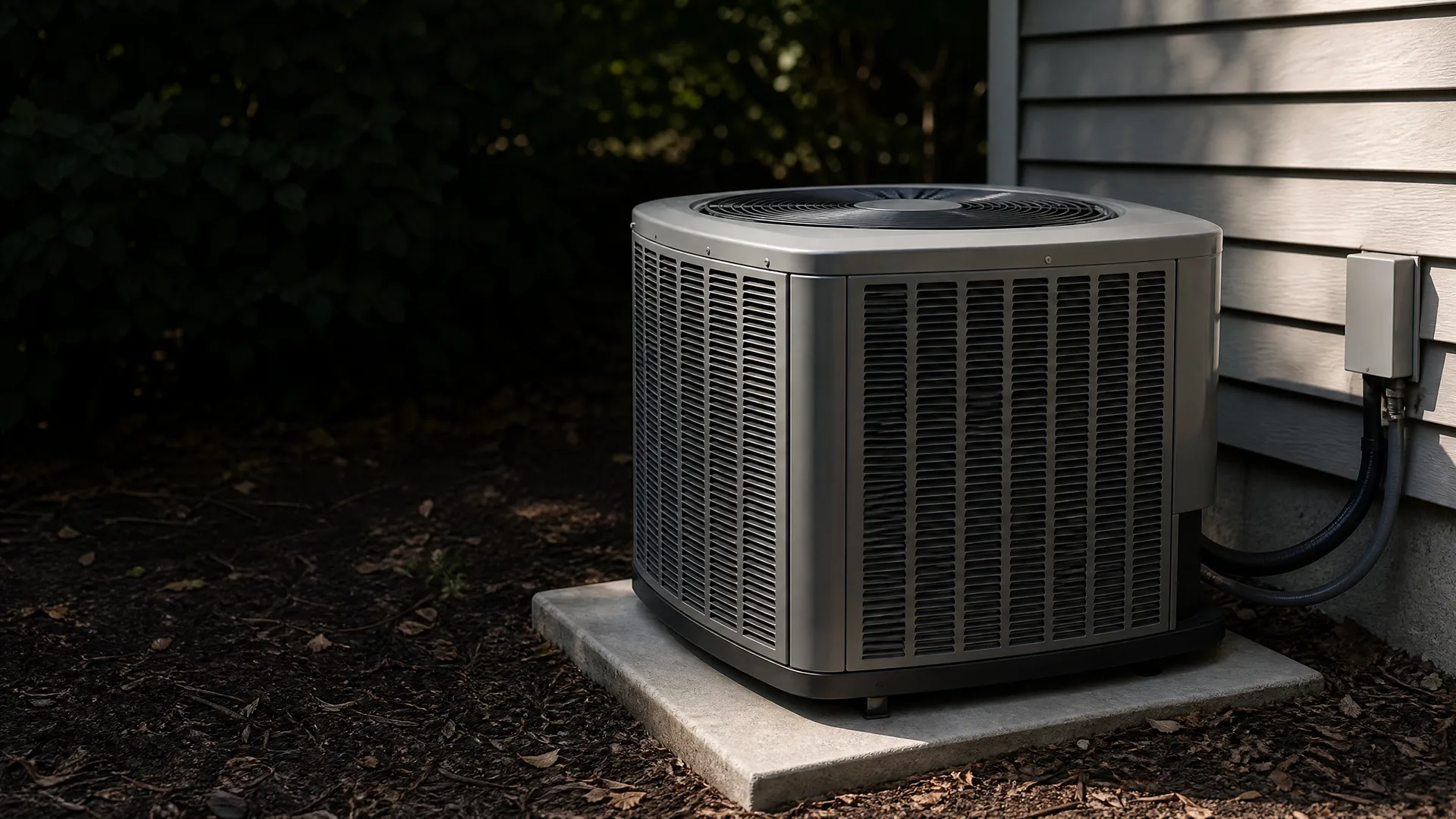
An outdoor air conditioner condenser unit on a concrete pad beside a house with horizontal lap siding, with an electrical disconnect box and conduit on the wall and dark mulch and shrubs around it.

Skip calling around

RepairCentral ACPottawattamie County, IA
Step 1 of 2

What ZIP code is the job in?