











AC blowing warm air in Iowa City, IA

Send it today

Warm air from the vents in the middle of an Iowa City summer is not something to sit with. The humidity makes it worse than the thermostat number alone suggests, and a system that is not actually cooling is often working just as hard as one that is, running up the bill while you stay uncomfortable. Whatever is behind it, a low charge, a failing capacitor, a compressor that is not keeping up, it is worth having someone look at it who works on these systems around Johnson County every summer and has a good idea what tends to go wrong before they even open the unit. Send the request through and the search for who to call is off your plate. One local, licensed contractor gets matched to your job, not a handful of companies competing for your callback. No sitting by the phone wondering which one will actually show up.

Why is my AC blowing warm air in Iowa City?

Your AC is running, but what comes out of the vents feels like room air or worse. In Iowa City's humidity, that's not something you want to wait out, since a system that isn't cooling can still be racking up the same electric bill as one that is. Most of the time the cause is one of a short list of things, and which one matters for how fast this gets fixed.

Usually a refrigerant leak, a dirty condenser, or a frozen evaporator coil thawing out

A low refrigerant charge is the most common reason, usually from a slow leak somewhere in the line set. A condenser coil caked with cottonwood fluff and cut grass, common in Johnson County summers, can't dump heat outside, so the air coming back in is warm. And if the evaporator coil froze up earlier, you'll get warm or weak airflow as it melts, which points to restricted airflow or low refrigerant rather than the compressor itself. Each of these needs a different fix, and only one of them, a dirty outdoor coil, is something you can check yourself by looking at the unit outside. The other two mean opening up the system, which calls for a licensed contractor with gauges and the training to find where the charge is going.

A man with grey hair and stubble in a dark sweater sits on a grey sofa indoors, looking off to the side, with a potted plant and a sunlit window behind him.
A man with gray hair, a beard and glasses, wearing a dark green sweater, sits on a gray sofa in a sunlit living room with a potted plant, table lamp and wooden sideboard behind him.
A middle-aged man with graying hair and a short beard sits on a blue sofa in a living room, looking toward a window, with a bookshelf, lamp and framed picture in the background.
A man with graying curly hair and a dark green sweater sits on a gray sofa in a sunlit living room, looking off to the side, with a framed picture, shelving, an armchair and a window with sheer curtains behind him.

Repair the Unit or Replace It

Call for repair

  • Warm air from the vents while the thermostat is set low usually means the refrigerant charge is low, a capacitor has failed, or the condenser outside isn't running.
  • A contractor who works on these systems all summer in Johnson County can usually narrow it down from how the unit sounds and whether the outdoor fan is turning.
  • If the outdoor unit is caked with grass clippings or cottonwood fluff, that alone can keep it from shedding heat, and clearing it is a repair, not a replacement.
  • A system still under ten or so years old blowing warm air is almost always a specific part failure, and fixing that part is usually the cheaper path first.
  • Waiting through a muggy Iowa City stretch with warm air coming out doesn't save the system any wear, since a compressor straining against a low charge works harder, not less.

Consider replacement

  • If the same system has needed repair more than once this summer, that pattern says more about where it's headed than any single fix does.
  • A refrigerant leak that keeps recurring in an older unit often means the coil itself is failing, and patching it again just delays the same call.
  • Systems built for the refrigerant phased out a few years back can be expensive to keep charged, since that refrigerant itself has gotten harder to source.
  • An AC that's run twenty summers in Johnson County's humidity has already done more work than one in a milder climate, and that adds up in the compressor.
  • A contractor who looks at the unit in person can tell you honestly whether what's failing is a part or the whole system, rather than guessing from the thermostat alone.
A gray outdoor air conditioning condenser unit sits on a concrete pad beside a house with light siding, a stone-veneer base, a shrub at left, and a lawn in the foreground.

What a low charge does

Refrigerant doesn't get used up the way fuel does. If the level is low, it's because it's leaking out somewhere in the line set or the coil. A system low on charge will still blow air, but that air won't be cold, and the compressor outside will run long stretches trying to make up for it. Left alone, that same leak tends to get worse, and the compressor can take the damage.

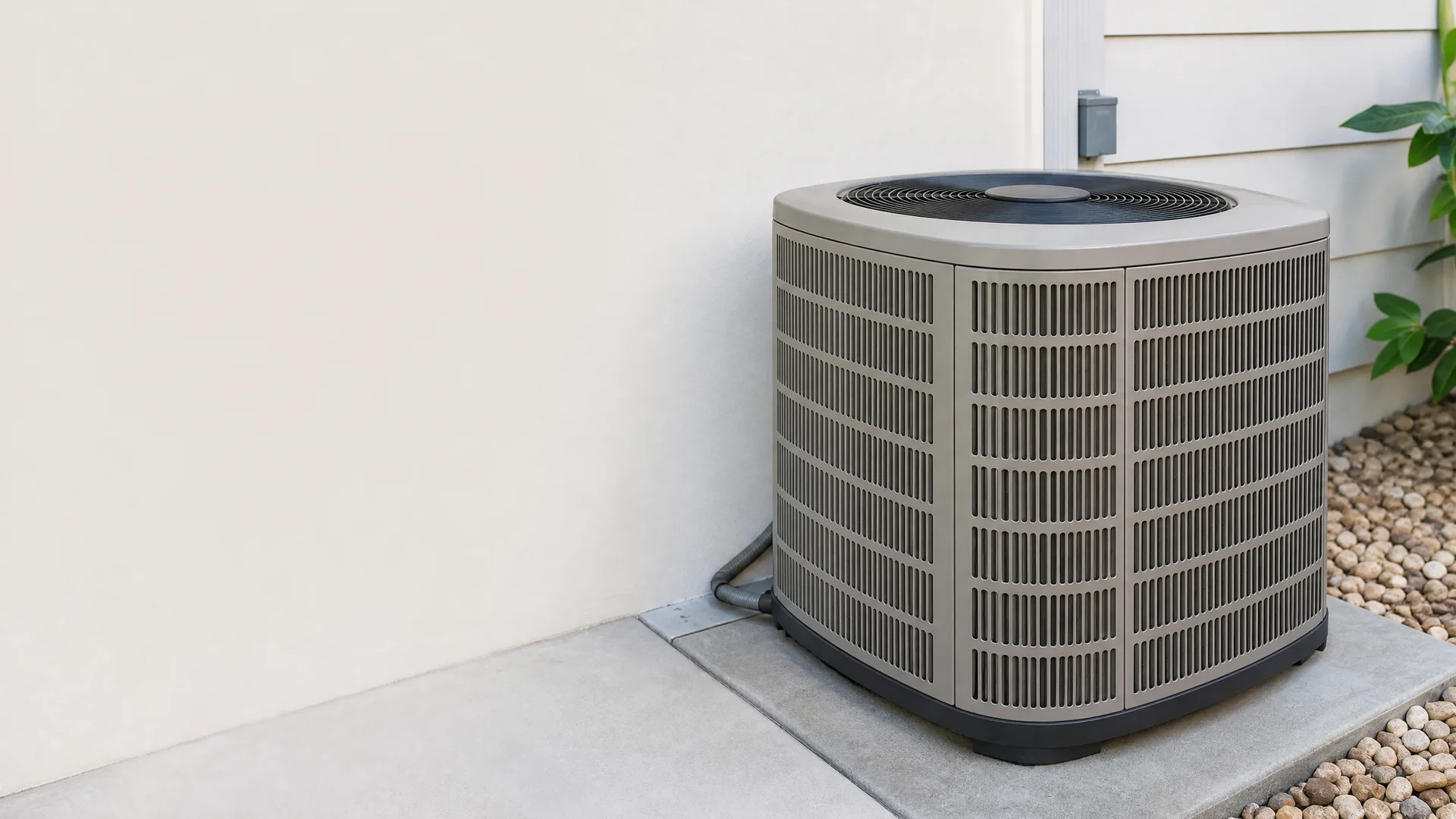
An outdoor air conditioning condenser unit sits on a concrete pad beside a stucco wall and lap siding, with a gravel bed and green shrub at right.

Why the outdoor unit matters

The condenser outside is where the heat your house collects actually gets dumped into the air. If its fan isn't spinning, or the coil around it is caked with grass clippings and cottonwood seed, the system can't get rid of that heat no matter how well the indoor side is running. From the thermostat, that looks the same as a refrigerant problem: warm air, a unit that won't quit running.

Cooling runs June through August

Three months is all your AC gets here, June through August, but that's when it has to work right every day. When it's blowing warm through most of a Johnson County summer, there's no slow season left to wait out the fix in.

NOAA nClimDiv 1991-2020

What a warm house costs you

A house that sits at 78 or 80 degrees in July isn't just uncomfortable. The compressor outside, if it's running at all, may be pulling power without producing any cooling, which shows up on the electric bill as a system working for nothing. Wood floors and trim react to heat the same way they react to humidity, and a house that can't get below the mid 70s on a muggy Johnson County day tends to hold moisture in the walls and furniture longer than one that's cooling properly. None of that reverses itself once the weather breaks. It sits there until the system is fixed and the house has a chance to dry out and cool back down.

What keeps this from getting worse

A compressor that runs without cooling the air is still doing mechanical work, and depending on what's actually wrong, continuing to run it can turn a simple fix into a bigger one. A failed capacitor left alone can take the compressor with it. A refrigerant leak left alone means less charge every week it runs, not the same amount. Shutting the system off at the thermostat until someone looks at it costs you the cooling for a few days. Leaving it running and hoping it corrects itself is the choice that tends to turn a repair into a replacement.

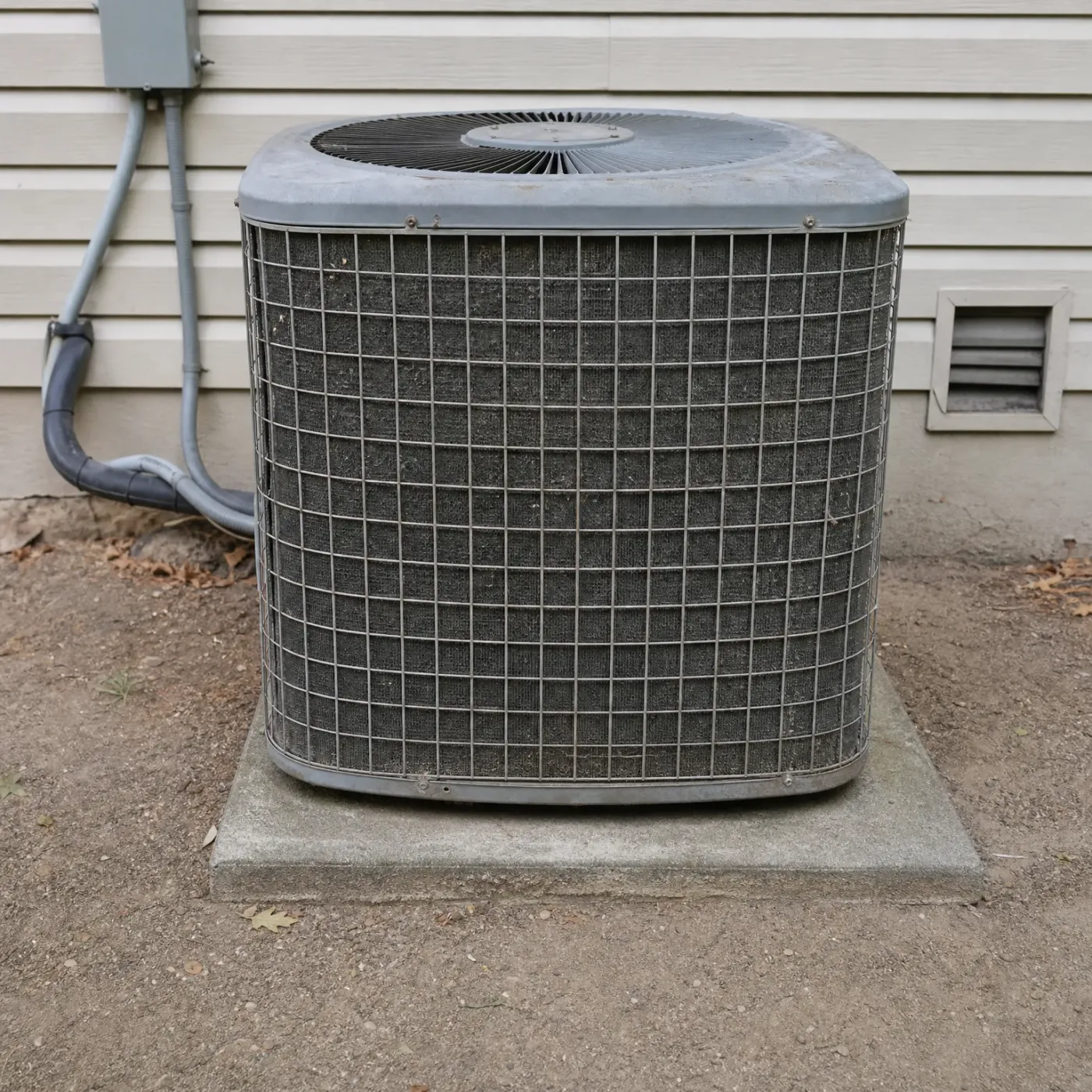
An outdoor air conditioning condenser unit with a dirty mesh coil guard sits on a concrete pad beside a house with horizontal lap siding, a wall vent, and conduit running to an electrical disconnect box.
Before you get your air conditioner repair
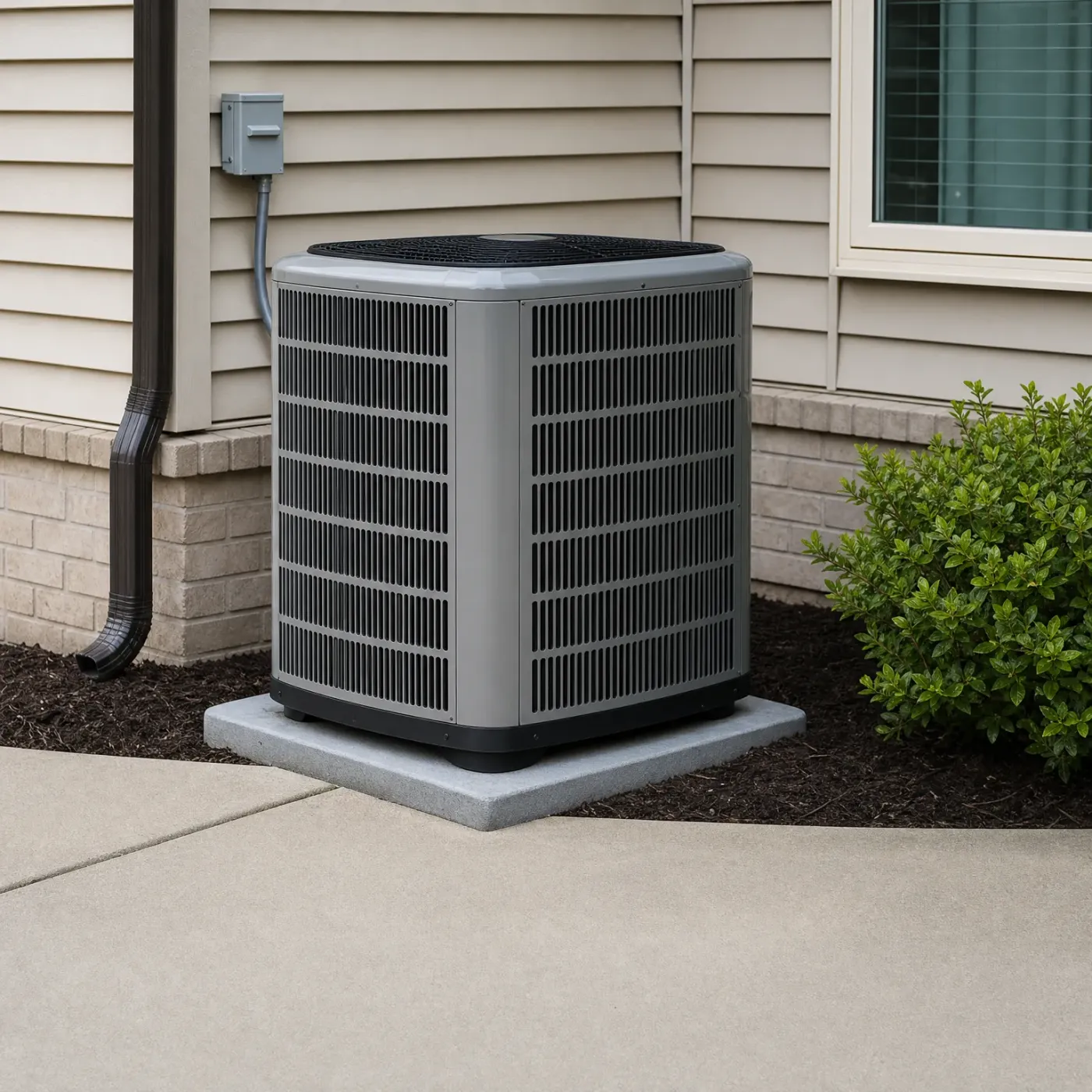
A gray outdoor air conditioning condenser unit on a concrete pad beside a house with horizontal vinyl siding, a brick foundation, downspout, electrical disconnect box, mulch bed and a green shrub.
After you get your air conditioner repair

Finding a pro stops being your job

A system blowing warm air doesn't fix itself by waiting, and in Johnson County, with maybe three good months of summer to use the thing, every day it runs wrong is a day you paid for and didn't get. Whatever is causing it, a low charge, a bad capacitor, a condenser fan that isn't turning, needs eyes on it, not guesswork. Sending the request puts it in front of one local contractor, someone who's out running down this exact problem in this exact heat all season, who knows what tends to fail first in a system like yours and what to check before anything else. You're not left sorting through a list of names or waiting on more than one callback. The house is still sitting warm right now. Getting someone on it today is the part you can actually do something about.

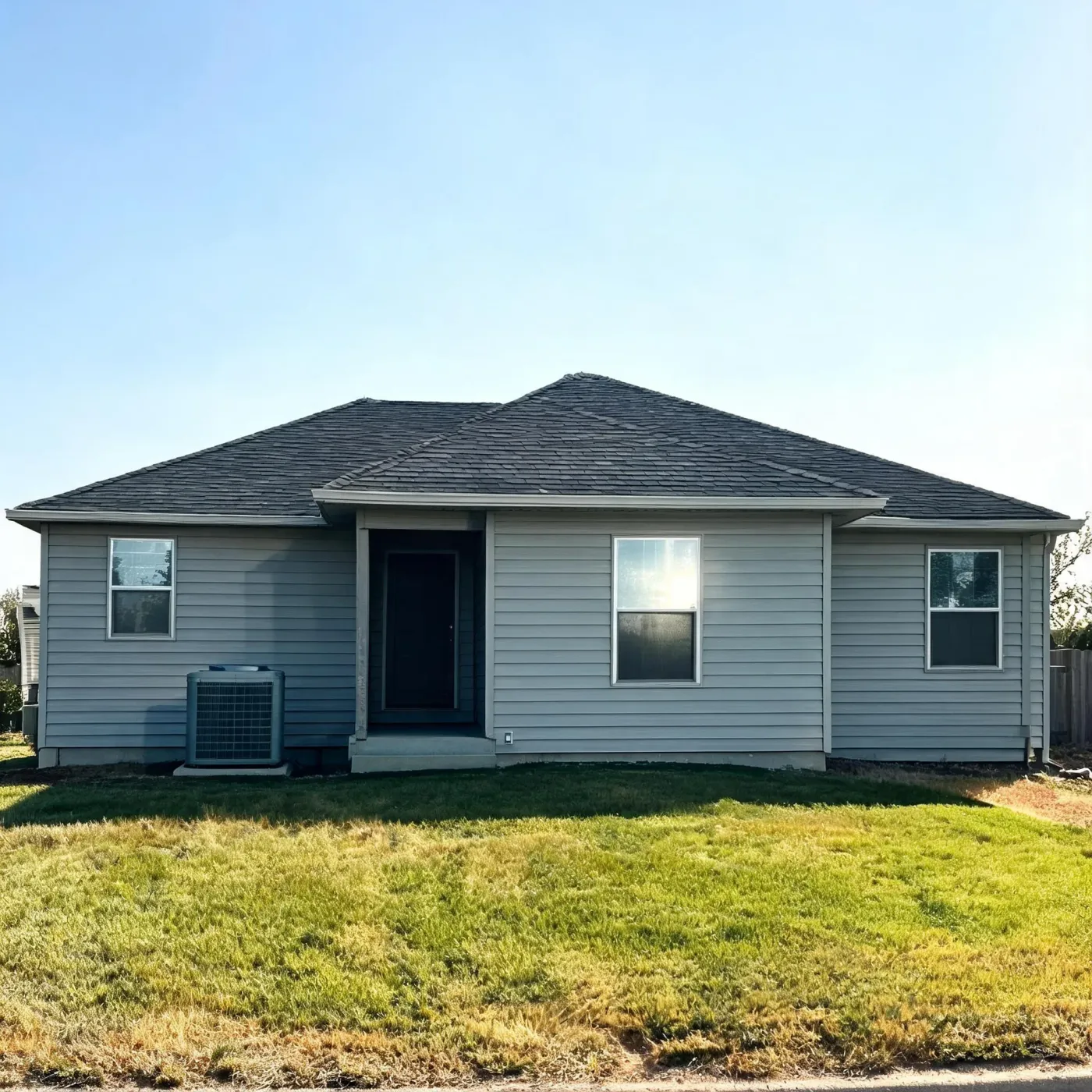
Single-story house with light gray horizontal siding, dark shingled hip roof, a dark front door with a small concrete stoop, three windows, and an air conditioning condenser unit at left, fronted by a grass lawn under a clear sky.

A Johnson County summer runs a dew point of 63°F, and that's what makes warm air from the vents feel so much worse than the thermostat shows. At that dew point, the air sitting in your house is heavy with moisture, and an AC that isn't cooling isn't pulling that moisture out either. You end up with a house that feels damp as well as warm, sheets that feel clammy, floors that feel sticky underfoot. A system working right handles both at once, the heat and the wet. One that isn't leaves you sitting in both.

NASA POWER T2MDEW

An outdoor air conditioning condenser unit on a concrete pad beside a house with horizontal lap siding, with a gray electrical disconnect box and conduit on the wall, mulch bed and shrub to the right, and mown grass in the foreground.
A condenser like this one, running normally, keeps cold air moving through the vents without you giving it a second thought.
An outdoor air conditioning condenser unit on a concrete pad beside a house with light blue horizontal siding, with a shrub to the left and a conduit and disconnect box on the wall to the right.
A coil caked in dust and debris like this one can choke a condenser down until it can't keep the house cool anymore.
  1. Thermostat calls for cooling and signals the outdoor unit to start.

  2. Compressor pressurizes refrigerant and sends it to the condenser coil.

  3. Condenser fan pulls outside air across the coil to shed heat.

  4. Liquid refrigerant travels inside to the evaporator coil in the air handler.

A woman with shoulder-length graying hair, wearing a white top and light knit cardigan, sits in a patterned armchair near a window and looks off to the side, with a white shelving unit behind her.
A woman with her hair in a bun holds a sleeping child against her chest, both wrapped in a grey knit blanket on a sofa in a dimly lit room with a lamp and houseplant behind them.
A gray outdoor air conditioning condenser unit on a concrete pad beside a house with horizontal siding and a stone veneer base, with refrigerant line and electrical disconnect box on the wall and flowering shrubs to the left.

Running clean

A condenser like this sits outside on its pad, lines running into the wall, and does its job without drawing attention to itself. The fins stay clear, air moves through the coil, and the house holds whatever temperature the thermostat is set to.


An outdoor air conditioner condenser unit on a concrete pad beside a house with light gray horizontal siding, with mulch and green shrubs on either side and a concrete walkway in the foreground.

Working but losing

This unit still turns on. The fan still spins. But the fins are caked with dirt and the casing shows years of weather, and a coil that choked up like this can't shed heat the way it needs to, so the air coming inside stops being cold.

Warm air from the vents has one of a handful of causes, a low charge, a bad capacitor, a condenser that isn't running, and none of them get better by waiting through a Johnson County summer. A licensed contractor who works on these systems every season in the area knows which of those it usually is before the panel even comes off, and you'll be matched with one contractor, not a handful of companies calling at once trying to win the job. That's one less thing to sort out while the house sits warm. Once that's arranged, the part that was yours to do, finding someone qualified, is done. What's left is the repair itself: the charge gets checked, the failed part gets replaced, the condenser gets back to doing its job. The air coming out of the vents again will feel like August is supposed to feel.

A white clapboard two-story house with black shutters at dusk, its lit entry porch and windows glowing, with a stone walkway leading to steps flanked by planters, shrubs and lawn.

Air Conditioner Repair

Let someone else find the pro

RepairCentral ACJohnson County, IA
Step 1 of 2

What ZIP code is the job in?

  • A beige upholstered armchair with an olive cushion sits in a sunlit corner beside a wooden side table holding a ceramic vase with leafy branches, under a framed abstract artwork, on a woven rug over a wood floor.
    • Get matched with someone who does this kind of work in Johnson County.
    • Get matched with a pro who fixes air conditioners in Johnson County.
  • A gray outdoor condenser unit on a concrete pad surrounded by dark gravel, beside a dark wood-sided wall with an electrical disconnect box and a stone veneer wall with a small evergreen shrub.
    • Send the request and finding a pro stops being your problem.
    • After this form, you can stop searching for an air conditioner pro.
  • A beige upholstered oversized armchair with a matching cushion and a knit throw draped over one arm, beside a round wooden side table holding a vase of greenery near a curtained window, with a framed landscape print on the wall and a woven rug on a wood floor.
    • Skip calling shops to ask who repairs air conditioners in Johnson County.
    • Answer a few questions instead of calling shop after shop.
  • Sunlit living room corner with a beige upholstered sofa, cushion and knitted throw, a round wooden side table holding a white ceramic vase of leafy branches and a small wooden bowl, a framed landscape painting on the wall, and a window at right.
    • A licensed pro who repairs air conditioners in Johnson County gets your request.
    • The pro who reaches out is licensed in Iowa.



