
Why your AC keeps turning on and off in Iowa

RepairCentral ACIowa
Step 1 of 2

What ZIP code is the job in?

Why does my AC keep turning on and off?

You notice it most on the sticky afternoons, the kind Iowa gets plenty of from June through August: the AC kicks on, runs a few minutes, shuts off, then starts right back up again. It never settles into a steady run. You're not imagining it, and it's worth figuring out before the next heat wave, because a system that cycles like this isn't cooling the way it should.

A dirty filter or low refrigerant is usually behind it

Most short cycling comes down to one of a few things. A clogged filter chokes airflow, so the coil inside gets too cold and frosts over, and the system shuts off to protect itself. Low refrigerant from a slow leak does the same thing. A thermostat in direct sun or near a heat vent can also misread the room and cut the system off early. In Iowa, where the air is thick with moisture most summer days, a struggling system has to work harder to pull that humidity out, and anything that was already borderline, a weak capacitor, a coil close to freezing, tends to show up now. Left alone, this wears on the compressor and drives up the power bill even though power here is cheap.

A gray outdoor air conditioning condenser unit on a concrete pad beside a house with horizontal lap siding, with a wall-mounted disconnect box and conduit, and shrubs to the left.

Cycling on a normal schedule

A healthy system starts, runs long enough to pull the heat out of the house, then shuts off and stays off for a while. The pad is clean, the disconnect box is intact, and the unit runs quiet without any rattle from loose panels or debris caught inside.


An outdoor air conditioning condenser unit on a concrete pad beside a house with horizontal siding and a concrete foundation, with dry brown leaves on the ground to either side.

Cycling too fast to cool anything

Leaves piled against the cabinet and a layer of grime on the coil block the airflow the unit needs to run a full cycle. It shuts off almost as soon as it starts, then kicks back on minutes later, and the house never quite catches up to the thermostat.

Fix It Yourself or Call a Contractor

Short cycling you can fix

  • A filter clogged with a summer's worth of dust chokes airflow, and swapping it often lets the system run a full cycle again.
  • Ivy or clippings packed against the outdoor unit block airflow across the coil, and clearing a foot of space around it solves that.
  • A thermostat placed near a vent or in direct sun reads the temperature wrong and can be moved or shaded.
  • Shade trees or an awning that changes how much sun the unit gets through the day can throw off a thermostat that used to work fine.
  • Weather stripping that's come loose around a door or window lets in enough heat on a 90 degree day to make the system cycle more than it used to.

Short cycling that needs a contractor

  • A refrigerant leak drops the charge low enough that the coil frosts over and the system shuts off to protect itself, then starts again once it thaws.
  • A failing capacitor can't hold the charge needed to keep the compressor running, so it stutters on and off instead of staying on.
  • An oversized system cools the air fast and shuts off before it's pulled the humidity out, which is why the house still feels sticky after it clicks off.
  • A dirty condenser coil holds heat the system can't shed, so it overheats and the high limit switch cuts it off early.
  • A failing run capacitor or a relay stuck between positions can make the compressor kick on and off rather than hold a steady cycle.
  • Low refrigerant from a slow leak means the system has to work longer and still trips off before the house ever reaches the set temperature.
A smiling bearded man in a dark green henley shirt sits on a blue-gray couch in a living room, with a bowl of popcorn in the foreground and a houseplant and window behind him.
A smiling man in a dark sweatshirt reclines on a gray sofa in a living room, with a wooden bowl of popcorn on a table in the foreground and a dining area, shelving, and pendant lamp behind him.
A smiling man in a navy long-sleeve shirt reclines on a sofa in a living room, with a bowl of popcorn on a wooden coffee table and framed pictures on the wall behind him.
A smiling man in a dark green long-sleeved shirt sits on a gray sofa in a living room, with a bowl of popcorn in the foreground and windows and a potted plant behind him.
An outdoor air conditioner condenser unit on a concrete pad beside a house with beige horizontal siding and a stone-veneer base, with refrigerant lines running to a gray wall-mounted electrical box, surrounded by dark mulch, a flowering shrub and an evergreen on the left.
Running fine, it starts up, holds a steady cycle, and the pad and disconnect box stay clean with nothing crowding the coil.
An outdoor air conditioning condenser unit on a concrete pad beside a house with light vinyl siding, an electrical disconnect box and conduit on the wall, bare shrubs and mulch to the right, and a concrete walkway in the foreground.
Struggling like this, it short cycles against bare dirt and dead shrubs, a sign something's blocking airflow or pulling it down.

A system that starts and stops within minutes is usually telling you something specific, not just acting up. If the thermostat sits near a supply vent or a sunny window, it reads the air around it instead of the house and shuts the compressor off too soon. The compressor itself needs rest between starts, and if something keeps calling for it too soon, it trips an internal switch meant to protect the motor. Low refrigerant lets the indoor coil ice over, and once that happens a safety switch cuts power before the house ever gets cool. An oversized unit does the opposite problem: it blasts the air near the thermostat cold fast, satisfies the setting, and shuts off before the rest of the house or the humidity catches up. A worn capacitor can't hold the compressor at a steady draw, so it hunts on and off under its own load. And a condensate line clogged with algae or dust backs up until a float switch kills the unit rather than let water spill into the house.

What's Actually Causing It

  • A thermostat sensing too close to a supply vent or a window reads the room wrong and cuts the compressor early.
  • The compressor needs a few minutes off between starts or it trips its own overload protection and shuts down again.
  • A low refrigerant charge lets the indoor coil frost over, and the system shuts off on a safety switch before the house cools.
  • An oversized unit cools the air near the thermostat fast without pulling the humidity out of the rest of the house, so it shuts off and restarts within minutes.
  • A failing run capacitor can't keep the compressor motor going at a steady draw, so it stutters on and off under load.
  • A clogged condensate line trips the float switch built to stop the unit before water backs up into the house.
A woman in a dark knit turtleneck sweater reclines on a couch under a cream knit blanket, looking down at an open book, with a lit table lamp and framed pictures behind her.
A smiling middle-aged man in a dark green sweater sits at a candlelit table with wine glasses and a plate of greens in a dimly lit interior.
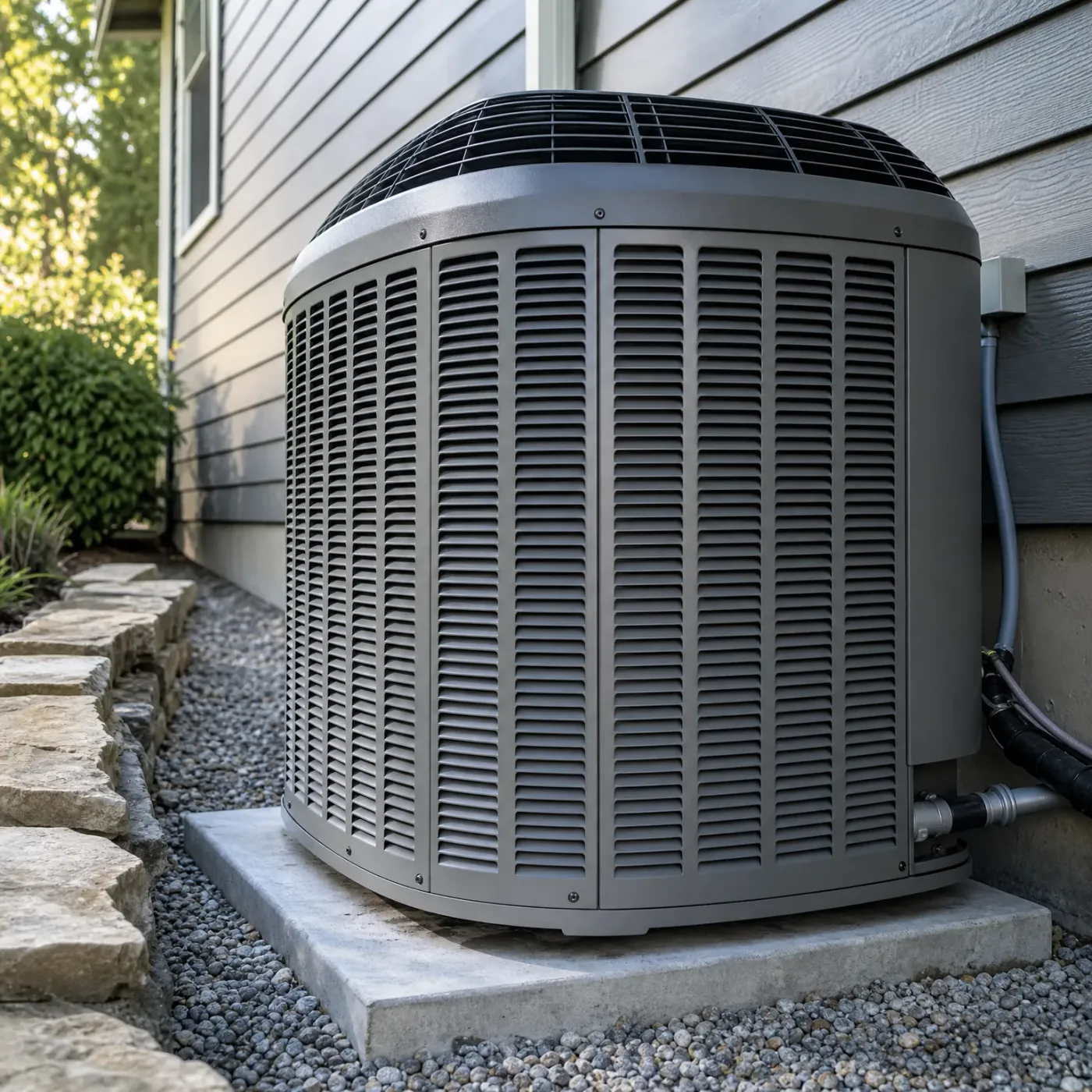
A gray outdoor air conditioning condenser unit with louvered sides and a black top grille sits on a concrete pad beside a house with horizontal lap siding, surrounded by gravel and a stone border.

A local pro for your air conditioner repair

After you send the request, you're done searching.

Say what's going on with your air conditioner, and a pro who works on them reaches out.

Request a pro

No fee to send it, and nothing to sign.

A woman in a long cream cardigan and jeans stands at an open wooden front door of a gray shingled house with stone-based porch columns, with a second person visible inside, and potted flowers and shrubs beside the entry.

What short cycling does to your house

A compressor that starts and stops all afternoon wears out faster than one that runs a steady cycle. Each restart puts a hard draw on the parts that get it going, and a system doing that every few minutes through August logs a lot more starts than it was built for. You'll likely see it on the bill before you see it fail outright, since a unit that never finishes a cycle never gets the chance to run efficiently either. Meanwhile the house stays muggy even with the AC running most of the afternoon, because short bursts pull some heat out but never enough to get ahead of a sticky Iowa day.

If this is already happening at your place, it's worth having someone look at the unit itself rather than guessing room by room. A contractor who works on systems like yours in your area can check the thermostat placement, the refrigerant charge, and the airflow around the outdoor unit, and tell you which one is actually behind it. Once you send that information in, it's one less thing on your list. Someone who knows the equipment takes it from there and reaches out to you directly.

A shallow dark wooden bowl and a stack of books rest on a wooden table in front of a beige sofa with linen and green cushions, with a tall ceramic vase of thin branches beside a window in the background.
A gray outdoor air conditioner condenser unit on a concrete pad beside a house with horizontal siding, with an electrical disconnect box and conduit on the wall behind it.

What a full cycle looks like

A system that's sized right for the house runs ten to fifteen minutes once it starts, long enough to pull moisture out of the air along with the heat, then shuts off for a while before it needs to run again. That's the rhythm an AC is built around. When a unit starts and stops every two or three minutes instead, it never gets far enough into the cycle to do that, and the compressor is the part absorbing the strain.

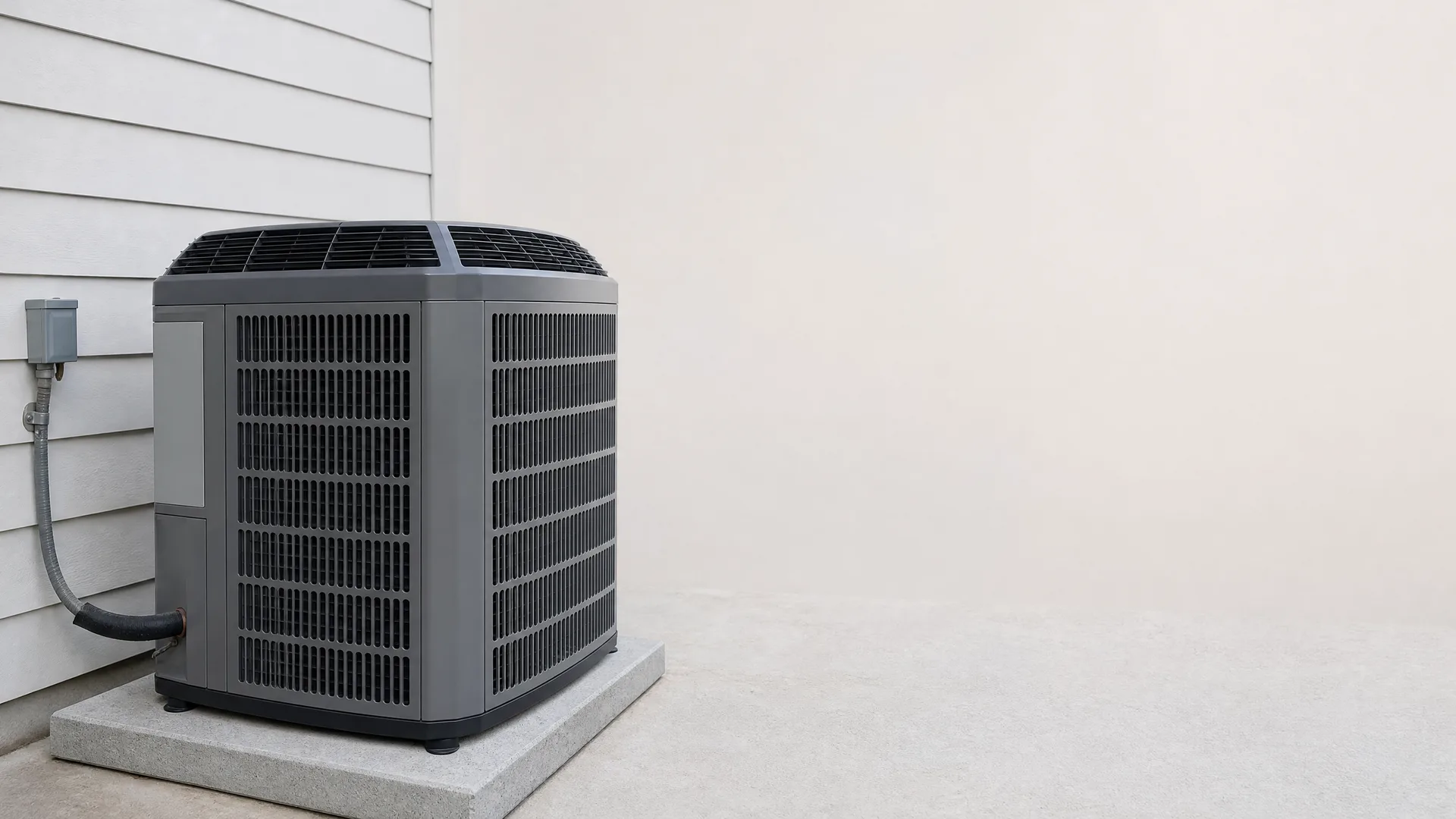
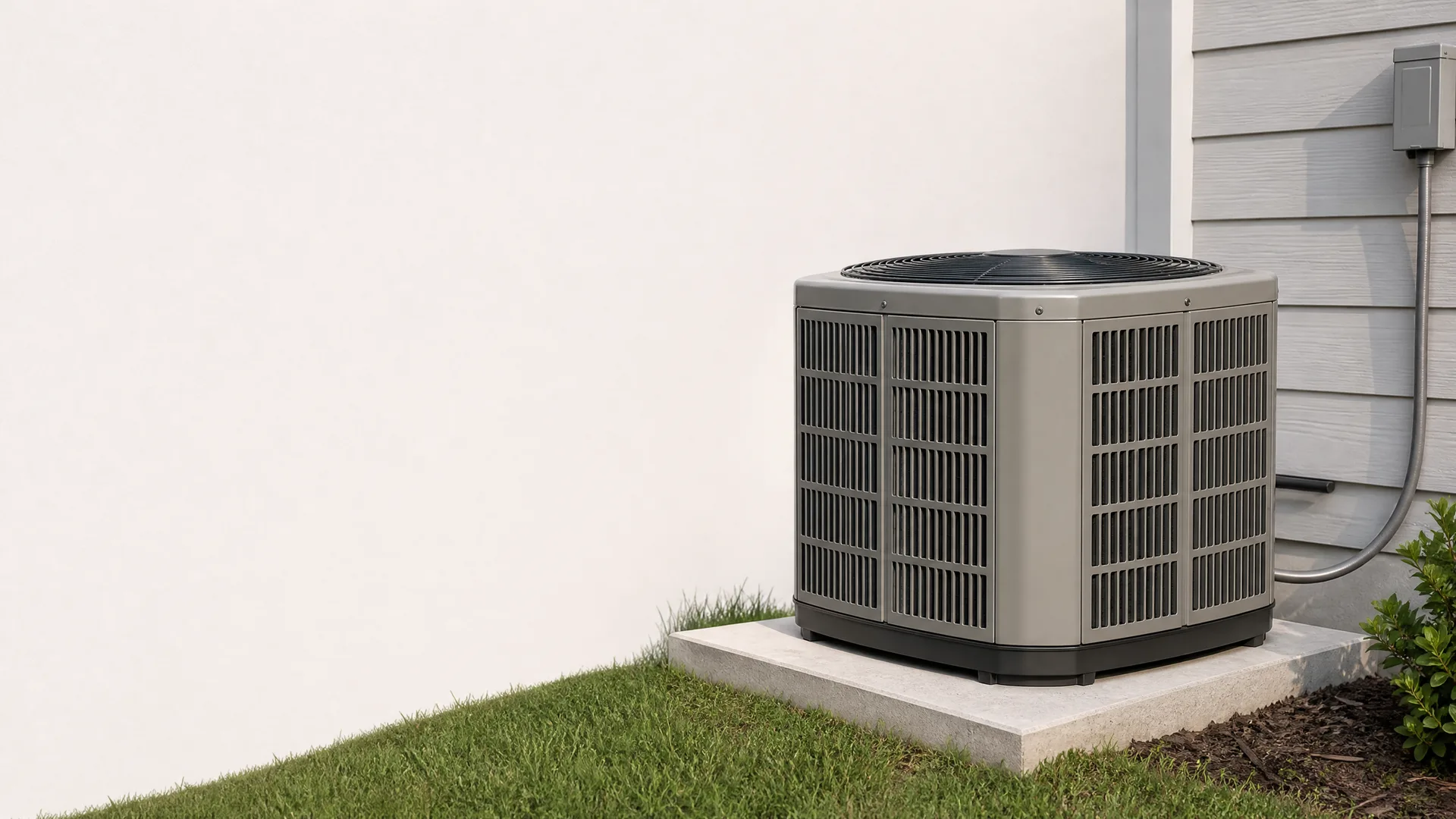
An outdoor air conditioner condenser unit on a concrete pad beside a house with horizontal lap siding, with a gray electrical disconnect box and conduit on the wall, grass in the foreground and a plain light wall at left.

Why the compressor takes the hit

Starting a compressor draws several times the current it needs once it's running, and that surge is where the wear happens. A unit that cycles every few minutes puts that draw on the system over and over through a day of 90-degree heat instead of the handful of times a normal schedule would ask for. Iowa's humid stretch runs June through August, and a compressor worked this hard across those months is the part most likely to fail first.

Power costs 13.62 cents per kilowatt-hour statewide

At 13.62 cents a kilowatt-hour, a compressor that short cycles all afternoon is drawing hard and getting less cooling for it. That add-up shows on the August bill even though power here is cheap compared to most places, because a unit restarting every few minutes works harder than one running its full cycle.

EIA-861 2025 statewide residential average

A problem worth a phone call

A clogged filter or a coil packed with yard debris is something you can find on a Saturday afternoon, but a thermostat placed wrong, a failing overload switch, or a refrigerant leak takes a gauge set and some training to pin down. If you've already swapped the filter and cleared the unit and it's still kicking on and off every few minutes, the cause is inside the system, not around it. That's a job for someone who works on these units for a living, not another hour spent guessing at it yourself.

What happens if it waits

A system short cycling in July doesn't fix itself by August. Every restart strains the compressor a little more, and a unit already struggling to hold a cycle is a unit more likely to quit outright on the hottest day of the year, which is usually when a contractor's schedule is hardest to get on. Getting it looked at now, while it's still running, costs less in wear than waiting until it stops running altogether. Iowa summers don't let up early, and a system that's already struggling has months left to get through.

An outdoor air conditioner condenser unit on a concrete pad beside a house with light horizontal lap siding, with an electrical disconnect box and conduit on the wall behind it.
Before you get your air conditioner repair
An outdoor air conditioning condenser unit on a concrete pad beside a house with white horizontal lap siding, with an electrical disconnect box and insulated refrigerant line on the wall and a shrub over mulch to the right.
After you get your air conditioner repair
A two-story gray horizontal-siding house with gabled roof and covered entry, fronted by a lawn, trees, a wet concrete walkway and sidewalk, and a wet street in low sunlight.

That stickiness you feel outdoors is why your AC has to work harder than the thermostat number alone suggests. Summer dew points around Iowa average 62°F, per NOAA climate data, and above 60 the air starts feeling heavy even when the temperature itself isn't that high. Your system has to pull that moisture out along with the heat, which means a longer run each cycle to actually get the room comfortable. A unit that's already short cycling never gets that long run, so the air inside stays damp and sticky even with the AC on. That's often the tell: the house never quite feels dry, no matter how often the compressor kicks on.

NASA POWER T2MDEW county cells weighted by homes

A system that short cycles isn't going to fix itself. Whatever's causing it, a clogged filter, a thermostat in the wrong spot, a failing part, or a refrigerant leak, it keeps happening until someone finds the cause and corrects it. Left alone through a sticky Iowa summer, that strain adds up on the parts that start the compressor and on the bill tied to that 13.62 cents a kilowatt-hour. The fix itself might be simple or it might need a gauge set and some training, but you don't have to be the one who figures out which. Send the form and that search, the comparing, the deciding who's worth calling, stops being something you have to carry on top of everything else you've got going this evening. A contractor who works on systems like yours gets your information and reaches out. Your part is done once you send it. The rest is theirs to sort out, and your afternoons go back to running cool and staying that way.

Sunlit corner of a room with a potted leafy tree in a gray planter, a wooden bench with a cushion and knitted throw, a linen curtain beside a window, wood flooring and a woven rug.
Sunlit entryway with a dark jacket hanging on a wooden wall hook, a wooden bench with a woven pillow and fringed throw, brown leather shoes on a jute mat, and a glazed wooden front door at right.
A wooden console table with a lower shelf holds a pale ceramic vase with olive branches and a dark shallow bowl, with a woven basket containing a cream fringed throw underneath, beside a doorway and wood floor.
A small olive-like tree in a round stone-colored planter stands in a corner of a room with wood flooring, a black-framed window showing trees outside, and wood cabinetry on the right lit by warm light.
A speckled ceramic mug and a wooden bowl sit on a rustic wooden side table beside a beige sofa with a knit throw, with leafy green branches in a glass vase behind.

Get the right pro for your air conditioner

Send the request today and stop worrying about who to call.

Send it today

Sending the form costs nothing.