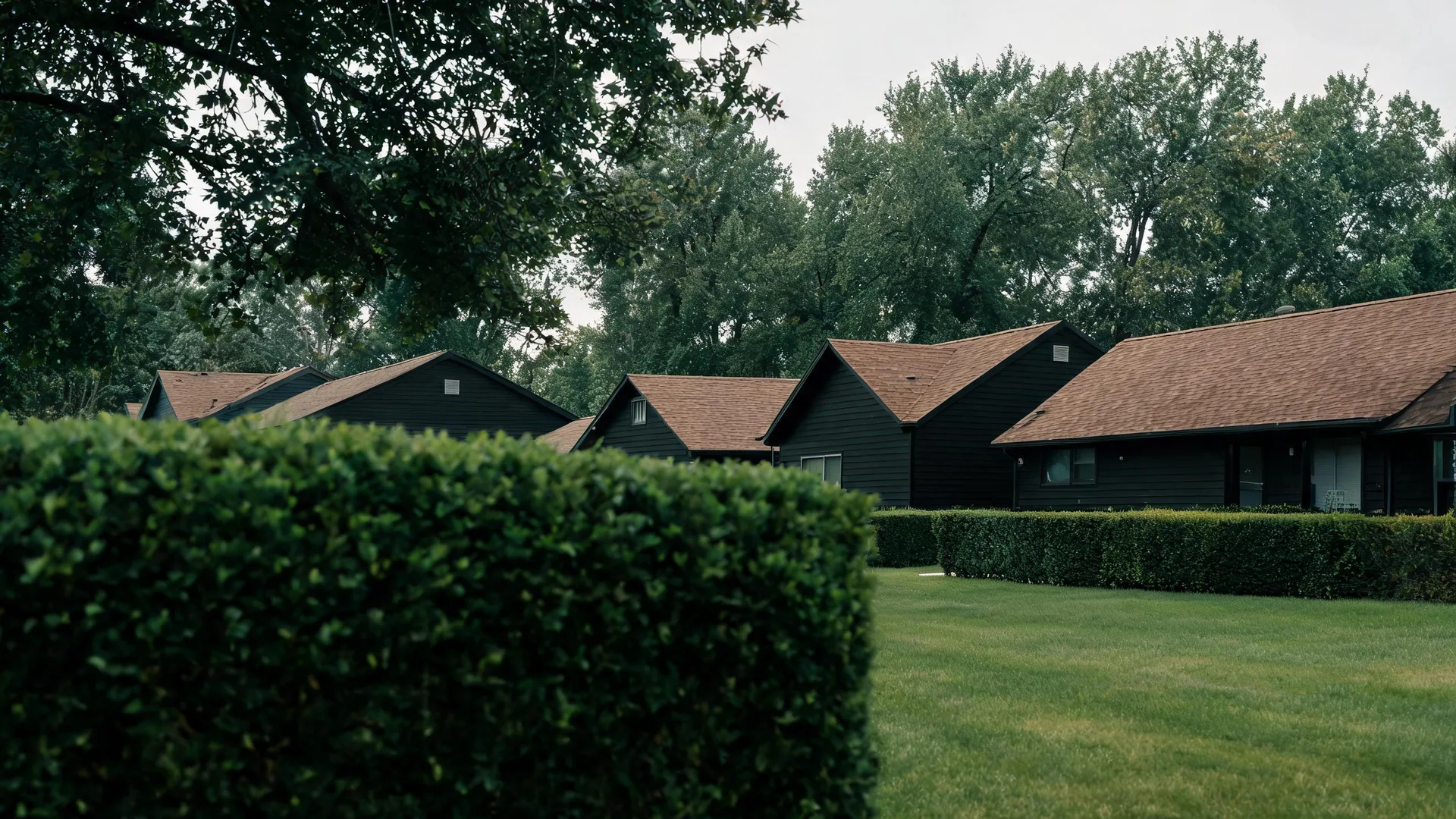
A row of dark-sided buildings with brown shingled gable roofs behind trimmed hedges, with a mown lawn in the foreground and leafy trees under an overcast sky.

AC Maintenance in Dubuque, IA

Tell us about the job

Takes about a minute. No obligation.

Tune-up, service, or cleaningCentral ACDubuque County, IA
Step 1 of 2

What ZIP code is the job in?

Dirt is the slow killer

A dirty coil cannot shed heat the way it should, so the compressor runs longer and harder to do the same job. Dust on the blower wheel cuts airflow across the whole system. None of this trips a breaker or throws an error. It just wears the compressor down year after year until it fails outright.


Small problems get found early, or they don't get found

A tech checking refrigerant charge, tightening electrical connections and testing capacitor strength will catch a part that's about to fail before it takes the system down with it. Skip that visit and the first sign of trouble is often the system not turning on at all, usually on the hottest day it has to work.

3 months
June through August, your air conditioner is on duty
81°F
the average summer afternoon it cools against
39 hail events
in ten years, and hail bends the fins on outdoor coils
118 wind events
in ten years, and wind drives debris into outdoor units
Isometric cutaway illustration of a small house showing interior rooms with furniture, ceiling ductwork and an air handler, plus an outdoor condenser unit connected by refrigerant lines beside the building.
Your air conditioner works hardest from June through August.

NOAA nClimDiv, 1991–2020 normals

Cooling in Dubuque County starts in June and runs through August.

Have the AC checked in May, before it has to work for real.

Weather here is hard on a system already working hard. One visit a year covers it.

189 severe weather events from 2015 to 2024
15% of homes statewide lost power a day or more in 2024
118 damaging wind events from 2015 to 2024

Half the homes in Dubuque County were built in 1970 or earlier. A system can be replaced more than once in a house that age, so its age isn't tied to the house itself. What matters is how long it's been running since the last time someone looked at it closely. A capacitor weakens slowly. A connection loosens slowly. None of that shows up as a breaker tripping or a warning light. A yearly check is what catches those things while the system is still starting every time you ask it to.

Get it checked before summer finds the weak part for you

If no one has checked your system since it went in, a yearly visit is how you find out what shape it's really in.

Find a contractor
An outdoor air conditioning condenser unit mounted on a concrete pad beside a house, with electrical conduit running to a wall-mounted disconnect box.

A real visit takes the panels off

A thorough visit starts outside, with the panels off the condenser so the coil fins are actually visible, not just a glance at the unit from a few feet away. The coil gets washed, not wiped, because dirt packed between the fins doesn't come off with a rag. Refrigerant charge gets checked against what the system is actually doing, pressures and temperatures together, not just a gauge reading held up to a number on a sticker. The capacitor gets tested under load, since a weak one can still show a reading while it's about to fail. Electrical connections get tightened, because a loose one generates heat right at the lug, and that heat is what takes out a contactor down the road. The blower wheel comes out or gets inspected closely enough to see dust built up on the blades, not just a look through the access panel. A quick visit skips most of this. A gauge gets clipped on, a filter gets glanced at, and the tech is back in the truck before any of that happened. Nothing gets found because nothing was really looked at.

The system tells you before it quits

A system about to fail rarely just quits cold. It warns first. Longer run times to hit the same temperature. Warm air out of some vents and cold out of others. A faint musty smell when it kicks on, which usually means moisture sitting somewhere it shouldn't. Ice on the copper line running to the condenser. Any one of these is worth a look, not a wait and see.

Sound and smell change before failure does

A healthy compressor has a steady hum. A clicking at startup that wasn't there before, a hard rattle from the cabinet, a squeal from the blower, all point to a part working harder than it should. The same goes for a burning smell near the indoor unit, which often means a motor bearing or an electrical connection overheating. Catching that early is the difference between a repair and a replacement.

Aerial view of a gray outdoor air conditioning condenser unit mounted on a concrete pad next to a house with vinyl siding.

Book your AC tune-up in May, before homes here start needing cooling in June.

  1. Jan
  2. Feb
  3. Mar
  4. Apr
  5. May
  6. Jun
  7. Jul
  8. Aug
  9. Sep
  10. Oct
  11. Nov
  12. Dec

A tune-up checks the refrigerant charge, cleans the coils, tests the capacitor and tightens the electrical connections.

A tune-up also means checking things that have nothing to do with dirt or wear. The thermostat gets tested to make sure it's actually calling for cooling and reading the temperature right, since a bad sensor can make a perfectly good system seem broken. Condensate drains get checked for a clog, because a blocked drain backs up and can shut the system down on a safety switch or leave water where it shouldn't be. The disconnect box outside gets opened and looked at, since corrosion in there causes the same kind of heat buildup as a loose wire inside. None of this takes long when someone is already there with the panels off. Skipping it just means the next surprise comes from a part nobody thought to check.