






A row of dark-sided single-story houses with gray shingled roofs behind trimmed hedges and a mown lawn, framed by overhanging tree branches under an overcast sky.

AC Maintenance in Marshalltown, IA

Tell us about the job

Takes about a minute. No obligation.

Tune-up, service, or cleaningCentral ACMarshall County, IA
Step 1 of 2

What ZIP code is the job in?

Skip maintenance long enough and the system starts running longer to do the same job. Dirt on the outdoor condenser coil makes it harder for the system to dump heat, and a dirty evaporator coil inside makes it harder to absorb it. Either one puts more strain on the compressor, and the compressor is not something you want to push harder than it needs to work. A clogged filter restricts airflow across the evaporator coil, and that coil can ice up even on a hot day once airflow drops too low. Low refrigerant from a slow leak usually goes unnoticed for a while, since nothing fails all at once, it just cools less and less until someone notices the house isn't getting comfortable. A yearly check catches the coil before it's caked with dirt, the charge before it drops too far, and loose or corroded electrical connections before they cause a real failure.

3 months
June through August, your air conditioner is on duty
82°F
the average summer afternoon it cools against
31 hail events
in ten years, and hail bends the fins on outdoor coils
65 wind events
in ten years, and wind drives debris into outdoor units
Isometric cutaway illustration of a single-story house showing interior rooms with furniture, attic ductwork connected to an indoor air handler, and an outdoor condenser unit on a pad linked by refrigerant lines.
Your air conditioner works hardest from June through August.

NOAA nClimDiv, 1991–2020 normals

Warm air from the vents when the thermostat is set low enough to run the compressor means something is wrong.

A charge or airflow problem like that is worth finding before the compressor pays for it.

Half the homes in Marshall County were built by 1958, and a system in a house that old has earned a yearly look

Half the homes here were built by 1958
Climate zone 5A
Power costs 13.4 cents a kWh statewide
Three months of workCooling runs June through August here, with afternoon highs averaging 82°F.

A quick visit means someone sprays off the condenser coil, glances at the gauges, and leaves. A thorough one means the coil gets washed clean, not just rinsed on the side you can see, and the panel comes off the blower to check the evaporator coil too. The refrigerant charge gets checked against what the system actually needs, not just topped off to a number that looks right. Electrical connections get tightened, since a loose one heats up over time and can take out a contactor or capacitor. The condensate drain gets checked for algae and blockage, because a clogged drain backs up and can shut the system down or damage the pan underneath. If nobody touches the blower wheel or pulls the panel at all, that is the short version, and it will miss exactly the kind of trouble that builds up slowly.

Catch it while it's small

If your system has been in the house a long time, a yearly check is how you catch problems while they're small.

Find a contractor
An outdoor air conditioning condenser unit mounted on a concrete pad beside a house, with electrical conduit running to a wall-mounted disconnect box.

What you can check, and what needs a gauge

Between visits, the main thing worth doing is looking at the filter. Pull it out, hold it up to a light, and if you can't see through it, swap it or rinse it if it's the reusable kind. A dirty filter is the one thing that gets worse fast and causes real damage, since it starves the evaporator coil of airflow and that coil can ice over. If you ever see ice on the indoor coil or on the copper line running outside, shut the system off and let it thaw completely before running it again. Running it iced up just makes the coil colder and the ice thicker. Outside, keep the area around the condenser clear. Grass clippings, leaves, and mulch piled against it block airflow the same way a dirty coil does. A hose rinse on the outdoor unit between visits does not hurt, but skip the pressure washer, it can bend the fins. Past that, there isn't much to do yourself. Refrigerant charge, electrical connections, and the drain line need a gauge set and someone who knows what the readings should be.

The capacitor reading before it fails

A weakening capacitor still starts the compressor and fan most days, so nothing seems wrong yet. A meter shows it drifting below its rated value long before it quits outright. Once it fails, it usually takes the compressor's start winding through a hard time with it, or leaves the fan motor humming without turning.

Static pressure the thermostat never sees

A system can short cycle or run long for reasons the thermostat has no way to show. Measuring static pressure across the blower catches a return that's too restrictive or ductwork that's choking the airflow, long before it shows up as a comfort complaint.

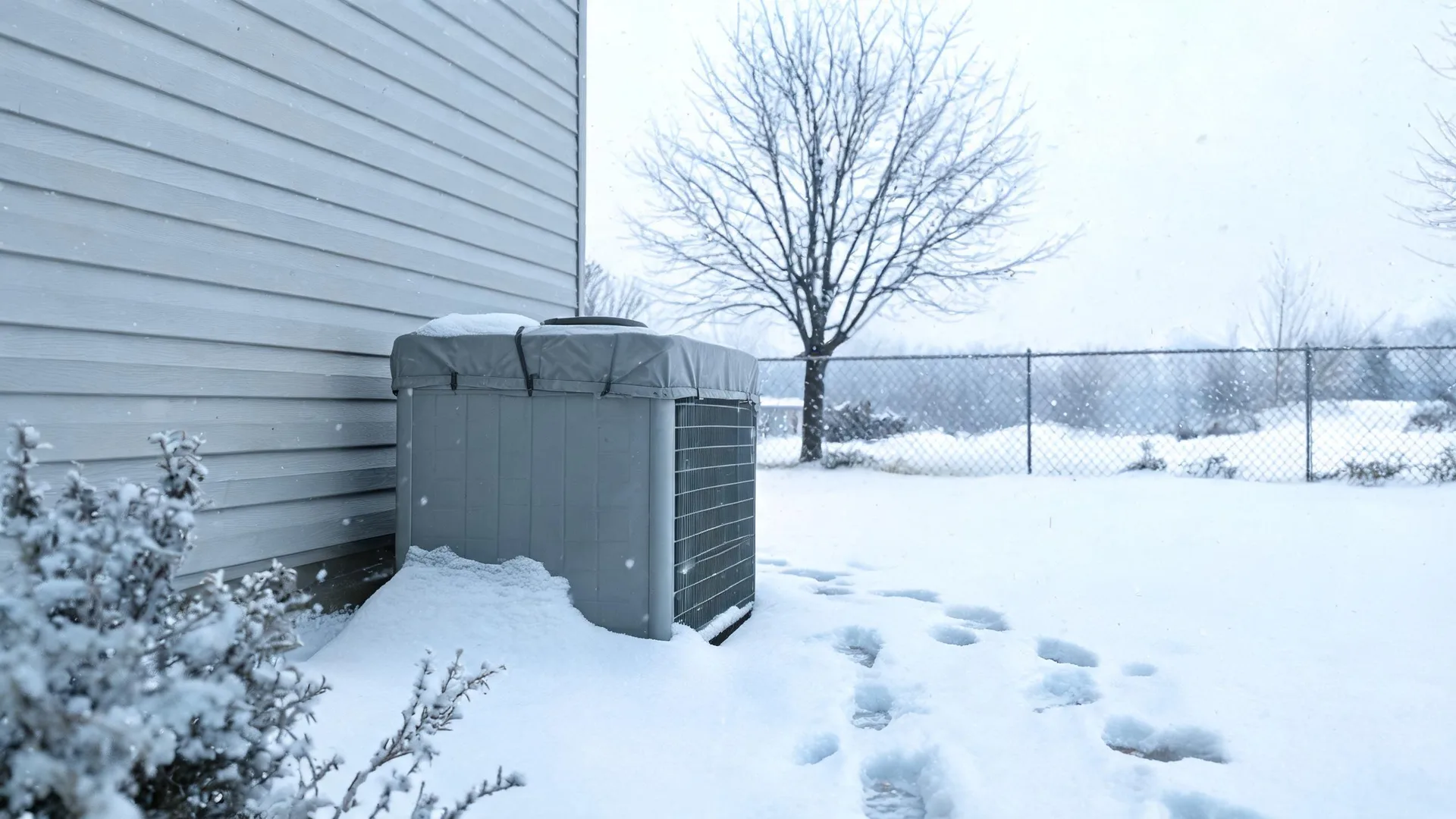
An outdoor air conditioning condenser unit installed beside the exterior wall of a blue vinyl-sided house at sunset.

Book your AC tune-up in May, before homes here start needing cooling in June.

  1. Jan
  2. Feb
  3. Mar
  4. Apr
  5. May
  6. Jun
  7. Jul
  8. Aug
  9. Sep
  10. Oct
  11. Nov
  12. Dec

A tune-up checks the refrigerant charge, cleans the coils, tests the capacitor and tightens the electrical connections.

A real tune-up checks the things that cause breakdowns, not just the things that are easy to see. That starts with the start and run capacitor, since a weak one is behind a lot of no-cool calls that get blamed on something else. It covers the contactor too, since those contacts pit and burn with use and a burnt one can keep the compressor running after the thermostat shuts it off. The blower motor and wheel get checked for the kind of dust buildup that throws the wheel out of balance and wears the bearings early. Refrigerant lines get checked for rub spots where a line touches metal or wood, since that wears a hole over time and lets the charge leak out slowly. None of this shows up by looking at the unit from across the room. It takes pulling panels and actually testing each part against what it should read.