








AC making a loud noise in Council Bluffs, IA

RepairCentral ACPottawattamie County, IA
Step 1 of 2

What ZIP code is the job in?

Why is my AC making a loud noise?

A loud noise from the outdoor unit or the air handler usually means something is loose, worn, or hitting something it shouldn't. In Council Bluffs, the unit runs hard through the muggy stretch of summer, and that's when parts that are already worn tend to let you know it. The sound itself points to what's wrong before anyone even opens the cabinet.

The type of noise tells you what's failing

A grinding or screeching sound usually means the fan motor bearings are worn out, and that motor is close to quitting. A rattle is often a loose panel or screw working its way free from the vibration of normal operation. A clicking that keeps repeating, rather than the single click at startup and shutdown, can mean a failing relay or a capacitor on its way out. A loud bang right when the unit kicks on points to a part inside the compressor that has broken loose. None of these get quieter on their own. A system that's banging or grinding and still running is often one bad part away from a bigger repair, and a contractor who works on these year-round can usually tell which part from the sound alone.

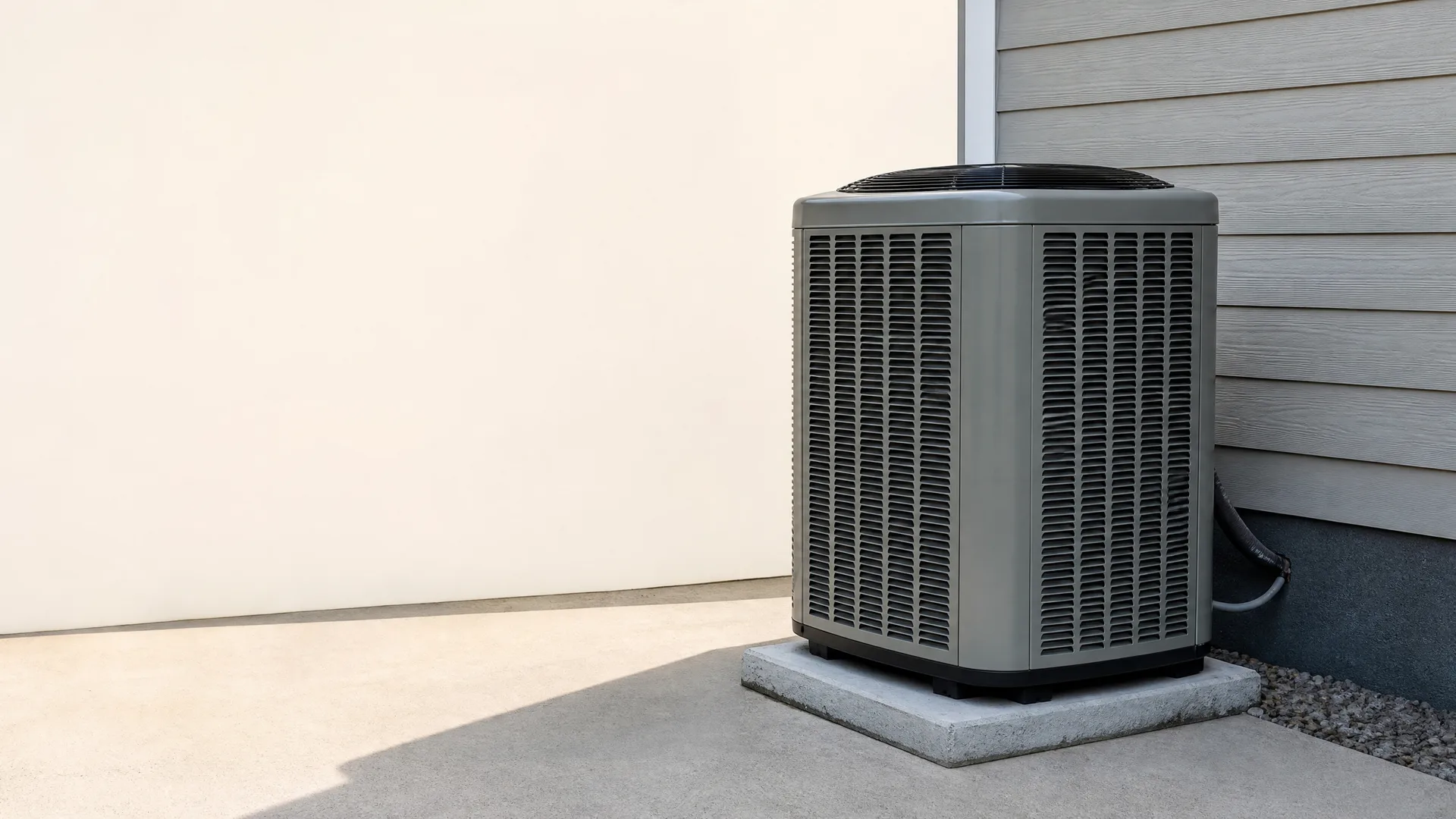
A gray outdoor air conditioning condenser unit on a concrete pad beside a house with vinyl siding and a large blank light-colored wall, surrounded by dark mulch and grass.

What the sound usually means

A banging or clanking from the outdoor unit often points to a loose blade on the fan, a part that's come unbolted, or the compressor itself working loose inside the cabinet. A high-pitched squeal usually comes from the fan motor bearing wearing out. Rattling can just mean a stick or gravel got inside the cabinet. Each of these sounds different enough that a contractor can often guess at the cause before opening the unit, then confirm it once the panel is off.

An outdoor air conditioner condenser unit on a concrete pad beside a house with horizontal lap siding, next to a plain light-colored wall and gravel bed.

Why summer runtime matters here

Your outdoor unit sits through months of long runtime once the muggy stretch sets in, and that steady workload is what tends to loosen bolts, wear down a fan motor bearing, or push a weak part past the point where it holds together quietly. A unit that ran fine in a milder month can start making noise once it's been cycling on for hours at a stretch through July and August. The noise is often the first sign something has shifted or worn down inside.

Call Now or Let It Wait

Call now

  • A loud grinding or metal-on-metal sound means something is already hitting a part it shouldn't, and running it longer can turn a fan blade or motor into a bigger repair.
  • If the noise showed up with warm air or no air at all, the compressor may be struggling, and shutting the system off until someone looks at it protects it from further damage.
  • A squeal that gets louder by the hour usually means a motor bearing is failing, and those don't fix themselves or go quiet again.
  • If the outdoor unit is shaking or the noise comes with a burning smell, that's worth having a licensed contractor look at before you run it again.
  • A local contractor who services units through Council Bluffs' muggy summers has likely heard this exact noise before and knows what to check first.

Can wait a day or two

  • A light rattle that only happens when the unit first kicks on is often just a panel or screw that's worked loose, not a sign of failure.
  • If the system is still cooling the house evenly and the noise hasn't changed since you first noticed it, it's reasonable to get it scheduled rather than treated as urgent.
  • A clicking sound at startup and shutdown is normal for most units and only becomes a concern if it turns into a louder or constant noise.
  • Debris rattling against the outdoor cabinet, like a stick or leaves caught in the fan grille, can sound alarming but is often cleared without a repair.
  • If the noise is coming and going rather than steady, it's worth noting when it happens so whoever looks at it can track down the cause faster.
A gray-haired bearded man in a dark green sweater sits on a light sofa indoors, looking to the side, with a houseplant, framed picture, table lamp and sunlit window behind him.
A middle-aged man in a dark denim shirt sits on a light beige sofa in a living room with wooden shelving and a potted plant, looking off to the side.
A gray-haired man in a dark navy sweater sits on a light sofa in a living room, looking toward a sunlit window with a houseplant and wooden cabinet behind him.
A man with greying hair in a dark green sweater sits on a light sofa in a sunlit living room, looking off to the side, with a large window, table lamp, framed art and white built-in shelves behind him.

What is that noise actually doing to your AC right now

Walk outside and you might see the fan wobbling or catching on the cabinet with every turn. Inside, a squeal can mean the blower is straining to push air through the house. Either way, the unit is still running while it makes that sound, and every hour it runs is another hour that loose part rubs, bends, or wears further. A fan blade that's hitting something will eventually bend enough to throw itself off balance for good. A motor squealing today can seize by next week, especially with the unit cycling often in a Council Bluffs summer. Left alone, a problem that's a simple fix now can turn into a compressor or motor replacement later.

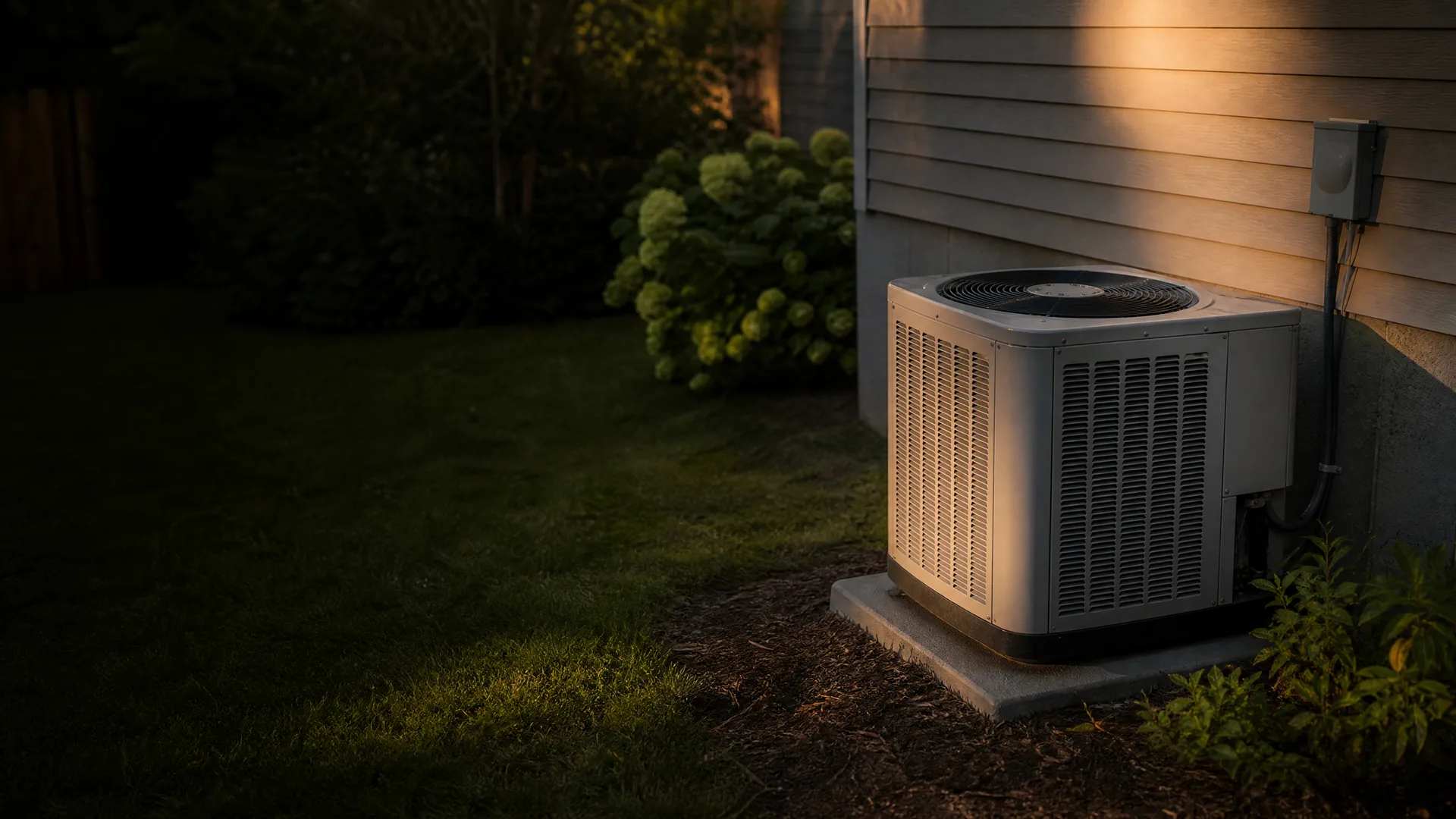
An outdoor air conditioning condenser unit on a concrete pad beside a house with horizontal lap siding, lit by warm light at dusk, with lawn and shrubs nearby.

You're out back around seven, the light going gold over the yard, and you hear it before you notice the air feels wrong. The condenser fan isn't spinning. It just sits there under the grille while the unit hums like it's trying. Inside, the house is starting to hold onto the heat instead of shedding it. You crouch down by the cabinet and the metal's warm to the touch, warmer than it should be this time of evening. A neighbor's sprinkler ticks on somewhere down the block. You flip the switch at the thermostat off, then on again, and the fan still doesn't move. The compressor keeps running anyway, straining against nothing, and you stand there in the heat deciding how long to let it.

Hand off the air conditioner problem

A noise like that rarely gets better on its own. A loose blade works itself looser. A dry bearing keeps drying out. Left alone through a Council Bluffs summer, when the unit might run for hours at a stretch most days, a small problem gets more turns of the fan to turn into a bigger one. Sending the request means a local contractor who works on these systems all season gets it, not five companies at once competing for your callback. Someone who hears "clanking from the outdoor unit" or "squealing on startup" and already has a short list of what that usually is, because they've opened that cabinet before. You don't have to figure out which part it is before you ask for help. You just have to stop running it long enough to get someone out to look, and that part takes just a minute from here.

Where the noise is coming from

  • The outdoor unit holds a fan blade, a motor, and a compressor, all bolted to a single metal cabinet that carries sound easily.
  • A fan blade spins close to the cabinet wall, so even a small bend in the blade turns into a steady knock with every rotation.
  • The compressor sits on rubber mounts meant to absorb vibration, and when those mounts crack the compressor can rattle against the cabinet.
  • Bearings inside the fan motor run dry over time without grease, and a dry bearing squeals before it seizes.
  • Loose screws or panels on the cabinet buzz against the metal at the compressor's running speed, which sounds worse than it is but still needs a wrench.
  • Refrigerant lines run through the cabinet wall, and if the rubber grommet around them wears out, the copper line can tick against the metal as it expands and contracts.

The outdoor cabinet is a thin metal box holding three things that move or vibrate: the fan blade up top, the motor that turns it, and the compressor down inside. Bolt all of that to one sheet metal shell and it carries sound the way a drum does. A problem that starts small somewhere in there doesn't stay quiet for long.

The fan blade spins only a few inches from the cabinet wall. Bend one edge of it, even slightly, from a stray branch or just years of running, and it starts clipping the housing on every rotation. That's the steady knock you hear from a few feet away.

The compressor rides on rubber mounts bolted to the cabinet floor. Those mounts are there to soak up vibration so the compressor doesn't transfer its running motion straight into the metal around it. Rubber cracks and hardens with age and heat, and once a mount fails, the compressor has nothing stopping it from knocking against the cabinet with every cycle.

The fan motor has bearings inside that need grease to turn quietly. Grease breaks down over years of summer runtime, and a bearing running dry squeals before it locks up for good.

Panels, screws, and the grommets around the refrigerant lines are smaller parts, but loose ones buzz or tick at the exact speed the compressor runs, and worn grommets let the copper line knock against bare metal as it heats and cools.

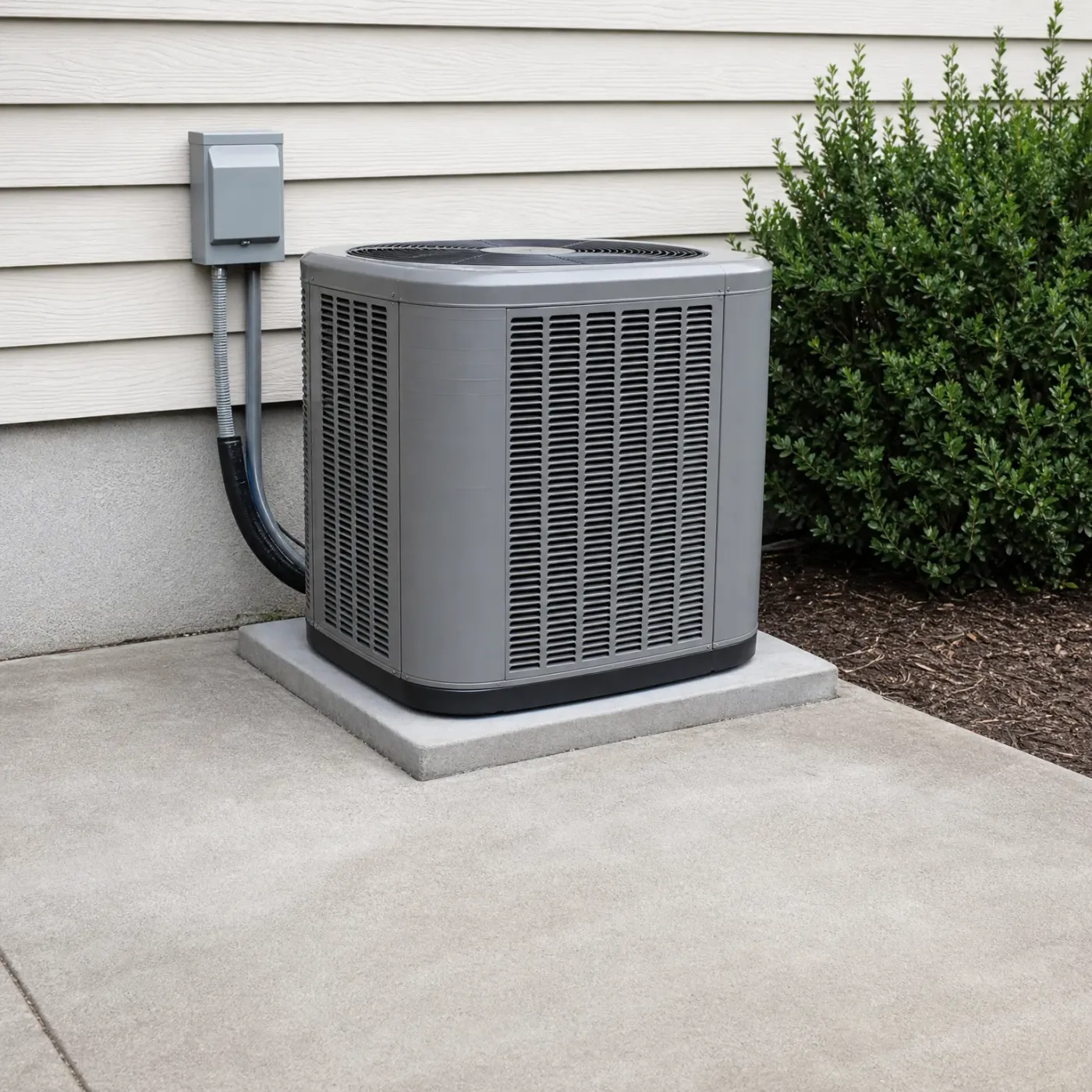
A gray outdoor air conditioning condenser unit on a concrete pad beside a house with horizontal lap siding, with a wall-mounted disconnect box and conduit to the left and a green shrub with mulch to the right.
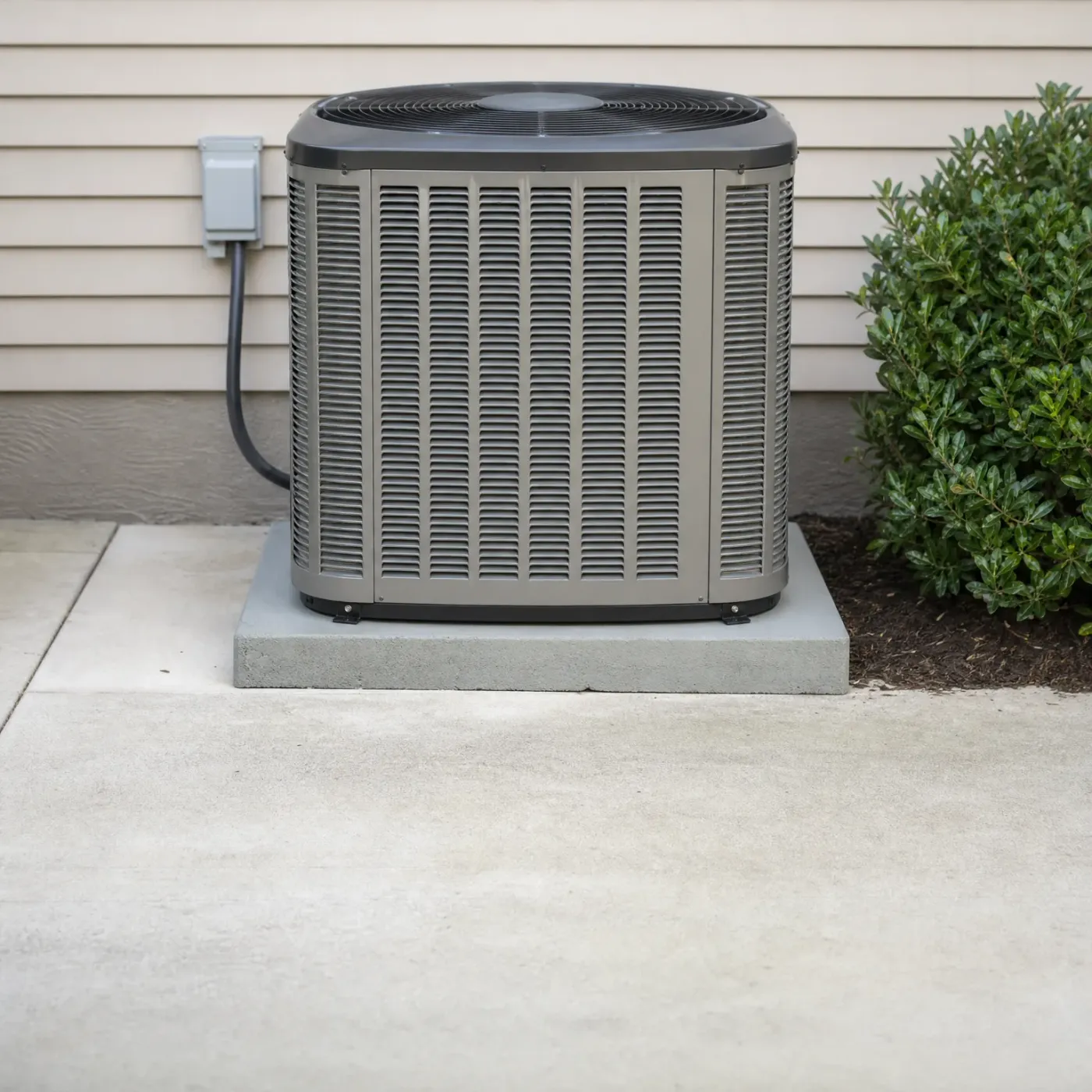
A clean condenser like this moves air freely, so the fan and compressor inside run quiet.
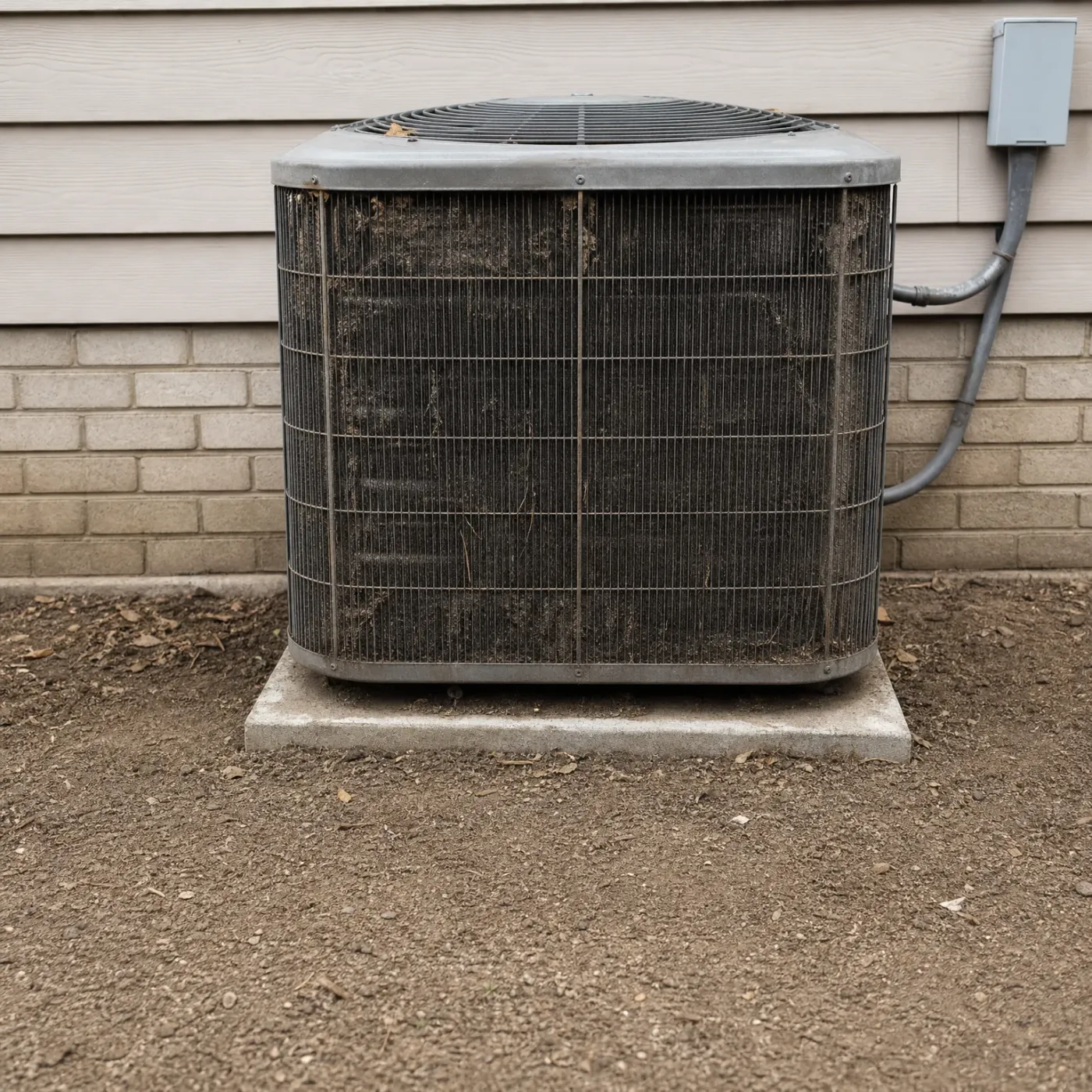
A dirty outdoor air conditioning condenser unit on a concrete pad beside a house wall with horizontal siding above a painted brick foundation, with a gray electrical disconnect box and conduit on the wall.
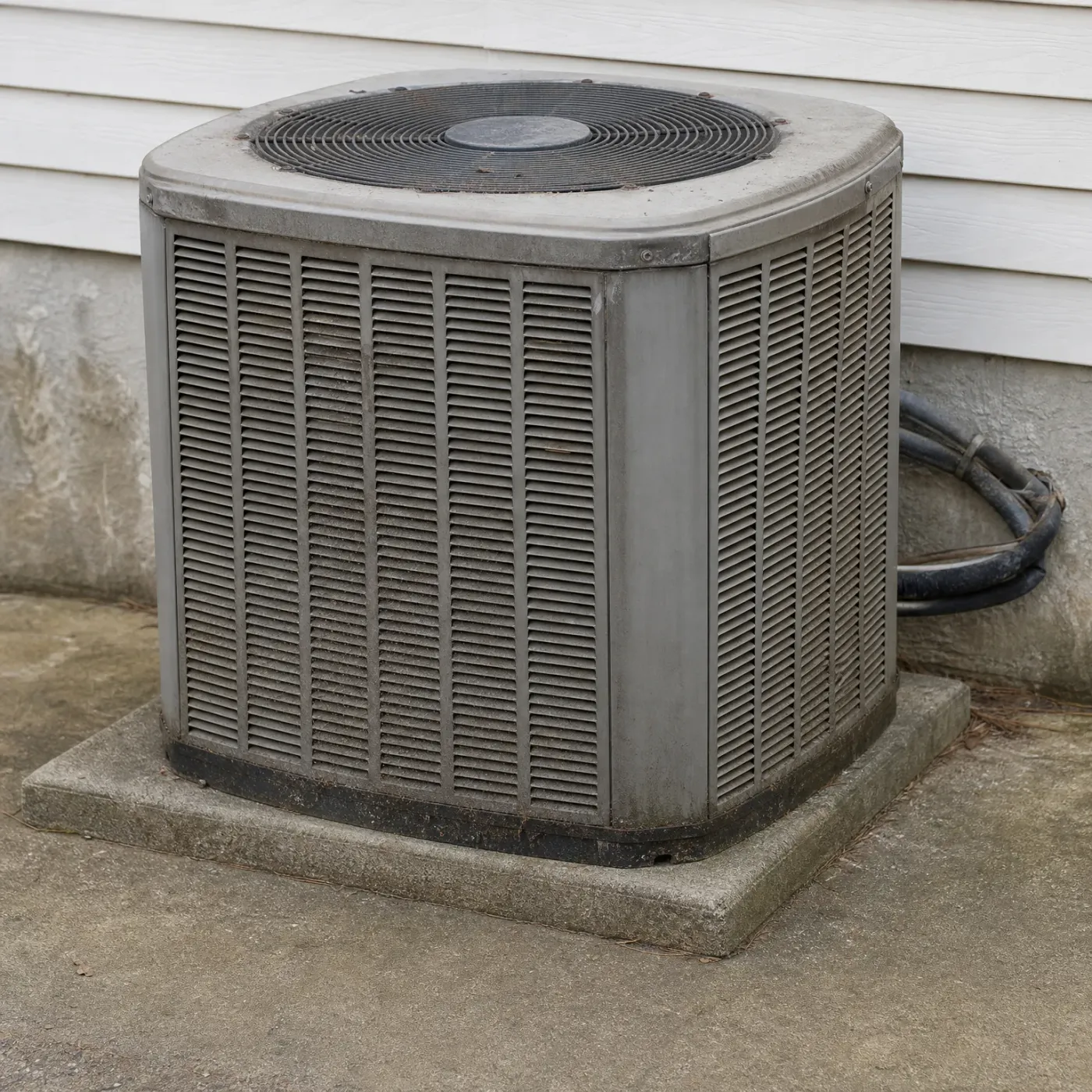
A coil packed with dirt and grime makes the fan and motor strain, and that strain is often where the noise starts.
A middle-aged woman with shoulder-length graying brown hair, wearing a gray cardigan over a cream top, sits in a light upholstered armchair and looks off to the side, with a window, houseplant and framed artwork behind her.
A woman with her hair in a bun holds a sleeping child, both wrapped in a cream knitted blanket on a gray sofa, with a lit lamp, framed photos, and a window behind them.
A two-story house with light gray horizontal siding and white-trimmed windows, set behind a mown lawn with shrubs, flanked by large green trees, with a sidewalk and wet street in the foreground.

A National Weather Service dew point reading puts the summer average here at 62°F, and that's thick enough to feel on your skin the moment you step outside. Your AC has to pull that moisture out of the air before the house actually feels cooler, so the compressor and fan run long stretches instead of cycling on and off. That extra runtime is hard on a loose blade or a motor bearing that's already wearing thin, which is why a rattle or squeal tends to show up in July and August rather than in a drier, milder month. The noise isn't new weather doing something strange. It's your unit working through conditions it sees every summer, with a part that was already starting to fail.

NASA POWER T2MDEW

An outdoor air conditioner condenser unit on a concrete pad beside a house with horizontal siding and a lower concrete foundation wall, with coiled refrigerant lines at right.
Before you get your air conditioner repair
An outdoor air conditioning condenser unit on a concrete pad beside a house with horizontal lap siding, with an electrical disconnect box and conduit on the wall and a green shrub to the right.
After you get your air conditioner repair

Wait and keep listening

The unit might run fine for another week on a loose fan blade or a worn bearing. Some homeowners ride it out through a stretch of mild weather, and the noise stays about the same for a while. But a bolt that's backed out doesn't tighten itself, and a bearing losing its grease doesn't regrease. The sound you hear today is usually the quietest version of the problem you'll have. Through a Council Bluffs summer, with the unit cycling on for hours most afternoons, that loose part gets more chances to wear further, not fewer.


Get it looked at now

A contractor who works on these units every summer can tell a lot from the sound alone, a knock versus a squeal versus a scrape, before the cabinet is even open. Getting it checked while the noise is new usually means catching a loose blade or a dry bearing before it damages the motor or the compressor around it. It's a shorter visit and a smaller repair than waiting until the part it's hitting gives out too. The unit also goes back to running the way it's supposed to, without that sound every time it cycles on.

Cooling runs June through September

Four months of real work, June through September, is enough for a loose part to wear into a worse one. A noise that shows up early in that stretch has months to get louder before fall gives the unit a rest.

NOAA nClimDiv 1991-2020

A loud noise from your AC is the unit telling you something has worked loose or worn down, and it won't fix itself by running longer. The part behind it, a bent blade, a dry bearing, a bolt backed out, is usually one a contractor who works on these units all summer has seen before, often more than once this season. A licensed contractor local to Council Bluffs can get out, hear it, open the cabinet, and tell you straight what's loose or worn. You'll hear from one contractor, not a handful calling all afternoon. Send the request and the search for who to call is off your plate.

A corner of a room with a large textured stone pot holding a leafy branching tree, next to a wooden console table holding a dark shallow bowl and a pale vase, below a framed neutral-toned artwork on a beige wall, on a light oak plank floor.
Interior corner of an empty room with a wood-framed window showing green foliage outside, beige walls, wooden baseboard and hardwood floor, with angled sunlight falling across the wall.
A potted olive-like tree in a terracotta urn stands in the corner of a room with plaster walls, dark hardwood floor and a patterned rug, beside a large black-framed grid window showing green trees outside.
Low-angle interior view of dark hardwood flooring meeting a white baseboard at a wall corner, with a dark wood cabinet holding a plant in a pale vase at left and a bright window at right.
A dark wood three-drawer dresser holding a dark ceramic vase with leafy green branches stands in a corner of a beige room with white baseboards, a window with greenery outside, and a patterned rug on a wood floor.

Send one request and you're done looking

A licensed pro who works in Pottawattamie County gets your request.

Hand off my repair

No fee to send it, and nothing to sign.