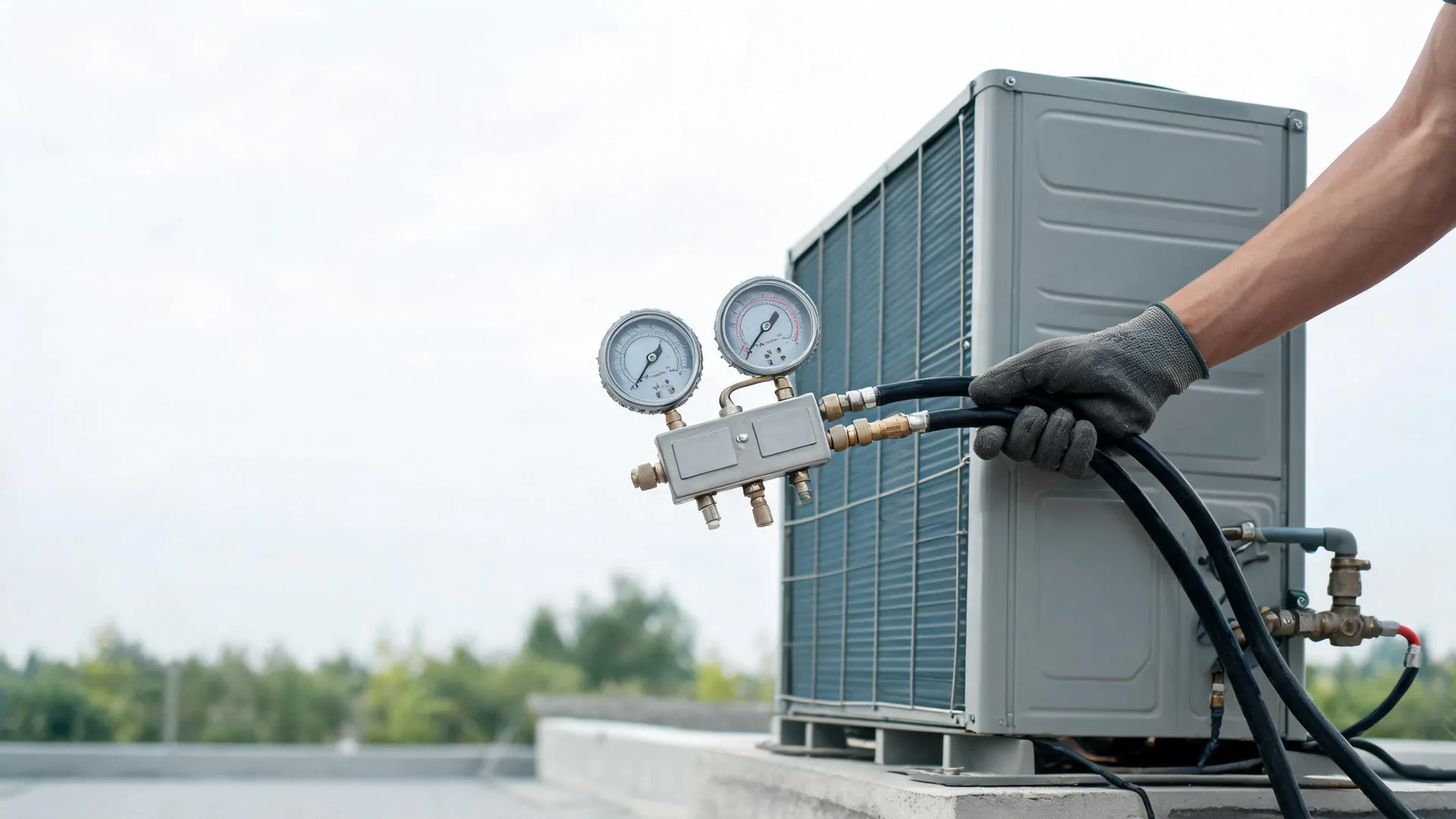
Three months of real work
AC in Ames runs June through August, with afternoon highs around 82°F. That's a short season, but the system runs most of the day to keep up. When something's off, it shows up fast.
Takes about a minute. No obligation.
AC in Ames runs June through August, with afternoon highs around 82°F. That's a short season, but the system runs most of the day to keep up. When something's off, it shows up fast.
Story County doesn't put any special strain on a home's AC. No extreme heat, no odd climate quirk. Whatever's wrong is most likely a common problem, like a weak capacitor, a low charge, or a dirty coil, and worth tracking down rather than guessing at.

NOAA nClimDiv, 1991–2020 normals
May is the quiet month before cooling starts in Story County.
Get the AC looked at in May, before the first hot week in June finds the weak part.



Half the homes in Story County were built in 1984 or later. If that's your house, your AC has probably had less time to wear down. A capacitor, a contactor, a fan motor, these parts fail from age and use, not from the year on the calendar, but a newer system has usually logged fewer hours and fewer hard starts. That makes repair the more likely answer. It's worth having someone confirm what's actually wrong before you spend money assuming the worst.
If your house dates from the newer half of the county, the AC in it still has most of its life ahead. Getting the actual part diagnosed and fixed makes more sense than replacing a system that has plenty of years left.
Find a contractorA capacitor is the part that usually gives out first. It stores the charge that kicks the compressor and fan motor into motion, and that job wears it down a little every time the system cycles on. Years of starts leave it weaker until one day it can't push the motor into action at all, and the unit just hums or doesn't start. A contactor goes a similar way, the contacts pit and burn from repeated arcing until they stop making a clean connection. Coils fail differently. Dirt and dust build up on the coil surface over time and block the airflow it needs to move heat, which makes the whole system work harder than it should. None of this is about one bad week of weather. It's the accumulated count of on and off cycles, and that count climbs the same way in a mild season as a brutal one.
Look at the outdoor unit and see if the fan is spinning. If it's not moving and you don't hear a hum, check the breaker first. A tripped breaker or a switch knocked off near the unit will stop it cold with no other symptom. Also look at the outdoor coil, the fins around the unit, for dirt, grass clippings or leaves packed against it. Airflow blocked from outside makes the system struggle the same as a dirty filter does from inside.
Swap the air filter if you haven't in a while, then check the thermostat is set to cool and the batteries aren't dead. Go inside and look near the indoor unit for water pooling or a drain pan that's full, that points to a clogged condensate line, which some systems will shut themselves down over. None of this fixes a bad capacitor or a refrigerant leak, but it rules out the simple stuff fast and tells the tech what to expect before they open the unit.
Estimates for a typical Story County home, compared with an older unit built to the previous federal minimum, from EIA household energy data, Iowa fuel prices and NOAA climate normals. Your home will differ.
Repair makes sense when a part like a capacitor or contactor has failed.
Replacement makes sense when the compressor has failed or the system uses R-22 refrigerant, which is no longer made.
Not every failure deserves the same answer. A capacitor or a contactor is a small, inexpensive part, and swapping it brings the whole system back to normal. A compressor is different. It's the most expensive part in the unit, and when it fails, the labor to replace it can rival putting in a new system, especially once you factor in the refrigerant type. What matters most is which part failed, not just how old the system is. A newer system with a bad capacitor just needs that capacitor. An aging system with a dying compressor is a harder call, and that one is worth thinking through rather than saying yes to the first number offered.