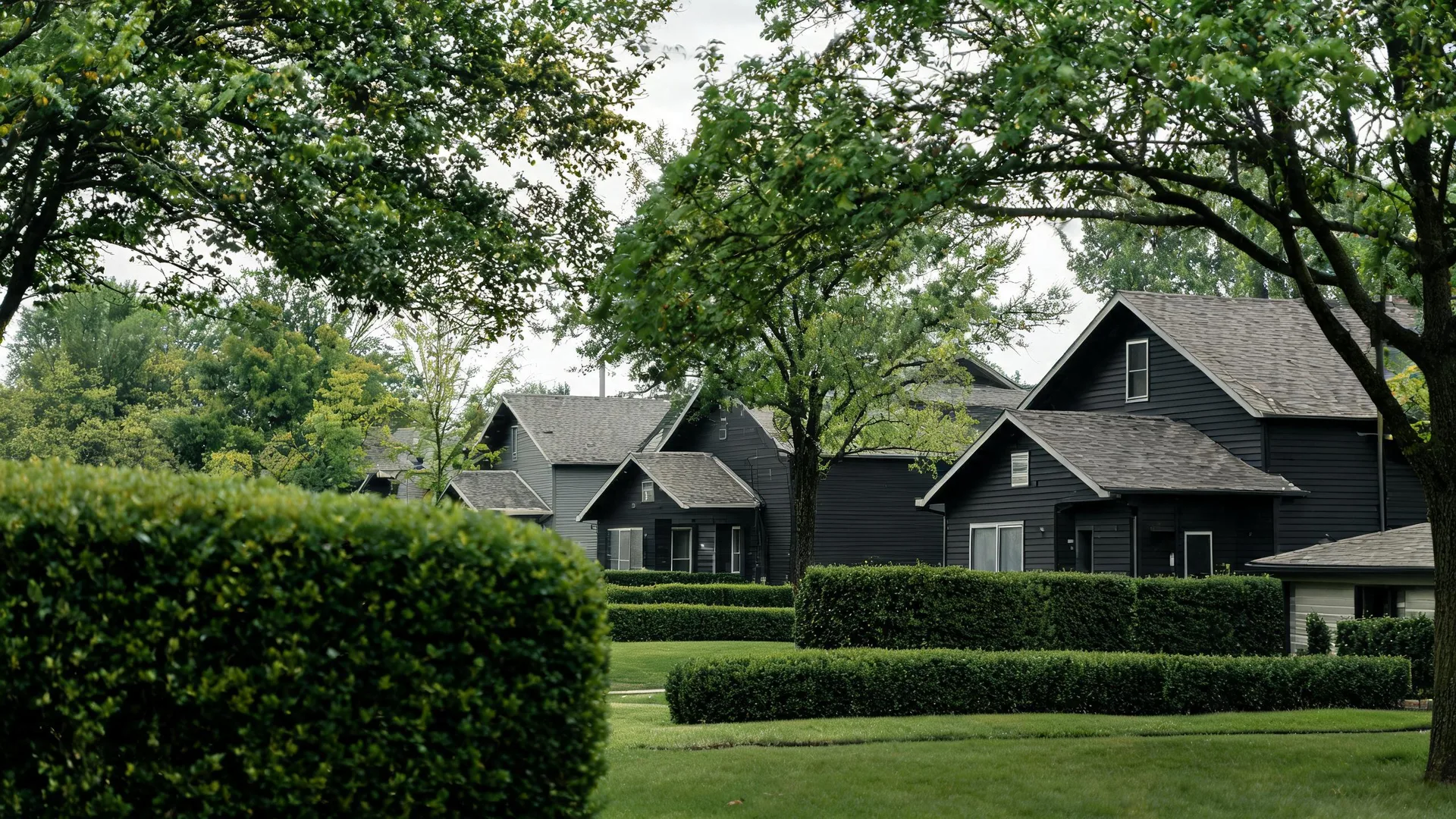




A row of dark-clad gabled houses with gray shingle roofs behind trimmed green hedges, mown lawn, and leafy trees under an overcast sky.

AC Repair in Carroll, IA

Tell us about the job

Takes about a minute. No obligation.

RepairCentral ACCarroll County, IA
Step 1 of 2

What ZIP code is the job in?

Summers here run about three months, June through August, with afternoon highs averaging around 82°F. That's short and mild compared to what cooling systems deal with further south. An AC here isn't fighting constant heat most of the year, so it doesn't wear out the way it does elsewhere. When one acts up, the cause is usually something specific. A weak capacitor. A low charge. A clogged filter choking airflow. That kind of problem is almost always worth fixing rather than replacing the whole unit.

3 months
June through August, your air conditioner is on duty
82°F
the average summer afternoon it cools against
15 hail events
in ten years, and hail bends the fins on outdoor coils
49 wind events
in ten years, and wind drives debris into outdoor units
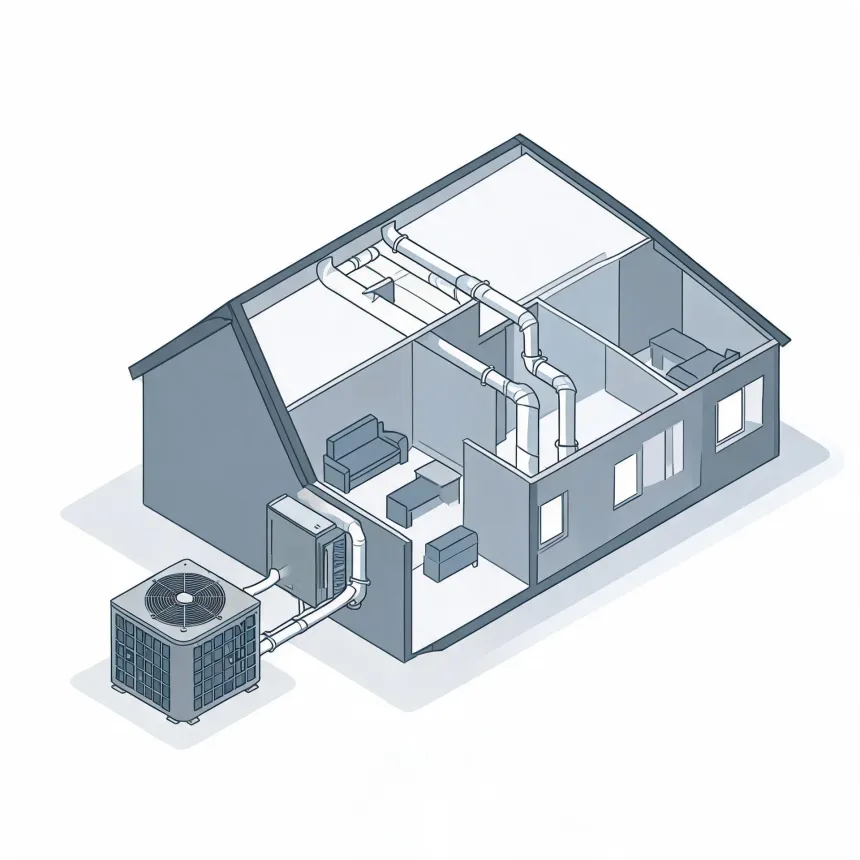
Isometric line illustration of a cutaway house showing interior rooms with ductwork, an indoor air handler, and an outdoor condenser unit connected by lines, on a white background.
Your air conditioner works hardest from June through August.

NOAA nClimDiv, 1991–2020 normals

June is when cooling starts here, and the first hot stretch finds whatever was already weak.

Get the AC looked at in May, before it has to run flat out.

A mild summer here means repairs usually pay off

Cooling runs June through August
Summer afternoons average 82°F
49 damaging wind events from 2015 to 2024

A capacitor is the part that fails most often. It gives the compressor and fan motor the jolt they need to start, and it weakens with age until one day it can't. You'll hear the unit hum and try to start, or the fan won't spin at all. Low refrigerant is another common cause, but it's never low because it got used up. It's low because it's leaking out somewhere, usually at a coil or a fitting, and that leak has to be found and sealed before adding more charge does any good. A clogged filter causes a different kind of trouble. Airflow drops, the coil gets too cold, and ice builds up on it until the system can't cool at all. None of these mean the unit is done. They mean a specific part needs attention.

Find out what's left in it before you pay for a repair

If the AC in your house is the one it came with, get the repair tech to size up the whole unit while they're there, not just the part that failed. On a system old enough to be original to the house, that's worth knowing before you spend money fixing what broke this time.

Find a contractor
An outdoor air conditioning condenser unit mounted on a concrete pad beside a house, with electrical conduit running to a wall-mounted disconnect box.

Left alone, a small problem finds a bigger one

A capacitor that's starting to go can still get the compressor running most of the time, so the unit keeps limping along instead of failing outright. Every start on a weak capacitor pulls more amperage through the compressor windings than a good one would, and that heat adds up over time. Run it that way long enough and the compressor itself can burn out. Low refrigerant follows a similar pattern. A small leak lets the system keep cooling, so there's no obvious reason to call anyone, but refrigerant carries the oil that keeps the compressor lubricated, and running low means less of that oil is making it back where it needs to go. A clogged filter is the clearest case. Restricted airflow lets the coil get too cold, moisture on it turns to ice, and the more it ices over the less air can get through, which only makes the ice worse. Left running, that ice can work down into the compressor itself. None of these stay the same size problem if the unit keeps cycling on.

Check the thermostat and breaker first

Make sure the thermostat is set to cool and set below room temperature, and check that its batteries aren't dead if it has a screen that's gone dark. Then check the breaker panel for the outdoor unit and the furnace or air handler. A tripped breaker or a thermostat with no power will look exactly like a failed system, and both take a minute to rule out.

Look at the filter and the outdoor unit

Pull the filter and hold it up to a light. If you can't see light through it, it's restricting airflow and needs to be changed before anything else is worth checking. Outside, look at the condenser unit and clear away any grass clippings, leaves or mulch stacked against it. Airflow has to move through those fins for the system to reject heat at all.

An overhead view of a residential air conditioning condenser unit mounted on a concrete pad next to a house with vinyl siding.

A new air conditioner would save little on running costs in Carroll County, so the repair decision comes down to the unit's condition.

  • A new one at the federal minimum, 13.4 SEER2$170 a year
  • An older air conditioner$180 a year

Estimates for a typical Carroll County home, compared with an older unit built to the previous federal minimum, from EIA household energy data, Iowa fuel prices and NOAA climate normals. Your home will differ.

Repair makes sense when a part like a capacitor or contactor has failed.

Replacement makes sense when the compressor has failed or the system uses R-22 refrigerant, which is no longer made.

Age by itself doesn't decide whether an AC is worth fixing. What matters is the compressor, since that's the part that can't be swapped out on its own without replacing the whole outdoor unit. If the compressor is still sound and the failure is a capacitor, a contactor, a fan motor or a control board, that's a straightforward repair on a system that still has life in it. If the compressor itself has failed, or the coil is leaking in more than one place, the unit is asking for money it won't pay back. A tech can tell you which kind of problem you have before any repair gets ordered, and that answer should come before the one about cost.