Polk County sees more than its share of storms
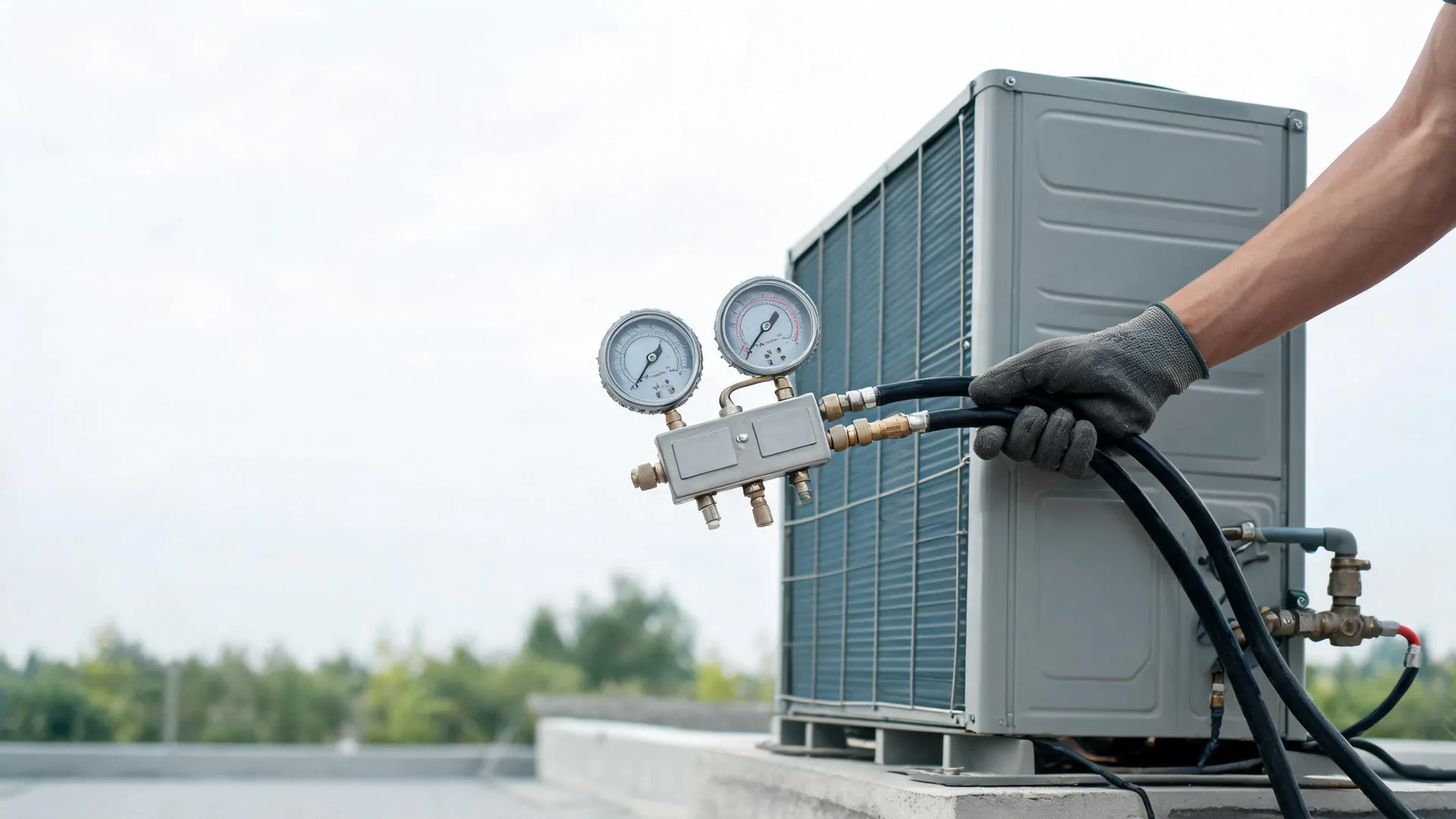
Polk County logged 405 severe weather events between 2015 and 2024, hail and damaging wind among them. The outdoor unit sitting in the yard is what takes the hit.
Takes about a minute. No obligation.
Polk County logged 405 severe weather events between 2015 and 2024, hail and damaging wind among them. The outdoor unit sitting in the yard is what takes the hit.
Hail dents fins and bends them shut. Wind throws branches and grit into the coil. None of that always stops a system from turning on. If your outdoor unit has been through a storm, it's worth having someone check it even if the air is still cold.
NOAA nClimDiv, 1991–2020 normals
A part failing doesn't mean the system is failing.
Most repair calls fix one worn part and leave the rest of the system alone.
May is a good month to get your AC looked at here. Cooling starts in June, and the first hot stretch is when a weak part finally gives out. A capacitor that was already marginal, or a charge that was already low, tends to hold on through a season of light use and quit once the system has to run hard. Having someone check it in May catches that before the heat does.
If your outdoor unit sat through a hailstorm or a windy night this year, have it looked at. It may still be running fine, and it may not be.
Find a contractorHalf the homes in Polk County were built in 1982 or later. If yours is one of them, the AC may not be original to the house, but it's less likely to be running on borrowed time than a system in an older home. A unit still within its working life is usually worth repairing. Whatever's wrong with it now, a capacitor, a low charge, a failed motor, is likely a fixable problem on a machine that has years left, not a sign the whole system is done.
If the system is low on charge or the airflow across the coil is choked, the compressor works harder to do the same job. It runs hotter than it should. Keep running it in that state and the windings inside can break down for good, turning a repair into a replacement.
A dirty filter or a low charge can let the coil get too cold and frost over. Ice on the coil blocks airflow, so the system cools even less and runs even longer trying to catch up. Shutting it off and calling someone stops that cycle. Leaving it running feeds it.
Estimates for a typical Polk County home, compared with an older unit built to the previous federal minimum, from EIA household energy data, Iowa fuel prices and NOAA climate normals. Your home will differ.
Repair makes sense when a part like a capacitor or contactor has failed.
Replacement makes sense when the compressor has failed or the system uses R-22 refrigerant, which is no longer made.
A diagnostic visit usually starts outside at the condenser. The tech checks the capacitor and contactor first, since those fail often and are easy to test, then watches whether the compressor and fan start up the way they should. Refrigerant charge gets checked too. Too little or too much both point to a specific problem rather than a general one. Inside, the coil gets checked for ice or dirt, and the filter gets a look, since weak airflow across the coil is behind a lot of service calls. Electrical connections get checked as well, because a loose wire can act like a failing part even when nothing is actually worn out. By the end you should have a name for the part that's failing and why, not just a guess that the system needs work.