




A quiet residential street at dusk lined with illuminated two-story brick houses and mature trees.

AC Repair in Independence, IA

Tell us about the job

Takes about a minute. No obligation.

RepairCentral ACBuchanan County, IA
Step 1 of 2

What ZIP code is the job in?

Summer here runs June through August, with afternoon highs averaging around 81. That's a short season, and it's an easy one by most standards. Your air conditioner isn't fighting extreme heat for months on end, so if it's broken down or blowing warm air, the cause is probably something ordinary. A weak capacitor. A low refrigerant charge. A clogged filter choking airflow. Wind and hail do pass through this county, and either can damage the outdoor unit's coil or fins, so that's worth a look if the trouble started after a storm. Otherwise this is most likely a normal repair, not a sign the system was ever asked to do too much.

3 months
June through August, your air conditioner is on duty
81°F
the average summer afternoon it cools against
33 hail events
in ten years, and hail bends the fins on outdoor coils
93 wind events
in ten years, and wind drives debris into outdoor units
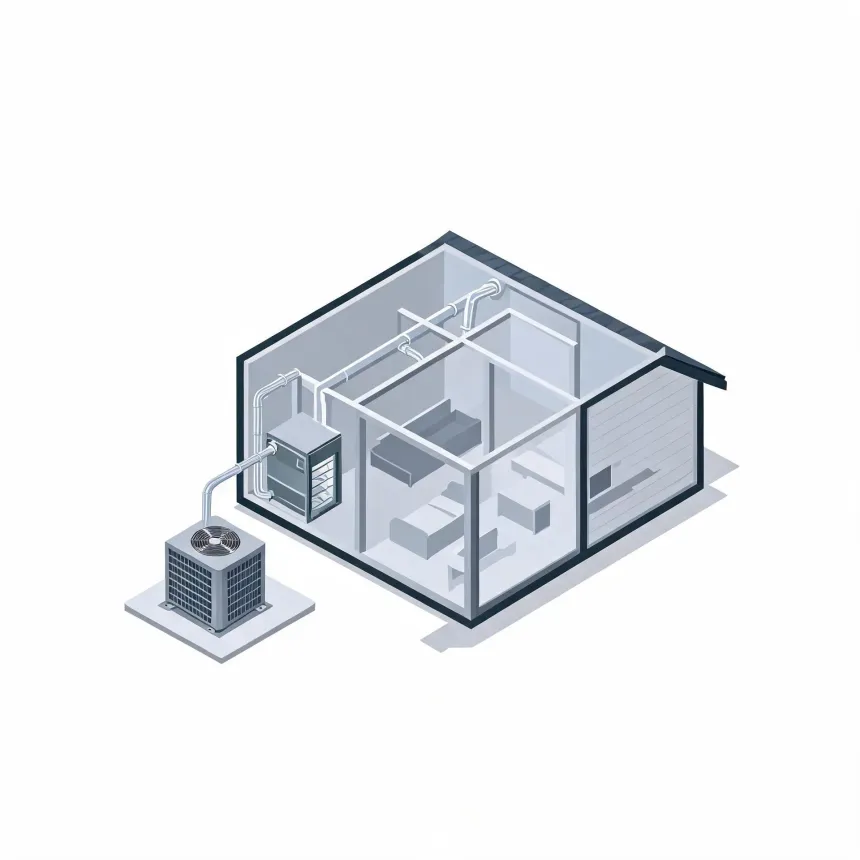
Isometric grayscale illustration of a cutaway house showing interior rooms, ductwork, an indoor air handler, and an outdoor condenser unit on a pad connected by lines.
Your air conditioner works hardest from June through August.

NOAA nClimDiv, 1991–2020 normals

Air conditioners here start running in June.

May is the month to get yours looked at, before the first hot day finds the weak part.

The house may be older than the AC, but half the homes here date to 1973 or earlier

Half the homes here were built by 1973
Cooling runs June through August
Summer afternoons average 81°F

Wind and hail both show up in Buchanan County's weather history, and both can damage an outdoor AC unit. Wind can bend the fins on the coil. Hail can dent the cabinet or the fins the same way. If your system quit during a storm or right after one, that's worth mentioning to whoever comes out to look at it. If it just stopped on a calm, ordinary day, the weather almost certainly had nothing to do with it. Most AC trouble traces back to a weak capacitor, a dirty filter, or a refrigerant leak, storm or no storm.

Before you pay for a big repair, ask how much life the unit has left

If your AC came with the house, ask the repair tech how much life it has left before you pay for anything big. A repair makes sense on a unit with years left in it. On one that's already near the end, the same money might be better put toward a replacement.

Find a contractor
A gray metal air conditioning condenser unit mounted on a concrete pad in a flat grassy field under a partly cloudy sky.

What to listen for before it quits

An air conditioner gives warning before it quits for good. A hum when the compressor tries to start and can't. Air coming out the vents that's cool but not cold. The system running longer than it used to before it shuts off. Ice on the copper line or the indoor coil means airflow or refrigerant is off, not that the unit is working harder than normal. A fan that rattles or squeals is wearing on its bearings, and that wear doesn't reverse itself. None of this depends on how many hours the system has logged. A unit that sits idle most of the year fails from the same worn parts as one that runs all day, just on its own schedule. What matters is noticing a change from how the system sounded or felt before, not how long it's been running this time around.

Check the filter and the thermostat first

A dirty filter chokes airflow until the coil freezes over, and that alone can look like a dead system. Pull it out and hold it up to a light. If you can't see through it, that's likely your problem. Also check that the thermostat is set to cool and the batteries aren't dead. It sounds too simple to matter, but it rules out the easiest fix before anyone drives out.

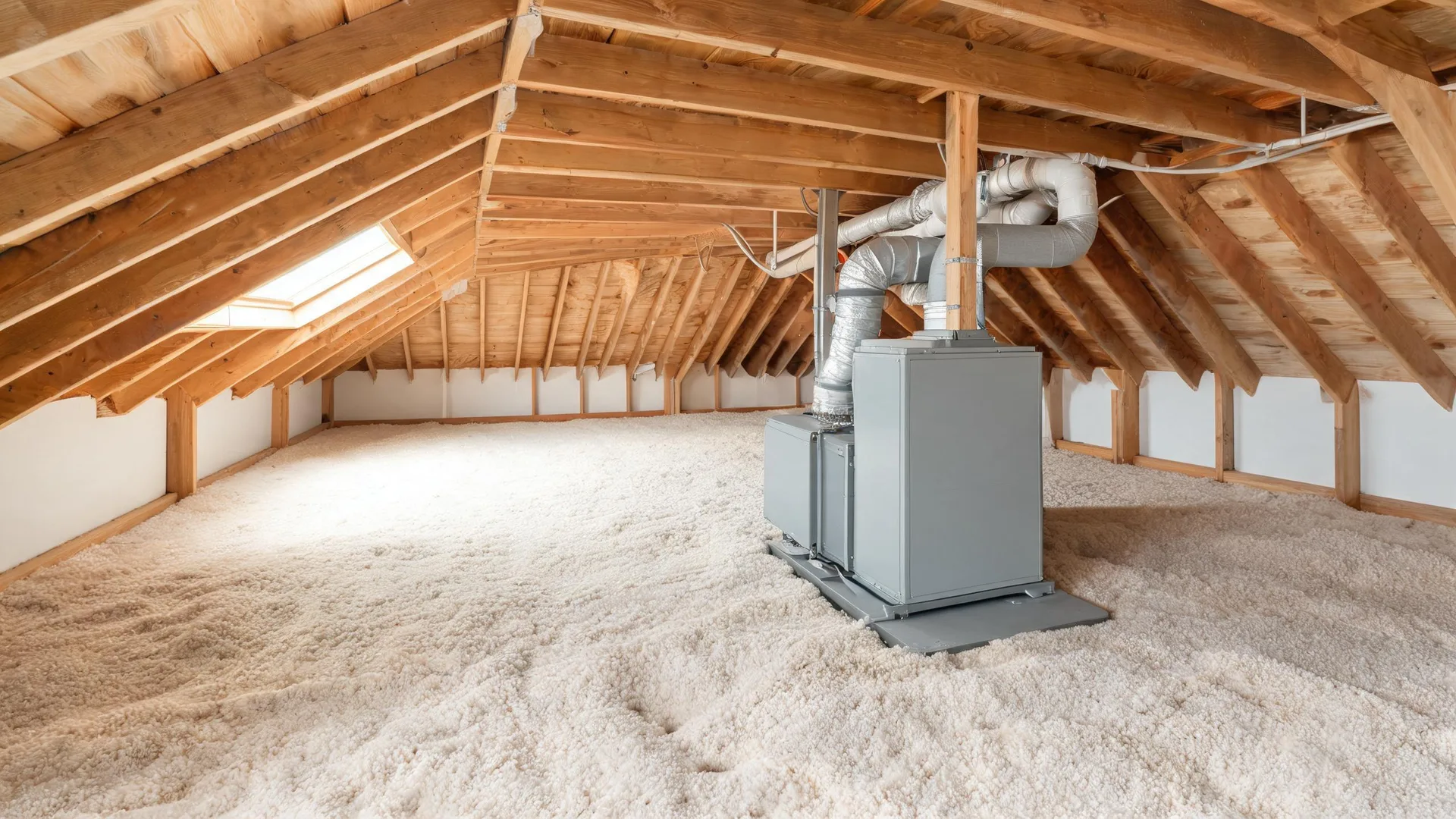
Check the breaker and the outdoor unit

If the system won't start at all, check the breaker panel for a tripped switch before assuming the worst. Then walk outside and look at the condenser. Make sure nothing is blocking it, no leaves packed against the coil, no debris sitting on top. If the outdoor fan isn't spinning but the indoor blower is running, that's worth telling the tech straight away, since it points to a specific part rather than the system as a whole.

Overhead view of an air conditioning condenser unit on a concrete pad next to a house with asphalt shingle roofing and vinyl siding.

A new air conditioner would save little on running costs in Buchanan County, so the repair decision comes down to the unit's condition.

  • A new one at the federal minimum, 13.4 SEER2$150 a year
  • An older air conditioner$160 a year

Estimates for a typical Buchanan County home, compared with an older unit built to the previous federal minimum, from EIA household energy data, Iowa fuel prices and NOAA climate normals. Your home will differ.

Repair makes sense when a part like a capacitor or contactor has failed.

Replacement makes sense when the compressor has failed or the system uses R-22 refrigerant, which is no longer made.

A repair is worth doing when the system is sound and one part gave out. A capacitor, a fan motor, a contactor, these fail on their own without saying anything about the rest of the unit. Replacement starts to make more sense when the repair on the table is a major one, a compressor or a coil, especially on a unit that's already old and has needed attention before. Age by itself doesn't retire an air conditioner, but an old unit facing a major repair is a different call than a young one with a worn part. Ask the tech what failed and why, not just what it costs to fix. If the answer points to a single worn part with nothing else going on, fixing it is usually the right move.