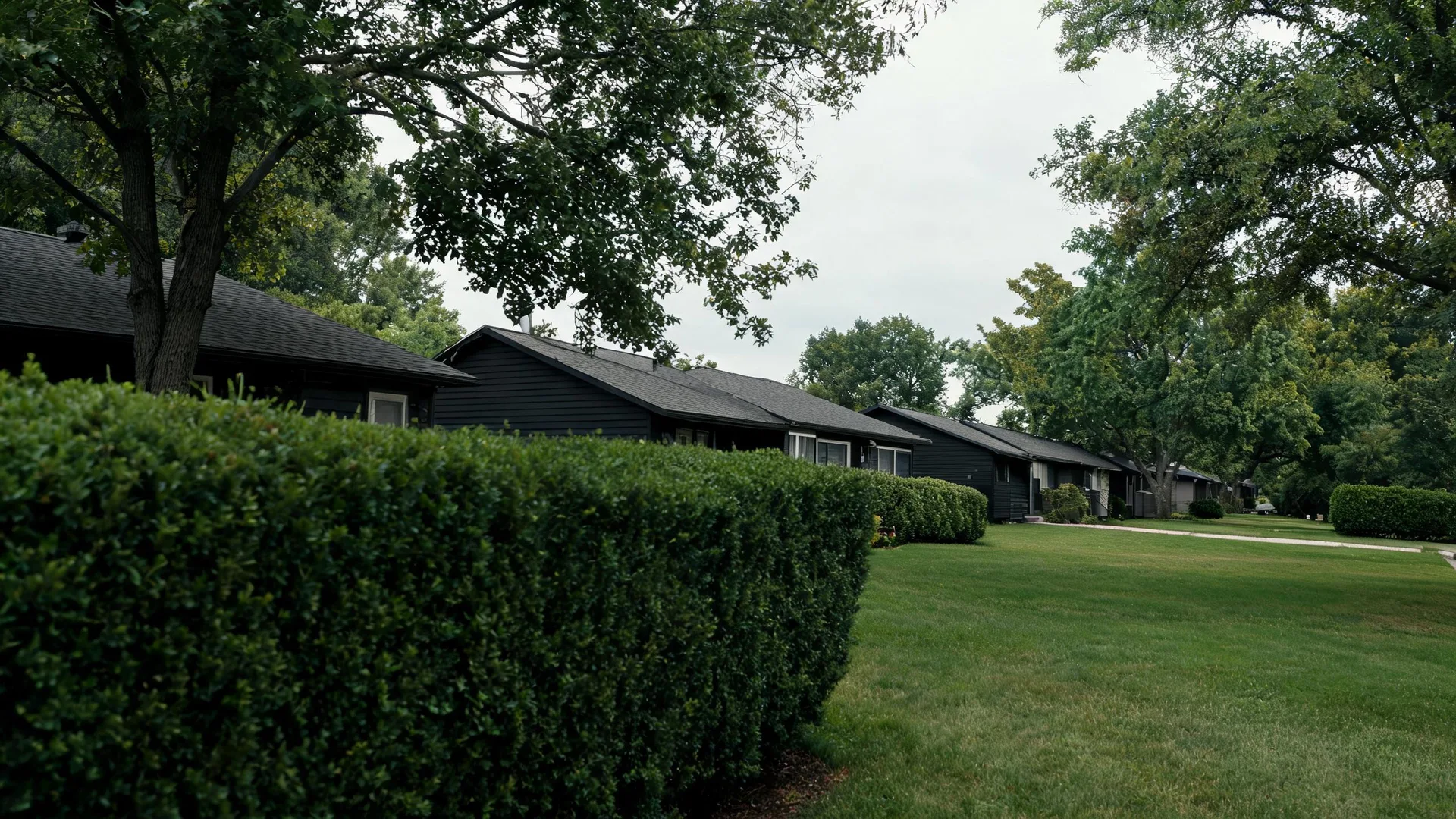





A row of dark-sided single-story houses behind a long trimmed hedge, with mown lawn, a paved path and large leafy trees under an overcast sky.

AC Repair in Mason City, IA

Tell us about the job

Takes about a minute. No obligation.

RepairCentral ACCerro Gordo County, IA
Step 1 of 2

What ZIP code is the job in?

A repair call usually comes down to age and pattern. If the unit is still fairly young and this is the first real problem it's had, fixing it makes sense almost every time. If it's older and this is the second or third breakdown in the last couple of years, the question changes. A compressor failure on an older system is often the point where paying for the part and the labor doesn't make sense next to putting that money toward a new unit. A bad capacitor or a failed run of refrigerant leak, on the other hand, is usually a straightforward fix regardless of the system's age. The honest way to think about it is whether the repair fixes the actual problem or just gets the system running again until the next part gives out.

3 months
June through August, your air conditioner is on duty
80°F
the average summer afternoon it cools against
54 hail events
in ten years, and hail bends the fins on outdoor coils
76 wind events
in ten years, and wind drives debris into outdoor units
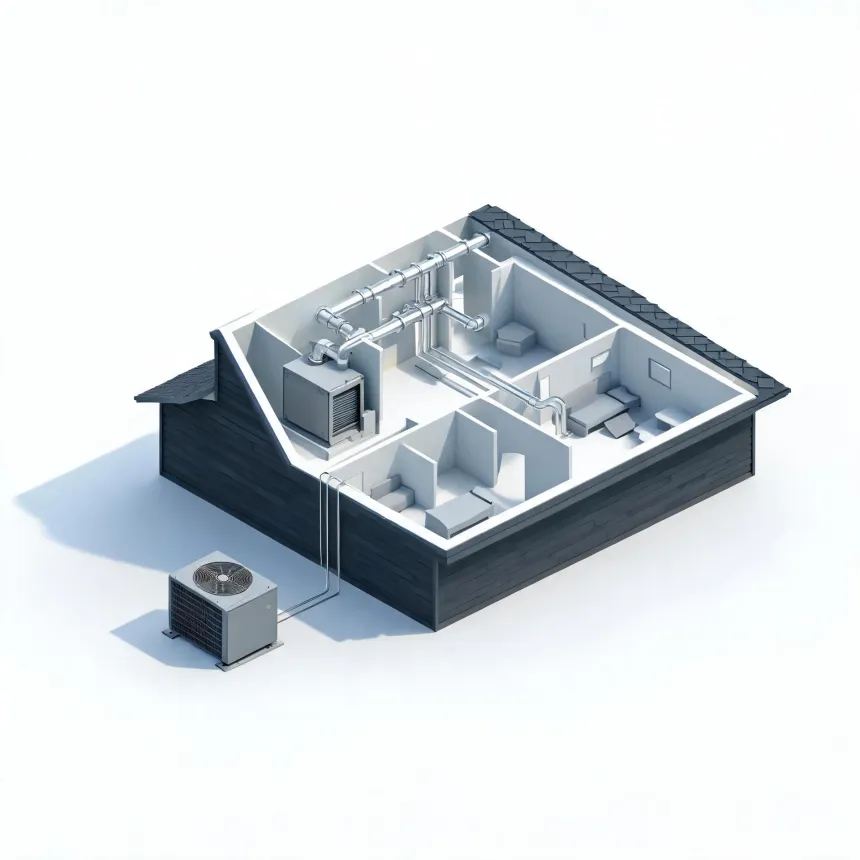
Isometric 3D cutaway render of a house with dark siding showing interior rooms, ductwork and an air handler, connected by lines to an outdoor condenser unit on a white background.
Your air conditioner works hardest from June through August.

NOAA nClimDiv, 1991–2020 normals

June is when cooling starts here, and the first hot stretch is when a weak part finally gives out.

Get an AC that's acting up looked at before June if you can, so the first real heat load isn't what finds the problem.

Half the homes here were built by 1959, old enough that the AC has been replaced at least once

Half the homes here were built by 1959
Cooling runs June through August
Summer afternoons average 80°F

Cerro Gordo County gets its share of hail and wind, and winter storms come through most years. None of that is what wears out an air conditioner here. The parts that fail are the same ones that fail everywhere. A capacitor weakens. A contactor pits. A refrigerant line develops a slow leak over time. Severe weather can take out a unit outright, say a branch comes down on it or hail bends the coil fins badly enough, but that's a different problem than a system that's just acting up. If yours is cutting out or blowing warm air, look at its age and repair history first, not the weather.

Get the usual fix

Nothing about this area is especially hard on it. It's most likely the usual problem with the usual fix.

Find a contractor
A man in a dark T-shirt, tan work pants and a backward cap walks up stone steps toward a dark green door, carrying a worn canvas tool bag, with a potted shrub in a green ceramic planter beside him.
A gray cylindrical air conditioning condenser unit mounted on a concrete pad next to a light-colored vinyl-sided house exterior.

The warning comes before the breakdown

An air conditioner that runs for months straight doesn't fail all at once. It gives you a warning first, usually weeks before it quits for good. Warm air from the vents when the thermostat is set low is a refrigerant or compressor problem, not a thermostat problem. Short cycling, where the unit kicks on and off in a few minutes instead of running a full cycle, points to a failing capacitor or a clogged filter choking airflow. Ice on the coil means airflow or refrigerant is too low for the system to work with. A unit that runs constantly and never quite cools the house has lost capacity somewhere, often the compressor itself. None of these get better left alone. Each one is the system compensating for a part that's already going, and the compensating only works for so long before something stops working entirely.

Check the filter first

A clogged filter is the most common reason a system struggles, and it's the one thing a homeowner can fix on the spot. Pull it out and hold it up to a light. If you can't see light through it, swap it. A dirty filter chokes airflow across the coil, and that alone can cause weak cooling or ice buildup that looks like a bigger problem than it is.

Rule out the breaker and the thermostat

If the unit won't start at all, check the breaker box before anything else. A tripped breaker or a dead thermostat battery looks exactly like a failed system from the homeowner's side, and both are simple to rule out. If the breaker trips again right after you reset it, stop there. That's telling you something electrical is wrong, and it needs a tech, not another reset.

Aerial view of a gray outdoor air conditioning condenser unit mounted on a concrete pad next to a house with vinyl siding.

A new air conditioner would save little on running costs in Cerro Gordo County, so the repair decision comes down to the unit's condition.

  • A new one at the federal minimum, 13.4 SEER2$140 a year
  • An older air conditioner$150 a year

Estimates for a typical Cerro Gordo County home, compared with an older unit built to the previous federal minimum, from EIA household energy data, Iowa fuel prices and NOAA climate normals. Your home will differ.

Repair makes sense when a part like a capacitor or contactor has failed.

Replacement makes sense when the compressor has failed or the system uses R-22 refrigerant, which is no longer made.

A refrigerant leak is the clearest case. Run the system low on charge and the compressor works harder to move what little refrigerant is left, building more heat than it was built to handle. Keep that up and you can cook the compressor itself, which turns a leak repair into a full system replacement. Ice on the coil does similar damage a different way. Once ice forms, it blocks airflow further, so more ice builds, and liquid refrigerant can end up back at the compressor instead of turning to gas like it should. A compressor isn't built to compress liquid. A failing capacitor follows the same pattern. It struggles to start the compressor and fan motor, those motors draw extra current every time they try, and that heat shortens what life the capacitor has left. The part that's struggling is rarely the part that fails for good. It's whatever it drags down with it.