




A two-story black house with a covered porch, framed by large deciduous trees and trimmed hedges, photographed from a low angle across a lawn with blurred grass in the foreground.

AC Repair in Oskaloosa, IA

Tell us about the job

Takes about a minute. No obligation.

RepairCentral ACMahaska County, IA
Step 1 of 2

What ZIP code is the job in?

Warm air coming out of the vents when the thermostat is set to cool usually means the compressor is struggling or the refrigerant charge is low. A short cycle, where the unit kicks on and off every few minutes instead of running a full cycle, points to a different problem, often electrical or a clogged filter choking airflow. Listen for it too. Grinding or squealing from the outdoor unit is a motor bearing going bad. A hissing or bubbling sound near the lines can mean refrigerant escaping, which is not something to wait on since it can damage the compressor over time. Water pooling near the indoor unit means the condensate drain is blocked or the pan has rusted through. Any of these is worth a call before the system stops cooling altogether.

3 months
June through August, your air conditioner is on duty
83°F
the average summer afternoon it cools against
12 hail events
in ten years, and hail bends the fins on outdoor coils
33 wind events
in ten years, and wind drives debris into outdoor units
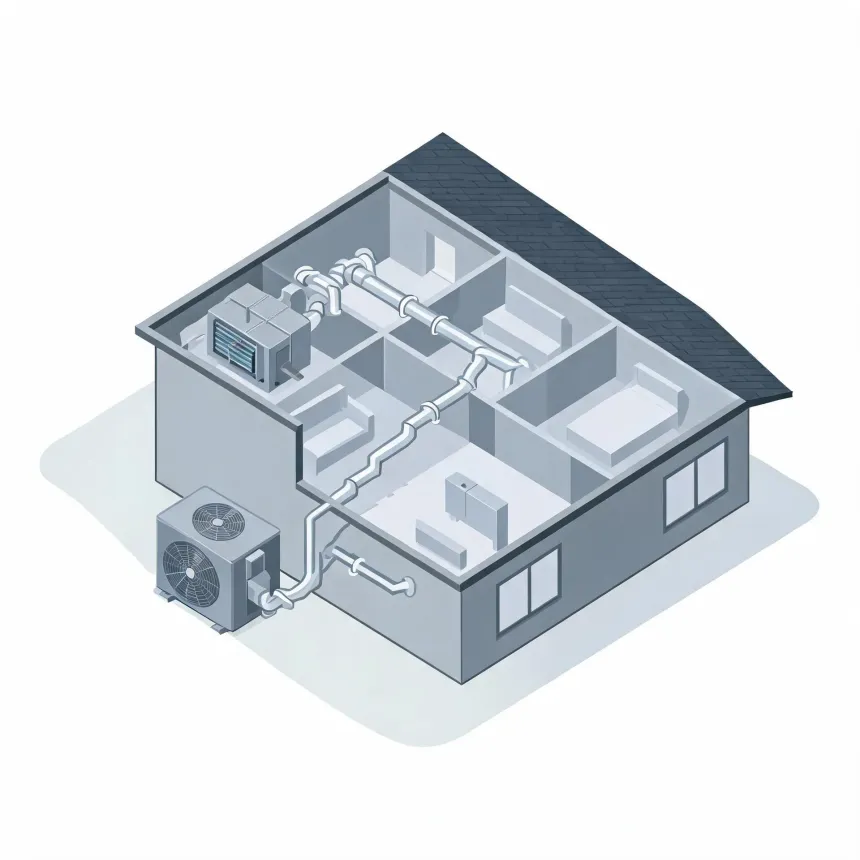
Isometric grey illustration of a cutaway single-story house showing interior rooms, ceiling ductwork connected to an indoor air handler, and an outdoor condenser unit linked by lines outside the wall.
Your air conditioner works hardest from June through August.

NOAA nClimDiv, 1991–2020 normals

Cooling in Mahaska County starts in June.

A weak part usually waits for that first real load to fail.

Half the homes in Mahaska County are old enough that their AC isn't the one the house came with

Half the homes here were built by 1965
Cooling runs June through August
Summer afternoons average 83°F

Three months of real cooling load a year is not much to ask of a compressor. Afternoons average 83 degrees here, nothing like the triple digit stretches that wear a system down further south. A unit running under that kind of mild load tends to hold up, so when something does go wrong it is usually one part failing, not the whole system giving out. That makes most repairs worth doing. Hail is the one thing that doesn't care how light the duty cycle is. Mahaska County has had 12 hail events in the past decade, and a dented coil or bent fins from a bad storm can cause real problems even on a unit that otherwise has an easy life.

Ask how much life the unit has left before you repair it

Half the homes here were built in 1965 or earlier. If your AC is the one that came with the house, it's old enough to ask a second question first. How much life does the unit have left. A tech can look at that on the same visit before going ahead with a repair.

Find a contractor
A man in a dark long-sleeve shirt and tan pants, seen from behind, carries a canvas tool bag up wooden porch steps toward a dark green front door of a shingled house.
An outdoor air conditioning condenser unit mounted on a concrete pad surrounded by gravel, photographed against a partly cloudy blue sky.

What to check before you call

Before a tech shows up, check the filter first. Pull it out and hold it to the light. If you can't see through it, swap it in. A clogged filter starves the system of airflow and can cause a lot of what looks like bigger trouble, from warm air at the vents to a coil that ices over. Next, go outside and look at the condenser unit. Clear away leaves, grass clippings or anything piled against the cabinet, since it needs open air around it to shed heat. Check that the outdoor fan spins freely and isn't making contact with anything inside the cage. Inside, make sure every supply vent is open and nothing is blocking a return. Check the thermostat batteries and make sure it's actually set to cool, not just on. Look at the breaker panel too. A tripped breaker will shut the whole system down and reset it, and it's worth ruling out before assuming the worst. If the outdoor unit isn't running at all, check for a disconnect switch nearby and make sure it hasn't been bumped off. None of this fixes a bad compressor or a refrigerant leak, but it rules out the simple stuff fast, and it tells the tech a lot before they even get there.

Capacitors wear down, they don't just break

The run capacitor gives the compressor and fan motors the jolt they need to start and keep turning. Heat and age dry it out slowly. The symptoms creep in first, a slow start, a humming unit that won't kick on, a fan that needs a push to get going. By the time it fails outright, it usually gave some warning.

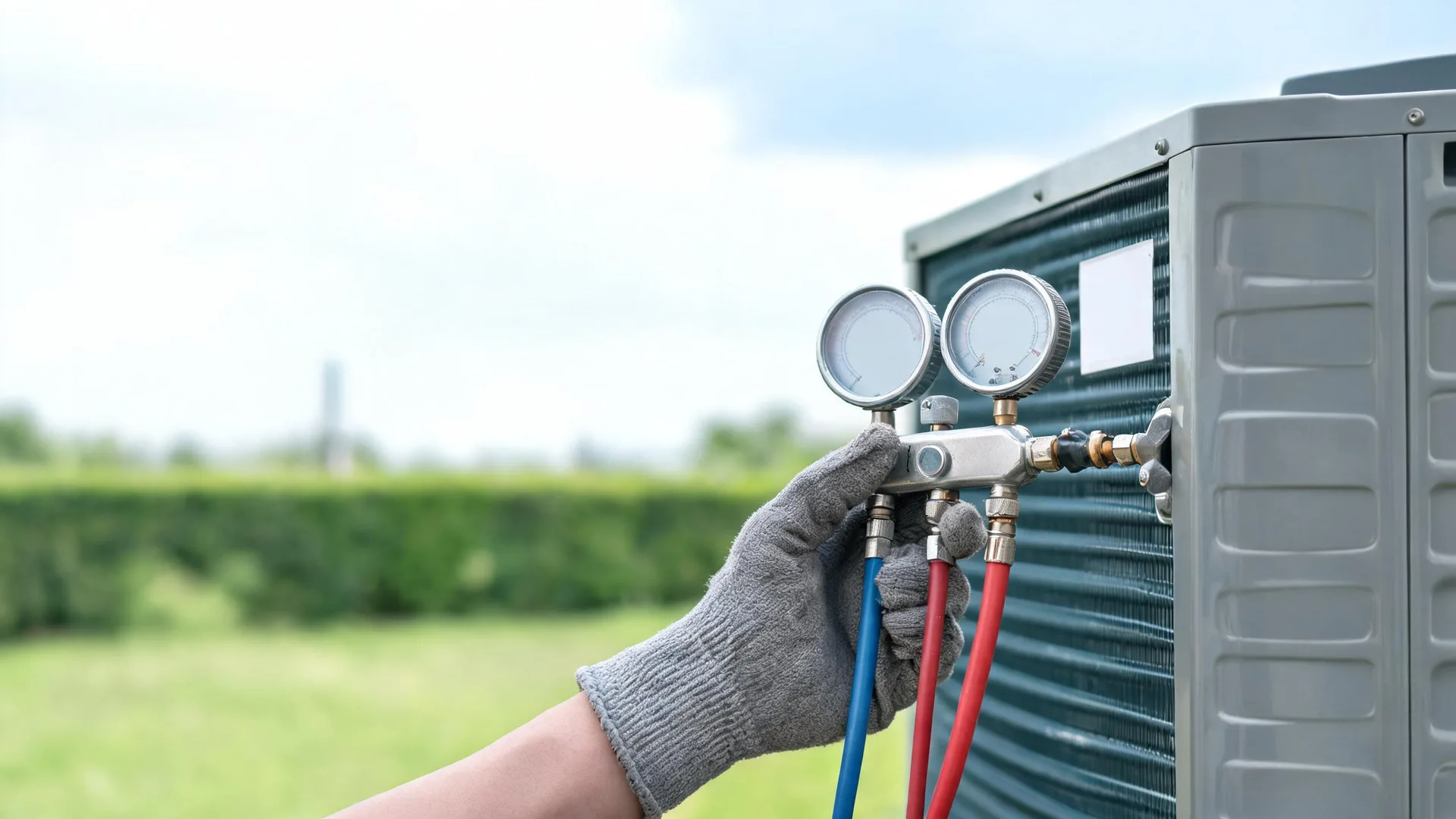
A refrigerant leak is never really fixed by adding more

Low refrigerant almost always means a leak somewhere in the coil or line set, usually from a worn joint or a small rub-through. Topping off the charge cools things down for a while. The level drops again until the leak itself gets found and sealed. Treating the symptom instead of the leak just delays the same call.

An outdoor air conditioning condenser unit installed beside the exterior wall of a blue vinyl-sided house at sunset.

A new air conditioner would save little on running costs in Mahaska County, so the repair decision comes down to the unit's condition.

  • A new one at the federal minimum, 13.4 SEER2$200 a year
  • An older air conditioner$220 a year

Estimates for a typical Mahaska County home, compared with an older unit built to the previous federal minimum, from EIA household energy data, Iowa fuel prices and NOAA climate normals. Your home will differ.

Repair makes sense when a part like a capacitor or contactor has failed.

Replacement makes sense when the compressor has failed or the system uses R-22 refrigerant, which is no longer made.

A compressor that's failed outright is usually the end of the road. It's the most expensive part in the system, and a shop that quotes replacing it is often pointing you toward a new unit instead, especially once a system has some years on it. A failed capacitor, a bad run of wiring, a blower motor seizing up, those are worth fixing almost every time. They're contained problems with a clear fix. The harder call is a unit that's nickel and diming its way to failure, a new part needed every time the season turns. At some point the repairs add up to more than the unit is worth holding onto, and a tech who's seen the whole history of the system is in a better position to tell you where that line is than a guess over the phone.