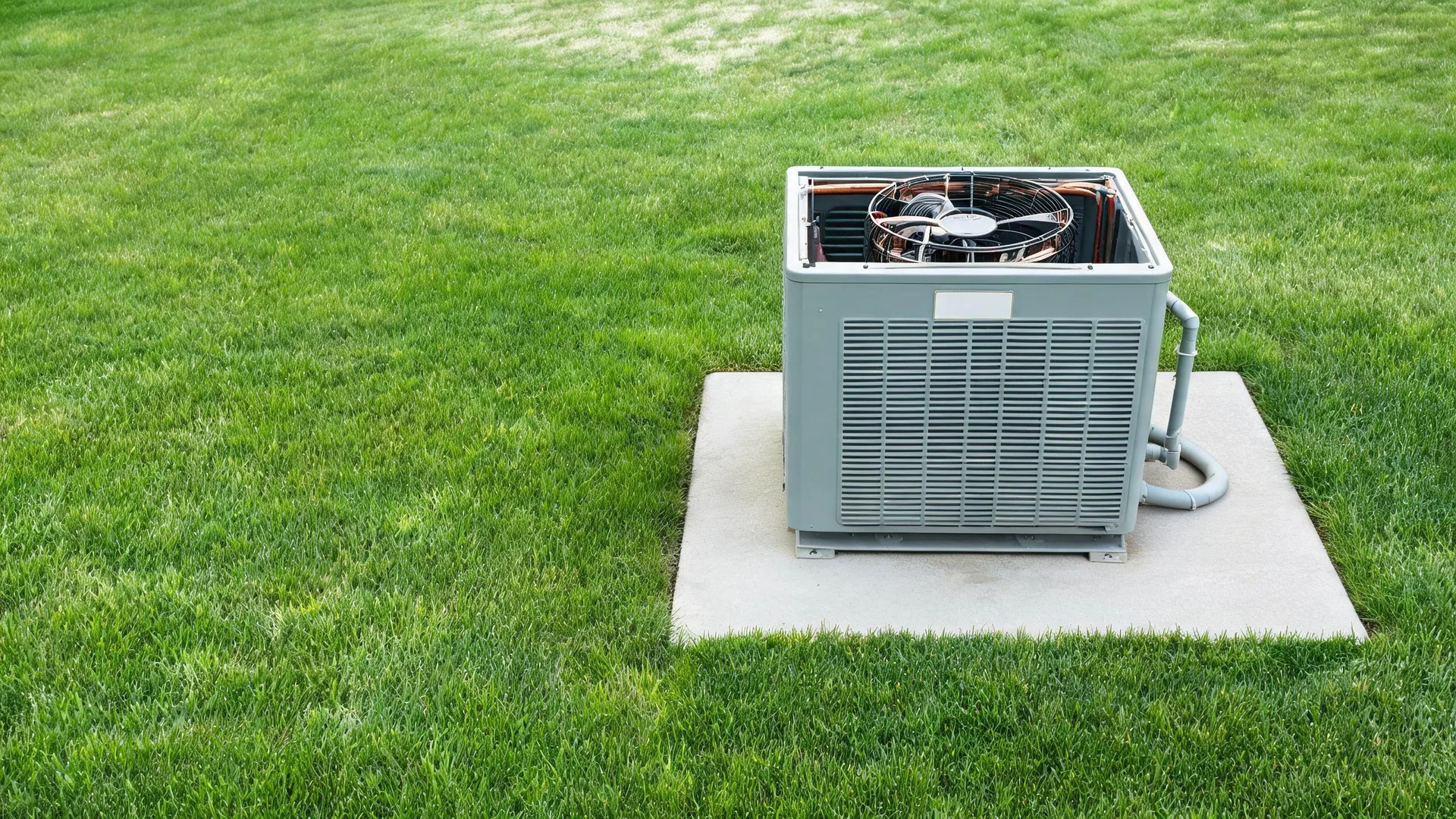
Overhead view of a gray outdoor AC condenser unit on a concrete pad beside a mulched garden bed and a house with vinyl siding.

AC Repair in Waverly, IA

Tell us about the job

Takes about a minute. No obligation.

RepairCentral ACBremer County, IA
Step 1 of 2

What ZIP code is the job in?

A small problem can take out a compressor

A refrigerant leak or a weak capacitor makes the compressor work harder than it should. Keep running the system on top of that and the compressor can overheat or seize. Once that happens the condenser usually has to come out as a whole unit, not just the one part that failed first.

Shutting it off buys you time

If the air coming out is weak, warm, or the unit is making a new noise, turning it off until a tech looks at it protects the parts that are still working. A system that is struggling and gets pushed through another day of running can end up with more parts damaged than it started with.

3 months
June through August, your air conditioner is on duty
81°F
the average summer afternoon it cools against
15 hail events
in ten years, and hail bends the fins on outdoor coils
37 wind events
in ten years, and wind drives debris into outdoor units
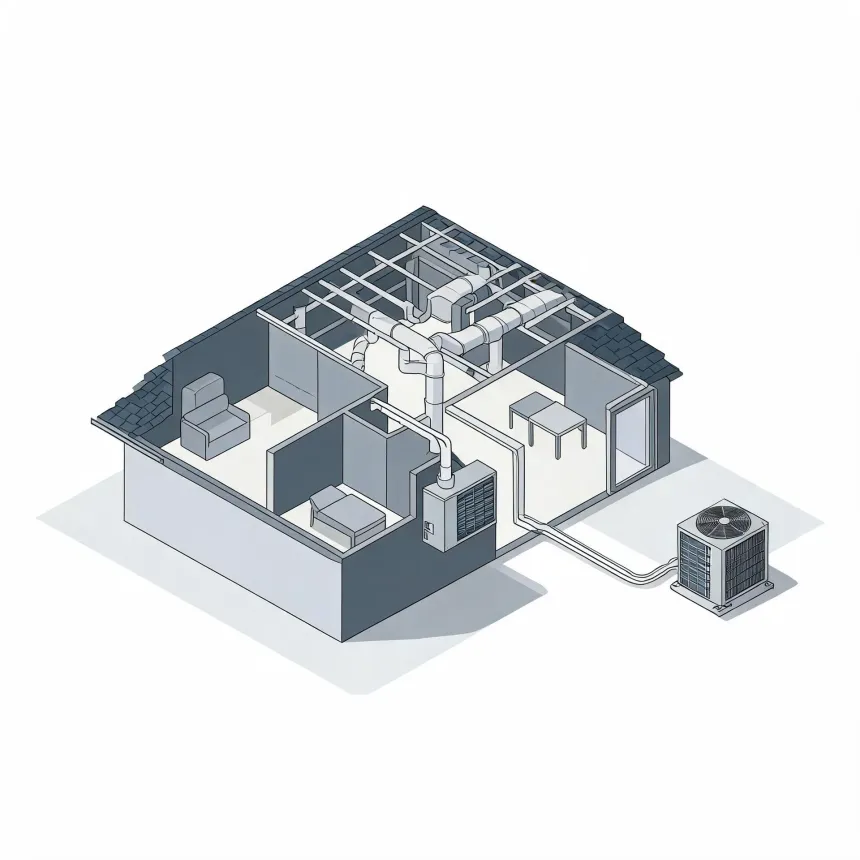
Isometric cutaway illustration of a house showing attic ductwork, an indoor air handler, and an outdoor condenser unit connected by lines.
Your air conditioner works hardest from June through August.

NOAA nClimDiv, 1991–2020 normals

Air conditioners in Bremer County only run about three months a year, June through August, with afternoon highs around 81.

A compressor that short summer doesn't wear out on its own, so when it fails there's usually a real cause behind it worth fixing.

Half the homes here were built by 1970, old enough that the AC itself, not just the compressor, may be original

Half the homes here were built by 1970
Climate zone 5A
Power costs 13.4 cents a kWh statewide
June is when AC trouble in Waverly shows upCooling in Bremer County runs June through August, and May is when it's worth a look first.

If your AC came with the house and the house is older, ask the tech straight out how much life is left in it before paying for a major repair. A compressor or coil replacement on a unit that's already near the end isn't worth the same as it would be on a five-year-old system. Half the homes in Bremer County were built in 1970 or earlier, so a lot of the systems out there are on their second or third unit already, not the original. Get the age of the equipment itself, not just the house, since a furnace or AC can be swapped out long after the walls went up. That number should decide whether you fix it or replace it.

It's usually worth repairing

It has an easier job here than in most places, so your air conditioner is often in decent shape. Repair is usually worth it.

Find a contractor
A man in a cap, gray long-sleeve shirt and tan pants climbs concrete steps toward a dark green front door, carrying a worn canvas tool bag.
A gray cylindrical air conditioning condenser unit mounted on a concrete pad next to a light-colored vinyl-sided house exterior.

What to check before you call anyone

Before anyone comes out, check the thermostat is set to cool and the setpoint is actually below room temperature. Walk over to the outside unit and look for the fan on top turning. If it's not spinning and you don't hear a hum, flip the breaker off and back on once, since a tripped breaker is an easy thing to rule out. While you're outside, check nothing is blocking the unit, no leaves packed into the sides, no grass clippings matted on the fins. Inside, pull the air filter and hold it up to a light. If you can't see light through it, that alone can choke off airflow enough to cause a lot of these symptoms. Look at the vents around the house and make sure none got closed or blocked by furniture. If there's a drain line near the indoor unit, check for standing water or a musty smell, since a clogged line can shut the system down on its own as a safety measure. None of this tells you what's actually broken, but it rules out the things that aren't worth paying a tech to find.

Warm air or weak airflow

Air that used to come out cold is lukewarm, or the vents are blowing but there's not much push behind it. Weak airflow usually points to the blower, a dirty coil, or ductwork losing air before it reaches the room. Warm air with good airflow points more toward the compressor or the refrigerant charge. Either way, the thermostat reaching its setpoint isn't the same as the house actually feeling cool.

New sounds or short cycling

A unit that starts clicking, buzzing, or grinding is telling you a part is wearing out before it fails outright. A system that shuts off and restarts every few minutes instead of running a full cycle is called short cycling, and it puts extra wear on the compressor every time it kicks back on. Both are worth a call before they turn into a no-cool situation.

An outdoor air conditioning condenser unit mounted on a concrete pad next to a blue-sided residential house at sunset.

A new air conditioner would save little on running costs in Bremer County, so the repair decision comes down to the unit's condition.

  • A new one at the federal minimum, 13.4 SEER2$150 a year
  • An older air conditioner$160 a year

Estimates for a typical Bremer County home, compared with an older unit built to the previous federal minimum, from EIA household energy data, Iowa fuel prices and NOAA climate normals. Your home will differ.

Repair makes sense when a part like a capacitor or contactor has failed.

Replacement makes sense when the compressor has failed or the system uses R-22 refrigerant, which is no longer made.

A diagnostic visit starts outside at the condenser. The tech checks that the fan spins freely and that the compressor is pulling the current it should. Gauges go on the refrigerant lines next. Low pressure usually points to a leak. High pressure can mean a dirty condenser coil or a fan motor that's not moving enough air across it. Inside, the tech checks the evaporator coil for ice or buildup and watches whether the blower is actually moving air the way it should. Electrical parts get tested too. A weak capacitor or a relay on its way out won't always show obvious signs until the compressor tries to start and can't. Once all of that's checked, the tech can point to the part that's actually failing instead of guessing from the symptoms alone.