AC smells like burning in Clinton, IA

RepairCentral ACClinton County, IA
Step 1 of 2

What ZIP code is the job in?

A burning smell from your AC usually means dust burning off a part that's just kicked on, or it means something electrical is overheating. If you just started the system after it sat idle, a light burning smell for the first few minutes can be dust on the coil or heating element clearing off, and it should fade. If the smell is sharp, like burning plastic or wiring, or it keeps up after the unit has run a while, that points to a motor bearing seizing up, a capacitor failing, or wiring insulation breaking down inside the unit. Both the indoor and outdoor parts of your system have motors and electrical connections that can do this, and either one can be the source. A smell like this is worth shutting the system off for until someone looks at it. Running a unit with an overheating motor or bad wiring risks a bigger repair, and in some cases a fire, so this isn't one to wait out through a hot Clinton summer.

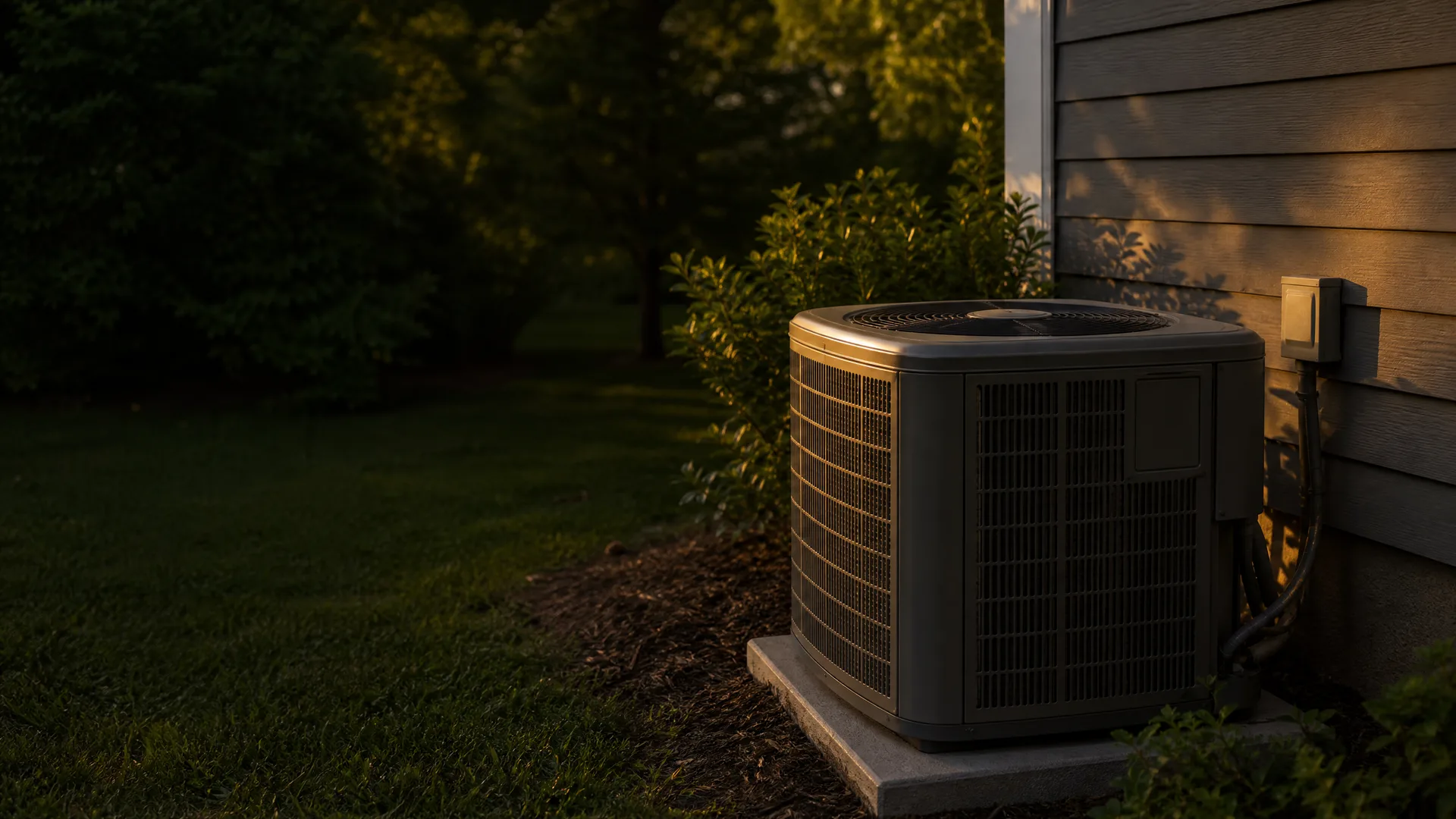
An outdoor air conditioning condenser unit on a concrete pad beside a house with white horizontal lap siding, with an electrical disconnect box and insulated refrigerant line on the wall and a shrub over mulch to the right.

Normal start-up smell

A faint burning smell for a few minutes, then gone, usually means dust on the coil or burning off the motor housing. The unit outside runs quiet and steady, the disconnect box stays cool, and the smell doesn't come back once the system has been running a while.

An outdoor air conditioner condenser unit on a concrete pad beside a house with light horizontal lap siding, with an electrical disconnect box and conduit on the wall behind it.

Smell that keeps coming back

A burning smell that returns every time the AC cycles, or gets sharper, points to a wiring problem or a motor that's overheating inside the condenser. An older unit with worn insulation or a failing capacitor is more likely to do this, and it won't clear up on its own.

Is that smell still there when the AC kicks off?

A burning smell that lingers past the first few minutes, or comes back every time the system cycles, is worth paying attention to. You might notice it strongest near a vent, or near the outdoor unit itself. Some people catch a sharper, almost electrical smell rather than a dusty one, which points more toward wiring or a motor than a dirty coil. If the smell is paired with the system blowing warm air, shutting off on its own, or tripping a breaker, that's the electrical side of things working harder than it should. Left alone, an overheating part can damage the system further or become a fire risk, so it's not something to wait out through a Clinton summer.

An outdoor air conditioner condenser unit on a concrete pad beside a house with horizontal lap siding, next to a mulch bed, shrubs and a lawn at dusk.

The sun is low behind the Clinton County bean fields when you walk out back to check on the noise your kid mentioned. It's still warm, the kind of August evening where the air doesn't move much. The condenser sits against the house, and that's when you notice it: the fan inside the cage isn't spinning. No hum, no air pushing out the top. Just the smell, sharper out here than it was through the vent in the living room, something like hot plastic. You crouch down near the unit. The side panel is warm under your hand. Inside, the house is already starting to feel it, the air coming through the vents a little less cold than it was an hour ago.


Keep Running It or Shut It Off

Keep running it

  • If the smell is electrical, the wire or part overheating keeps heating every minute the system runs, and that damage doesn't reverse itself.
  • A capacitor or contactor that's starting to burn can fail outright mid-cycle, leaving you without cooling on a hot Clinton County afternoon.
  • Running the blower while something's actually burning can push that smell through the ductwork into every room instead of just the one near the unit.
  • If the smell comes from the outdoor unit and it keeps running, whatever's overheating out there is exposed to summer heat on top of its own heat.
  • Waiting usually doesn't cost you the full unit, but it can turn a single part replacement into a repair that touches the wiring or the board too.

Shut it off and call

  • Switching the system off at the thermostat or the breaker stops the heat source from getting worse while you sort out who can look at it.
  • A local contractor who works on AC systems all summer in Clinton County has likely seen this exact smell trace back to a specific part before.
  • Calling one contractor instead of sorting through several means you explain the smell once, not every time a new company calls you back.
  • A licensed technician can open the disconnect box and check the wiring and components without guessing at what's safe to touch.
  • If the smell was nothing more than dust burning off, a quick inspection tells you that for certain instead of leaving you wondering all summer.
A woman with long gray wavy hair in a knit sweater sits on a light sofa with a striped pillow, looking toward a window in a room with wooden shelving and a potted plant.
A woman in a gray cowl-neck sweater stands in a living room with built-in shelves, a lamp, a sofa with cushions, and a bright window behind her, looking to her right.
A woman with long wavy brown hair in a dark blue sweater sits on a sofa with cushions, looking off to the side, with a wooden shelving unit, houseplant and bright window behind her.
A woman with long dark hair in a gray knit sweater sits indoors smiling and looking off to the side, with a window, houseplant, framed picture, and shelving blurred behind her.

Breakers trip around 40 to 50 amps on most AC circuits

A short in a wire or a failing part can pull enough current to trip the breaker before anything catches. If yours doesn't trip, don't count on it to protect you.

Reach a local pro

One local contractor, not a handful of bids

A technician who works on AC units around Clinton County every summer knows which parts tend to overheat first and can look at yours without a string of other companies calling you.

Reach a local pro

Why does my AC smell like burning when it turns on?

You hear the AC kick on and catch that burning smell right at the start, maybe near the thermostat or just as the compressor outside spins up. You're not sure if this is the system clearing its throat after sitting idle or something wrong with the wiring or the motor. It helps to know what's actually happening inside the unit in that first minute.

It's usually dust burning off, or a part overheating

When an AC sits idle, dust settles on the coil and on the motor housing. The first time the system runs, that dust burns off as the parts warm up, and you get a faint smell that clears in a few minutes. That's normal, especially after the unit has been off for a while between cycles. The other cause is electrical. A capacitor or contactor that's starting to fail can draw more current than it should and heat up every time the system turns on. That smell doesn't fade the way the dust smell does. It tends to show up at the same point in the cycle, every time the unit kicks on, because the same part is working harder than it should.

An outdoor air conditioning condenser unit on a concrete pad beside a house with white horizontal vinyl siding, with a gray electrical disconnect box and refrigerant lines on the wall behind it.
Before you get your air conditioner repair
A gray outdoor air conditioner condenser unit on a concrete pad beside a house with white horizontal siding and a brick foundation, with a wall-mounted disconnect box and conduit, and a green shrub with mulch at left.
After you get your air conditioner repair

Explain it one time

The pro who gets in touch is licensed in Iowa and works in Clinton County.

No fee to send it, and nothing to sign.

Call a contractor yourself

You could start looking now: searching for AC repair companies that serve Clinton, calling a few, describing the burning smell to each one, and asking whether they can come out today. Some will want you to text a photo of the disconnect box. Some won't have anyone free until next week. You'll repeat the same details each call, where the smell is strongest, whether the breaker has tripped, how old the unit is, and then start comparing quotes once a couple of them get back to you. If the smell is electrical, every day spent calling around is another day that part keeps heating up.

Get matched instead

Fill out the request on this page and it goes to one licensed contractor who works on AC systems in Clinton and the rest of Clinton County, not a batch of companies competing for your callback. Someone who services this equipment every summer has likely seen this exact smell before, traced to a capacitor going bad or a contactor arcing, and knows what to check first. You explain the problem once. No comparing bids, no sorting through voicemails, no second call to explain it again to someone new. You still get to ask questions and decide what to do next, but the work of finding someone qualified is already done.

A woman and a child wrapped in a knitted blanket on a couch indoors, with a lit table lamp and a potted plant in the background.
An older woman with short gray hair in a cream knit sweater stands smiling and looking to the side behind a wooden counter holding a round loaf of bread, in a warmly lit kitchen with shelves and a window showing snowy trees at dusk.
A gray outdoor air conditioner condenser unit on a concrete pad beside a house with horizontal siding and a stucco foundation, with a disconnect box and conduit on the wall, decorative gravel, mulch, and a shrub nearby.

Clean coil, normal run

This is what the unit should look like outside. The coil grilles are clear, the gravel bed keeps debris down, and the disconnect box stays cool to the touch. Air moves through the coil the way it's supposed to, and nothing in the cabinet is working harder than it should.

An outdoor air conditioning condenser unit on a concrete pad beside a house with horizontal lap siding, with an electrical disconnect box and conduit on the wall, mulch and a green shrub to the right, and a concrete walkway in the foreground.

Dirt built up on the coil

Dust and yard debris have packed into the coil grilles here. The unit has to work harder to pull air through a dirty coil, and that extra strain shows up as heat in the electrical parts nearby, including the disconnect box mounted just beside it.

Cooling runs June through August

Three months of real heat means three months where your AC can't take a day off. If a burning smell shows up in July, you're not catching it at the tail end of the season, you're catching it with weeks of hard running still ahead.

NOAA nClimDiv 1991-2020

A gray outdoor air conditioner condenser unit on a concrete pad beside a house with horizontal lap siding, with a flowering shrub at left and a disconnect box with conduit on the wall at right.
The coil is clear and the gravel bed is clean, so nothing on the outside is feeding the unit heat it doesn't need.
An outdoor air conditioner condenser unit on a concrete pad beside a house with light horizontal vinyl siding, surrounded by bare dirt, gravel and dry leaves, with refrigerant lines and conduit running along the wall.
Leaves and dirt packed against the base trap heat against the cabinet, and refrigerant lines running along the wall pick that heat up too.
A two-story house with light beige siding and a gray shingled roof, fronted by a mowed lawn, shrubs, a large leafy tree at right, and a wet concrete walkway leading to the front door in low golden sunlight.

The dew point here averages 63°F across June, July and August, according to NOAA climate records for Clinton County. That's heavy air, the kind that leaves a film on your skin walking from the car to the house. Your AC has to pull that moisture out before the house feels right, which means longer run times than a dry 90-degree day would need. A system already stressed by that load runs its motor and electrical parts hotter and longer than it would in a drier climate. If something's starting to overheat, this is the weather that pushes it from a faint smell to a real problem.

NASA POWER T2MDEW

A kitchen with green cabinets and a dark countertop holding potted plants, a wooden bowl and cutting board, with a closed laptop, ceramic mug, and glass vase of greenery on a rustic wooden table in the foreground.

A burning smell is your AC telling you something, not nothing

A smell that fades in a few minutes and never comes back is dust. A smell that lingers, or shows up every time the unit cycles, is a part working harder than it should, and that part won't fix itself by running longer. The breaker might not save you from it either. Either way, you've got an answer now, and a reason to check further or let it be.

Finding someone to check it is its own chore, calling around Clinton, describing the smell more than once, waiting to hear back while the system keeps cycling. A contractor who works on AC units around Clinton County sees this particular smell often enough to know what it usually is before they even pull the panel off, and you deal with one call instead of a handful.

A shallow dark wooden bowl and a stack of books rest on a wooden table in front of a beige sofa with linen and green cushions, with a tall ceramic vase of thin branches beside a window in the background.
A white barn with a dark gambrel roof sits on a wooded hillside above a broad river valley with fields and tree lines under a hazy sky at dawn or dusk.

Skip the calls to every shop

Get one local pro

Sending the form costs nothing.

One call gets a Clinton County contractor out to look at the actual smell, instead of you guessing from the thermostat whether it's safe to keep running the AC through another hot afternoon.