
Why your AC smells musty in sticky Iowa summers

Describe what your air conditioner is doing once, in one form.

RepairCentral ACIowa
Step 1 of 2

What ZIP code is the job in?

Why does my AC smell musty in the summer?

You turn the AC on during a sticky stretch and the air coming out of the vents smells sour, like a wet basement. It's not strong enough to blame on anything you can see, and it usually fades after the system has run a while. But it keeps coming back, especially on the muggiest days, and you want to know if it means something is wrong with the unit or if it's just Iowa humidity working its way into the house.

That smell is mold or bacteria growing on the evaporator coil

Your evaporator coil stays wet while the AC runs, since that's the part pulling moisture out of the air. In Iowa's humid summers, that coil can stay damp for hours after the system shuts off, and mold starts growing on it and on the drain pan underneath. The musty smell is that growth, carried through your ducts every time the blower turns on. A clogged drain line makes it worse, since water sits instead of draining away. The smell usually isn't dangerous, but it means moisture is sitting somewhere it shouldn't, and left alone it can lead to a cracked or corroded drain pan, or mold spreading into the ductwork itself.

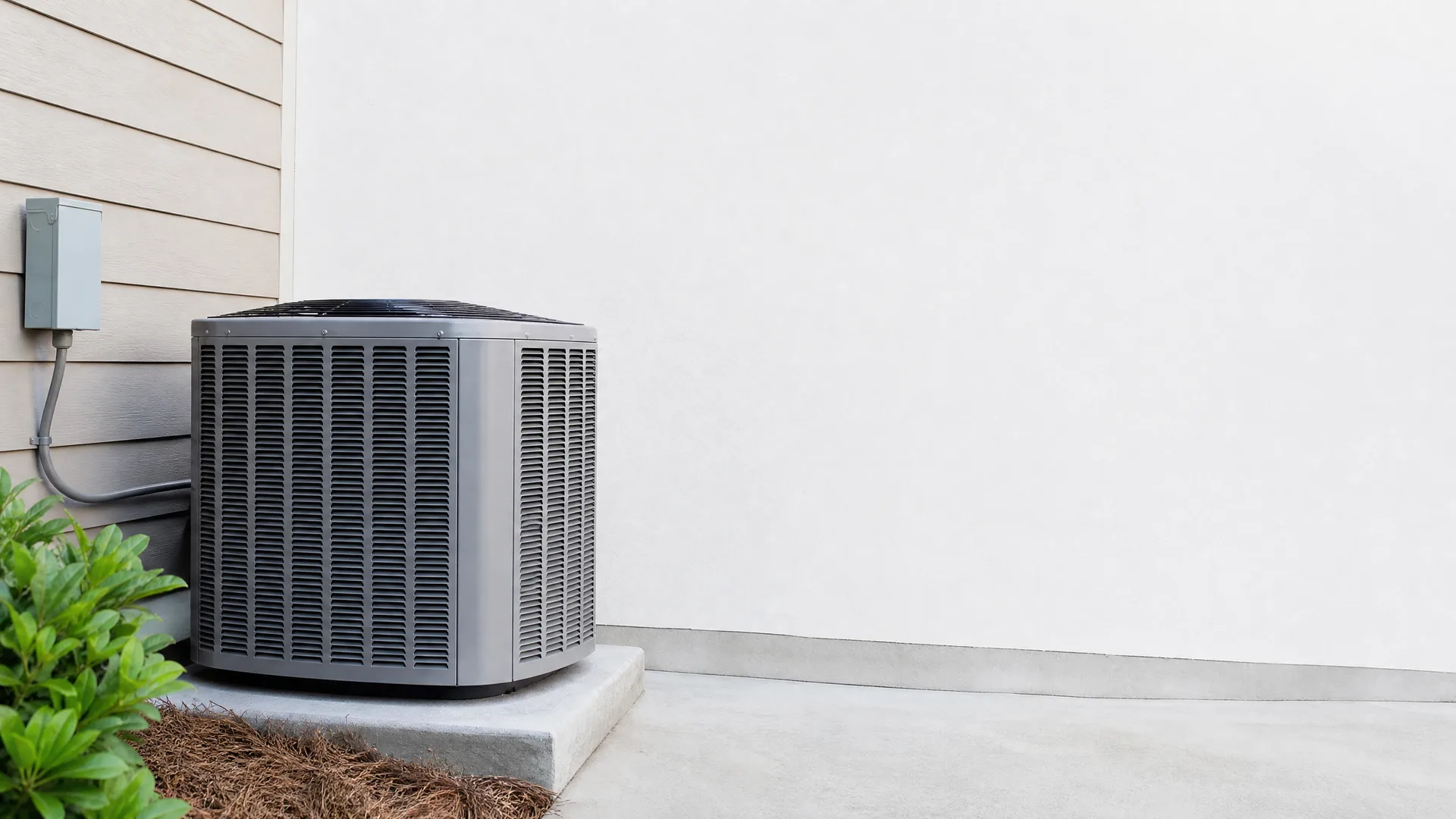
A gray outdoor air conditioning condenser unit on a concrete pad beside a house with horizontal siding and a stone veneer base, with a wall-mounted disconnect box and conduit, next to a shrub bed and a concrete patio.

Running clean

Your condenser sits outside, coil clear, fan turning steady. Air moving across the coil stays cool and dry before it ever reaches the vents, so there's nothing damp sitting still long enough to grow anything. The musty smell has no reason to show up.


An outdoor air conditioner condenser unit on a concrete pad beside a house with light gray vinyl siding, with a gray electrical disconnect box and conduit on the wall, gravel beds and dried plants nearby, and a concrete sidewalk in the foreground.

Drainage gone wrong

Weeds crowd the pad and the unit looks like it's been ignored a while. Inside, a clogged drain line or a dirty coil keeps moisture sitting where it shouldn't. That standing water is what feeds the smell every time the system kicks on.

A woman in a gray sweatshirt with her hair pinned up sits in a living room looking off to the side, with a pale sectional sofa, cushions, a potted plant, framed wall art and a large window behind her.
A woman with long wavy brown hair in a gray top and dark cardigan stands near a window, looking to the side, with a living room, fireplace and round mirror blurred behind her.
A woman with curly dark hair in a grey long-sleeved top sits on a grey couch with patterned cushions, looking off to the side in a softly lit living room.
A woman in a gray knit sweater with her hair in a bun sits on a couch indoors, smiling and looking off to the side, with a dining area and framed picture blurred in the background.

How the musty smell starts

  • Your evaporator coil sits inside the air handler and runs cold enough to pull moisture out of the air all summer long.
  • That water is supposed to drip into a pan below the coil and drain outside through a condensate line.
  • Iowa's humid air means more water comes off that coil than it would in a dry climate, so there's more to drain.
  • If the drain line has a low spot or a clog, water backs up and sits in the pan instead of draining away.
  • Standing water in a dark, closed cabinet starts growing mold and mildew within days, and that smell travels straight through your ducts.
  • A dirty filter or dirty coil gives mold spores something to cling to, so the smell keeps coming back even after the system cycles off.

Your air conditioner cools your house by pulling heat out of the air, and pulling moisture out comes with it. That happens at the evaporator coil, tucked inside the air handler, usually in a closet or the basement. On a sticky Iowa afternoon, that coil can pull a lot of water out of the air, far more than it would on a dry day. All that water has one job: drip down into a shallow pan and run out through the condensate line to a drain outside. When that line is clear and sloped right, you never think about it. When it's not, the water has nowhere to go. A sagging section of line, a clog from algae or dust, or a pan that's slightly out of level, and water starts sitting instead of draining. Water sitting still inside a dark, closed cabinet is exactly what mold needs. It doesn't take long, days rather than weeks, before something is growing in there. Once it is, every cycle of your system pushes that smell through the ducts and out the vents into your living room. A dirty filter or a coil with dust caked on it makes it worse, because that buildup gives mold spores more surface to hold onto. That's why the smell can come back even after the air feels dry again. The fix isn't complicated for someone who knows where to look, but it usually means clearing or repairing the drain line and cleaning what's growing on the coil and pan.

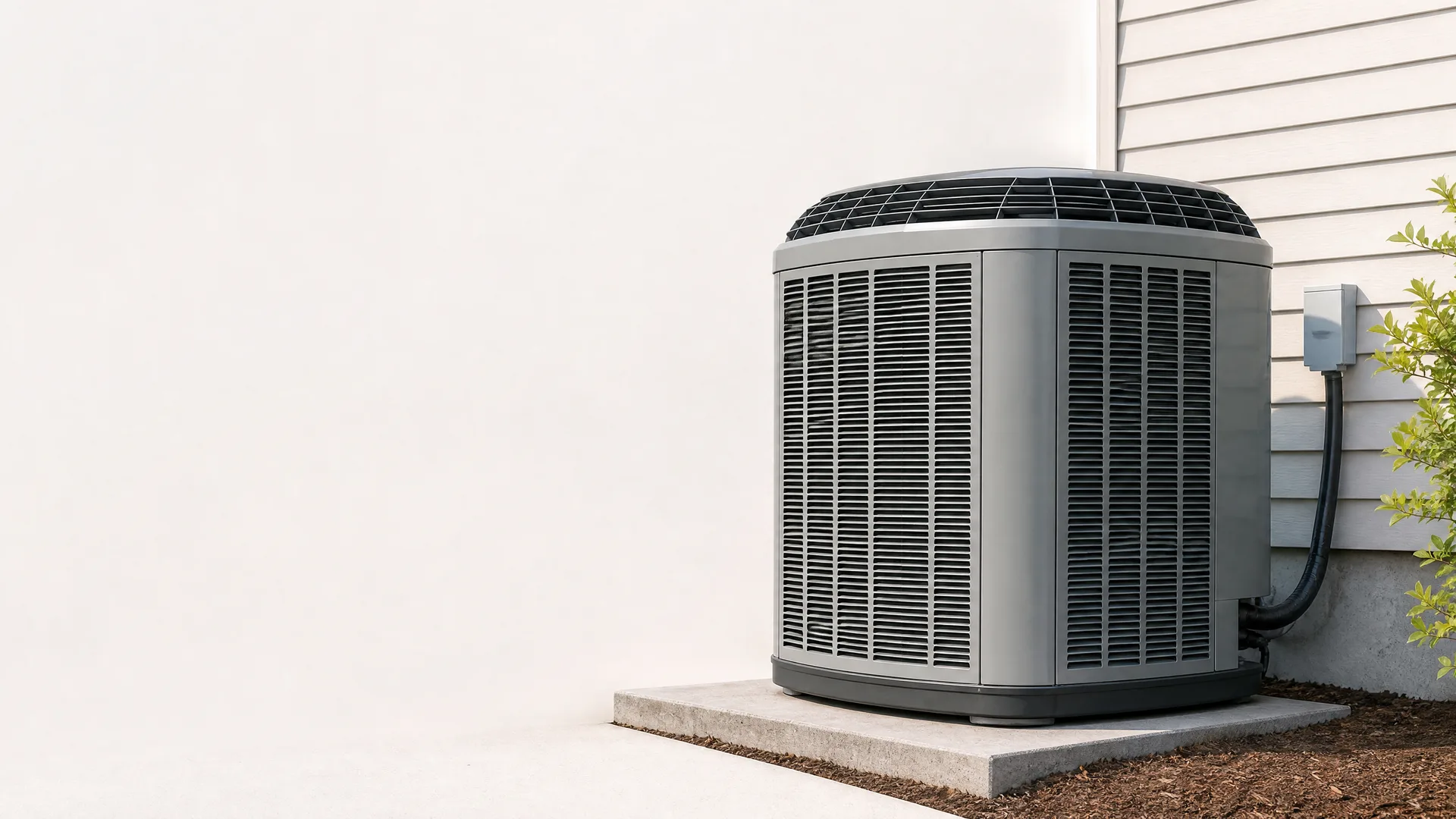
A gray outdoor air conditioning condenser unit on a concrete pad beside a house with horizontal lap siding, with a conduit and electrical disconnect box on the wall and a green shrub in mulch to the right.
Coil clean, drain running clear, condensate moving outside where it belongs.
A weathered outdoor air conditioner condenser unit on a concrete pad beside a house with horizontal vinyl siding, with a conduit and disconnect box on the wall to the right.
Coil caked with dust and a drain line clogged with algae, so water backs up instead of draining.
  1. Humid air crosses the cold evaporator coil and loses its moisture

  2. Water collects in the drain pan below the coil

  3. Dust and algae build up and narrow the condensate line

  4. Water backs up in the pan instead of draining outside

An outdoor air conditioner condenser unit on a concrete pad beside a house with horizontal lap siding, with a conduit running to a gray electrical disconnect box on the wall.
Before you get your air conditioner repair
A gray outdoor air conditioner condenser unit on a concrete pad beside a house with horizontal lap siding, with a wall-mounted disconnect box and conduit at left and a green shrub and mulch bed at right.
After you get your air conditioner repair
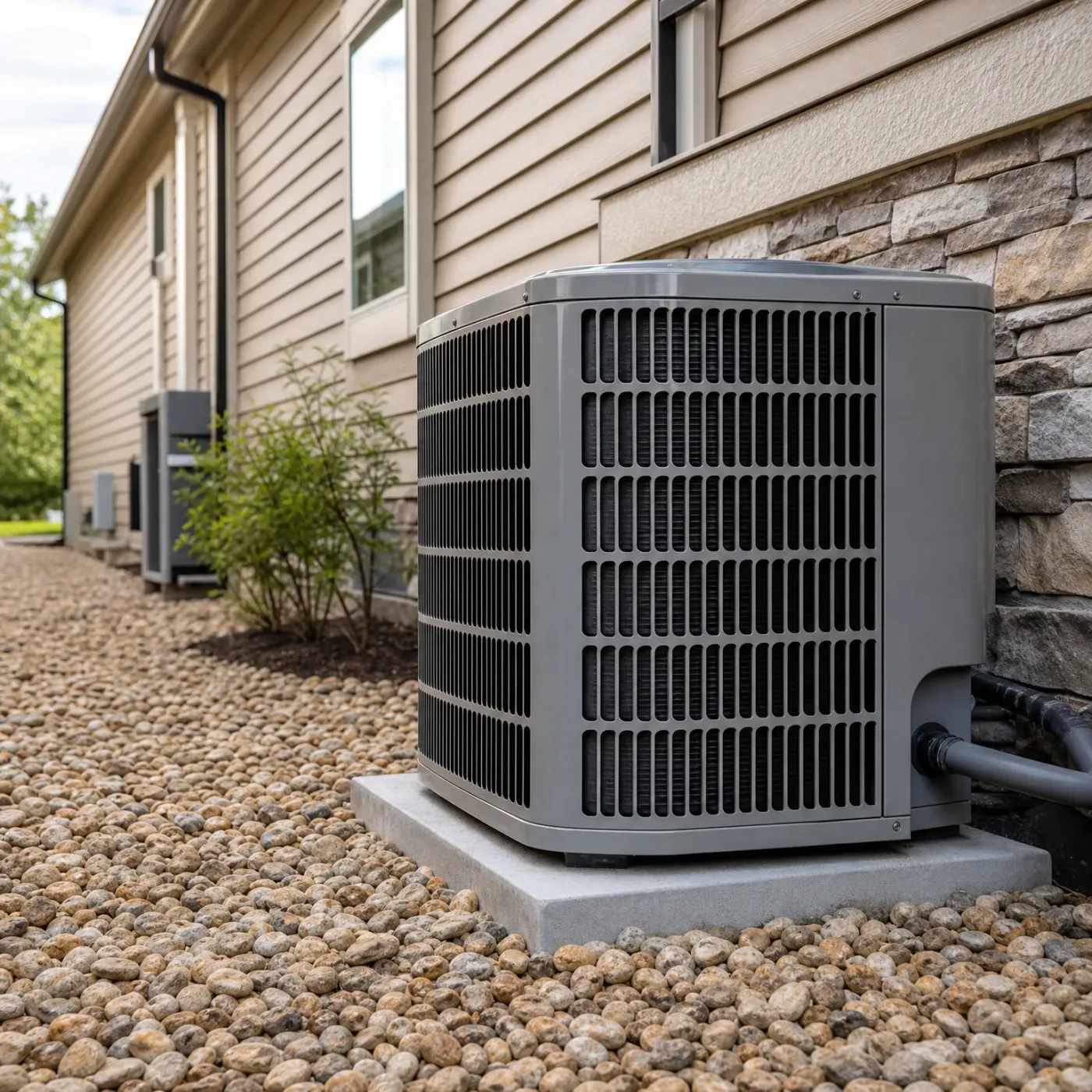
A gray outdoor air conditioner condenser unit on a concrete pad beside a house with vinyl siding and stone veneer, surrounded by gravel, with a second smaller unit and a shrub farther along the wall.

No phone calls to make

Only one pro gets your request, so you hear from one company.

Answer a few questions instead of calling shop after shop.

Skip the search

Asking costs nothing, and the choice to hire stays yours.

Is that musty smell showing up anywhere else in the house

Check the air handler closet or basement near it. A musty AC usually means standing water somewhere it shouldn't be, and you might notice a damp patch on the floor, a faint smell that lingers in that room longer than near the vents, or water staining around the unit. Some homes have a drain pan with a float switch that shuts the system off once it fills, so the AC stops cooling with no warning beyond the smell you already caught. Left alone, standing water in the pan or line can mean water damage to the floor or subfloor under the unit, and mold that spreads past the coil into the ductwork, so the smell carries through every vent in the house instead of fading.

A gray outdoor air conditioner condenser unit sits on a concrete pad beside a house, with a gray electrical disconnect box and conduit on the lap-siding wall above it and a green shrub and pine straw at the lower left.

Why the pan has a backup drain

Most air handlers have a second, shallower pan under the main drain pan, with its own line running outside. It only catches water when the primary line is already blocked. If you've seen water stain the ceiling below an attic unit, or drip near a basement unit, that backup pan was overflowing too. It's a sign the clog had been building for a while before anyone noticed.

A gray outdoor air conditioner condenser unit on a concrete pad beside a light-colored stucco wall and horizontal lap siding, with an electrical disconnect box, conduit, mulch, and a shrub at right.

Why a clean filter still clogs

A dirty filter lets more dust reach the coil, but even a clean one won't stop algae from growing in the drain line itself. The line stays wet and dark all summer, and that's exactly what algae needs. A contractor flushing the line is dealing with growth inside the pipe, not dust that slipped past the filter. Changing the filter on schedule helps the coil but won't clear a line that's already narrowing.

Power costs 13.62 cents per kilowatt-hour statewide

At 13.62 cents a kilowatt-hour, running your AC harder than it needs to shows up fast on the bill. A coil fighting a clogged drain has to work longer to keep the house comfortable, and that extra runtime is what you're paying for.

EIA-861 2025 statewide residential average

A musty smell from your AC almost always comes down to water sitting where it should be draining, usually in the pan or the line under the evaporator coil. That's a mechanical problem, not something a filter change or a can of coil cleaner fixes for good. A contractor who works on air conditioners around Iowa all summer has seen this same drain line clog more times than they can count, because the humidity here keeps those lines wet and growing algae in a way drier climates don't. That's the kind of problem they can spot and clear fast, and because you're only talking to one licensed local contractor instead of fielding calls from several, you explain what's going on once, to someone who already knows what they're going to find before they open the panel. The smell goes away when the water does. Get the drain clear and draining the way it's supposed to, and the air coming out of your vents goes back to smelling like nothing at all.

Sunlit corner of a room with a wooden sideboard holding a ceramic vase of olive branches and a dark wooden bowl, beside a white-framed window, a hardwood floor and woven rug.
A wooden cabinet holding a pale ceramic vase with leafy branches stands beside a beige wall in a sunlit room with hardwood floors, a jute rug, and a window showing green foliage outside.
Sunlit room corner with a beige upholstered sofa holding a rust-brown cushion, beside floor-length linen curtains at a window, over a wood floor with a woven rug.
Corner of a room with beige walls, a framed photograph, a floor-length linen curtain beside a window, an upholstered armchair with a knit pillow, white baseboards and trim, wood flooring and a pale rug.
Sunlit living room corner with a beige upholstered armchair with a cushion, linen curtains beside a wooden-framed window, green vertical panelled wall with a framed print, and a wooden table edge over a woven rug.

One form, no calling around

Your request stays with one local pro.

Skip the calls

No fee to send it, and nothing to sign.