A quiet residential street at dusk lined with illuminated two-story brick houses and mature trees.

Heat Pump Repair in Council Bluffs, IA

Tell us about the job

Takes about a minute. No obligation.

RepairHeat PumpPottawattamie County, IA
Step 1 of 2

What ZIP code is the job in?

Winters here test a heat pump the normal amount

Council Bluffs winters bring overnight lows averaging 16°F across December, January and February. That's cold enough that a heat pump leans on backup heat sometimes, but it's within what these systems are built to handle.


Look for a cause, not a mystery

A heat pump struggling to keep up, short cycling, or blowing cool air in winter usually traces back to a specific part. A stuck reversing valve. Low refrigerant. A failing defrost sensor. Local weather isn't the culprit here. Finding which part is doing this is the job.

8 months
October through May, your system heats
4 months
June through September, it cools
16°F
the average winter night it heats against
84°F
the average summer afternoon it cools against
Isometric line illustration of a cutaway house showing interior rooms, an air handler with ductwork in the attic space, and an outdoor condenser unit beside the exterior wall.
Your system heats October through May and cools June through September.

NOAA nClimDiv, 1991–2020 normals

Heat pumps in Pottawattamie County run from October through May, eight months straight.

A weak part usually gives out once the October heat load hits it, so problems show up early in the stretch.

Council Bluffs doesn't put extra strain on a heat pump

Power costs 13.4 cents a kWh statewide
51 hail events from 2015 to 2024
16 winter storms from 2015 to 2024
An older machine, an older houseHalf the homes in Pottawattamie County were built in 1967 or earlier.

Pottawattamie County gets its share of rough weather, including damaging wind and hail most years and the occasional tornado. None of that is what wears out a heat pump. Wind and hail hit the cabinet outside, not the parts that make it run. What actually knocks a unit out is a power blink during a storm, and a good share of Iowa households lost power for a full day or more last year. If your heat pump won't start after the lights come back on, check the breaker and the disconnect near the outdoor unit before assuming the worst.

Check the age before you fix it

If your heat pump came with the house, check how old it is before the repair goes any further. A repair makes sense on a unit with years left in it. On one near the end, ask the contractor straight out how much life is left before deciding.

Find a contractor
A man in a dark long-sleeve shirt and tan work pants, seen from behind, steps onto a porch toward a dark green paneled door while carrying a canvas tool bag with tools in its outer pockets, with a potted shrub to the right.
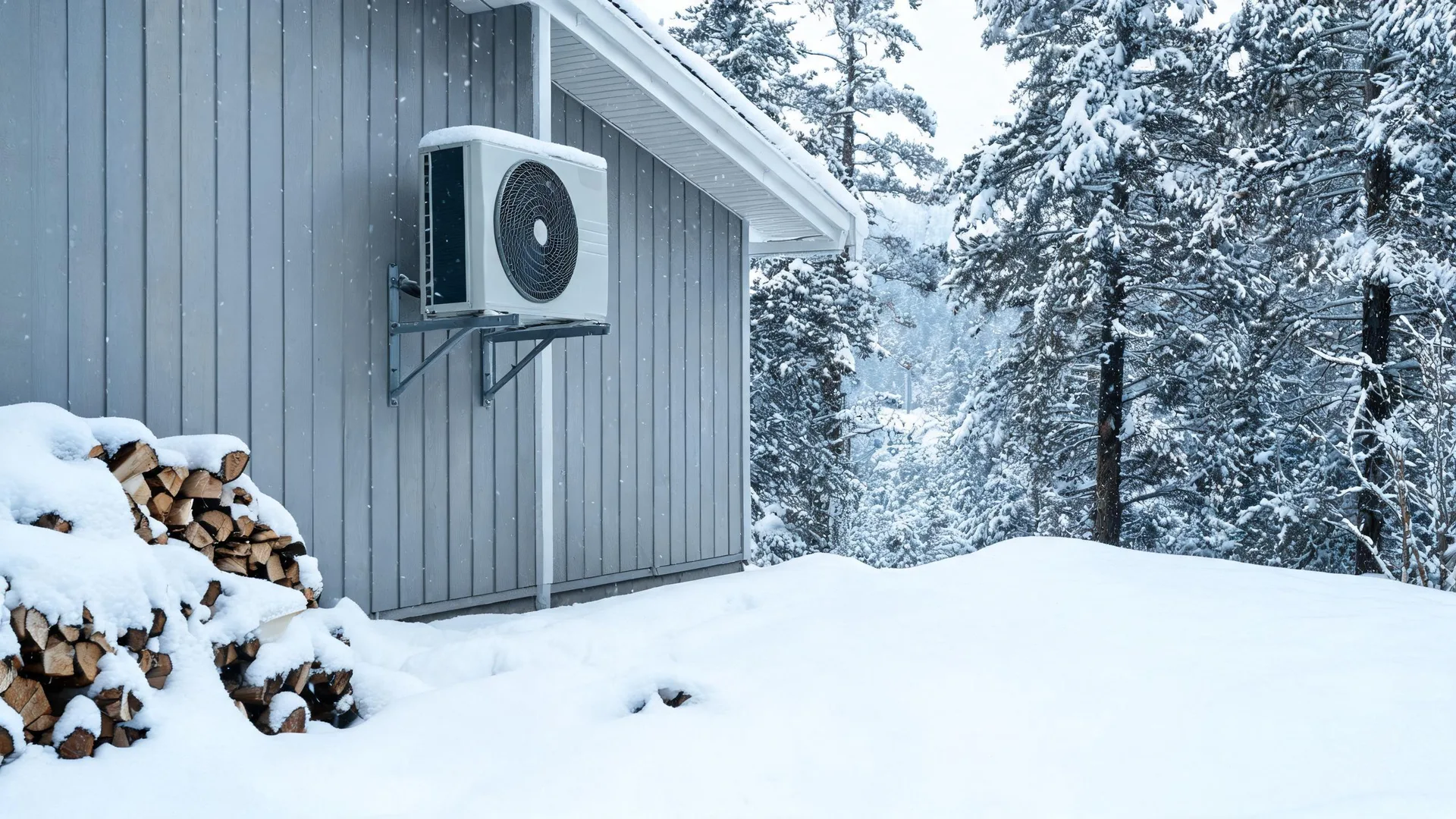
A residential heat pump outdoor unit mounted on a concrete pad next to a house with gray vinyl siding.

What the machine is telling you before it quits

Pay attention to what the system does right before it fails, not just the fact that it stopped. A heat pump that runs and runs without hitting the target temperature is usually low on refrigerant or losing the fight through a failing compressor. One that short cycles, kicking on and off every few minutes, often has a bad sensor telling it the job is done when it isn't. Ice building up on the outdoor unit and not clearing during the defrost cycle points to a stuck reversing valve or a defrost sensor that's quit. Warm air in heating mode, or air that smells faintly burnt when it kicks on, is worth a same-week call rather than a wait and see. A system that's merely noisier than usual, a new rattle or hum, can often wait a few days. One that's stopped moving air, or is tripping its breaker, can't.

What you can check yourself

Look at the outdoor unit first. If it's caked in ice or buried under snow and debris, airflow is blocked and the system can't do its job. Check that the filter inside isn't clogged, since a dirty filter can mimic a refrigerant problem by starving the system of airflow. Walk through the house and check that every vent is open and nothing's blocking them. Check the thermostat is set to heat, not fan only, and that the batteries aren't dying if it's a battery model.

What to leave alone

Don't open the outdoor unit's cabinet or touch the refrigerant lines. Don't pour water or chip at ice buildup, since that can bend fins or crack the coil underneath. If the breaker has tripped, you can reset it once, but if it trips again, stop and call someone rather than resetting it repeatedly. That usually means a short or a failing part drawing too much current, and repeated resets risk doing more damage.

A heat pump that's struggling doesn't fail all at once. It fails a little more every hour it keeps running wrong. Take low refrigerant. Once the charge drops, the compressor works harder to move the same heat, running hotter than it's built for, and a compressor that runs hot for long enough doesn't recover. A stuck reversing valve causes a similar problem. The system keeps trying to switch modes and can't, so it short cycles over and over, and every one of those cycles puts more wear on the compressor. Ice on the outdoor coil follows the same pattern. A little ice is normal and clears during a defrost cycle. Ice that doesn't clear blocks airflow completely, and the compressor ends up straining to push refrigerant through a coil that can't do its job. The parts in a heat pump are built to handle normal strain. They're not built to run for days under a fault that keeps making the system work harder to do less.

Whether a repair makes sense comes down to what's failing and what it's connected to. A bad capacitor or a failed sensor is a clean fix. It's a single part doing a single job, and swapping it brings the system back to normal. A compressor is different. It's the heart of the heat pump, and when it's failing, that's often a sign the system has been running stressed for a while, sometimes from a problem that was never fully fixed. Replacing a compressor on an old system can cost close to putting in a new unit, since the labor is the same either way and the parts around an old compressor tend to be worn too. Ask the contractor what's actually wrong before deciding, not just what it costs to fix. A straight answer about whether the rest of the system is sound tells you more than the repair estimate alone.