
Repair or replace a heat pump in Iowa

Get in touch with a local installer about a new heat pump.

New system or replacementHeat PumpIowa
Step 1 of 2

What ZIP code is the job in?

Should I repair or replace my heat pump in Iowa?

Your heat pump is giving you trouble again and you're trying to figure out whether it's worth fixing or if you should just replace it. With Iowa winters putting real strain on a heat pump and summers here getting sticky enough that you're running it hard the other half of the year, this isn't a system that gets a break. You want to know when a repair bill still makes sense and when it doesn't.

Replace it if the compressor is failing or the unit is past 10 years old

A heat pump in Iowa works year round, pulling heat in through the winter and pushing it out all summer, so the parts inside wear from both directions. A failed compressor usually costs close to what a new unit does, and once a system is past 10 years old, a second repair often shows up within a year or two of the first. If the problem is a capacitor, a contactor or a fan motor and the unit is newer, repair makes sense. If it's the compressor, or you're facing a repair on a system that's already 10 or more years in, replacing it is the better use of your money.

A gray outdoor condenser unit on a concrete pad beside a light-green sided house, surrounded by mulch, ornamental grasses and a shrub, with mowed lawn in the foreground.

Running fine

A heat pump that's keeping up still cycles on and off without struggling, and the outdoor fan spins freely when it kicks on. If yours is holding steady through the muggy stretch and still pulling its weight once the cold sets in, repair is usually the right call when something does go wrong.


An outdoor condenser unit on a concrete pad beside a horizontal-sided house, with insulated refrigerant lines running to a wall-mounted box, surrounded by bare dirt.

On its way out

Rust along the cabinet, a coil caked with years of grime, or a unit that runs constantly and still can't keep the house comfortable all point to a heat pump nearing the end of its life. At that point, a contractor can tell you whether another repair is worth it or if replacement makes more sense.

A woman stands in the open front doorway of a single-story house with stone and wood siding while a man in a dark polo shirt and cap walks toward it along a concrete path.

What a struggling heat pump costs you in Iowa

A heat pump that's losing ground shows up in your gas bill before it shows up anywhere else. Most homes here heat with gas, and the heat pump is supposed to carry the load on the milder days so the furnace doesn't have to. When the heat pump can't keep up, the furnace kicks in more than it should, and you're paying for heat twice over. Summers tell the same story in reverse. A unit that cycles too long to cool the house during a sticky July runs up power even where electricity is cheap, because long runtimes add up no matter the rate.

If the system came with the house, you likely don't know its full repair history, what it's needed before or how hard it's been run. That's worth finding out before you sink more money into it. A contractor local to Iowa who services this equipment every season has seen what tends to go wrong here, in homes that lean on gas heat and ask the heat pump to handle the shoulder seasons and the summer humidity. Getting matched with one means someone looks at your specific system instead of guessing from a phone script.

A large weathered ceramic vase and a shallow wooden bowl sit on a rustic wooden table beside a window with linen curtains, with a blurred sofa with cushions and a hanging fabric panel in the background.
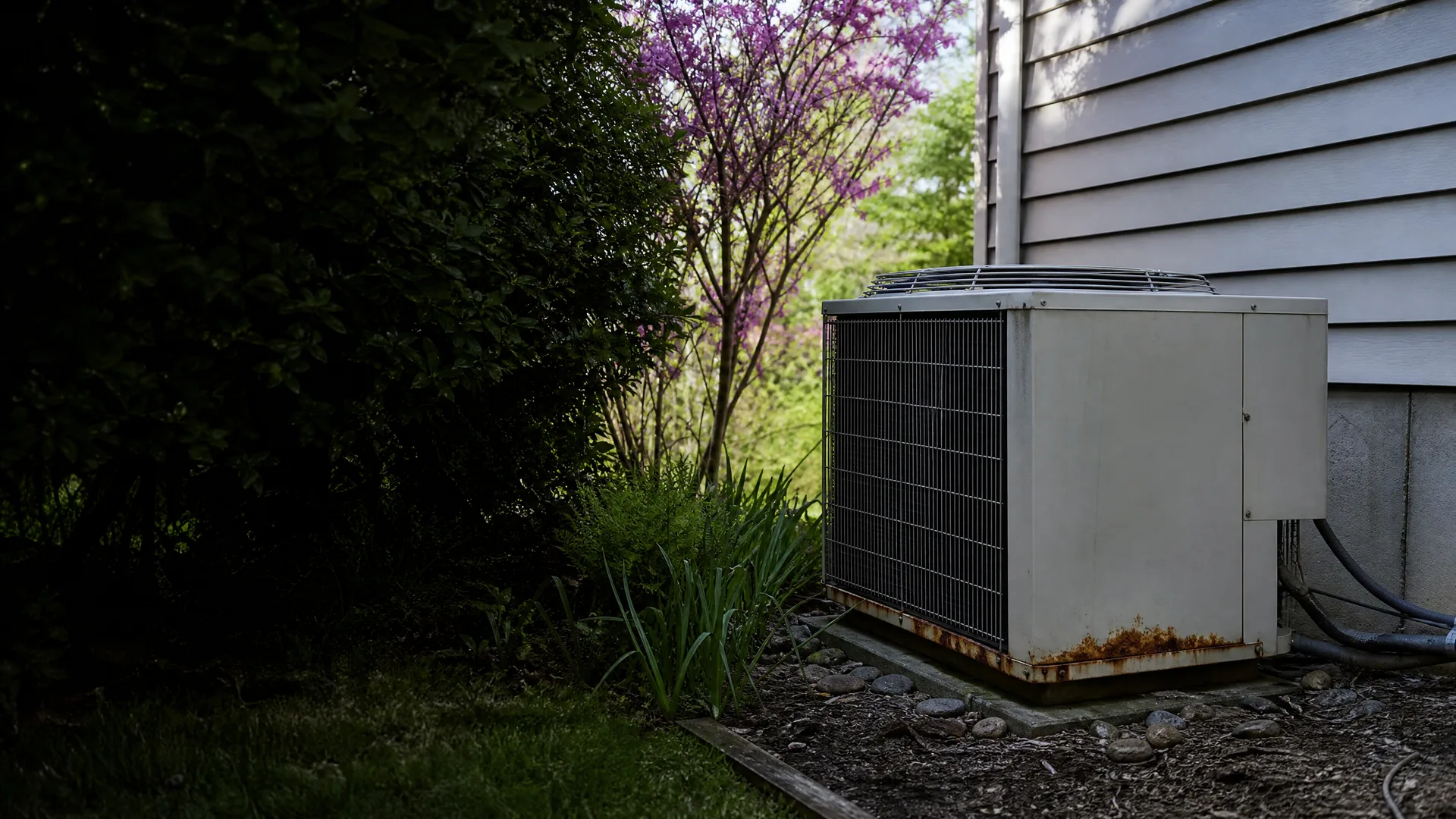
An outdoor air conditioning condenser unit with rust streaks sits on a concrete pad beside a light-colored lap-sided house, surrounded by shrubs, gravel and a flowering tree.

You walk out to check the unit on a mild spring afternoon, the kind where you don't need the heat pump or the AC and it's been sitting idle for weeks. The rust along the base catches your eye first, flaking orange where the metal meets the concrete pad. You crouch down and run a finger along the edge, and a piece of it comes away. The cabinet still looks solid from a few feet back, but up close you can see the rust has worked past the paint. Summer's coming, and sticky days aren't far off. You straighten up, make a mental note to ask someone about it before you need the thing to actually run.

Why does your heat pump seem to be working harder than it used to?

You notice it in small ways. The outdoor unit runs longer than it used to before it shuts off. Inside, a room or two never quite gets as cool as the rest during a sticky stretch, or stays a little cold by the vents in January. The air coming out feels lukewarm instead of warm. You might hear a rattle or a hum from the outdoor fan that wasn't there last year, or notice ice building up on the coil even when it isn't that cold out. None of this is dramatic on its own, but a heat pump that's straining pushes more of the load onto your furnace and your gas bill, and keeps doing that every day it goes unaddressed.

An older man with gray hair and a beard, wearing a dark coat dusted with snow, stands smiling in a doorway of a warmly lit home with a sofa, lamp and window visible behind him.
An older man with grey hair and a beard, wearing a dark coat dusted with snow, stands in a dimly lit entryway with a ceiling lamp, a side table with two shaded lamps, and a lit fireplace visible in a room beyond.
A bearded older man in a dark snow-dusted coat and scarf stands just inside a home's front door, with a lamp-lit room and snowy window visible behind him.
An older man with gray hair and a beard stands in a doorway of a home, wearing a dark coat dusted with snow, with a lit fireplace and lamp visible in the blurred room behind him.

Matched to your heat pump job

A heat pump that keeps shutting down or can't keep the house even doesn't get better on its own, and every summer it limps through costs you comfort during the muggy stretch, with the furnace picking up slack it shouldn't have to the rest of the year. At some point the fixes stop adding up against a new system that can actually carry an Iowa winter and a sticky Iowa summer without strain. Figuring out which side you're on, and finding someone who'll look at your actual unit instead of guessing, is the hard part. A local contractor who installs and repairs heat pumps all year in this climate has seen what tends to fail here and what's worth saving. Requesting a match puts your situation in front of one contractor who serves your area, not a handful competing for your phone number. Whatever shape yours is in right now, that's who looks at it next.

How a heat pump actually works

  • A heat pump moves heat instead of making it, pulling warmth from outside air even when it's cold and reversing to pull heat out of your house in summer.
  • The reversing valve is what switches the system between heating and cooling, and a stuck valve is a common reason a heat pump gets stuck in one mode.
  • Below a certain outdoor temperature, most heat pumps lean on backup heat, which in Iowa usually means the gas furnace takes over.
  • The defrost cycle briefly reverses the system to melt ice off the outdoor coil, and you'll see steam rise off the unit when it kicks in.
  • A dirty outdoor coil or a low refrigerant charge both make the compressor run longer to move the same amount of heat.
  • The outdoor fan and the compressor are the two parts most likely to fail first, since they run every time the system cycles.

A heat pump doesn't burn anything to make heat. It moves heat from one place to another, which is why the same unit handles your summer cooling and part of your winter heating. In summer it pulls heat out of your house and dumps it outside, same as a regular AC. In winter it runs the cycle backward, pulling warmth out of the outside air, even cold air, and pushing it inside. The reversing valve is what flips that switch. When a heat pump gets stuck blowing cold air in January or warm air in July, a stuck reversing valve is often why.

Iowa winters get cold enough that the outside air doesn't hold enough heat for the heat pump to keep up on its own. Below a certain outdoor temperature, the system leans on backup heat, and in most homes here that means the gas furnace takes over. That's normal, not a sign anything's broken.

You'll also see the outdoor unit go through a defrost cycle on cold, damp days. It briefly reverses itself to melt ice off the outdoor coil, and steam rising off the unit during that cycle is normal, not a leak or a malfunction.

The compressor and outdoor fan run every time the system cycles, in both directions, so they wear first. A dirty coil or low refrigerant charge makes the compressor work longer to move the same amount of heat, which is usually where trouble starts.

Power costs 13.62 cents per kilowatt-hour statewide

At 13.62 cents a kilowatt-hour, running your heat pump stays cheap next to what a struggling one pushes onto your gas furnace. A unit that's lost efficiency leans harder on electric backup or stops carrying the mild days at all, and that cost shows up on the gas side, not here.

EIA-861 2025 statewide residential average

A woman wrapped in a cream textured blanket sits in an armchair beside a lit lamp and a dark window, with an open book in the foreground.
A woman in a cream knit sweater sits in an armchair with her eyes closed and head tilted back, beside a window showing orange autumn foliage and a wooden side table with a mug.

A heat pump that cycles cleanly, holds the house steady through a muggy stretch, and still earns its keep once it's cold out is worth repairing. One that's lost its grip, short-cycling, icing up, leaning harder on the furnace than it should, is telling you it's done. Either way, you don't have to figure out which one yours is on your own. A contractor who works on heat pumps in Iowa all year, through the sticky summers and the hard winters, has seen what usually fails first and can tell you in a few minutes whether what's wrong with yours is worth fixing. You'll be matched with one licensed contractor local to you, not a handful of companies competing for the job, just the one who'll actually show up and look at your unit.

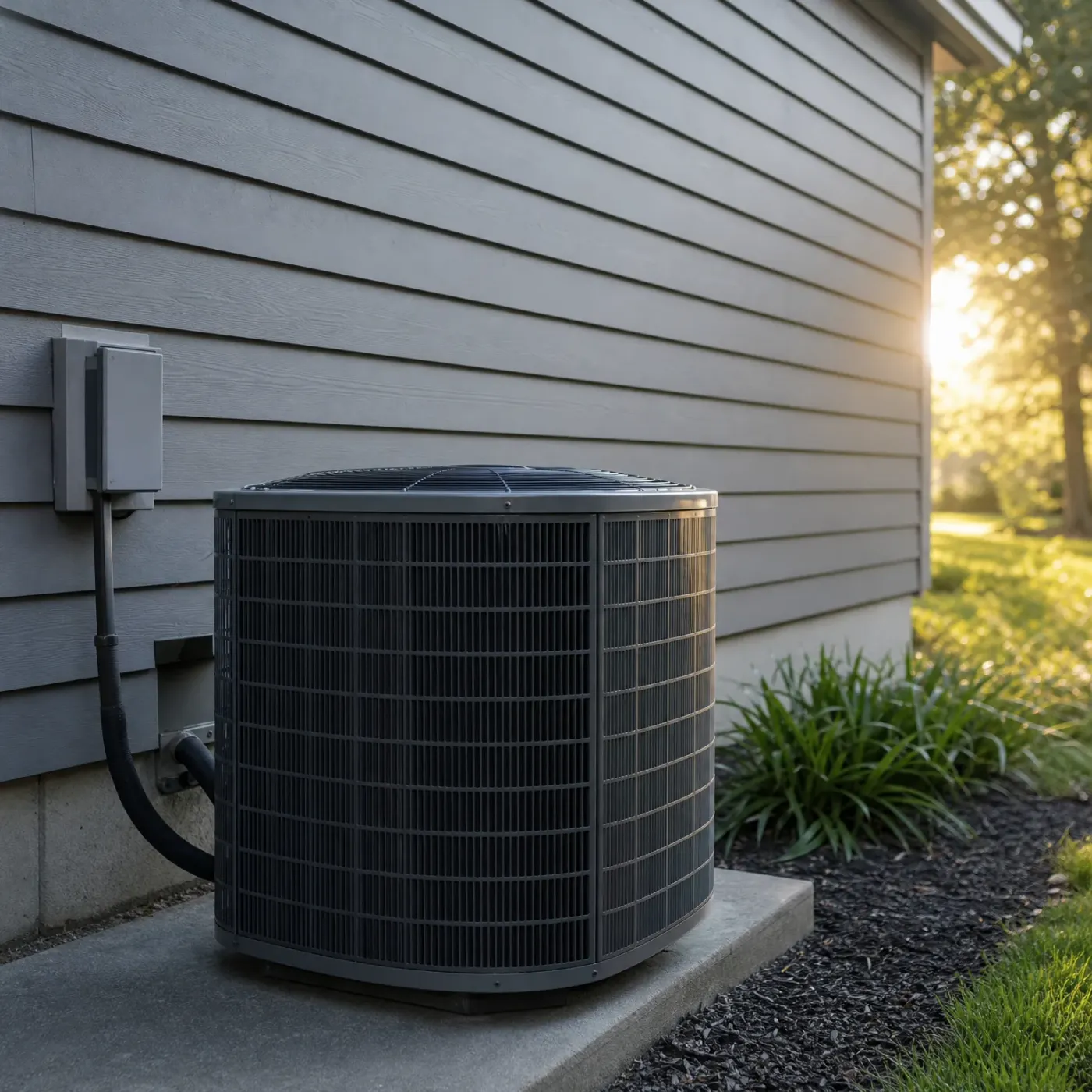
An outdoor air conditioner condenser unit on a concrete pad beside a gray horizontal-lap-sided house, with an electrical disconnect box and refrigerant line on the wall, grass, shrubs and a tree with low sun behind.

A heat pump pro near you

Find a local pro

Your request stays with one local pro.

There's no charge for the request.