
Let someone else find the pro
Is a heat pump cheaper to run than gas heat in Iowa
Most of Iowa heats with gas, and power here is cheap, so the math isn't obvious. What you pay to run a heat pump against gas comes down to how your rates compare and how cold it actually gets where you live. The answer below walks through that. When you're ready for an install, sending the form means you're done chasing contractors, calling around, and repeating your situation to every one of them.
Hand it offMost Iowa winters, gas heat costs less to run than a heat pump, because gas here is cheap and a heat pump has to work harder as the temperature drops. Below freezing, a heat pump pulls less heat from the outside air per unit of electricity it uses, so it draws more power to keep your house warm the colder it gets outside. Once temperatures fall into the teens and single digits, which happens for stretches most Iowa winters, many heat pumps lean on backup electric resistance heat to keep up, and that's expensive to run. Gas doesn't lose capacity the same way when it's cold out. None of that means a heat pump is the wrong choice. It still earns its keep cooling your house all summer, and it can cost less than gas during the milder weeks of fall and spring. The question is how your system is set up to switch between the two as the weather changes.




A heat pump doesn't make heat the way a furnace does. It pulls heat out of the outside air and moves it into your house, which is why it can run on less energy than burning gas, at least down to a point. The colder it gets outside, the less heat there is in that air to grab, so the unit has to run longer and cycle more to deliver the same warmth to your rooms. Efficiency drops as the temperature drops. That's why most heat pumps installed in Iowa come paired with a backup, usually electric resistance heat, that switches on once the outdoor air gets too cold for the heat pump to keep up by itself. A thermostat or outdoor sensor controls that switch point, and where it's set decides how many hours of the winter run on the backup instead of the heat pump. That backup costs more per hour to run than either the heat pump or a gas furnace. A gas furnace doesn't have this problem. It burns the same fuel the same way whether it's 40 degrees out or 10 below, so its efficiency stays flat all winter.
How a heat pump actually heats
- A heat pump moves heat from outside air into your house instead of burning fuel to create it, which is why it uses less energy per degree of warmth down to a point.
- As the outdoor temperature drops, the unit has to run longer and pull more cycles to move the same amount of heat, so its efficiency falls off.
- Most heat pumps in Iowa pair with a backup heat source that kicks in once the outdoor air gets too cold for the heat pump to keep up on its own.
- That backup is usually electric resistance heat, and it costs more to run per hour than either gas or the heat pump working alone.
- A thermostat or outdoor sensor decides when to switch over, and where that switch point is set changes how much of the winter runs on the expensive backup.
- Gas furnaces hold the same efficiency whether it's 40 degrees outside or 10 below, since burning fuel doesn't depend on how much heat is in the outside air.


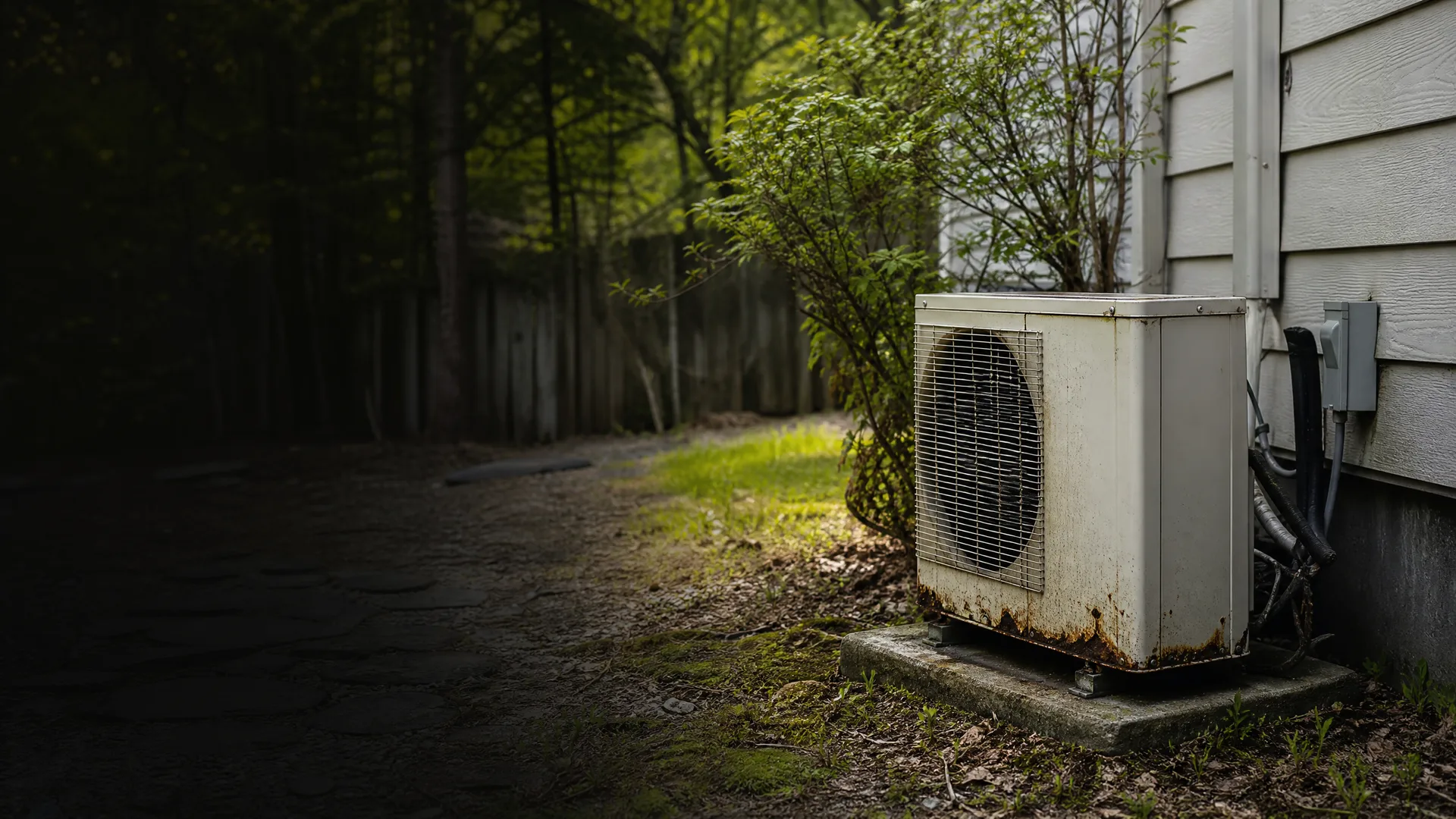
You're out in the side yard in April, coiled hose still looped on its hook from last fall, and the unit catches your eye. Rust is working its way along the base now, more than you remembered from the fall. You crouch down and knock on the panel and it sounds thinner than it should. It ran through another whole winter leaning on the gas furnace to carry the cold stretches, the way it's supposed to, and through last summer's humidity before that. Nothing's failed yet. But you stand there doing the math on how many more Iowa winters this one has in it, and whether you want to find that out in January or decide it now, on your own schedule, in the yard, in the sun.
One request and it's handed off

Skip collecting and comparing quotes for the new heat pump.
You only hire the pro if you want to.
How a heat pump actually heats
- Below about freezing, most heat pumps switch on a backup heat strip that runs on straight electric resistance, which costs more per degree than the compressor alone.
- The outdoor unit has a defrost cycle that briefly reverses to melt frost off the coil, and during that minute or two it draws extra power without adding heat indoors.
- Your thermostat usually has a setting called auxiliary heat or emergency heat, and leaving it stuck on aux is what runs up a bill fastest.
- A heat pump rated for cold climates can still pull efficient heat down into the teens, where a standard unit has already handed off most of the load to backup.
- Gas furnaces burn fuel directly and don't lose output as it gets colder, which is the tradeoff against a heat pump's efficiency curve.
- Balance point is the outdoor temperature where a heat pump stops keeping up on its own and backup heat has to fill the gap, and it's different for every system.
A heat pump spends most of its time pulling heat out of outdoor air and moving it inside, which is cheap work for a compressor compared to burning fuel. The trouble starts when the air outside gets cold enough that there isn't much heat left to pull. Somewhere around freezing, the system leans on backup heat strips, plain electric resistance, to make up the difference, and resistance heat costs more per degree than the compressor does on its own. You'll also lose a little ground every time the outdoor unit defrosts. It runs in reverse for a minute or two to melt the frost off the coil, drawing power the whole time without putting any warm air into the house. None of this means the heat pump is failing. It means the unit has reached what the trade calls its balance point, the temperature where it can no longer keep up alone and backup heat has to fill the gap. That point is different for every system. A cold-climate heat pump can still pull efficient heat out of air in the teens, while a standard model has usually handed most of the load to backup heat by then. Check your thermostat for a setting called aux heat or emergency heat. If it gets switched on and left there, intentionally or by a glitch, that's usually what drives a bill up fast, not the heat pump running as designed.


Power costs 13.62 cents per kilowatt-hour statewide
At 13.62 cents a kilowatt-hour, your heat pump is cheap to run above freezing, when it's just moving heat rather than making it. Once it leans on the backup strip in deep cold, that same rate applies to straight electric heat, and that's where the bill climbs.
EIA-861 2025 statewide residential average

Thermostat calls for heat and the reversing valve shifts to heating mode.
The outdoor unit pulls heat from the outside air into the refrigerant.
The compressor concentrates that heat and sends it inside as warm air.
Below freezing, the system leans harder on the backup heat strip.



So where does that leave you
Gas costs less to run most of an Iowa winter. Your heat pump still earns its place, carrying the house through fall and spring and most of the cold without help, and handling every bit of cooling in a sticky Iowa summer. The gap only opens up once the backup strip takes over in the hardest cold, and that's the stretch worth getting looked at.
If you're trying to decide whether your setup is costing you more than it should, that's not something to work out alone from a rate chart. You'd otherwise be the one calling around, explaining the same system and the same bill to every contractor who picks up, then sorting through quotes that don't quite match. Send this one form instead and that whole search is off your plate.


Heat Pump Installation
Done looking for a heat pump pro

- A local installer who puts in heat pumps gets your project.
- Get in touch with a local installer about a new heat pump.

- One request ends the search for a heat pump installer.
- Once you send the form, finding a pro is off your list.

- Describe the project once instead of to every installer.
- Answer a few questions instead of calling shop after shop.

- One installer gets your project, so there's no bidding war over it.
- Your request goes to one pro, not a list of companies.