


Is a heat pump worth it with cheap power in Iowa

A local installer who puts in heat pumps gets your project.

Get my match

Is a heat pump worth it in Iowa if electricity is cheap?

You already have a heat pump, and most of your neighbors are heating with a gas furnace. Electricity rates in Iowa are low compared to a lot of the country, so it's fair to wonder whether the heat pump is actually earning its keep, or whether you'd come out ahead just running gas heat and central air like everybody else.

Yes, especially for cooling, and still worth it for heat

A heat pump moves heat instead of burning fuel to make it, so it uses less electricity per degree of warmth than a space heater or a baseboard unit would. With Iowa's power rates on the low side, that efficiency turns into a real cost advantage over straight electric heat. Where it has the clearest edge is summer. Iowa summers get humid, and a heat pump cools and pulls moisture out of the air the same way a central air conditioner does, so you're not giving anything up there. In winter, once outdoor temperatures drop hard, many heat pumps lean on backup heat to keep up, and that's when a gas furnace next door might pull ahead on cost. Whether that tradeoff still favors the heat pump depends on your specific unit and how cold it gets on your coldest nights.

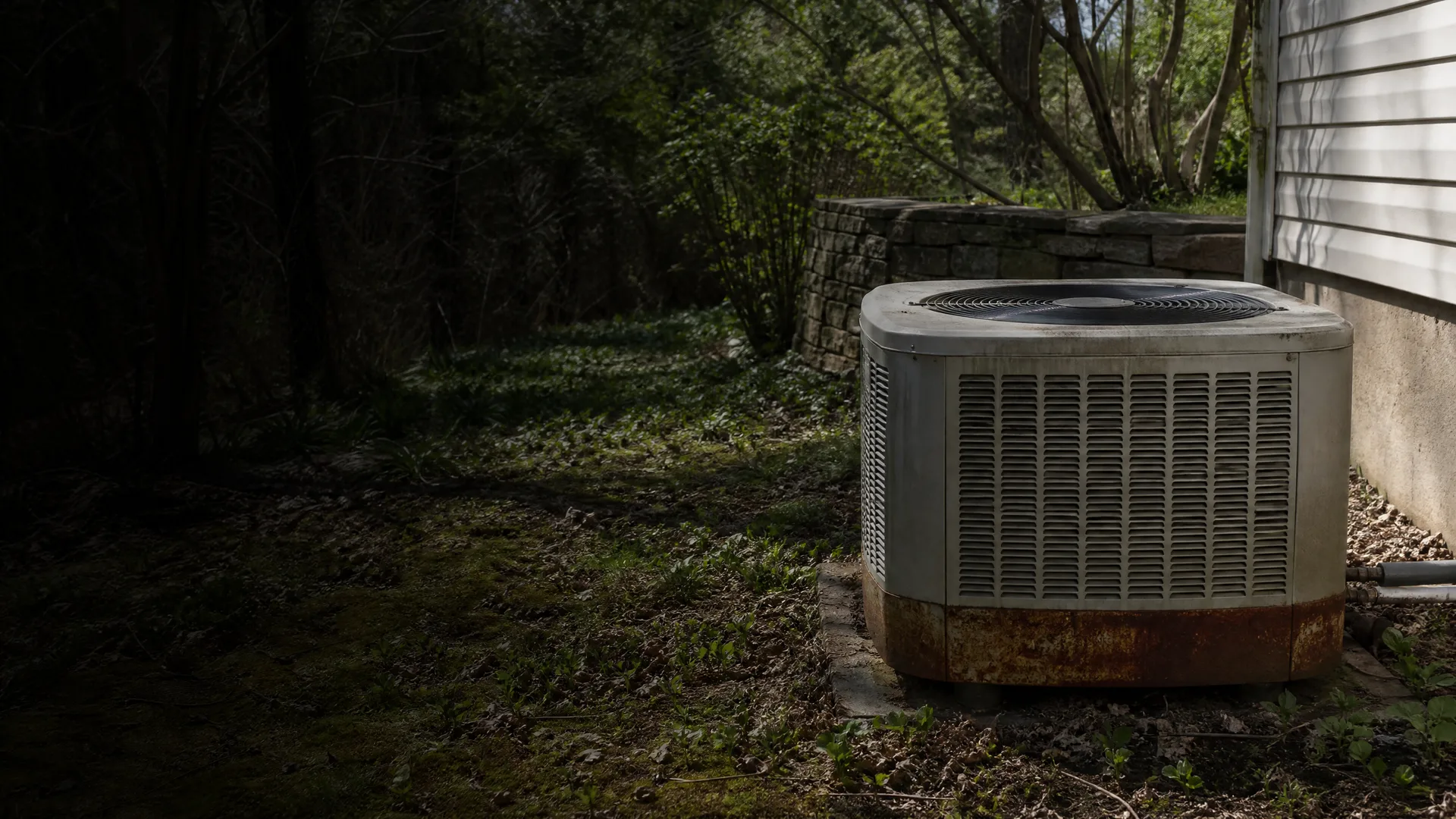
A weathered outdoor condenser unit with rust along its base sits on a pad beside a house with vinyl siding, next to a low stone wall and shaded vegetation.

You're out checking the yard in April, and you stop by the outdoor unit on the side of the house. Rust is creeping along the base, right where it sits on the pad. You crouch down and run a finger along the edge. It's been through a lot of winters pulling heat out of cold air, and a lot of summers pushing it back out once the humidity sets in. The casing has held up fine everywhere except this one strip near the bottom, where snow must have packed against it season after season. You straighten up, make a mental note to ask someone about it, and head back inside before the sun drops.

Heat Pump or Furnace-Only in Iowa

Keep running the heat pump

  • Cheap Iowa electricity keeps the heat pump's running cost close to gas on a lot of days, especially above freezing.
  • It covers both jobs, so you're not pricing out a separate AC unit when the sticky part of summer hits.
  • On the coldest nights it loses efficiency, and the gas furnace or strip heat behind it will pick up more of the work.
  • One system handles your whole year, so there's only one piece of outdoor equipment aging on that pad.
  • If yours is getting old, a failure in January leaves you without heat until it's replaced, not just repaired.

Switch back to gas furnace only

  • A furnace holds its output no matter how cold it gets outside, so it doesn't lean on backup heat the way a heat pump does below freezing.
  • You'd still need a separate AC unit for summer, which is another piece of equipment and another install.
  • Gas furnaces are what most homes around you already run, so parts and service for one are easy to find locally.
  • Pulling a working heat pump and installing a furnace is its own job, not a swap you'd do on a whim.
  • You lose the efficiency a heat pump gives you on the mild days that make up a good share of an Iowa year.
A gray outdoor condenser unit on a concrete pad beside a light-colored lap-sided house, with a wall-mounted disconnect box, refrigerant lines, mulch bed and shrubs, and a concrete walkway in the foreground.

Heat pump holding up

This is what a heat pump should look like after years outside. The cabinet is clean, the fan grille is free of rust, and the lines running to the disconnect box are intact. A unit kept this way is still doing real work against the sticky Iowa summer and the cold months on either side of it.


An outdoor air conditioner condenser unit with rust spots on its top grille sits on a concrete pad beside a house with light horizontal siding, with conduit lines and an electrical box on the wall and a mulch bed to the right.

Heat pump wearing out

Rust along the top grille and dirt packed around the base tell you this unit has been sitting exposed for a long time. It may still run, but a cabinet this worn is closer to the end than the beginning. Once a heat pump looks like this, failing on a July afternoon or a January morning is a real possibility.

An outdoor air conditioner condenser unit on a concrete pad beside a house with horizontal siding, with conduit, cables and an electrical box on the wall and mulch beds at either side.
Before you get your heat pump installation
A light gray outdoor heat pump unit mounted on a concrete pad beside a house with horizontal lap siding, with refrigerant lines and conduit running to a wall-mounted electrical box, gravel and a leafy shrub nearby.
After you get your heat pump installation

The right pro for this job

Describe the project once instead of to every installer.

You're not committing to anything by asking.

A two-story house with light siding and a dark hipped roof behind a green lawn, with a sprinkler spraying water near a concrete walkway leading to the front door.

A dew point of 62°F across June, July and August means the air carries real moisture all summer, not just on the worst days. Your heat pump has to pull that moisture out while it cools the house, which is harder work than cooling dry air. You'll notice it in how long the system runs and in how the house feels if it's falling behind. A unit that's lost some capacity might still bring the temperature down but leave the air feeling damp. That's a sign worth paying attention to, since a heat pump working against humidity like this all summer needs to be sized and running right to keep up.

NASA POWER T2MDEW county cells weighted by homes

A gray-haired man in a dark coat dusted with snow stands in a warmly lit home entryway, with a lamp, sofa, window and white staircase banister behind him.
An older man with gray hair and a beard, wearing a dark coat dusted with snow and a blue plaid scarf, stands smiling in a dimly lit entryway with a window, framed picture, table lamp and staircase behind him.
A gray-haired, bearded man in a dark winter coat with snow on the shoulders stands in a doorway of a home interior with a lit lamp, framed pictures, a potted plant and a staircase behind him, and an evergreen wreath at the left edge.
A gray-haired man in a dark coat with snow on the shoulders and collar stands smiling in a dimly lit entryway with a paneled front door, lamps, and a framed picture in an adjoining room.

25 to 30 degrees

That's how far below freezing a heat pump can still pull heat from outside air before it leans hard on backup heat. Below that, a gas furnace or a properly sized backup takes over the load.

Start one form

Two systems, one cabinet

A heat pump replacing a worn-out unit still needs to be sized for your house and matched to whatever backup heat you're keeping. Getting that sizing right is what a contractor walks through with you.

Start one form

What is your heat pump telling you right now

Go stand by the outdoor unit. Listen to it cycle. If it's running long stretches without shutting off, even on a mild afternoon, it's struggling to move enough heat to keep up with the house. Check the vents upstairs and down. If one floor runs warmer than the other, the system isn't distributing evenly anymore. Look at the coil fins through the side grille for a layer of dirt or ice. A unit working harder than it should pushes your power bill up a little every month without you noticing until you compare it to last year. Left alone, that strain wears down the compressor faster than it should, and a compressor failure is the kind of repair that gets expensive.

A gray outdoor condenser unit on a concrete pad beside a house with horizontal lap siding, with an electrical disconnect box and insulated refrigerant lines on the wall, gravel in the foreground and a planting bed at left.
A clean cabinet and clear fins mean the heat pump can still move heat efficiently in both directions, all year.
A weathered gray outdoor condenser unit sits on a concrete pad beside a house with horizontal siding, with refrigerant lines entering the wall at left and a mulched shrub bed at right.
Dirt packed into the fins and base makes the unit work harder in both January and July, and it shows up on the bill.
  1. Refrigerant inside the outdoor coil pulls heat from the outside air.

  2. A reversing valve sets whether the unit heats or cools.

  3. The compressor pressurizes that refrigerant and raises its temperature.

  4. The indoor coil releases that heat into the air moving through your ducts.

Power costs 13.62 cents per kilowatt-hour statewide

At 13.62 cents a kilowatt-hour, running the heat pump through a mild stretch in October or March costs you less than most states pay. It's once temperatures drop hard that the math gets closer to your neighbor's gas bill, since the unit leans on backup heat to keep up.

EIA-861 2025 statewide residential average

How the heat pump actually runs

  • The reversing valve is what flips the unit from pushing heat outside in July to pulling it in from outside in January.
  • A defrost cycle runs automatically when frost builds on the outdoor coil, briefly reversing the system to melt it off.
  • During defrost the indoor coil can blow cool air for a few minutes, which is normal and not a sign of trouble.
  • The compressor works harder as the outside temperature drops, since there's less heat in the air for it to pull.
  • Backup heat strips or a furnace kick in only when the compressor alone can't keep pace with the house's heat loss.
  • A thermostat set to auxiliary heat too often skips the heat pump's efficient range and runs up the bill.

A heat pump doesn't make heat the way a furnace does. It moves it. In summer the reversing valve sends refrigerant one way, pulling heat out of the house and dumping it outside, same as a regular AC. In winter that valve flips, and the same unit pulls what heat it can out of the cold outside air and pushes it inside. That's the whole trick, and it works down to around 25 to 30 degrees before the compressor is straining against air that barely has any heat left to give.

When frost builds on the outdoor coil, the system runs a defrost cycle to clear it. For a few minutes the unit reverses again, which means warm refrigerant goes outside to melt the frost and the indoor coil puts out cool air instead of warm. If you feel a cool draft from the vents on a cold day and the outdoor unit's steaming a little, that's the defrost cycle doing its job, not a breakdown.

Backup heat, whether it's electric strips or a gas furnace paired with the heat pump, is there for the days the compressor can't keep up on its own. It should only be kicking in on the coldest stretches. If your thermostat is set to call for auxiliary heat too easily, you're skipping past the heat pump's efficient range and leaning on the more expensive backup more than you need to, which shows up on the bill fast.

A woman wrapped in a thick wool blanket sits in an armchair with an open book on her lap, beside a lit lamp and a frost-patterned window.
An older woman with grey-blonde hair in an updo and a beige turtleneck sweater smiles while looking to the side in a warmly lit kitchen, with a round loaf of bread on the counter in front of her and a dark window showing snow outside.

A heat pump in Iowa earns its keep. Cheap electricity covers most of the year, the gas furnace or backup heat covers the hardest cold, and one outdoor unit handles the sticky summers instead of two separate systems. Whether yours is still worth running comes down to what you saw outside: a clean cabinet and steady cycling mean it's still doing the job, rust and long runtimes mean it's falling behind. Either way, finding someone to look at it shouldn't be its own chore. You shouldn't have to search through contractors, call a handful of them, explain the same rust and the same runtimes to each one, then sit with a stack of quotes trying to tell them apart. Answer a few questions about your heat pump and your house, and a contractor who knows this equipment and this climate will reach out to you directly. You'll still decide what happens with your system. You just won't have to do the legwork to get there.

An outdoor heat pump unit with a large circular fan sits on a concrete pad beside a dark horizontal-sided building, with gravel ground and green shrubs at right.

A heat pump pro near you

One form replaces the calls you'd make to find a heat pump pro.

New system or replacementHeat PumpIowa
Step 1 of 2

What ZIP code is the job in?