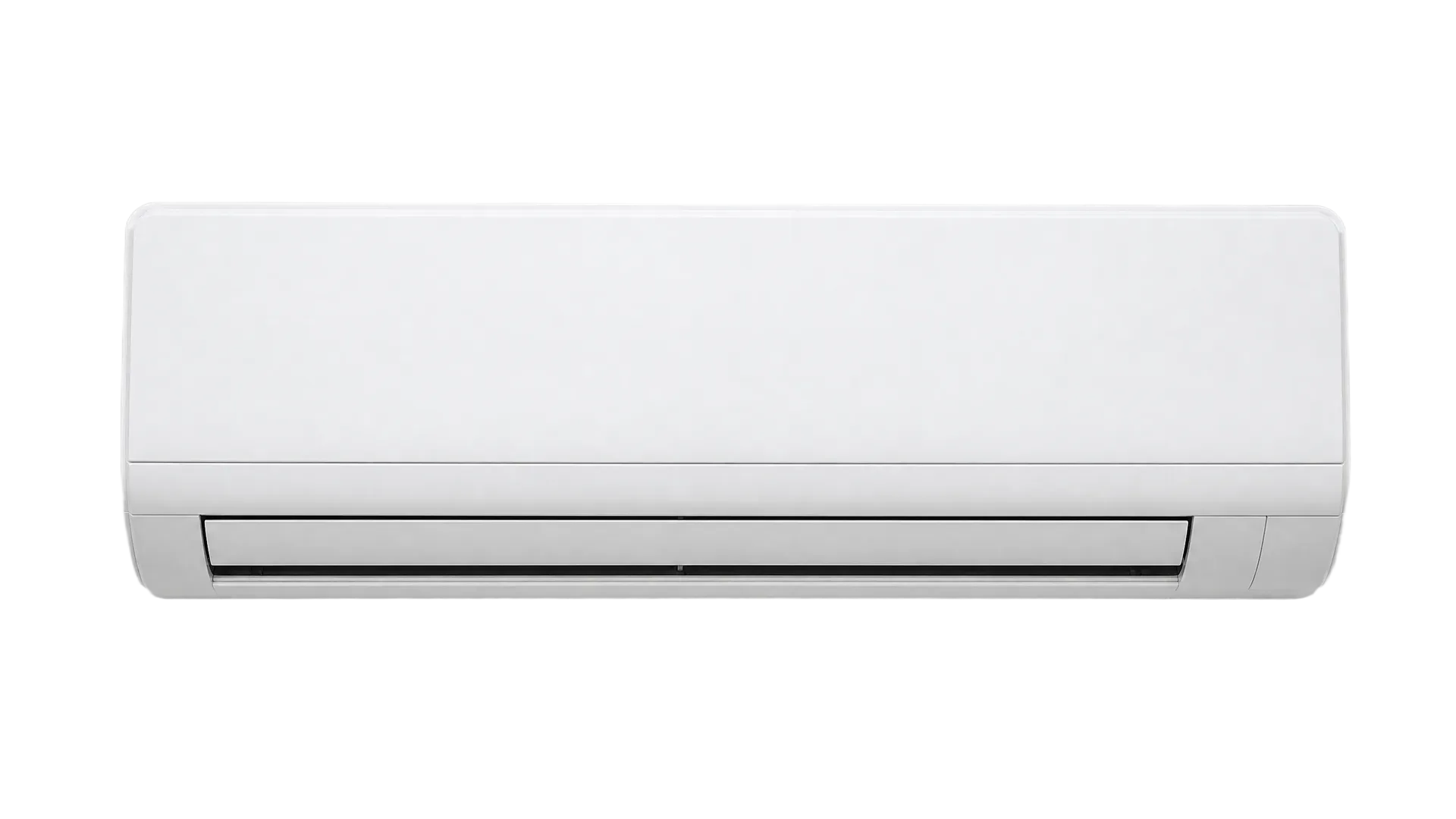

Running clean
This is what a mini split looks like doing its job. Air moves out across the room, the coil stays dry, and the indicator panel shows a steady state instead of an error. No frost on the lines, no water pooling under the unit.
A mini split that ices over the indoor coil usually still runs, fan blowing, but the air coming out feels weak or barely cold at all. You might see frost creeping across the coil fins or even dripping water once it melts between cycles. It's a strange thing to see in a system that's supposed to make cold air, and most people want to know what's causing it before they try to run it again.
A frozen coil almost always comes down to one of two things. Either air isn't moving across the coil the way it should, usually from a dirty filter or a blocked return, or the system is low on refrigerant, which drops the coil temperature below freezing and ices it instead of cooling the room. Dubuque summers get humid enough that a mini split already works hard pulling moisture out of the air, and a dirty filter or low charge tips that balance fast. Running it longer while it's frozen won't clear the ice and can strain the compressor, so the coil needs to thaw out fully before anyone can find the actual cause.
This is what a mini split looks like doing its job. Air moves out across the room, the coil stays dry, and the indicator panel shows a steady state instead of an error. No frost on the lines, no water pooling under the unit.

Dust and grime like this build up on the coil and vanes over time, and that buildup is often what starts the freeze. Once ice forms, the vane can't open all the way and airflow drops, which lets more ice build. Left alone, it keeps icing instead of cooling.
Look at the indoor head. If there's frost on the coil you can see through the vents, or ice built up thick enough to show along the edge of the unit, that's the freeze-up. Check the floor or wall under it too. A puddle or a damp spot means ice has already started melting, which happens as soon as the unit cycles off or the room warms a few degrees. You might also notice the air barely moving or not getting cold even with the thermostat set low. If you let it run like this, the ice keeps building on the coil, and the line set or the wall behind the unit can end up wet for longer than you'd want in a Dubuque winter.
Airflow gets blocked by a dirty filter or coil.
Refrigerant can't absorb heat, so the coil turns cold.
Moisture in the air freezes on the coil surface.
Ice builds layer by layer, blocking airflow further.






Answer a few questions instead of calling shop after shop.
You only hire the pro if you want to.
A mini split moves heat by running refrigerant through the indoor coil, and that coil has to stay above freezing to shed condensation as water instead of ice.
Once frost takes hold, it adds a layer of insulation between the coil and the room air, so the unit works harder and cools less with every hour it keeps running.
Cooling runs June through August
Three months of cooling a year means the coil isn't built for constant strain, so a freeze-up during June, July or August hits a system already working near its limit.
Heat runs October through May
Eight months of heat a year in Dubuque County means your mini split runs more hours on heat than cool, and a frozen coil in that stretch leaves you without a backup plan for longer.
Power here costs 17.13 cents per kilowatt-hour
At 17.13 cents per kilowatt-hour, a mini split icing over and running without cooling the air still draws power the whole time, so you're paying for work it isn't doing.
NOAA nClimDiv 1991-2020 · EIA-861 2025
A frozen coil is the mini split telling you airflow or refrigerant isn't right, and running it through that won't clear the ice on its own. The unit needs to thaw, and whatever caused it, a clogged filter, a blocked coil, a leak, needs to get found before you turn it back on expecting it to keep up. That part isn't a guess you can make from the vent. It takes someone opening the unit up to see which one it actually is. Left alone, the ice just comes back the next time the system runs long enough to get cold again, and you're back to watching water collect under the unit or air that never gets cold. Dubuque winters are hard enough on a heating system without a frozen coil cutting into the eight months a year this unit is carrying the load. Finding out who in the area actually works on mini splits, calling a few, walking through the same symptoms each time, and sorting through what they quote you is its own chore on top of the ice itself. Getting matched with a contractor skips that part. Someone who services this kind of system reaches out, you explain it once, and you find out whether this is a filter you missed or something inside the unit that needs a part, instead of shutting it off and hoping it doesn't ice up again next week.

The right pro for this job