

Running the way it should
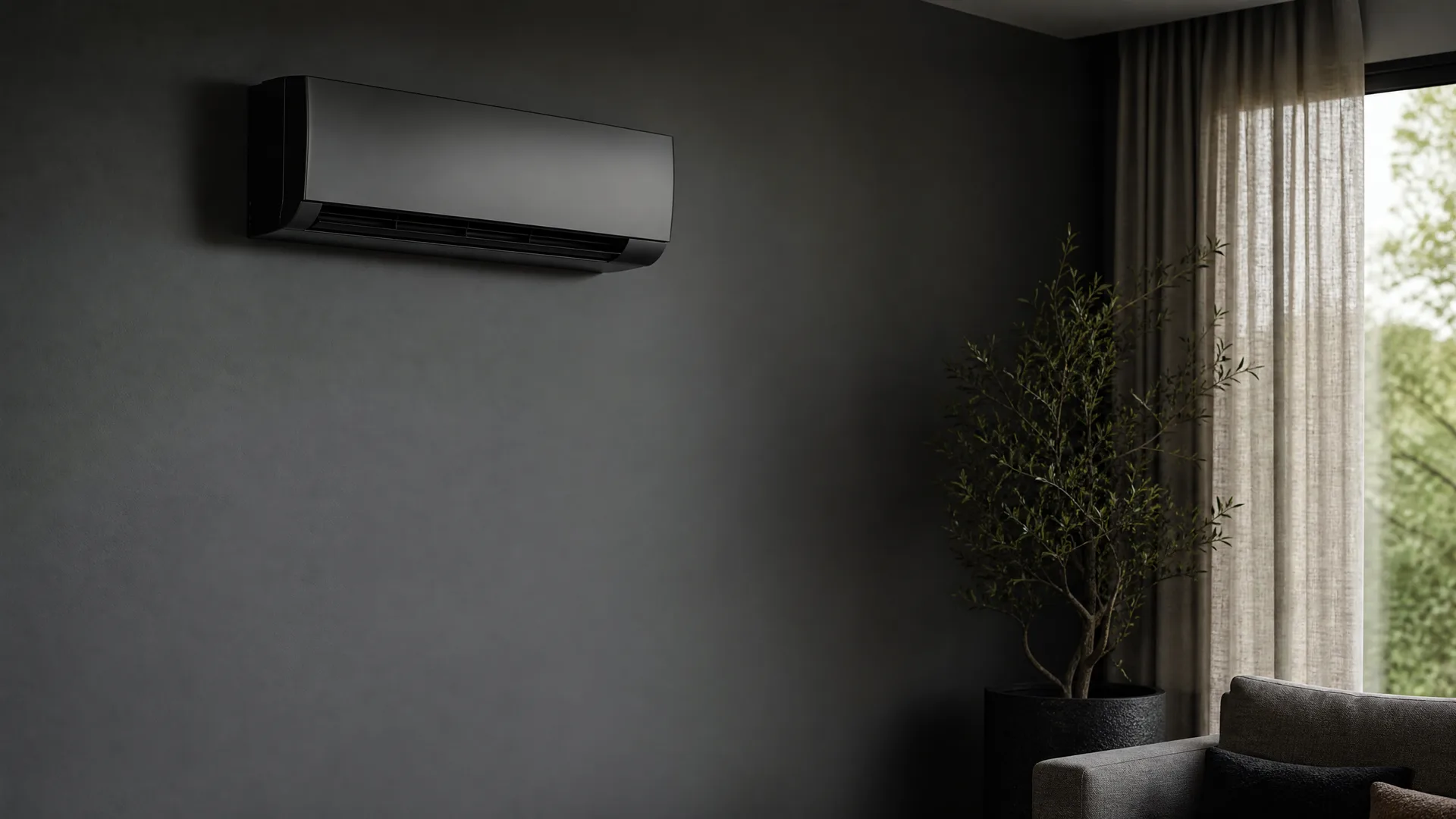
This is what a mini split looks like doing its job. No drips, no stains below it, no sound beyond the quiet hum of air moving. Condensate drains out through its line, not onto your wall or your floor.
A Dubuque County pro who repairs mini splits gets your request.
Connect with a proA puddle under the indoor unit or water dripping down the wall is the usual way this shows up. You catch it fast, before it soaks the floor or the drywall, and now you want to know what's actually going on inside the unit before it gets worse.
Your mini split pulls moisture out of the air as it cools, and that water is supposed to run out through a small drain line. When that line clogs with algae or dust, the water backs up and finds another way out, usually down the front of the unit or through the ceiling if it's a ducted system. A dirty filter can cause the same problem a different way: it restricts airflow across the indoor coil until the coil gets too cold and ice forms on it, then melts faster than the drain pan can handle. Humid summers in Dubuque County push the unit harder for months at a time, which gives algae and condensate more chances to build up in that line than in a drier climate.

This is what a mini split looks like doing its job. No drips, no stains below it, no sound beyond the quiet hum of air moving. Condensate drains out through its line, not onto your wall or your floor.

A casing that's yellowed and caked with dust is a sign the unit hasn't had a cleaning in a long while. A clogged filter or coil behind that front panel can back water up until it finds its way out around the edges instead.
Look under the indoor unit first. A puddle on the floor, a stain spreading across the wall below it, or a dark line down the drywall are the usual signs. Some people notice a musty smell before they see anything, which usually means water has been sitting somewhere for a while. You might hear the unit dripping steadily rather than running quiet. If this is happening where the mini split sits above flooring or near outlets, the water can warp the floor, stain the wall, or reach wiring nearby. Left alone through a muggy Dubuque summer, a small drip can turn into a bigger mess on the wall or ceiling below it.


Inside the indoor unit, the coil pulls moisture out of the air the same way a cold glass sweats on a humid day. That water is supposed to fall into a pan underneath and leave through a drain line that runs behind the wall and out to the exterior, near the refrigerant lines. Most leaks start with something blocking that path rather than a broken part. A dirty filter chokes airflow until the coil frosts over, and when it thaws, more water hits the pan at once than it was built to carry. Algae and dust collect inside the drain line itself, the same way hair clogs a shower drain, until water backs up instead of running out. Sometimes the problem goes back to how the line was installed. If it was run without enough downward slope, or it dips somewhere along the way, water sits in that low spot instead of draining. A pan that has cracked or shifted out of place is a separate issue, and it sends water straight down the wall instead of into the drain at all.




Explain the mini split problem once instead of to every shop in Dubuque County.
No charge to send it. You decide if you hire them.
Most of this traces back to airflow or slope. A filter clogged with dust slows the air moving across the coil, and the coil gets cold enough that moisture freezes on it instead of dripping off. That ice holds until the unit cycles off, then it melts all at once, faster than the pan and drain line can handle, and the overflow finds the nearest way out. Algae growing inside the drain line causes the same kind of backup without any ice involved. The line is narrow to start, and a film of algae buildup is enough to slow the water until it stacks up behind the clog and rises back into the pan. The pan itself can be the problem too. It's set with a slight pitch toward the drain fitting, and if it's shifted out of level, even a little, water runs to the wrong edge and spills over the side instead of leaving through the bottom. The line running outside matters as much as the pan. If whoever installed it left a low spot or a kink anywhere along its length, water sitting there has nowhere to go but back the way it came. And sometimes there's no clog or slope issue at all. The pan has simply cracked with age, or come loose from the coil housing above it, and condensate drips straight through the gap into the unit's casing and down the wall behind it.
Cooling runs June through August
Cooling runs June through August. That's three months of condensate draining steady, three months where a clogged line or iced coil shows up as water on your floor.
Heat runs October through May
Heat runs October through May. Most of the year your mini split is pulling double duty on the heating side, and a drain line problem doesn't take a season off just because it's cold out.
Power here costs 17.13 cents per kilowatt-hour
Power here costs 17.13 cents per kilowatt-hour. A mini split working against a clogged filter or a dirty coil draws more to do the same job, and that shows up on your bill before you ever see the leak.
NOAA nClimDiv 1991-2020 · EIA-861 2025
A mini split leaking water almost always comes down to a blocked drain line, a dirty filter, a coil that iced over, or a line set that was never pitched right. None of those fix themselves, and water finding its way onto your floor or down your wall will keep finding its way there until someone clears the line or cleans the coil. You don't have to spend your evening searching through contractors, calling a few, explaining the same puddle and the same stain three separate times, then sitting with quotes trying to guess who's worth it. That part ends here. What's left is matching you with a contractor who works on mini splits in Dubuque and the surrounding county, someone who already knows what a drain line looks like after a hard, humid summer and what winter does to a unit that was draining fine in July. You found the water. The next step is getting someone out to see where it's actually coming from.
Skip calling shops to ask who repairs mini splits in Dubuque County.
