Get the air conditioner repair search off your mind today.
A sticky Iowa afternoon and your AC is running but the house won't cool past 78. Maybe it blows warm for a while then cold again. Maybe there's a hiss near the indoor unit or ice on the copper line outside. These are the signs that point to low refrigerant, and they matter because a system that's low isn't just failing to cool. It's running the compressor harder than it should, in July heat, for hours on end.
Refrigerant doesn't get used up the way gas in a car does. A system that's low has a leak somewhere, and that leak doesn't fix itself. It gets worse, slowly or quickly, until the compressor is working against a charge that can't carry the heat out of your house the way it was built to.
This isn't a job for a top-off and a hope. Finding the leak takes someone who knows where these systems tend to fail, and fixing it means repairing the leak itself, not just adding refrigerant back in. A local contractor who works on Iowa systems all summer has seen where the line sets crack, where the coils corrode, what fails first in a system that's been running hard since May.
Once you send the request, that search is off your plate. You're not left sorting through a list of companies or fielding calls from three different outfits trying to win the job. One licensed contractor local to you gets the details, and from there it's their job to figure out what your system needs. You've already done the hard part, noticing something was off instead of waiting for the house to just stay hot.
Send the details below and let someone who does this every summer take it from here.
What are the signs my AC is low on refrigerant?
You've noticed something's off with your AC this summer. Maybe the house never quite gets cool, maybe you've caught it blowing warm air for a stretch before cooling again, or you spotted ice forming on the copper line outside. You're trying to figure out if this points to refrigerant before you call anyone.
Warm air, weak airflow, ice on the line, or a hissing sound usually means low refrigerant
Refrigerant doesn't get used up the way gas in a car does. A system that's low has a leak somewhere in the line set or coil, and that's what causes the signs you're seeing. As the charge drops, the coil can't absorb heat the way it should, and moisture on it freezes into ice instead. That ice blocks airflow, which is why the house stops cooling even though the unit runs. A hiss or bubbling sound near the indoor unit or outside line is often the refrigerant escaping at the leak point itself. None of this fixes itself, and running the system low on charge for long stretches through an Iowa summer puts more strain on the compressor, the most expensive part to replace.
Why ice forms on the line
Refrigerant is supposed to stay at a certain pressure as it moves through the copper line to the indoor coil. When the charge runs low, that pressure drops and the line gets cold enough to freeze the moisture in the air around it. The ice usually starts thin, right at the coil or along the line outside, then builds up the longer the system keeps running low. Once ice forms, airflow across the coil gets worse too, which is part of why the house stops cooling even as the unit keeps running.
Why the hiss or bubbling matters
Refrigerant moves through a sealed loop, and that loop is only supposed to open for service. A hiss or a bubbling sound near the indoor unit usually means there's a leak somewhere in that loop, and refrigerant is escaping as gas instead of staying in the line where it belongs. A system doesn't use up refrigerant the way a car uses gas. If the level is low, it got out somewhere, and the sound is often the clearest clue to where a contractor should start looking.
Let someone else find the pro
Only one pro gets your request, so you hear from one company.
Once you send the form, finding a pro is off your list.
It costs nothing to send, and you don't have to hire anyone.
Low Refrigerant or Something Else
Low Refrigerant
The hiss or bubbling sound comes from a leak in the line, and that leak won't seal itself no matter how many times the system gets topped off.
Ice on the copper line keeps coming back within days or weeks of melting, because the pressure drop that causes it hasn't been fixed.
The house cools some rooms and not others, or cools for a while then stalls, because the coil can't absorb heat properly at a low charge.
Adding refrigerant without finding the leak means paying for it again next summer, and the leak often gets worse in the meantime.
A gauge set on the line will show pressure below what the system is rated for, which confirms the charge rather than just guessing at it.
The outdoor unit may run longer than it used to for the same amount of cooling, since a weak charge makes the compressor work harder to move less heat.
Other Causes
A dirty filter or blocked return cuts off airflow across the coil, which can cause the same ice and warm-air symptoms as a low charge.
A failing capacitor or a worn contactor can make the outdoor unit short cycle or struggle to start, which also shows up as weak cooling.
Closed or blocked vents in some rooms starve airflow to the ductwork feeding them, leaving the house cool in spots and warm in others.
A dirty outdoor coil covered in grass clippings or leaves can't shed heat well, so the system runs long and still underperforms.
A failing blower motor moves less air across the indoor coil, which drops capacity without touching the refrigerant charge at all.
A thermostat reading the wrong temperature can run the system when it isn't needed or shut it off before the house actually cools.
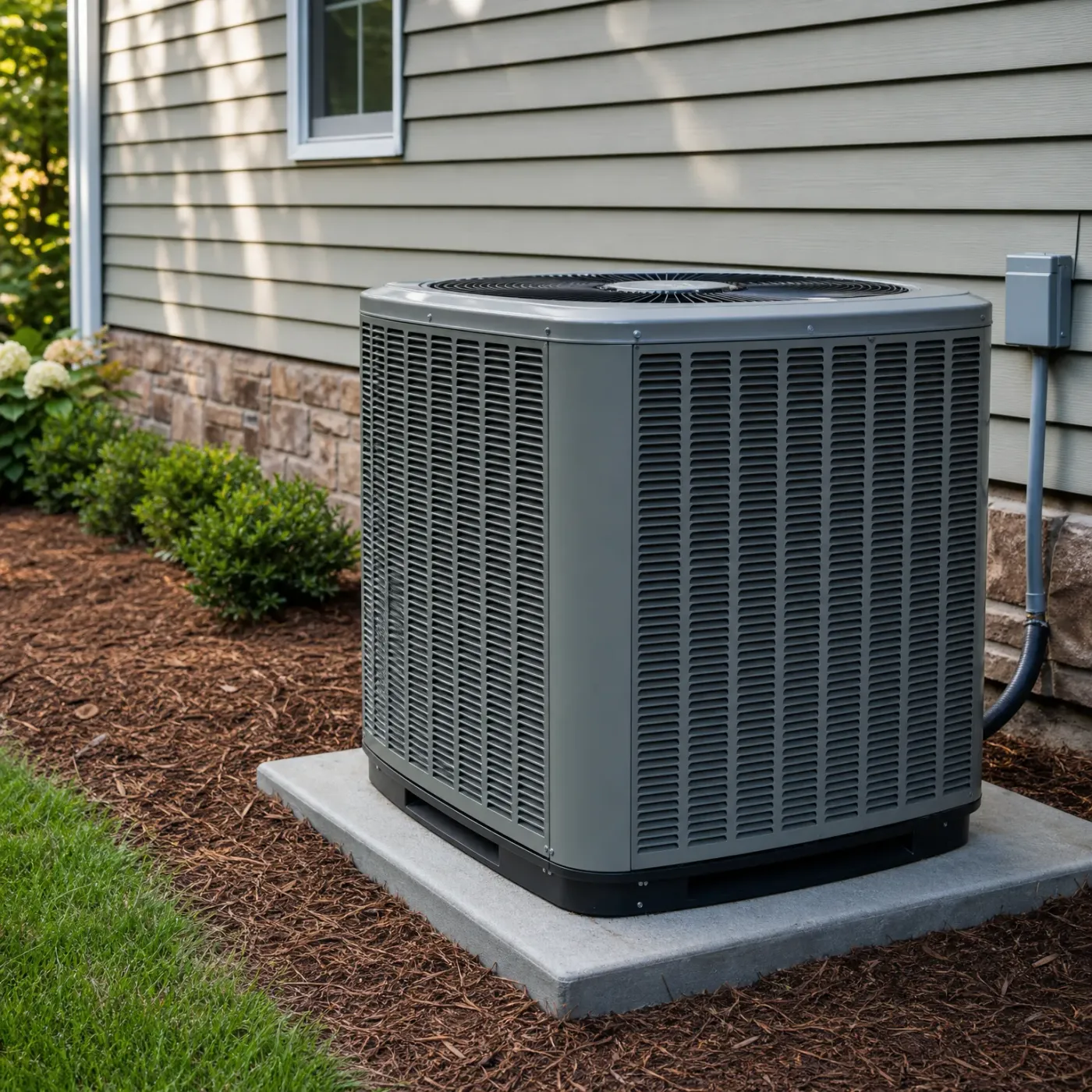
The coil is clean and the pad around it is clear, air moving through the fins the way it should on a muggy day.
A coil packed with dust like this makes the system work harder to pull heat out, and it's often mistaken for a refrigerant problem.
You're out back around seven, grass still warm underfoot, and the condenser isn't making its usual sound. You walk over and the fan blades sit still while the unit hums low, like it's trying anyway. Inside, your wife calls out that the thermostat still says 79. The sun's dropping behind the Johnsons' fence, that gold light that means the worst of the day should be over, except the house never caught up with it. You crouch by the unit and feel warm air leaking from the top instead of the usual rush. A cicada starts up somewhere close. You already know you'll be calling someone tomorrow.
Power costs 13.62 cents per kilowatt-hour statewide
At 13.62 cents a kilowatt-hour, power here is cheap compared to most of the country. That's part of why a low refrigerant charge is easy to miss at first. The bill doesn't jump the way it would somewhere pricier, even while the compressor works harder and longer trying to cool a house that won't get past 78.
EIA-861 2025 statewide residential average
What These Signs Mean
Warm air that cools off slowly, ice on the copper line, and a hiss near the indoor unit all point to the same low charge.
A refrigerant leak needs a repair, not another top off, because the charge will just drop again.
A coil caked with dust can mimic the same symptoms, so the cause still needs a proper look before any work starts.
Someone local who services Iowa systems all summer knows which of these signs usually traces back to a leak versus a dirty coil.
One licensed contractor takes the call, not several, so you're not sorting through competing quotes while the house sits warm.
Catching this early means less strain on the compressor and fewer muggy days spent waiting for the house to cool.
Warm air that takes its time cooling, ice on the copper line, a hiss by the indoor unit. They all trace back to the same thing, a system running short on refrigerant. Sometimes a dirty coil gets blamed instead, and it looks similar enough from the outside that guessing isn't worth it. Either way, the fix starts with someone actually looking at the unit, not another round of topping off a charge that's going to leak right back out.
This is the kind of call that goes to someone who works on Iowa systems through every muggy stretch of summer, not someone new to what the heat does to a compressor here. That's the contractor you get matched with. One licensed contractor, local to you, who's seen this exact combination of symptoms before and knows which one usually means a leak in the line and which one usually means a coil that needs cleaning. You're not fielding calls from three different companies trying to win the job while your house sits at 78 degrees.
None of this gets better by waiting. A low charge means the compressor works harder than it should, and that strain doesn't reverse itself once the refrigerant is topped off, not if the real cause is a leak. The sooner someone qualified traces it back to the source, the sooner the house cools the way it's supposed to, and the less the rest of the system pays for a problem that started in the line.