Where to put a mini split in an Iowa home

A white wall-mounted mini-split air conditioner indoor unit shown straight-on against a plain light gray background.
Hand it off

The right spot depends on which wall faces the room you use most, and on where the outdoor unit can sit clear of snow. Inside, the head goes high on an interior wall, away from doorways and out of direct line with where you sit, so the air mixes through the room instead of blowing straight on you. Outside, the condenser needs to sit up on a stand or bracket, since Iowa winters bury anything mounted low under drifts and ice. It also needs clearance on all sides so snow thrown by a plow or shoveled off a walk doesn't pile against it. If the unit is doing your heating too on the coldest nights, placement matters even more, since a coil packed with ice can't pull heat from the air no matter how far you turn up the thermostat. Get the location right once and the system runs the way it was designed to for as long as you own it.

A gray-haired man with a beard in a blue button-placket shirt reclines on a couch with his eyes closed, beside a sunlit window with a green plant.
A woman in a cream knit sweater sits in an armchair with her eyes closed near a window showing yellow autumn foliage, with a mug on a round wooden side table beside her.

Why the indoor spot matters

A mini split cools and heats by throwing air across the room, not by filling ductwork. Mount the head where it can throw that air over open space, toward the middle of the room, instead of straight at a couch or a bed. If it sits too close to the ceiling corner or above a doorway, the stream hits a wall a few feet out and the far corners stay warm in July and cold in January. Eight feet up on a clear stretch of wall gives the air room to spread before it reaches you.


Why the outdoor spot matters

The outdoor unit has to pull in air and push air out, and snow piled against it blocks both. Set it up on a bracket or a stand so it sits above where drifts collect against the house, not flush with the ground. Keep the space in front of the coil open on at least two sides so air can move through it. A unit buried after a storm works harder to do the same job, and ice that forms low on the cabinet can hold moisture against parts that should stay dry.

A man in a blue sweatshirt reclines with closed eyes in a brown leather armchair in a living room with a bookshelf, houseplant, sofa, window, and a side table holding newspapers and a dark mug.
A bearded man in a gray pullover reclines with closed eyes on a brown leather sofa in a sunlit room with a window, framed picture, potted plant, and a wooden cabinet holding papers and a dark mug.
A man in a gray sweater leans back with closed eyes in a brown leather armchair beside a wooden side table holding a dark mug and a folded newspaper, with bookshelves and a window seat behind him.
A man in a green sweater reclines in an armchair with his eyes closed and a slight smile, beside a window with plants, a small table holding a mug and folded newspaper, and bookshelves behind him.

One room or the whole floor

A single head on an interior wall handles one room well: the living room, or a finished space above the garage that your furnace doesn't reach evenly. If you're trying to cover an open layout, kitchen into living room into a hallway, one head has to throw air further and around corners, and the room ends at one temperature near the unit and another on the far end. A multi-zone setup with two or three heads, one per room, keeps each space even on its own and lets you run just the one you're in.

Where the outdoor unit can't go

The outdoor unit needs to sit where snow won't bury it and where drifting off the roof won't bank up against it over the winter. A pad on the north or east side of the house, clear of the drip line, holds up better than a spot tucked under the eave. Keep it off the ground on a stand or bracket so it stays above the snowpack, and leave room on all sides for the fan to pull air through. A spot too close to the foundation or boxed in by a fence restricts that airflow and the unit works harder to keep up.

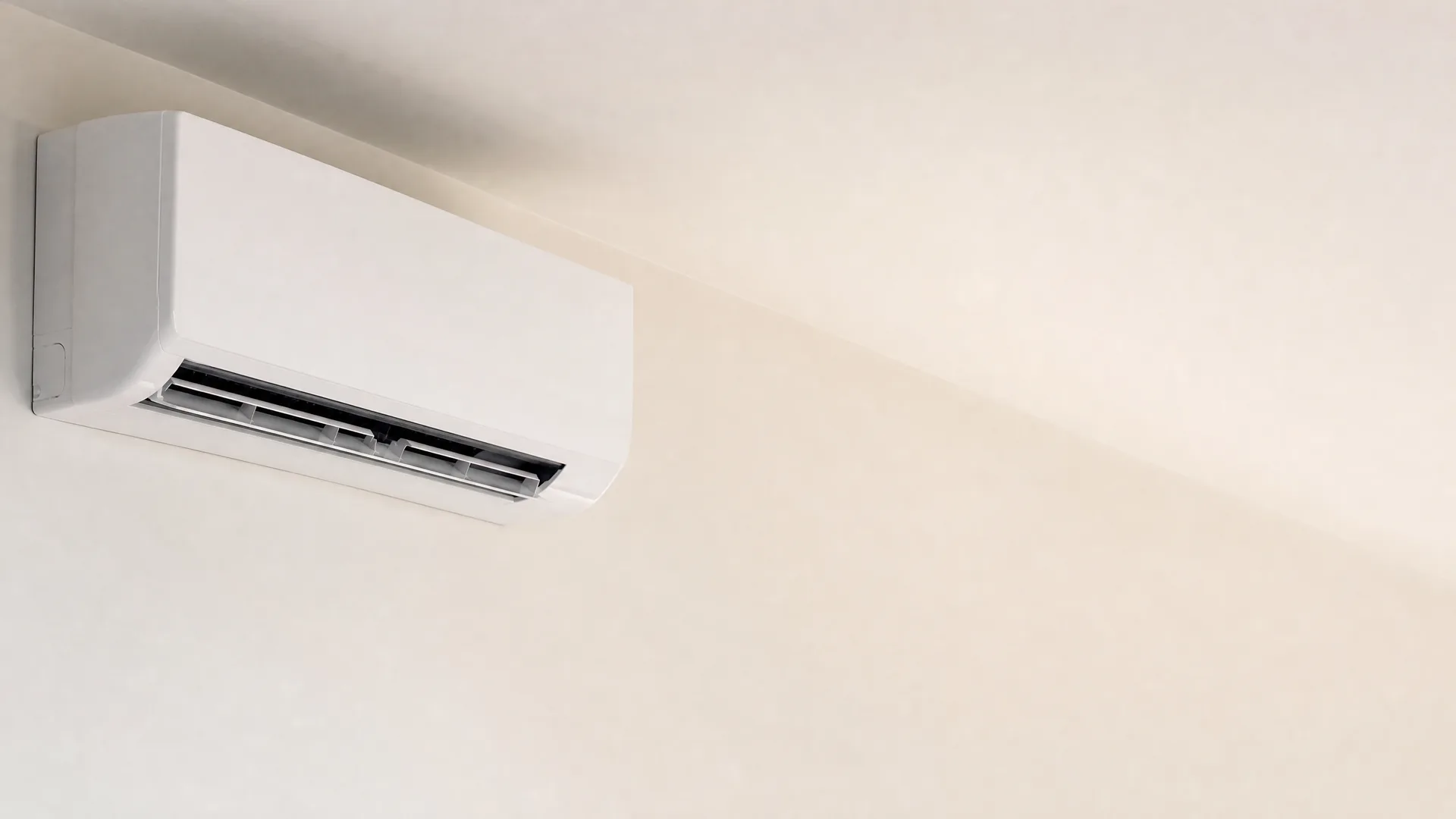
A dusty, discolored white wall-mounted mini-split air conditioner unit installed on a plain beige interior wall below a molding strip.
Before you get your mini split installation
A white wall-mounted mini-split air conditioner installed high on a light gray interior wall below a white crown molding and ceiling with a recessed light.
After you get your mini split installation

Stop chasing a mini split pro

Skip collecting and comparing quotes for the new mini split.

Sending the form costs nothing.

A white wall-mounted mini-split air conditioner unit installed high on a plain beige wall near the ceiling, with empty wall space to the right.

Where a bad spot shows up first

A head placed wrong doesn't fail, it just disappoints you. You'll notice it in August, when the far corner of the room stays warm no matter what the thermostat says, or in January, when cold air pools near the floor by the windows. You paid for the unit and still reach for a fan or a space heater to fix what the layout didn't.

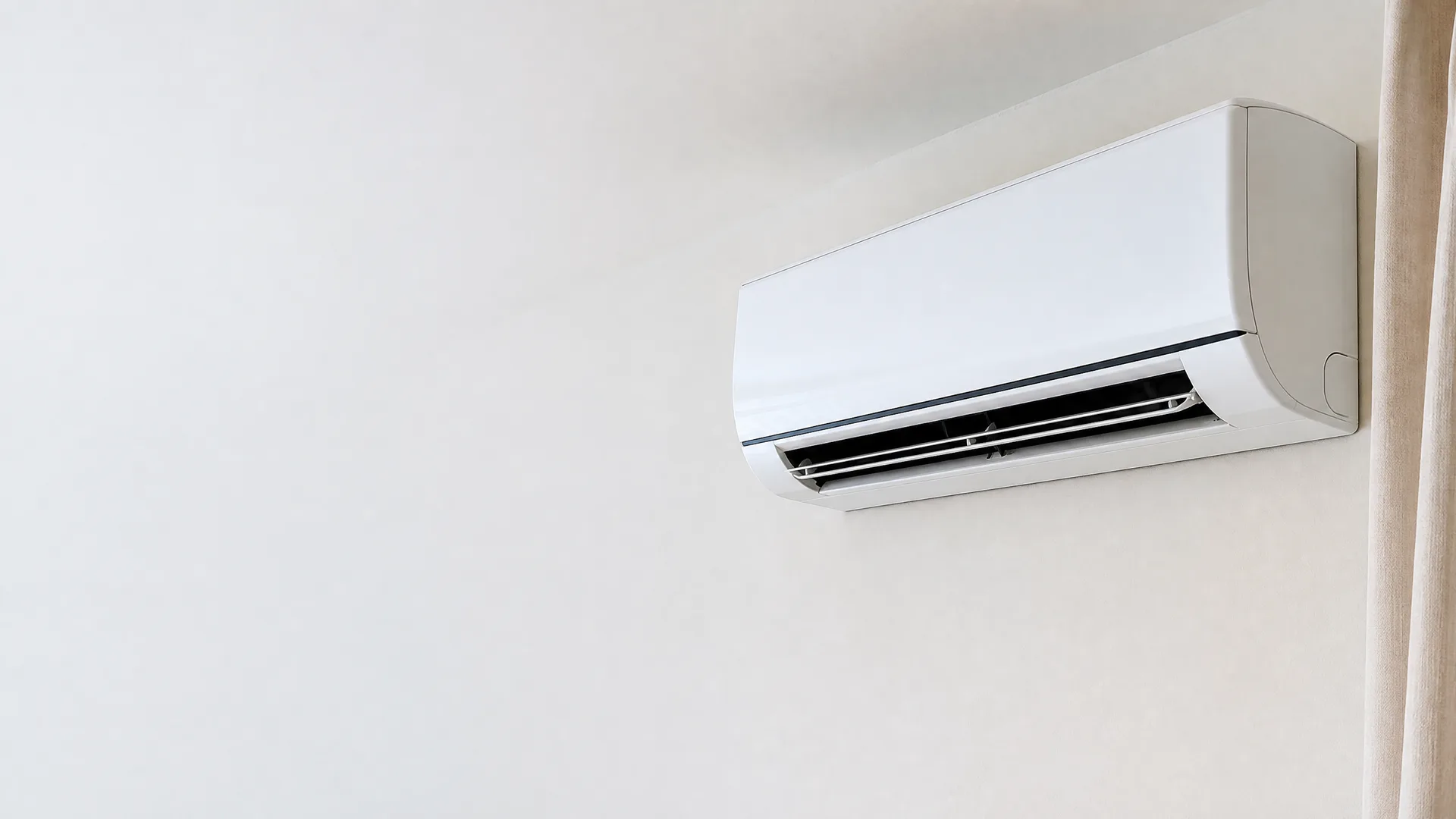
A white wall-mounted mini-split air conditioner indoor unit on a plain light-colored wall, with a beige curtain at the right edge of the frame.

What the outdoor unit needs

The outdoor unit has to breathe all year, through the humidity of an Iowa summer and whatever the snow piles up against it in January. Set it too close to the foundation or under a roofline that dumps snow and ice on top of it, and it works harder for less. A few feet of clearance on the right side of the house costs nothing now and saves a service call later.

Interior Wall or Exterior Wall

Indoor wall

  • An interior wall gives the mounting bracket solid framing and keeps the line set run short to the outdoor unit.
  • A wall shared with another finished room lets the head throw air across open floor space instead of into a doorway or hallway.
  • Mounting high on an interior wall keeps the airflow above furniture and away from where you sit, so you don't feel a direct blast.
  • An interior wall usually sits farther from windows, which means less afternoon sun hitting the unit's sensor and throwing off the thermostat reading.
  • Running the line set through an interior wall often means a shorter path to the electrical panel and condensate drain, which matters once the contractor is sizing the job.

Exterior wall

  • An exterior wall shortens the line set run to the outdoor unit, since the wall the head sits on faces outside already.
  • Mounting on an exterior wall in an older part of the house can mean less open stud bay to work with, which limits where the bracket goes.
  • An exterior wall is colder in January, so the head sits closer to the coldest surface in the room instead of out over open floor.
  • If the exterior wall faces west, summer sun can heat that wall through the afternoon, which works against the unit right when it's working hardest.
  • An exterior wall puts the indoor head closer to where the outdoor unit sits, which can mean a tighter, more direct penetration for the line set.
  1. The installer scouts the wall stud layout before mounting the bracket

  2. A hole gets drilled through the wall for the line set

  3. Copper refrigerant lines run from the head to the outdoor unit

  4. The line set, wiring and drain line get sealed and tested

A white wall-mounted mini-split air conditioner on a beige interior wall, with a cream curtain and window at left, a potted plant on a ledge at right, and a wood floor below.
A mini split mounted high on a clear wall throws air across the whole room and keeps it that way for years.
A dusty, discolored white wall-mounted mini-split air conditioner unit installed high on a plain interior wall below a white ceiling molding.
A mini split nobody can reach to dust clogs its intake and starts losing airflow long before anything breaks.

Power costs 13.62 cents per kilowatt-hour statewide

At 13.62 cents a kilowatt-hour, running a mini split in Iowa costs less to leave set where you want it than to shut off and restart every time you walk into the room. A good mounting spot that covers the whole room without a boost from a space heater keeps that rate working in your favor.

EIA-861 2025 statewide residential average

A white wall-mounted mini-split air conditioner near the ceiling of a room with light gray walls, white crown molding, and a beige curtain at the left edge.

Mounted clear, running clean

This head sits high on an open wall with nothing blocking the throw. Air reaches every corner of the room, the filter stays easy to reach, and the wall underneath stays as clean as the day it went up.

A dusty beige wall-mounted mini-split air conditioner indoor unit installed high on a plain light-colored wall below the ceiling.

Mounted wrong, paying for it

Dust and grime build up fast when a head sits where nobody can reach the filter, and the staining on the wall is condensation that had nowhere else to go. Airflow drops long before the unit itself fails.

A closed dark laptop and a ceramic mug of coffee on a wooden dining table, with wooden chairs, a dark kitchen cabinet with cutting boards and a potted plant, and a leafy plant by a window in the background.

The spot you pick now is the one you live with

Put the head high on an interior wall with open floor space in front of it, and keep the outdoor unit where snow won't bury it. That's the whole answer. Everything else is making sure the wall you pick actually gives the installer good framing and a short line set run to the outdoor unit.

Getting this right the first time means you're not the one tracking down a second opinion when the mounting spot looks wrong, or calling around to find out who can move a line set that was run too long. Send the form once and the search for who does this work is off your plate. You'll know where the head goes and where the outdoor unit sits, and someone licensed to install it both takes it from there.

A gray upholstered sofa with a matching cushion sits beside a potted plant and a wooden table holding a small green plant in a stone pot, near a curtained window.
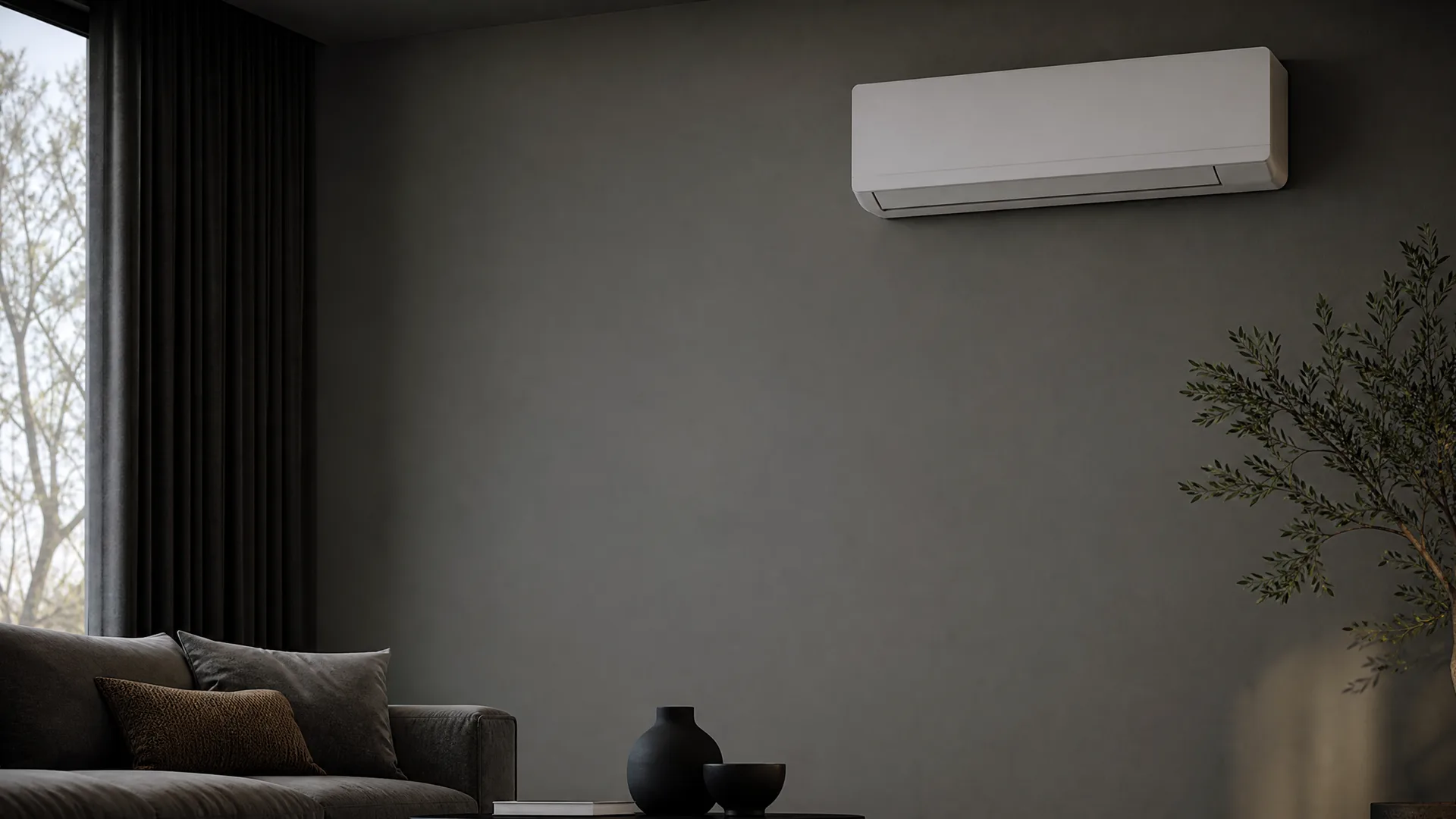
A white wall-mounted mini-split air conditioner on a dark gray interior wall above a gray sofa, with a window and curtain at left, a potted olive-like plant at right, and a black vase and bowl on a table in the foreground.

Send one request and you're done looking

One form replaces the calls you'd make to find a mini split pro.

New system or replacementMini-splitIowa
Step 1 of 2

What ZIP code is the job in?