

Running clean
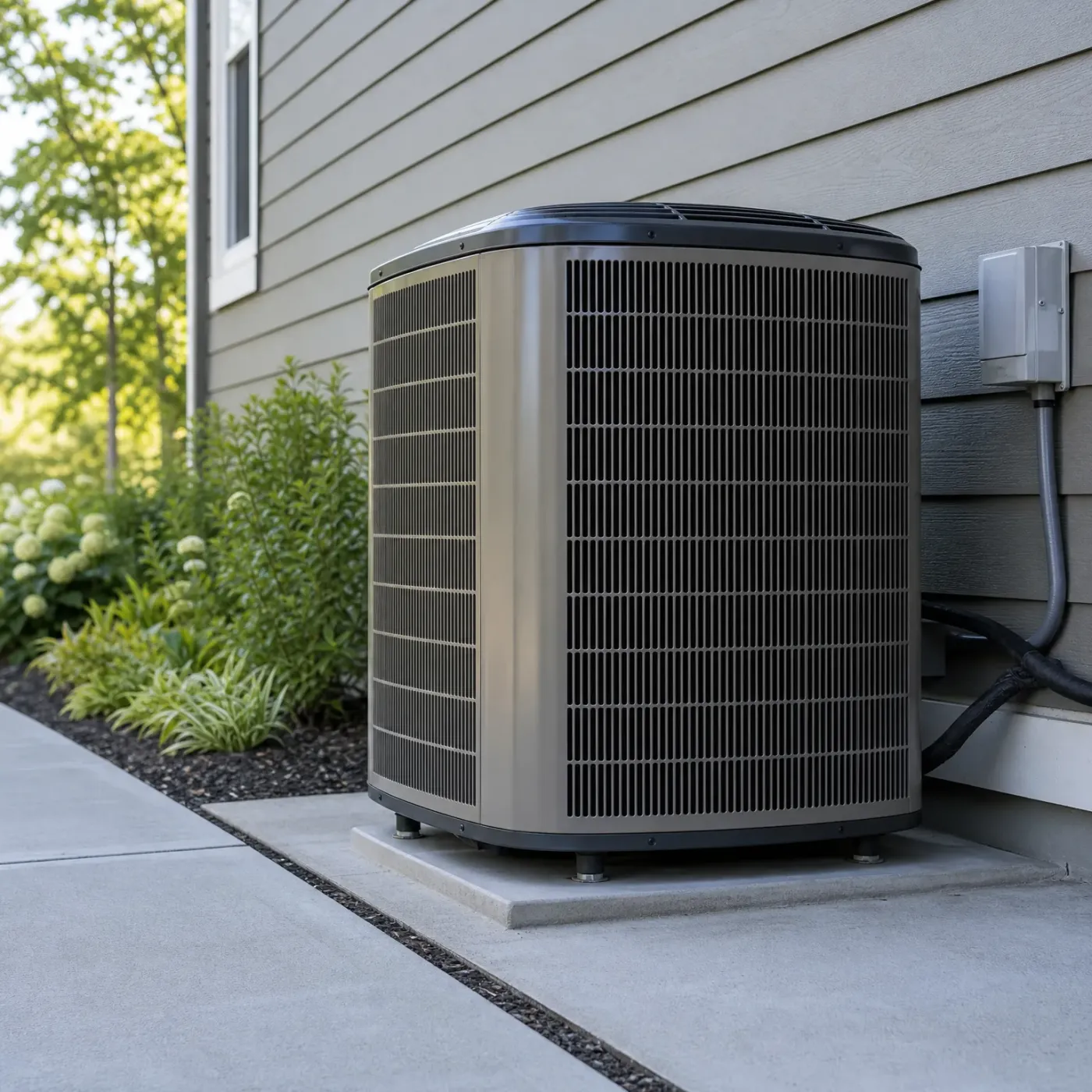
A condenser with open grilles pulls air straight through and sheds heat the way it's built to. It cycles off between runs instead of grinding through the afternoon. The shrub next to it has room to breathe, and so does the unit.
 Find my pro
Tell a local repair pro what your air conditioner is doing.
Your AC kicks on in the morning and it's still running when you get home from work. In Iowa, that's normal once the humidity sets in. The air outside is heavy with moisture, and your system has to pull that moisture out before the house feels cool at all. That takes longer than cooling dry air, so the unit stays on instead of cycling off and on like it does in spring and fall.
A system that's sized and running right can still keep up with that. One that can't, usually has a reason. A dirty coil, a low refrigerant charge, a blower that's not moving enough air. Any of those make the unit work harder and longer to reach the same temperature, and on a humid Iowa afternoon that shows up fast.
Since most homes here heat with gas, the air conditioner is doing one job, cooling, without a furnace blower fighting it for double duty most of the year. That makes it easier to tell when the AC itself is the problem rather than something shared with the heating side.
Figuring out which one it is means having someone look at the actual unit, not guessing from a list of possible causes. A local contractor who works on these systems all summer knows what tends to give out first in this climate and what's worth checking before anything else.
Answer a few questions about your system and your home, and you'll be matched with one licensed contractor near you, not a handful of companies competing for your call. They'll reach out to look at what's actually going on with your AC.
Your AC runs all day because Iowa summer air carries so much moisture that your system spends most of its time wringing water out of the air before the house ever feels cool. A thermostat reading 74 degrees doesn't tell the whole story when the humidity is high, so the unit keeps running well past when a dry-climate system would have shut off. That's expected behavior, not a sign of trouble, as long as the house is actually cooling down and the air coming out of the vents feels cold. Where it points to a real problem is if the house stays warm and sticky no matter how long the system runs, if you hear it cycling on and off in short bursts, or if the energy bill jumps far more than the weather explains. Those signs usually mean something is making the system work harder than it should, like a dirty coil, a low refrigerant charge, or a blower that isn't moving enough air. Caught early, most of those are simple fixes.


A long, steady run isn't your AC struggling. It's the system doing the slow part of its job, pulling moisture off the evaporator coil a little at a time. Air passes over that cold coil, the moisture in it condenses into water, and that water drains away outside. On a muggy July day there's a lot more moisture to pull out than there was in April, so the system has to keep running to get it all. A properly sized unit will settle into those long runs in the thick of summer and hold a steady pace rather than clicking on and off. What's worth watching is when that run stretches out past what it should. A dirty coil or weak airflow through the filter and ducts makes the system work longer to move the same amount of moisture. A low refrigerant charge keeps the coil from getting cold enough to condense water efficiently, so the unit runs and runs without really catching up. And once the compressor starts short cycling instead of holding a clean, steady run, you're paying for runtime that isn't buying you much cooling or dehumidifying at all.




Your request goes to one pro, not a list of companies.
Say what's going on with your air conditioner, and a pro who works on them reaches out.
No fee to send it, and nothing to sign.


Humid air enters the return duct and crosses the evaporator coil first.
The coil chills the air below its dew point, and moisture condenses on it.
Water runs off the coil into a drain pan and out a condensate line.
The now-drier air passes over the coil again and gets cooled.
Why does my AC run longer on humid days than hot ones
A thermometer only measures air temperature. It says nothing about how much water that air is carrying. On a dry 90 degree day your AC can pull the house down to 74 and shut off. On a sticky 84 degree day, the kind Iowa gets plenty of in July and August, the air holds far more moisture, and the evaporator coil has to keep condensing that water out before the thermostat sees any drop at all. The compressor stays on longer not because it's working against more heat, but because it's working through more moisture. If your system runs long on mild, muggy days and short on dry ones, that's the coil doing its job, not a sign something's broken, though a system that runs long on every day regardless of humidity is worth having checked.
A condenser with open grilles pulls air straight through and sheds heat the way it's built to. It cycles off between runs instead of grinding through the afternoon. The shrub next to it has room to breathe, and so does the unit.

Dirt packed into the mesh cabinet blocks the airflow this unit needs to dump heat outside. It has to run longer to do the same job, and in Iowa's humid air that can mean all day. A coil that dirty is worth having a contractor look at.
At 13.62 cents a kilowatt-hour, a system running long hours on a humid day adds up on the bill fast. A unit that's struggling to pull moisture out of the air draws power the whole time it runs, so a repair that gets it cycling normally again is the difference between paying for a few short runs and paying for one that drags on all afternoon.
EIA-861 2025 statewide residential average
A condenser fan draws air through the coil fins to shed the heat your system pulls out of the house. Pack those fins with grass clippings and cottonwood fluff and that air can't move through.
Heat that can't shed stays in the refrigerant, so the compressor runs longer to get the same cooling done. A contractor who services your model knows which fin pattern clogs fastest in your yard.



The dew point across Iowa averages 62°F through June, July and August, according to NOAA climate data. That's the number your AC is actually working against, not the temperature on the thermostat. Air that heavy holds a lot of moisture for the coil to pull out before the house feels dry and cool. On a day like that, the system can run for hours straight and never get a real break, because the compressor keeps cycling long after the air temperature would normally let it shut off. If your AC seems to run nonstop once July hits, this is why. A unit in good shape handles it. One that's already behind on performance, low on refrigerant or short on airflow, struggles to keep up and runs even longer.
NASA POWER T2MDEW county cells weighted by homes

An Iowa summer asks a lot of your AC. Thick, humid air means long run times most afternoons, and that alone doesn't mean anything is wrong. What's worth paying attention to is a system that runs all day and still can't get the house comfortable, or one that used to cycle off sometimes and now never does.
If that's where you're at, it's worth having someone look at the coil, the condenser, and the charge before another month of bills like this one passes. A contractor who works on AC systems in this climate every summer has seen what thick Iowa air does to a struggling unit, and knows what to check first. You'll be matched with one licensed contractor local to you, and they'll reach out directly, so you're not stuck fielding calls from a handful of companies while your house sits warm.


An air conditioner pro near you



