Why your AC is blowing warm air in Iowa

RepairCentral ACIowa
Step 1 of 2

What ZIP code is the job in?

Why is my AC blowing warm air?

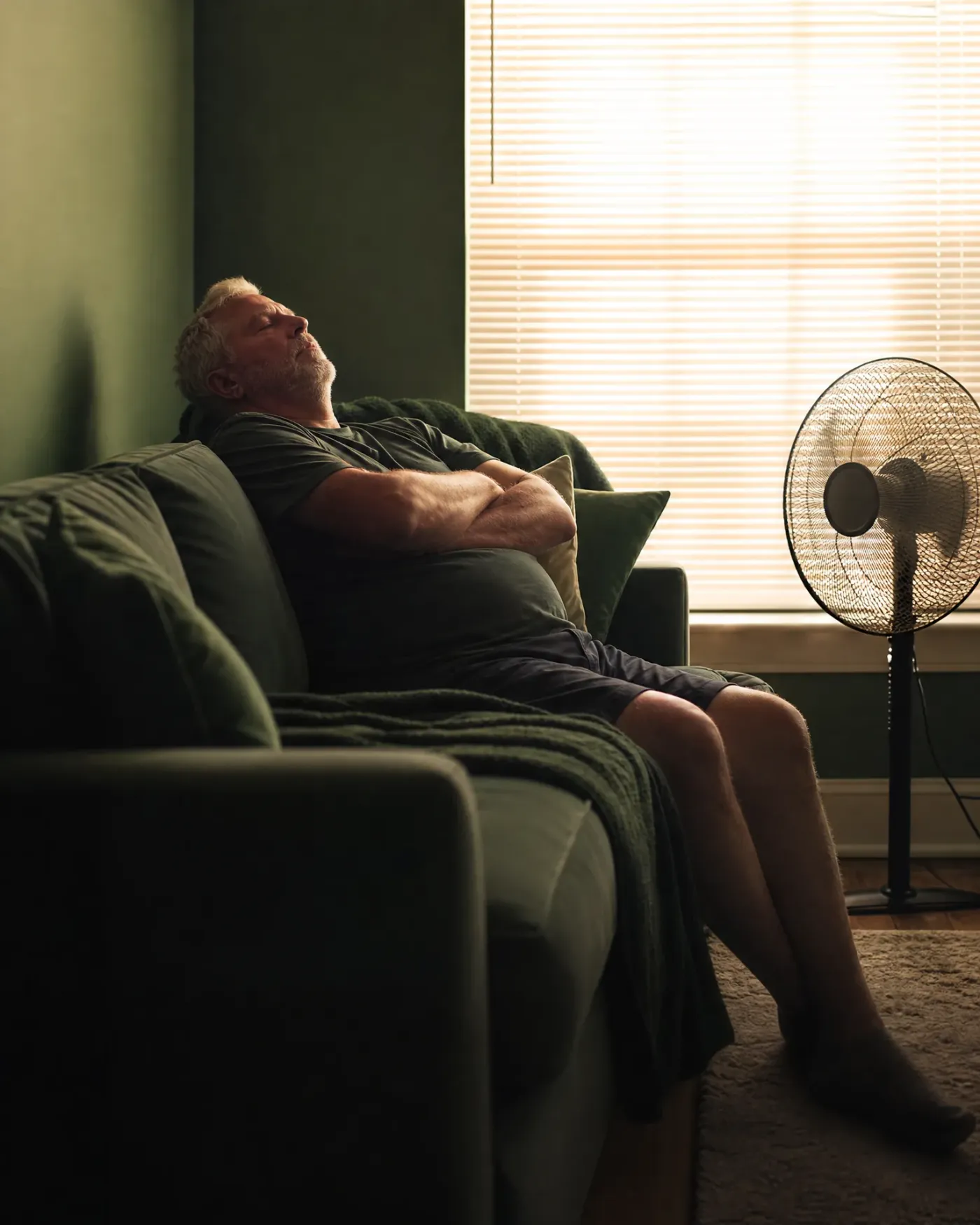
Iowa summers get sticky, and the last thing you want is an AC that's running but not actually cooling. Maybe it kicked on fine this morning and now it's just pushing around room-temperature air, or it's been like this since you turned it on for the season. Either way, something specific is wrong, and knowing what it usually is helps you figure out how serious it is before anyone comes out to look at it.

It's almost always low refrigerant, a dirty air filter, or a frozen coil

A dirty filter chokes off airflow over the coil until it gets too cold and ices up, and once that happens the air coming out of your vents turns warm instead of cool. Low refrigerant does something similar, since the coil needs the right amount of it to pull heat out of the air passing over it. A failing compressor is the other common cause, and that one means the system isn't moving refrigerant at all. With Iowa summers running hot and humid for months, an AC stuck blowing warm air gets uncomfortable fast, and it's worth having someone qualified check which of these it actually is before it turns into a bigger repair.

A gray-haired man in a dark sweater sits on a light gray sofa in a living room, looking toward a sunlit window with trees outside.
A gray-haired man in a dark blue sweater sits on a light gray sofa in a sunlit living room, looking off to the side, with a potted plant, shelving unit, and large glass doors behind him.
A bearded man with graying hair in a dark green sweater sits on a sofa in a living room, looking off to the side, with a sliding glass door and a dim kitchen doorway behind him.
A gray-haired man in a dark knit sweater sits on a light gray sofa in a living room, looking toward a sunlit window, with houseplants, a lamp, and framed art in the background.
An outdoor air conditioning condenser unit on a concrete pad beside a house with white horizontal lap siding, with an electrical disconnect box and insulated refrigerant line on the wall and a shrub over mulch to the right.
A condenser like this one is still moving heat out of the house the way it should, keeping cool air coming from the vents.
An outdoor air conditioner condenser unit on a concrete pad beside a house with light horizontal lap siding, with an electrical disconnect box and conduit on the wall behind it.
A unit this weathered may have a failing capacitor or a refrigerant leak, either one enough to leave you with warm air.
A single-story house with gray vinyl siding, dark shingled gable roofs, and white-trimmed windows, set behind a partly dry green lawn under a clear blue sky.

Summer air in Iowa holds a dew point around 62°F, according to NOAA climate normals. That's thick, damp air for your AC to wring the moisture out of before it can cool the house. The system has to run longer just to pull that humidity down, which means the condenser and compressor are working harder than they would in drier air. When something's already weak, like a failing capacitor or a low refrigerant charge, this kind of load is what pushes it over the edge. You'll notice it as air from the vents that feels cool but not cold, or a house that stays clammy even with the AC running.

NASA POWER T2MDEW county cells weighted by homes

What does it feel like when the AC can't keep up

You'll notice it first at the vents. Air that should feel cold feels room temperature, or close to it. The thermostat might say 72 but the house feels more like 80, especially by late afternoon. Some rooms hold up better than others, usually the ones farthest from the unit. The air feels heavy, almost sticky, even with the system running nonstop. You might hear the outdoor unit cycling on and off more than usual, or just running without stop and never catching up. Left alone, a system working this hard for this little payoff tends to wear out its parts faster, and that heat and humidity sitting in the house day after day isn't just uncomfortable, it's harder on wood floors, trim and anything else sensitive to moisture.

An outdoor air conditioner condenser unit beside a light-colored lap-sided house with an electrical disconnect box on the wall, surrounded by shrubs and lawn in low evening light.

You're out back around seven, grilling or just getting some air before it cools off. The sky's still got that gold edge to it. You walk past the condenser on your way to the hose and notice it's quiet. Not the low hum you're used to, just the cicadas. You crouch down and look through the fan grate and it's not spinning. The compressor might be running, you can't tell, but nothing's moving air through those coils. Inside, your spouse calls out that the living room feels warm again. You already knew that. You've known it for twenty minutes, standing here watching a fan that won't turn while the house behind you holds onto the heat of the day.

Call for Repair or Wait It Out

Call for repair

  • A unit blowing warm air while the compressor runs is usually a refrigerant leak, a bad capacitor, or a dirty condenser coil, and a licensed contractor can pin down which.
  • If the condenser is still fairly young, replacing a part is often enough to get cold air back without putting in a new system.
  • A contractor who works on AC units all summer in Iowa has seen which parts fail first in this kind of heat and humidity.
  • Waiting on a refrigerant leak lets the compressor run low on charge, which can wear it out faster than the leak itself would.
  • A repair gets the house cool again without the time and expense of a full installation.
  • Some fixes, like a capacitor swap, can have the system running again the same visit.

Let it run

  • If the AC is only blowing warm air on the hottest afternoons, it may just be straining to keep up with the humidity, not failing outright.
  • A unit that's cooling fine most of the day and only loses ground during a heat spike isn't necessarily broken.
  • Riding it out risks the compressor running on low refrigerant or a weak capacitor, which can turn a small problem into a bigger repair.
  • A house that stays warm past sundown, after the sun's no longer heating the walls, points to something that needs looking at rather than something to wait out.
  • Without someone checking the refrigerant charge and the electrical parts, there's no way to know if the problem will hold steady or get worse.
  • Humid Iowa summers put real strain on a system that's already struggling, so a small issue now can turn into a no-cool day later.
A gray outdoor air conditioner condenser unit on a concrete pad beside a house with white horizontal siding and a brick foundation, with a wall-mounted disconnect box and conduit, and a green shrub with mulch at left.

Clean coil, clear airflow

This condenser has room to breathe. The grille is clear, the fins aren't caked with grass clippings or cottonwood fluff, and the coil underneath can actually shed the heat it's pulling out of your house. That's what keeps the air at your vents cold on a July afternoon.

An outdoor air conditioning condenser unit on a concrete pad beside a house with white horizontal vinyl siding, with a gray electrical disconnect box and refrigerant lines on the wall behind it.

A coil that's been fighting all summer

Grime like this across the grille and top cover means the coil underneath is likely just as coated. A dirty coil can't dump heat the way it should, so the compressor works harder and the air coming off it runs warmer. A contractor can tell you if a cleaning fixes it or if something else failed underneath.

An outdoor air conditioning condenser unit on a concrete pad beside a house with horizontal lap siding, with an electrical disconnect box and conduit on the wall, mulch and a green shrub to the right, and a concrete walkway in the foreground.
Before you get your air conditioner repair
A gray outdoor air conditioner condenser unit on a concrete pad beside a house with horizontal siding and a stucco foundation, with a disconnect box and conduit on the wall, decorative gravel, mulch, and a shrub nearby.
After you get your air conditioner repair

Hand off the air conditioner problem

A contractor who works on AC units all over Iowa every summer has seen this exact problem more times than you'd guess, and usually knows within a few questions whether it's a capacitor, a leak, or a coil caked with debris. That's the kind of call worth making when your house is sitting at 80 degrees with the sun still up. Send the request and it goes to one licensed contractor near you, not a handful of companies racing to call you back first. No juggling quotes, no explaining the problem five separate times. You've already done the hard part just figuring out something's wrong. The rest, tracking down someone who knows this equipment and has time to look at it, stops being on you once you send it. Your AC isn't going to fix itself before the next humid afternoon rolls in, and the sooner someone capable is looking at the condenser, the sooner the vents actually feel cold again.

Refrigerant doesn't get used up

A sealed system doesn't burn through refrigerant the way a car burns gas. If your AC is low, it's because it's leaking out somewhere, through a worn fitting, a rubbed-through line, or a corroded coil. No leak means no loss. That's why a unit blowing warm air almost always points to one of two things: refrigerant escaping through a leak, or the compressor and capacitor unable to move heat out of the house at all. Topping off refrigerant without finding the leak just buys a little time before the same warm air comes back.

The capacitor does the starting

Every time your AC cycles on, the capacitor gives the compressor and fan motor the jolt they need to start spinning. A capacitor weakens with heat and age, and Iowa summers put it through a lot of starts. When it finally gives out, the compressor may hum and try to start without catching, or the outdoor fan may sit still while the indoor blower keeps running air through the house. Either way, the air moving through your vents has nothing cooling it, so it comes out close to room temperature.

A middle-aged woman with shoulder-length dark hair, wearing a gray cardigan over a cream top, sits in an upholstered armchair and looks toward a sunlit window, with a shelf holding framed pictures and a plant behind her.
A woman and a child wrapped together in a knitted gray blanket on a couch, with the child's head resting on her shoulder and a lit table lamp and houseplant in the background.

You run the fan and hope it fixes itself, maybe adding a day or two waiting to see if it clears up on its own while the house stays sticky.

A licensed contractor opens the unit, finds the actual cause, and fixes it, so you're not guessing at the problem while the Iowa heat sits in your house.

Power costs 13.62 cents per kilowatt-hour statewide

At 13.62 cents a kilowatt-hour, an AC that's running but not cooling is wasting money twice over, the power to run the compressor and the power for a house that's still warm. Fixing whatever's wrong stops that waste instead of letting it ride all summer.

EIA-861 2025 statewide residential average

An outdoor air conditioner condenser unit on a concrete pad beside a house wall, with a gray electrical disconnect box and conduit above it and grass in the foreground.

Letting it ride

The unit keeps running, so it's easy to tell yourself it'll sort itself out. It won't. A capacitor that's starting to go doesn't get better, it fails. A slow leak doesn't seal itself. Meanwhile the compressor keeps cycling on, pulling power, and the house stays warm enough that the thermostat just keeps calling for more. Every day you wait is a day of that same cycle repeating, with nothing changing except maybe the leak getting worse.

A gray outdoor air conditioner condenser unit on a concrete pad beside a house with horizontal lap siding, surrounded by white gravel and a lawn, with a white wall at left.

Getting it looked at

A licensed contractor who works on these units all summer can usually narrow it down fast. Gauges on the lines tell them if the charge is low. A multimeter tells them if the capacitor's weak. A look at the coil tells them if airflow is the problem. Once they know which one it is, the fix is usually straightforward, because it's one specific part doing one specific thing wrong, not a mystery anymore.

Warm air from the vents means something specific is wrong, a capacitor giving out, a leak, a coil too dirty to shed heat, and none of those fix themselves. A contractor who works on AC units across Iowa all summer has opened up this exact problem more times than you'd guess, and knows where to look first. Send the request and that search is done for you. You'll hear from one licensed, local contractor, not a handful of companies competing for your callback, and that's someone who sees this equipment every season and knows what usually fails on units like yours. From there it's a matter of finding the actual cause and fixing it, so you're not left running the fan and hoping the house cools down on its own.

Close view of a dark standing-seam metal roof with a stone chimney and metal flue cap, overlooking a wide river, trees, and flat farmland under a partly cloudy sky.

It's off your list after this

Send it today

No fee to send it, and nothing to sign.

A house that stays warm through late afternoon and into the evening isn't going to cool itself off once the sun's down. Send the request now and stop waiting on a unit that's already told you it needs a look.