Running the way it should
The unit cycles on, the fan spins, and cold air moves through the house. The breaker holds, the disconnect box stays shut, and the pad underneath stays clear and level.

A few things usually keep an AC from starting. The thermostat may not be calling for cooling, which happens if the batteries died or the setting got bumped. A tripped breaker is common, especially when the system has been running hard through a muggy Iowa summer and the compressor draws more than it should. Outside, a capacitor can wear out and leave the compressor or fan unable to start even though power is reaching the unit. There may be a safety switch holding the system off, often tied to a clogged filter restricting airflow or a drain pan that filled up and tripped a float switch. Sometimes it is simpler: a disconnect switch near the outdoor unit got left or knocked off, or a service switch by the indoor equipment is shut. None of these are things to leave alone once you notice them, since a system that won't start at all can mean a part is close to failing for good.


A capacitor that's gone bad is one of the most common reasons an AC won't start, and it's a cheap part doing a job the whole system depends on.
It gives the compressor and fan motor the jolt they need to get moving. Without that jolt, the unit can hum or click but never actually turn on.





The unit cycles on, the fan spins, and cold air moves through the house. The breaker holds, the disconnect box stays shut, and the pad underneath stays clear and level.

Dirt has built up on the grilles, choking the airflow the unit needs to shed heat. The disconnect box nearby is often the first place to check once the unit stops responding at all.
No hum at all is different from a unit that tries and fails. It points away from the capacitor and toward something stopping power from reaching the outside unit in the first place. You want to know where to look before calling anyone, and whether this is the kind of thing that waits until morning or not.
A unit that stays completely silent usually isn't getting power. Start at the breaker panel. A breaker tripped from the system working hard through a muggy stretch will cut power to the whole outdoor unit, not just slow it down. Next, check the disconnect box mounted on the wall near the condenser. It holds a pull-out block, and if that block isn't seated all the way in, the unit gets no power even with the breaker on. Both are things you can look at yourself. If the breaker holds and the disconnect is seated but the unit still won't hum, the problem is likely inside the unit, in the wiring or the motor itself, and that's where a licensed contractor needs to take over.

Summer air in Iowa carries a dew point around 62°F, averaged across June, July and August by NOAA. That's the sticky range, where sweat doesn't dry and the air feels heavy even when the temperature isn't that high. Your AC has to pull more moisture out of that air to make the house feel right, and it leans on the system harder than a dry heat ever would. That extra load is exactly when a weak capacitor or a stuck contactor tends to give out, usually on the muggiest afternoon of the week. If yours won't start right when you need it most, getting matched with a contractor who knows this stretch of weather means one less thing to chase down yourself.
NASA POWER T2MDEW county cells weighted by homes
Send the request today and stop worrying about who to call.
There's no charge for the request.
The room that's farthest from the thermostat warms up first. Maybe it's an upstairs bedroom or a sunroom. If the system isn't starting at all, you'll notice fast because there's no fan noise outside and no air moving through the vents. If it's the thermostat or a breaker, the house might feel normal for a few hours before it gets muggy.
A unit that's tripping its breaker repeatedly is telling you something is drawing too much power, and that doesn't fix itself by resetting it again. Running a system on a failing capacitor can push the compressor harder than it's built for. The compressor is the expensive part to replace. Catching the small problem now is cheaper than replacing the whole outside unit later.
At 13.62 cents per kilowatt-hour, running your AC here doesn't put much strain on the budget. So when it won't start, the fix is almost never about saving power. Something is stopping it, and that's worth chasing down fast rather than living without cooling.
EIA-861 2025 statewide residential average

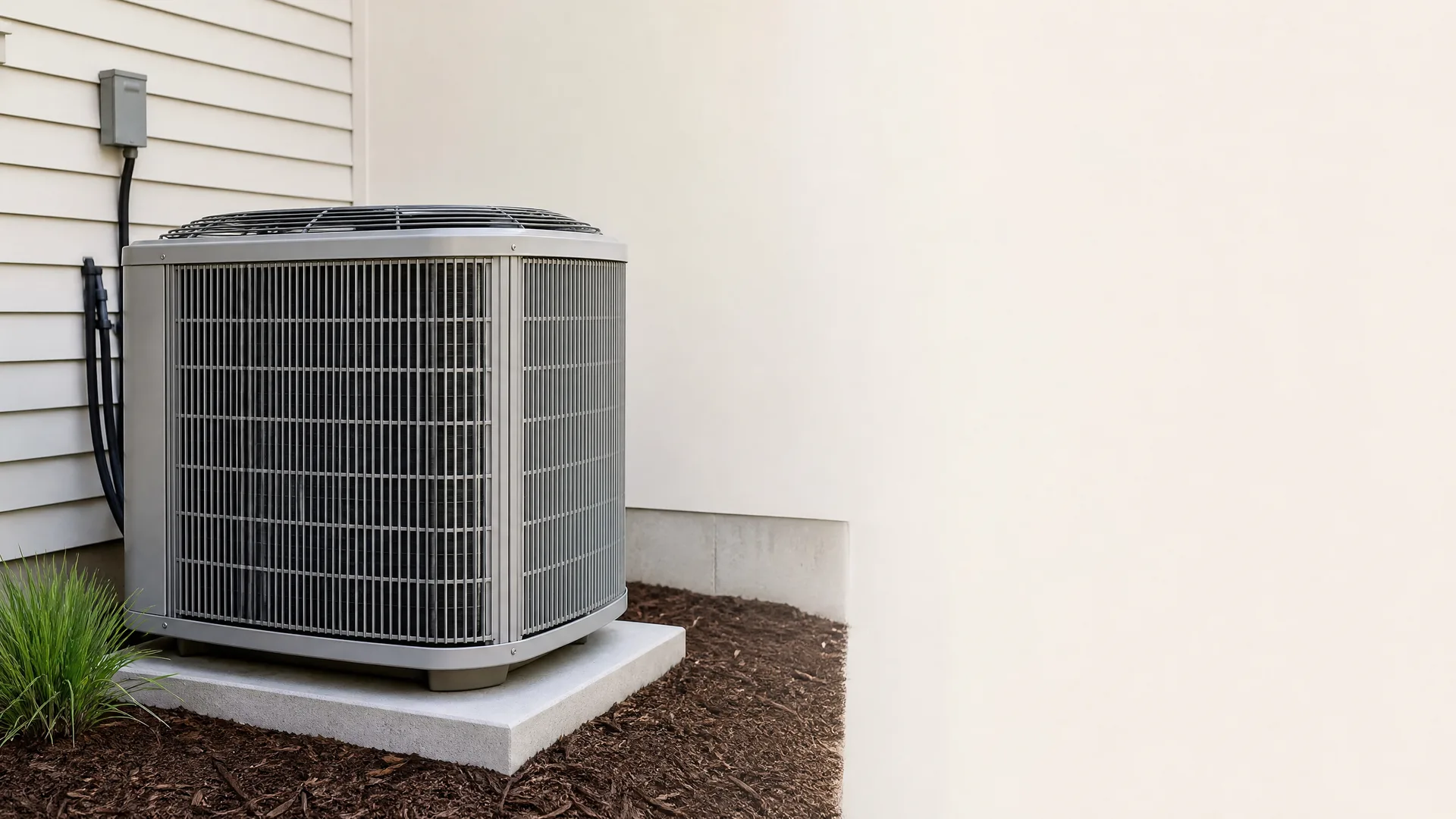
The condenser sits on its pad, disconnect box shut tight on the wall beside it. The cabinet's clear, no dirt packed into the wire mesh, so air pulls through the coil the way it should. Nothing blocking it, nothing straining to get through, and the unit starts without a fight.

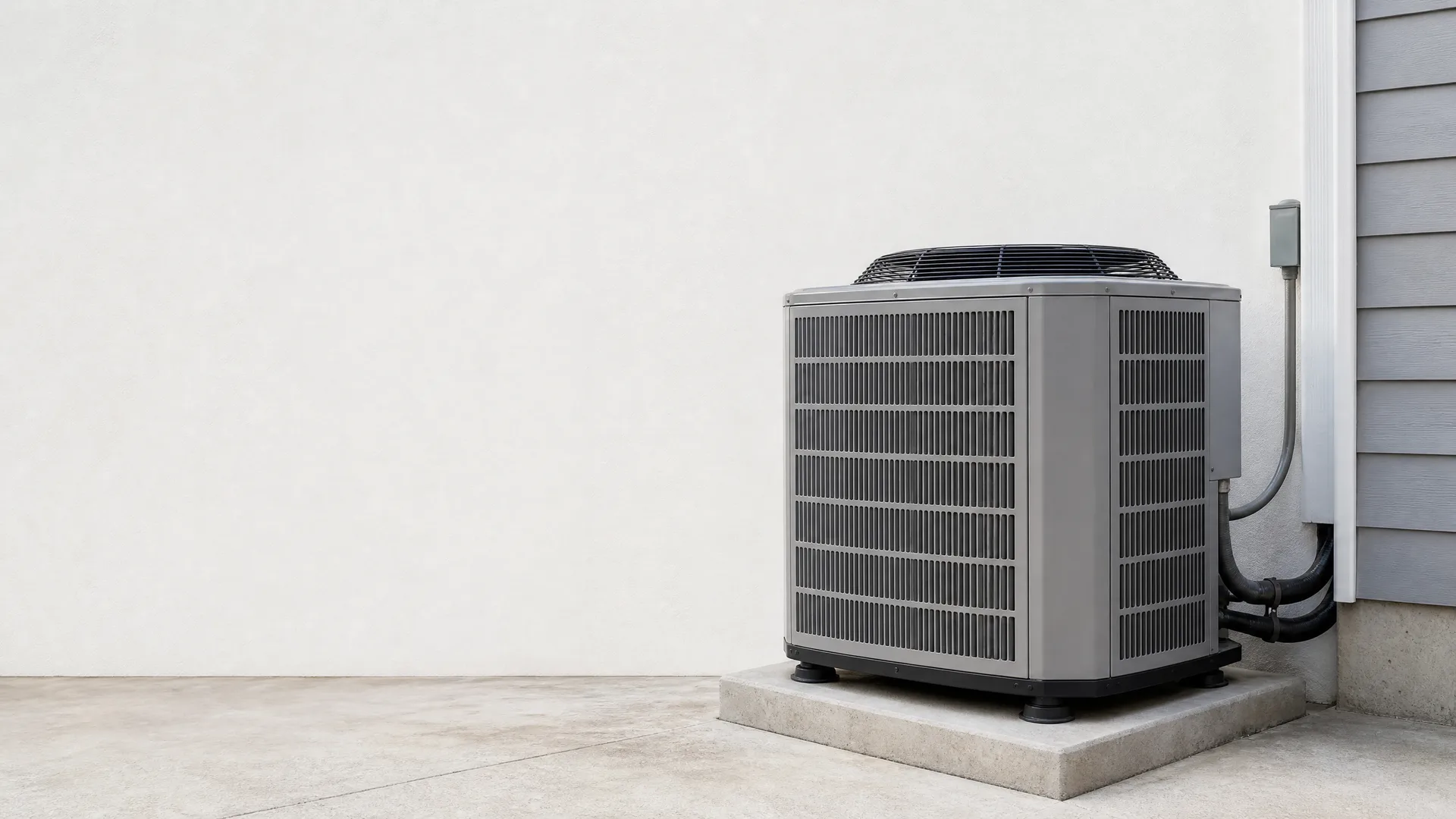
Dust and grime cake the wire mesh over this cabinet, and that buildup chokes the airflow the coil depends on. The unit works harder to move the same amount of air, and that extra strain is the kind of thing that trips a breaker or burns out a part before its time.
You flip the thermostat down and nothing happens outside. No hum, no click, no fan spinning behind the unit. Inside, the vents stay quiet and the air sitting in the house just gets heavier as the afternoon goes on. Maybe you've already checked the thermostat display and it looks fine, so you're standing at the breaker panel wondering if that's it. The longer the house sits without cooling, the more the humidity creeps into everything, the furniture, the air itself, and it stops feeling like your house. None of this means something is badly wrong. It means something small is stopping the system from starting, and it's worth finding before the heat really settles in.
Thermostat calls for cooling and sends power to the contactor.
The contactor closes and sends power to the compressor and fan motor.
The capacitor gives both motors the jolt they need to start.
The compressor pressurizes refrigerant and the outdoor fan pulls air through the coil.

A dead thermostat, a tripped breaker, a bad capacitor, a shut disconnect. One of these is almost always the reason your AC stayed quiet when you needed it running. Most are quick to spot once someone's looking at the right part, and few of them mean the system is actually damaged.
You don't have to figure out which one it is by yourself. Send the details through and a contractor who works on these systems in your area will reach out to you directly. No more guessing at breakers or pulling the cabinet apart to check a part you're not sure how to test. That part of it is off your plate now.

Send the request and finding a pro stops being your problem.
You only hire the pro if you want to.