Why your heat pump bill jumps in an Iowa winter

RepairHeat PumpIowa
Step 1 of 2

What ZIP code is the job in?

Why does my heat pump bill jump in winter here in Iowa?

Iowa winters push a heat pump harder than any other season, and the bill shows it. You've watched the number climb and want to know if that's normal or a sign something's wrong with the unit.

It works harder below freezing, and it can't do the job alone

A heat pump moves heat from outside air into your house. That gets harder the colder it gets outside, and Iowa winters push well below freezing for weeks at a time. Below a certain point, the unit can't pull enough heat from the air to keep up, so a backup heat strip kicks in to make up the difference. That backup runs on electricity directly, with none of the efficiency of the heat pump itself, and it's what drives the bill up. If yours is running constantly, cycling oddly, or leaning on backup heat even on milder days, something in the system may not be working the way it should.

A bearded man in a navy long-sleeve shirt sits smiling on a gray sofa in a living room, with a bowl of popcorn on a side table in the foreground and a shelving unit, potted plant, and kitchen area behind him.
A smiling man in a navy long-sleeved shirt reclines on a gray sofa in a living room, with a wooden bowl of popcorn in the foreground and shelves and a potted plant behind him.
A smiling man in a dark green sweater sits on a tan leather sofa in a dimly lit living room, with a bowl of popcorn in the foreground and a kitchen area blurred behind him.
A smiling man in a dark navy sweater sits on a light sofa in a living room, with a glass bowl of popcorn on a wooden coffee table and bookshelves behind him.

Normal Strain or a Real Problem

Heat Pump Running Normally

  • The outdoor unit frosts over and the defrost cycle kicks on, running the compressor and fans both, which pulls more power than a straight heating cycle.
  • Below freezing, a heat pump has to move more heat from colder outside air, so it runs longer to hold the same indoor temperature.
  • Auxiliary or strip heat kicks in automatically when outdoor temperatures drop hard, and that backup heat draws far more electricity than the compressor alone.
  • The thermostat is set a few degrees higher than usual, or someone adjusted it while away, and the system is just meeting that setpoint.
  • A clear, steady hum from the outdoor unit with warm air at the vents means it's working as designed, just harder than it does in October or April.

Heat Pump Needs a Look

  • The outdoor unit is iced over and stays that way instead of clearing after a defrost cycle, which means it's not shedding frost like it should.
  • Auxiliary heat is running most of the time instead of kicking in only during the coldest stretches, which points to the compressor not pulling its share.
  • Warm air at the vents feels barely warm, not hot, even though the system is running close to constantly.
  • The unit short cycles, turning on and off every few minutes instead of running a steady stretch to reach the setpoint.
  • The bill jumped sharply from one month to the next with no real change in weather or thermostat setting, which points to the equipment rather than the season.
A dimly lit bedroom with an unmade bed and pillows beside a window with sheer curtains, showing trees and a hill under a dusky sky outside.

The thermostat still reads 68, but you've got a sweatshirt on over another layer, standing at the register in the hallway at ten at night, waiting to feel air move. A January wind is working at the window behind you. Out back the unit hums, then clicks into defrost, and you hear the fans pick up like it's trying harder than it was a minute ago. You check your phone, pull up last winter's bill next to this one, and just look at the difference for a while. The furnace closet door is shut. You haven't touched it. You just want to know if the unit out there is working the way it's supposed to, or working too hard.

Send one request and you're done looking

Describe what your heat pump is doing once, in one form.

You only hire the pro if you want to.

How Your Heat Pump Handles Cold

  • A heat pump moves heat from outside air instead of burning fuel to make it, so colder air means more work for the same warmth.
  • Below about 25 to 30 degrees, most units bring on backup electric resistance heat, often called strip heat or auxiliary heat.
  • Strip heat draws far more electricity than the compressor alone, and it runs whenever the thermostat calls for heat faster than the heat pump can supply it.
  • Every time frost builds on the outdoor coil, the unit reverses itself briefly to melt it off, which is the defrost cycle.
  • Bumping the thermostat up several degrees at once, or using a schedule that swings the temperature, can trigger aux heat even on a mild day.
  • A heat pump that's low on refrigerant or has a failing component will lean on backup heat far more than it should.

A heat pump doesn't make heat the way a furnace does. It pulls heat out of outside air and moves it inside, and that gets harder the colder it gets. Somewhere around 25 to 30 degrees, depending on the unit, the compressor alone can't keep up with what the thermostat is asking for. That's when the backup heat kicks in, a set of electric resistance coils built into the air handler. Installers call it strip heat or aux heat. It works, but it draws a lot more power than the compressor running on its own, because it's making heat directly from electricity instead of moving heat that's already there. On top of that, the outdoor unit collects frost in cold, damp air. When enough builds up on the coil, the system reverses for a few minutes and runs the compressor backward to melt it off. That's the defrost cycle, and it happens on its own, automatically, as part of normal operation in winter. None of this is a problem by itself. But if the thermostat gets bumped up several degrees at once, or a schedule swings the temperature a lot between day and night, the system calls for more heat than the compressor can deliver fast enough, and aux heat steps in to close the gap. A unit that's running low on refrigerant or has a part starting to fail leans on that backup heat far more than it's supposed to, and that shows up on the bill long before it shows up as a breakdown.

An outdoor air conditioning condenser unit with dusty coils sits on a concrete pad against light horizontal siding, with an electrical disconnect box and refrigerant lines on the wall and a shrub and mulch at left.
Before you get your heat pump repair
A gray outdoor condenser unit sits on a concrete pad beside a house with horizontal lap siding, with a wall-mounted disconnect box and refrigerant lines, mulched beds and a shrub nearby, and a concrete walkway in the foreground.
After you get your heat pump repair
A gray outdoor condenser unit on a concrete pad beside a light-colored horizontal-siding house, with a disconnect box and refrigerant line on the wall, ornamental grasses and a shrub in mulch nearby, and a concrete patio in the foreground.

Running the way it should

The unit cycles on, runs, and shuts off. Frost that builds up during a cold snap melts off in the defrost cycle without you noticing. The fans and compressor sound steady, not strained, and the air coming out of your registers is warm within a few minutes.

An outdoor air conditioning condenser unit on a concrete pad beside a house with horizontal lap siding, with a green shrub to the left and a wide concrete slab in the foreground.

Working too hard to keep up

The unit runs long stretches without shutting off, or it short cycles, kicking on and off every few minutes. Ice builds up on the coil faster than defrost clears it. If yours is doing this on a cold night, it's pulling more power to make less heat.

A woman with dark hair in a bun sits on a beige sofa under a knit blanket with her eyes closed and an open book in front of her, with a lit lamp and houseplant in the background.
A smiling bearded man in a dark sweater sits at a dinner table with lit candles, a glass of red wine, and bowls of food, in a dimly lit room with a lamp and houseplant behind him.
A gray outdoor condenser unit on a concrete pad beside a light green lap-sided house, with a wall-mounted electrical disconnect box, mulch bed with shrubs, river rock, and a paved walkway in the foreground.
A clean unit like this one can still pull strip heat on a cold night, and that alone explains a higher bill with nothing wrong.
An outdoor air conditioner condenser unit on a concrete pad beside a house with beige vinyl siding, with a gray electrical disconnect box and insulated refrigerant lines on the wall and river rock to the right.
Coils packed with dirt and debris force the compressor to run longer for the same heat, and that shows up on the bill too.
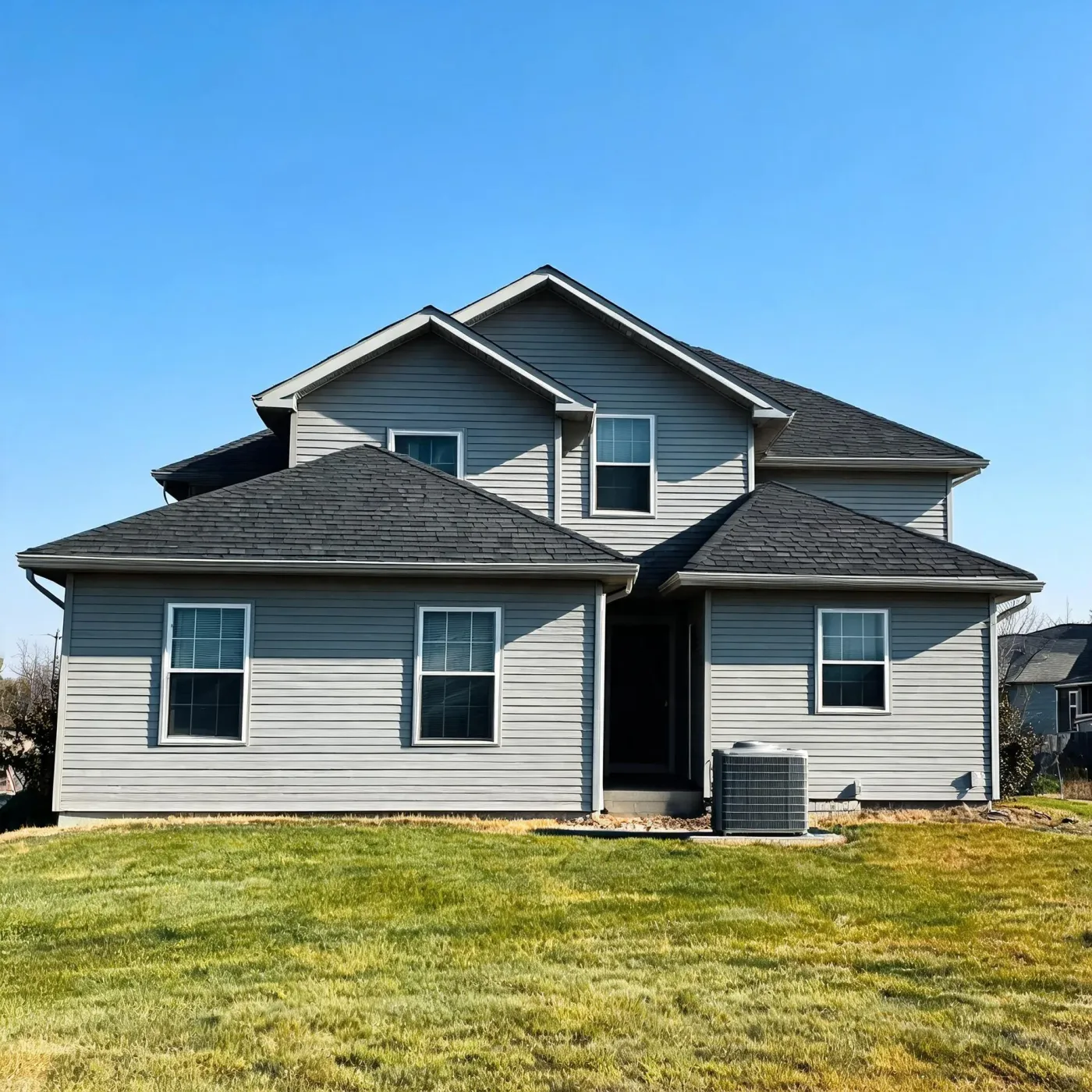
Rear view of a two-story gray vinyl-sided house with dark shingled gables, white-trimmed windows, an open doorway, an outdoor air conditioning unit, and a grassy lawn under a clear blue sky.

That heat pump isn't working against winter alone. Summer here runs a dew point of 62°F, NOAA's average across June, July and August, which is heavy, sticky air for the same outdoor coils that spend January pulling heat from the cold. Thick summer air makes the coils work to wring out moisture as well as cool, and anything that leaves them dirty or strained after a season of that doesn't just go away when the weather turns. A coil that's been fighting humidity all summer is a coil that's already working harder before the first cold snap even hits, and that shows up on the bill before you've connected the two.

NASA POWER T2MDEW county cells weighted by homes

A closed silver laptop and a white mug of dark coffee sit on a wooden table in a sunlit room, with a blurred kitchen counter, shelf and window with plants in the background.

So the bill isn't the mystery it feels like

A heat pump working hard on a cold Iowa night isn't broken. Strip heat kicking in, frost melting off in a defrost cycle, longer run times when the temperature drops, all of that is the unit doing its job. What isn't normal is a system straining to keep up, short cycling, or blowing air that never feels warm. That's worth a look from someone who can tell the difference between winter doing its work and a coil or a component failing underneath it.

If it's the second one, you don't have to spend your evening on it. No searching through listings, no calling three contractors to compare who can actually come out, no explaining the same thing about your outdoor unit three separate times. Send the request once and the search is off your plate. Someone licensed to work on it takes it from there.

Interior corner of a dining room with a round wooden table, a ceramic vase holding olive branches, a dark spindle-back chair near a curtained window, and a sideboard with a lamp against beige walls.
A fiddle-leaf fig in a woven basket stands beside a window, next to a beige upholstered armchair draped with a knit throw on a textured rug.
A woven water hyacinth basket with a cream fringed throw draped over its edge sits on a wood floor against white paneled wainscoting, beside an open wood door and a patterned rug.
Sunlit living room corner with a wooden sideboard holding a large clay vase of green branches, a framed landscape print above, and a gray armchair with rust and brown pillows and a knit throw beside a curtained window.
An entryway with a wooden bench holding a beige and a green pillow against a pale wall, beside a dark wood glass-paned door with green foliage outside, and a woven rug on the light wood floor.
Interior corner of a living room with a potted leafy tree in a woven basket beside a stone fireplace with a wooden mantel, a cream upholstered chair and sheer-curtained window at left, and a wooden table with a ceramic mug and book in the foreground.

Finding a pro stops being your job

Answer a few questions instead of calling shop after shop.

Hand it over

Asking costs nothing, and the choice to hire stays yours.