





A row of dark-sided single-story houses with gabled shingle roofs behind a long trimmed hedge, with mown lawn in the foreground and large leafy trees overhead under an overcast sky.

AC Installation in Dubuque, IA

Tell us about the job

Takes about a minute. No obligation.

New system or replacementCentral ACDubuque County, IA
Step 1 of 2

What ZIP code is the job in?

Gas furnaces heat 71.2% of homes in Dubuque County, and most of those homes pair that furnace with a central air conditioner on the same ductwork. If your ducts already carry warm air in the winter, they can carry cooled air in the summer, which makes a straight AC swap the simplest install. Electric heat accounts for 15.3% of homes here, and LP gas another 10.3%, and either setup can still take central air the same way as long as the ductwork is there. What matters for the install isn't the furnace itself, it's whether the home already has the ducts and the electrical capacity an AC unit needs.

3 months
June through August, your air conditioner is on duty
81°F
the average summer afternoon it cools against
39 hail events
in ten years, and hail bends the fins on outdoor coils
13.4 SEER2
the federal minimum any new unit must meet
Isometric grayscale illustration of a cutaway house with the roof lifted, showing interior rooms, ductwork, an indoor air handler, and an outdoor condenser unit beside the building.
Your air conditioner works hardest from June through August.

NOAA nClimDiv, 1991–2020 normals

Half the homes in Dubuque County were built in 1970 or earlier.

An install in a house that age has to match the ducts and the panel already there, not the other way around.

Electricity here runs 13.4 cents a kilowatt-hour, cheaper than most places, so the payback on a high-efficiency unit stretches out

Power costs 13.4 cents a kWh statewide
Cooling runs June through August
Summer afternoons average 81°F
Cooling starts in June hereMay is the month to get it installed

With power this cheap, it's worth looking at a mid-efficiency unit instead of paying more for the highest SEER2 rating on the shelf. Put the difference toward things that actually affect how the system performs. A condenser sized to the house, a clean refrigerant charge, ductwork that can move the air the unit puts out. An oversized unit on leaky ducts will cool worse than a correctly matched one no matter what the sticker says. Ask what size and model fit the house, not just which one claims the lowest bill.

Any system installed here has to clear 13.4 SEER2

Any new split system going into a Dubuque County home has to meet 13.4 SEER2 at minimum, the federal floor for this size of unit. That's the baseline to ask about when you're comparing quotes, not the ceiling. A federal tax credit is available on qualifying high-efficiency equipment, worth checking against whatever unit a contractor proposes before you decide.

Find a contractor
An outdoor air conditioning condenser unit mounted on a concrete pad surrounded by gravel, photographed against a partly cloudy blue sky.

Three months of work a year

Three months of work, June through August, with afternoon highs averaging 81. That's a light load next to what the furnace carries the rest of the year here. A standard unit sized to the house keeps up fine over a summer that short.

The line set and pad add up

A condenser needs a pad set level outside, a line set run to the indoor coil, and a disconnect box within sight of the unit. The farther the condenser sits from the coil, the more refrigerant line and labor the job takes. A straight run costs less than one that has to go around a foundation or up through a tight chase.

The coil has to match the condenser

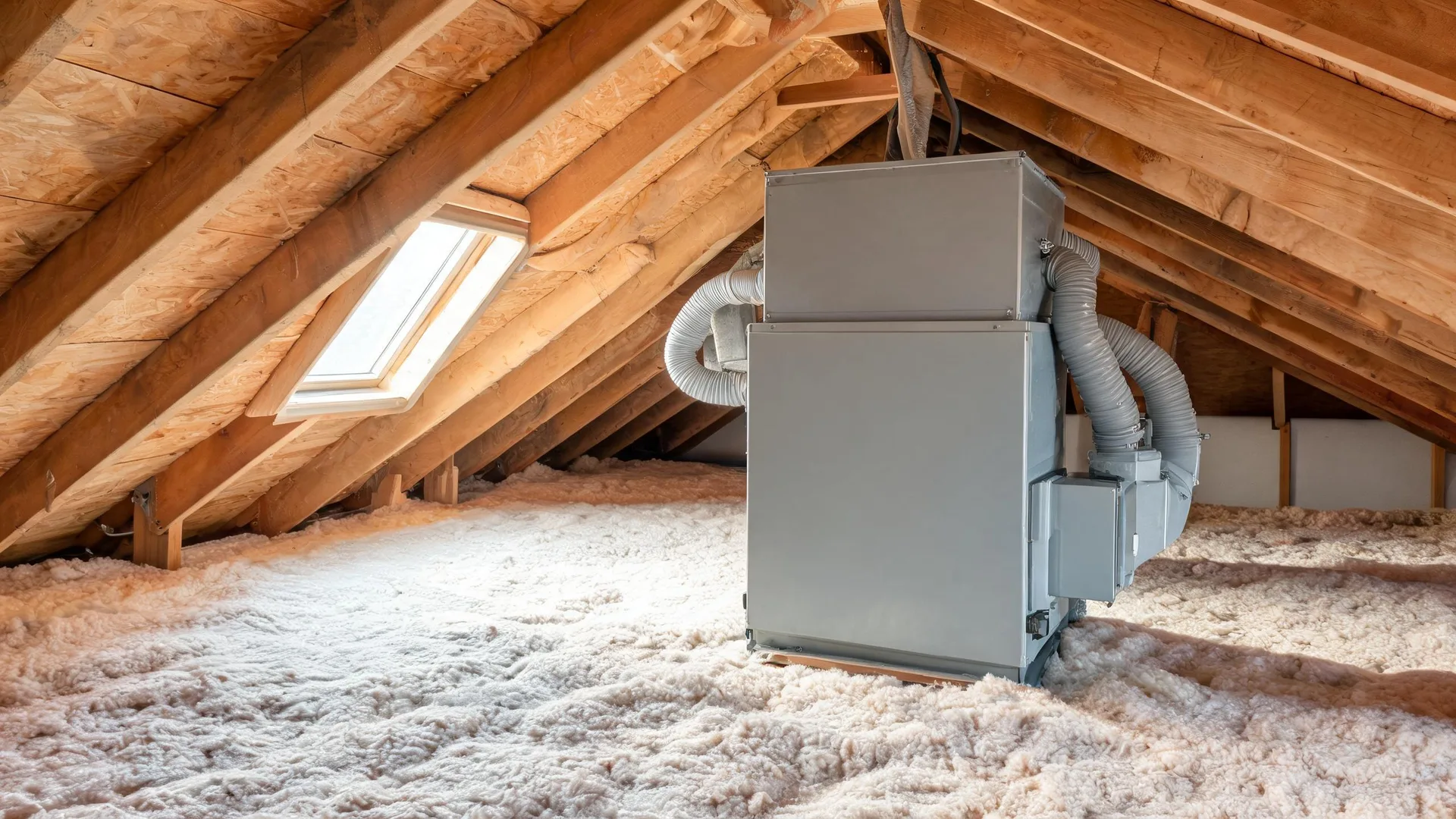
An indoor coil sized for a different unit won't give the new condenser the airflow it needs to work right. Swapping in a mismatched coil to save a step costs more later in comfort and wear than doing the coil and condenser together now.

An outdoor air conditioning condenser unit positioned on a concrete pad next to a blue-sided house, surrounded by green shrubs and flowering hydrangeas at sunset.

Going above the federal minimum saves little here, about $20 a year.

  • A higher-efficiency unit$130 a year
  • A new unit at the federal minimum, 13.4 SEER2$150 a year

Estimates for a typical Dubuque County home, from EIA household energy data, Iowa fuel prices and NOAA climate normals. Your home will differ.

Install day starts outside, not in. The crew sets the pad first, level ground so the condenser doesn't rock or strain the line set over time. From there they run the refrigerant lines to the indoor coil, hang the new coil above or beside the furnace, and wire in the disconnect box within sight of the unit, that's code, not preference. Once everything's connected, the system gets evacuated to pull moisture and air out of the lines before any refrigerant goes in. Then it's charged to the manufacturer's spec, not just topped off by feel. Last step is running it, checking the temperature split at the vents and the pressures on the gauges, because a unit that's wired up right can still perform poorly if the charge is off by a little.