
Heat pump leaking water in Des Moines, IA

RepairHeat PumpPolk County, IA
Step 1 of 2

What ZIP code is the job in?

Water near your heat pump's indoor unit usually means the condensate drain line is clogged or the drain pan has cracked. As the system pulls humidity out of your air, that moisture collects in the pan and drains out through a small line, and algae or dirt can block that line over time. In winter, water can also show up from ice building on the outdoor unit as it melts, especially during a thaw after a hard freeze, which is normal through an Iowa winter unless the ice is heavy and the unit struggles to defrost on its own. A clogged line left alone backs up and overflows the pan, and that water can reach your floor or the ceiling below if the unit sits in an attic. Shutting the system off stops the dripping while you sort out what's behind it. The line or pan itself needs a contractor to clear or replace, since the drain often runs where you can't easily reach it.

A gray outdoor condenser unit on a concrete pad beside a light green lap-sided house, with a wall-mounted electrical disconnect box, mulch bed with shrubs, river rock, and a paved walkway in the foreground.

Normal operation

In summer, your outdoor unit sits there doing its job, and any water shows up inside near the indoor coil, not out here. The pad stays dry. The lines run clean along the house. If you see puddling by this unit, look at the line set insulation instead.


An outdoor air conditioner condenser unit on a concrete pad beside a house with horizontal siding above a concrete block foundation, with insulated refrigerant lines and a vertical white pipe on the wall.

Trouble outside

Water pooling around the outdoor unit often points to ice that built up on the coil and is now melting off, or a line set that sweats where the insulation has worn through. Either way, check the coil for frost before the next cold snap and call if you find it.

Why does your heat pump's drain trouble show up so much of the year?

  • Winter nights average 16°F

    Winter nights average 16°F here, cold enough that any condensate sitting in the line or pan can freeze and crack it.

  • Heat runs October through May

    Heat runs October through May, eight months where the indoor coil and drain line are working and a clog can back up.

  • Cooling runs June through August

    Cooling runs June through August, when the system pulls the most moisture out of your air and sends the most water through that line.

NOAA nClimDiv 1991-2020

A smiling man in a dark green henley shirt sits on a gray sofa in a living room with a lit table lamp, wooden shelving unit, and a bowl of popcorn in the foreground.
A smiling man with graying dark hair and a beard, wearing an olive sweater, sits on a sofa in a living room beside a bowl of popcorn on a wooden table.
A smiling man in a dark sweatshirt reclines on a gray sofa in a living room, with a wooden bowl of popcorn on a table in the foreground and a dining area, shelving, and pendant lamp behind him.
A smiling bearded man in a dark green henley shirt sits on a blue-gray couch in a living room, with a bowl of popcorn in the foreground and a houseplant and window behind him.
A gray outdoor condenser unit on a concrete pad beside a house with horizontal lap siding, connected by conduit and lines to a wall-mounted disconnect box, with a shrub and gravel bed to the left.
A clean coil and a clear line keep this outdoor unit dry season after season.
An outdoor air conditioning condenser unit with dusty coils sits on a concrete pad against light horizontal siding, with an electrical disconnect box and refrigerant lines on the wall and a shrub and mulch at left.
Grime like this holds moisture against the cabinet and can mean a drain or coil problem has gone unchecked.
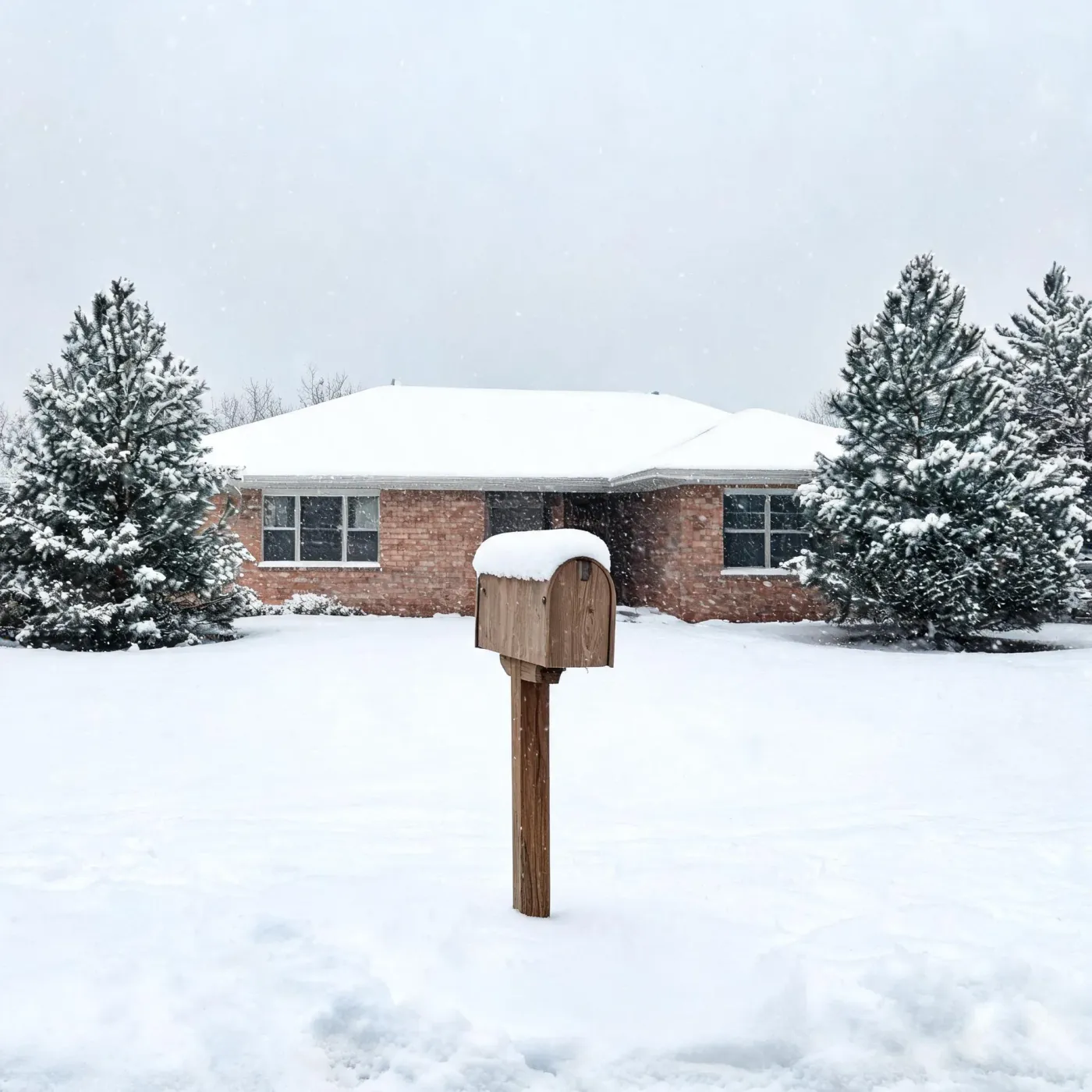
A snow-covered wooden mailbox on a post stands in a snowy yard in front of a single-story brick house flanked by snow-laden evergreen trees during falling snow.

On a night when the temperature sits at 16°F, your heat pump's outdoor unit is working through frost on the coil and running defrost cycles to clear it. That melt has to go somewhere, and it drains out through the same line that handles condensate from the indoor coil. If that line already has a slow clog, the melted frost backs up instead of draining, and it can freeze solid in the line overnight. By morning you might find ice at the base of the unit or water pooling once things warm up and thaw. (Source: NOAA)

NOAA nClimDiv 1991-2020

Clogged Line or Cracked Pan

Clogged line

  • Water backs up inside at the indoor coil because the condensate can't get past the clog, so you see it there, not outside.
  • Algae and dirt build up inside the line slowly, so the leak often starts as a small drip before it becomes steady.
  • A wet-dry vacuum or a straight length of clear tubing can sometimes clear the blockage from the drain line's outside end.
  • The pan and the line itself are usually fine once the clog is out, since nothing cracked or broke to cause the backup.
  • This tends to show up any time the system is pulling moisture from your air, so it's not tied to one season.

Cracked pan

  • Water shows up even when the line runs clear, because the crack lets it escape before it ever reaches the drain.
  • A plastic pan can split from age or from water freezing in it on a cold night, and once cracked it keeps leaking.
  • Clearing the line won't stop this leak, since the problem is the pan holding water, not the water having somewhere to go.
  • A cracked pan has to be replaced, since there's no clearing it out the way you can a clogged line.
  • If the leak keeps coming back after the line's been cleared, the pan is usually the next thing worth checking.
An outdoor air conditioning condenser unit on a concrete pad beside a house with horizontal lap siding, with a green shrub to the left and a wide concrete slab in the foreground.
Before you get your heat pump repair
A gray outdoor condenser unit on a concrete pad beside a light-colored lap-sided house, with a wall-mounted disconnect box, refrigerant lines, mulch bed and shrubs, and a concrete walkway in the foreground.
After you get your heat pump repair

Get matched with a heat pump pro in Polk County

Get the heat pump repair search off your mind today.

No fee to send it, and nothing to sign.

What that water is doing to your house

A clogged drain line does not stop pulling moisture out of your air. It backs up at the indoor coil instead, and once the pan overflows, that water finds the nearest way down. In a lot of homes that means the ceiling below, or the floor around the unit if it sits in a closet or utility room. Drywall stains, a soft spot in the floor, or a musty smell in that room are all signs the water has been going somewhere for a while before anyone noticed. The longer it runs this way, the more of the house it touches, and a stain on the ceiling is usually the last thing to show up, not the first.

What it does to the system itself

Standing water near the indoor unit is also sitting next to the electrical connections and the coil itself. A cracked pan or a line that stays clogged keeps that moisture in contact with parts that are not built to handle it, and corrosion follows. In winter, the same water that would otherwise drain away from the outdoor unit during a defrost cycle can freeze if the line is blocked, and ice inside a drain line can split it. None of this fixes itself. The clog or the crack stays until someone clears the line or replaces the pan, and until then the water keeps finding the same path out.

A woman with long wavy brown hair in a knit sweater reclines on a couch with eyes closed under a textured blanket, an open book on her lap, beside a lit table lamp and potted plant.
A smiling middle-aged man in a dark knit sweater sits at a dimly lit dinner table with a glass of red wine, a bowl of food, and a lit candle in the foreground.
A light gray outdoor heat pump unit mounted on a concrete pad beside a house with horizontal lap siding, with refrigerant lines and conduit running to a wall-mounted electrical box, gravel and a leafy shrub nearby.

Outdoor unit running clean

The pad is dry and the lines running up to the disconnect box are clean. Dirt and rock nearby stay clear of the cabinet. A unit kept like this isn't the source of water showing up inside your house.

An outdoor air conditioner condenser unit on a concrete pad beside a house with beige vinyl siding, with a gray electrical disconnect box and insulated refrigerant lines on the wall and river rock to the right.

Coil clogged with debris

These fins are packed with dirt, so air can't move through the coil the way it should. That strain can push a struggling system toward the drain problems that show up as water at your indoor unit, not here at the pad.

Power here costs 11.37 cents per kilowatt-hour

At 11.37 cents a kilowatt-hour, running the blower and defrost cycles to fix a drain problem costs you less here than in most places. That's one less reason to put off a repair that's sending water where it shouldn't go.

EIA-861 2025

A woman in a cream sweater and jeans stands in the open doorway of a white stucco house, holding the dark door, while a man in a dark quilted jacket seen from behind walks toward the entry past potted plants.

Water at your indoor unit means the drain line or the pan, not the weather

A clogged condensate line or a cracked pan is almost always the reason. The water shows up inside, near the indoor coil, because that's where the system collects what it pulls out of your air before sending it down the line. Once that line is blocked or the pan has split, the water has to go somewhere else, and that somewhere is your floor or your ceiling.

None of this needs a guess on your part. A contractor who works on heat pumps in Polk County can look at the line, the pan, and the coil and tell you which one failed and what it takes to stop it. Once you send in your request, you're not the one tracking down who's free or who answers the phone. That part moves to someone else, and the water gets dealt with by a contractor matched to your situation, not a stranger starting from scratch.

Interior corner of a room with a dark upholstered sofa and textured cushion, a potted plant, sheer curtains at a multi-pane window showing blurred green and yellow trees, and a dark table holding a wooden tray with stacked coasters and a small ceramic vase.
A woven basket holding a cushion and a fringed throw sits on a wood floor beside a beige upholstered sofa with a rust-colored pillow, with window light casting leaf shadows on the plain wall.
A corner of a room with a light beige upholstered sofa and throw blanket beside a large pale ceramic vase holding a leafy branch, with linen curtains, a wood floor, a woven rug, and plant shadows on the wall.
A wooden sideboard holding a lit round ceramic table lamp, a small potted trailing plant and a dark bowl, beside floor-length linen curtains at a window showing green foliage outside, with a framed abstract print on the wall.
An entryway with a dark wood console table holding a ceramic vase of olive branches and a wooden bowl, a round woven-framed mirror above, a woven basket beneath, and a glass-paned wood front door beside a textured rug on a wood floor.
A wooden front door with six glass panes on a light clapboard house at dusk, lit by a black gooseneck wall lantern, with a potted shrub, coir doormat and stone step in front.

Find a heat pump repair pro in Polk County

Once you send the form, finding a pro is off your list.

Send my request

Sending the form costs nothing.