A row of dark-sided houses with brown shingled gable roofs behind tall trimmed hedges, with a mowed lawn in the foreground and overhanging tree branches against an overcast sky.

Heat Pump Repair in Ames, IA

Tell us about the job

Takes about a minute. No obligation.

RepairHeat PumpStory County, IA
Step 1 of 2

What ZIP code is the job in?

The first cold snap in October finds the weak spot

A heat pump in Story County switches over to heat in October and runs through May. Whatever was marginal in the spring, a contactor on its way out, a low charge, a stuck reversing valve, tends to show itself the first time the system has to work hard in the new direction.


September is when to get ahead of it

If a heat pump is already short cycling or blowing cool air before the switchover, September is the month to get it looked at. Waiting until the first cold week means calling after the system has already been leaning on the bad part during real demand.

8 months
October through May, your system heats
3 months
June through August, it cools
14°F
the average winter night it heats against
82°F
the average summer afternoon it cools against
Isometric line illustration of a cutaway single-story house showing interior rooms with ducted air distribution, an indoor air handler, furniture, and an outdoor condenser unit connected by lines outside the wall.
Your system heats October through May and cools June through August.

NOAA nClimDiv, 1991–2020 normals

Winter nights in Story County average 14°F, and that's when a heat pump leans hardest on its reversing valve and defrost control.

None of that wears a heat pump out early. When one fails here, it's almost always the same handful of parts that fail anywhere else.

The reversing valve is usually where it starts. It's what switches the system between heating and cooling, and the solenoid that moves it can stick or burn out after years of switching back and forth. When it sticks halfway, the system runs but can't settle into one mode, so you get warm air when you wanted cold or the outdoor unit icing up and never clearing. A failing capacitor is just as common. It gives the compressor and fan motors the jolt they need to start, and once it weakens, the compressor hums without turning or the fan barely spins. Low refrigerant charge from a slow leak will also bring a system down over time, usually showing up as weak heating or cooling and ice on the outdoor coil even when it isn't cold enough outside to explain it. None of these fail because of anything the homeowner did. They fail because they're mechanical parts that open and close, start and stop, thousands of times a year.

A heat pump that's struggling costs more to run here

Iowa electricity ran 13.40 cents per kilowatt-hour in 2024, and a heat pump leaning on a bad capacitor or a low charge pulls more of it every time it cycles. A stuck reversing valve or an icing coil doesn't fix itself. The longer it runs that way, the more it shows up on the bill.

Find a contractor
A man in a cap, dark jacket and work pants carries a worn canvas tool bag up stone steps toward a dark green front door, with a shrub in a green planter beside the entry.
A gray heat pump condenser unit mounted on a concrete pad against the gray lap-siding exterior wall of a house.

A newer house usually means a system still worth fixing

Half the homes in Story County were built in 1984 or later. If yours is one of them, the heat pump probably isn't old enough to be the reason it's acting up. A stuck reversing valve or a weak capacitor fails on its own timeline, not because the system is near the end of its life. Worth fixing first, before anyone talks about replacing it.

What you'll actually notice first

Air coming out warm when it should be cold, or the system running long stretches without the house ever feeling right. Sometimes it's a hissing or clicking from the outdoor unit, or the whole thing cycling on and off every few minutes instead of running a normal stretch. None of these are subtle once you're paying attention to them.

What waiting on it does

A heat pump that's limping along doesn't fail cleanly, it just gets worse at its job. Ice builds on the outdoor coil and chokes the airflow further, which makes the compressor work harder to move the same amount of heat. A compressor that's humming instead of starting is straining the windings every time it tries. Left alone, the part that's failing drags down the parts around it.

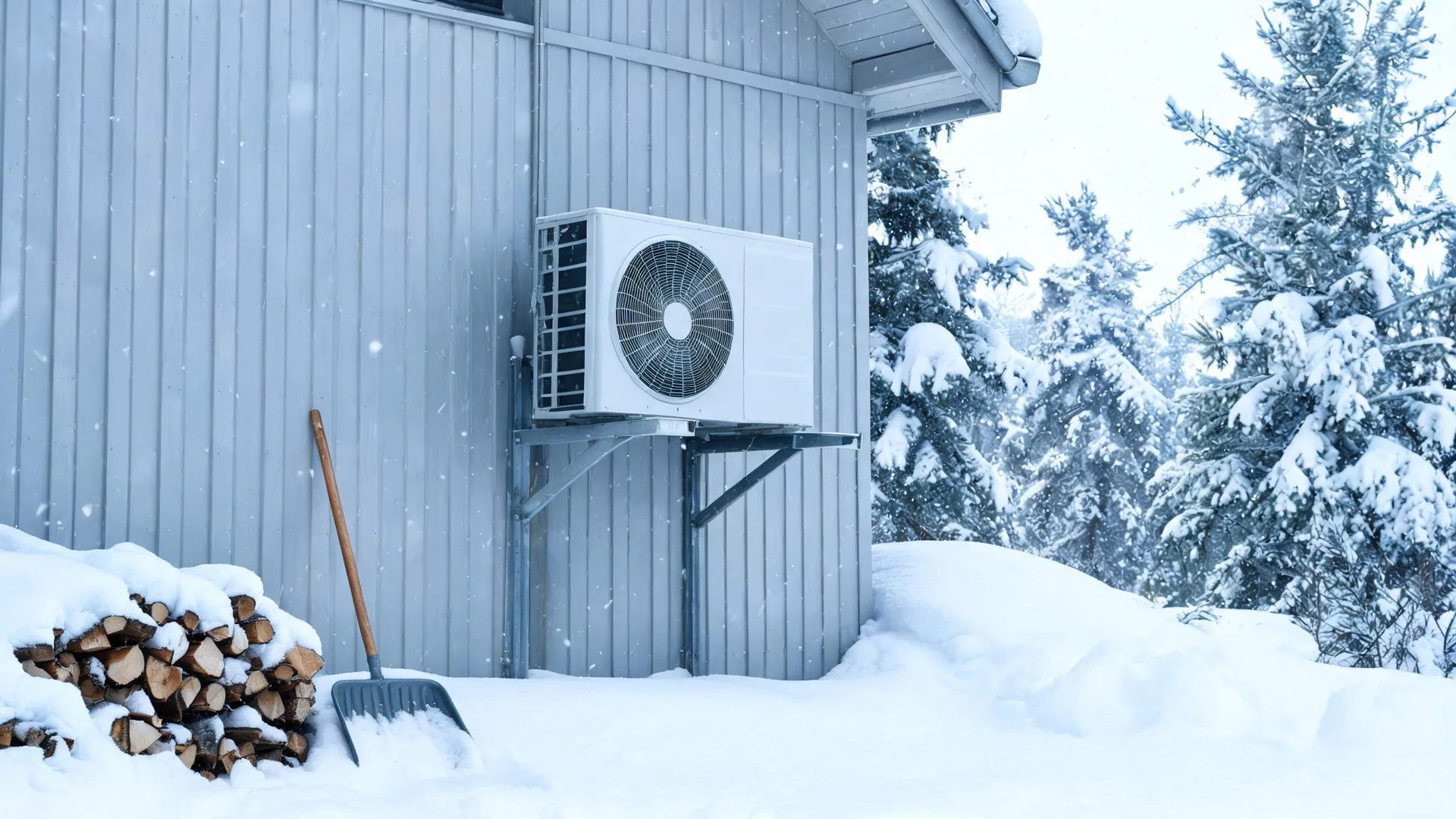
Before calling anyone, check the thermostat is set to heat and the temperature is actually above room temperature. Then look at the air filter. A filter clogged with dust chokes airflow across the indoor coil, and a heat pump starved for airflow will ice up or run weak even if nothing else is wrong. Walk outside and look at the outdoor unit. If it's packed in leaves, snow or ice, that alone can stop it from working right, and clearing it is safe to do. Check that the indoor vents are open and not blocked by furniture or rugs. Look at the breaker panel too. A heat pump that won't start at all sometimes just has a tripped breaker, and resetting it once is fine. If you reset it and it trips again, stop and leave it alone. Anything past this, opening the outdoor unit, touching refrigerant lines or wiring, isn't something to take on yourself.

Most of the time, the question isn't really repair versus replace, it's whether the failed part is worth replacing on its own, and almost always it is. A reversing valve, a capacitor, a blower motor, these fail one at a time, and swapping one doesn't put stress on the rest of the system. What changes the math is a compressor going bad. That's the one part that's expensive enough and central enough that a tech will stop and ask what else is going on with the unit before touching it. If the compressor is still fine and it's one of the smaller parts acting up, fixing it is the normal call. Age matters less than people think. A heat pump that's been maintained can run a long time on original parts, and one part failing doesn't mean the rest are about to go with it.