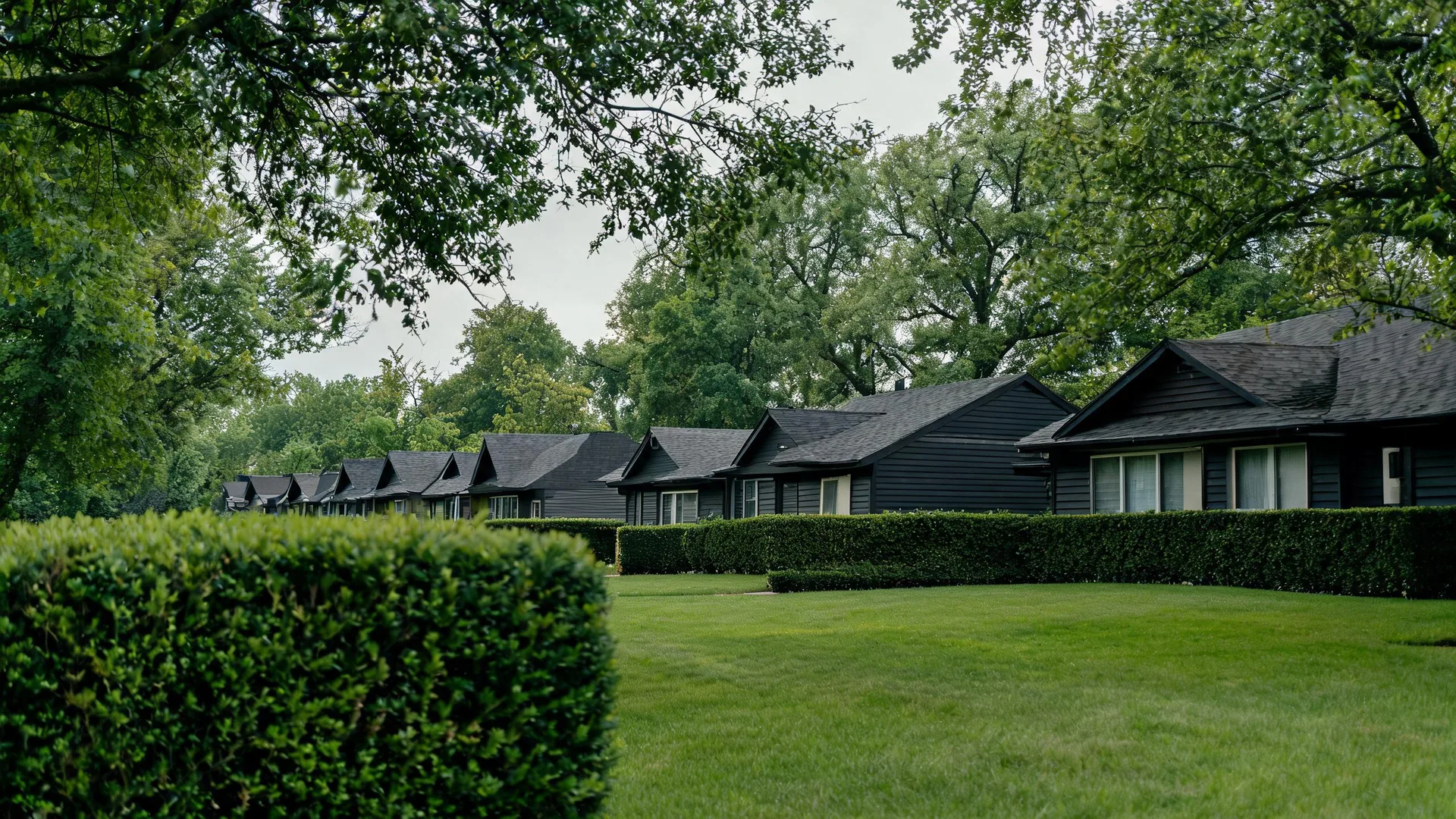





A row of dark-clad single-story cottages with gabled roofs behind trimmed hedges, with a mown lawn in the foreground and large leafy trees under an overcast sky.

Heat Pump Repair in Des Moines, IA

Tell us about the job

Takes about a minute. No obligation.

RepairHeat PumpPolk County, IA
Step 1 of 2

What ZIP code is the job in?

Polk County saw 405 severe weather events between 2015 and 2024. Damaging wind caused 191 of those, hail caused 162, and 17 tornadoes touched down in that same stretch. A heat pump's outdoor unit sits outside through all of it, with coil fins and a fan exposed to whatever blows through. Hail can bend those fins and still leave the unit running, just running worse. Wind-driven debris does the same to the fan blades and the cabinet. A unit that still turns on after a storm isn't necessarily a unit that came through fine.

8 months
October through May, your system heats
3 months
June through August, it cools
16°F
the average winter night it heats against
83°F
the average summer afternoon it cools against
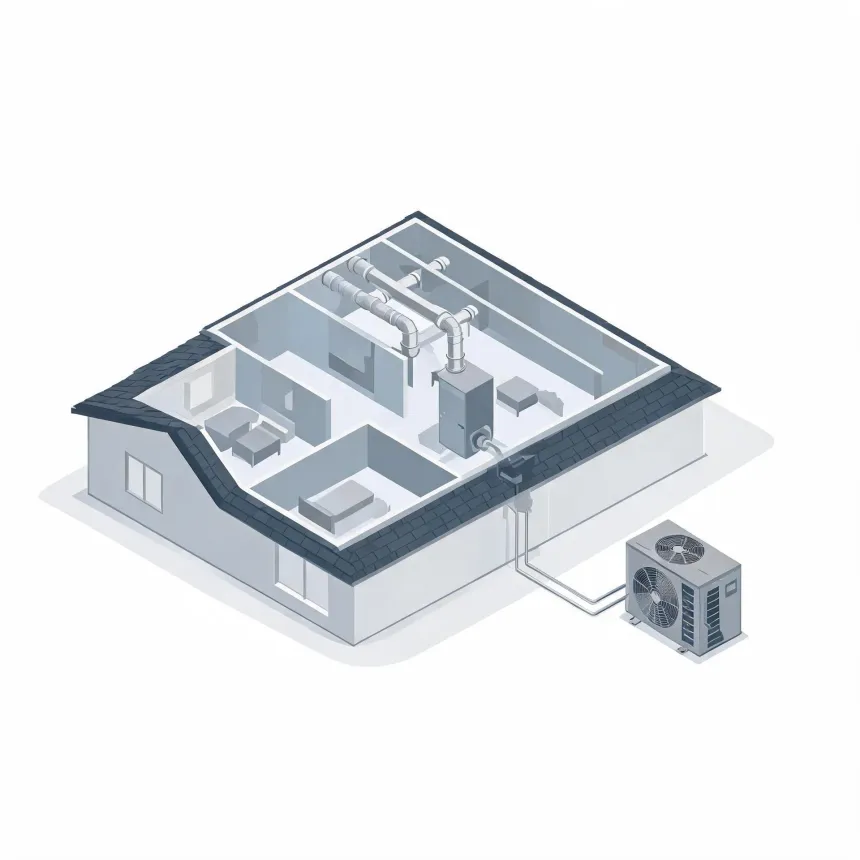
Isometric cutaway illustration of a single-story house showing interior rooms with ductwork, a furnace or air handler, and refrigerant lines running outside to a condenser unit on a pad.
Your system heats October through May and cools June through August.

NOAA nClimDiv, 1991–2020 normals

Polk County winters push heating equipment hard, and the dew point averages 63°F all summer, so a heat pump here barely gets a break.

That kind of steady demand wears parts down faster, so a repair call here deserves a real diagnosis, not a guess.

Eight months of heat, three of cooling, and no real downtime between them

Cooling runs June through August
Heat runs October through May
191 damaging wind events from 2015 to 2024

Half the homes in Polk County were built in 1982 or later. If yours is one of them, the heat pump itself may not be original to the house, but it's worth finding out how old the unit actually is before you assume the worst. A compressor failure or a refrigerant leak on a newer system is still usually a repair, not a replacement. The weather here is hard on equipment no matter its age, but a unit with years of service life left has earned a real diagnosis before anyone talks about pulling it out.

Get the outdoor unit checked after the next storm, running or not

After a storm like that, a heat pump can still power on and still have bent fins or a damaged fan behind that. If yours came through recent wind or hail, get the outdoor unit looked at even if it seems to be working.

Find a contractor
A man in a dark long-sleeve shirt and tan work pants, seen from behind, carries a canvas tool bag up porch steps toward a dark green front door beside a potted shrub.
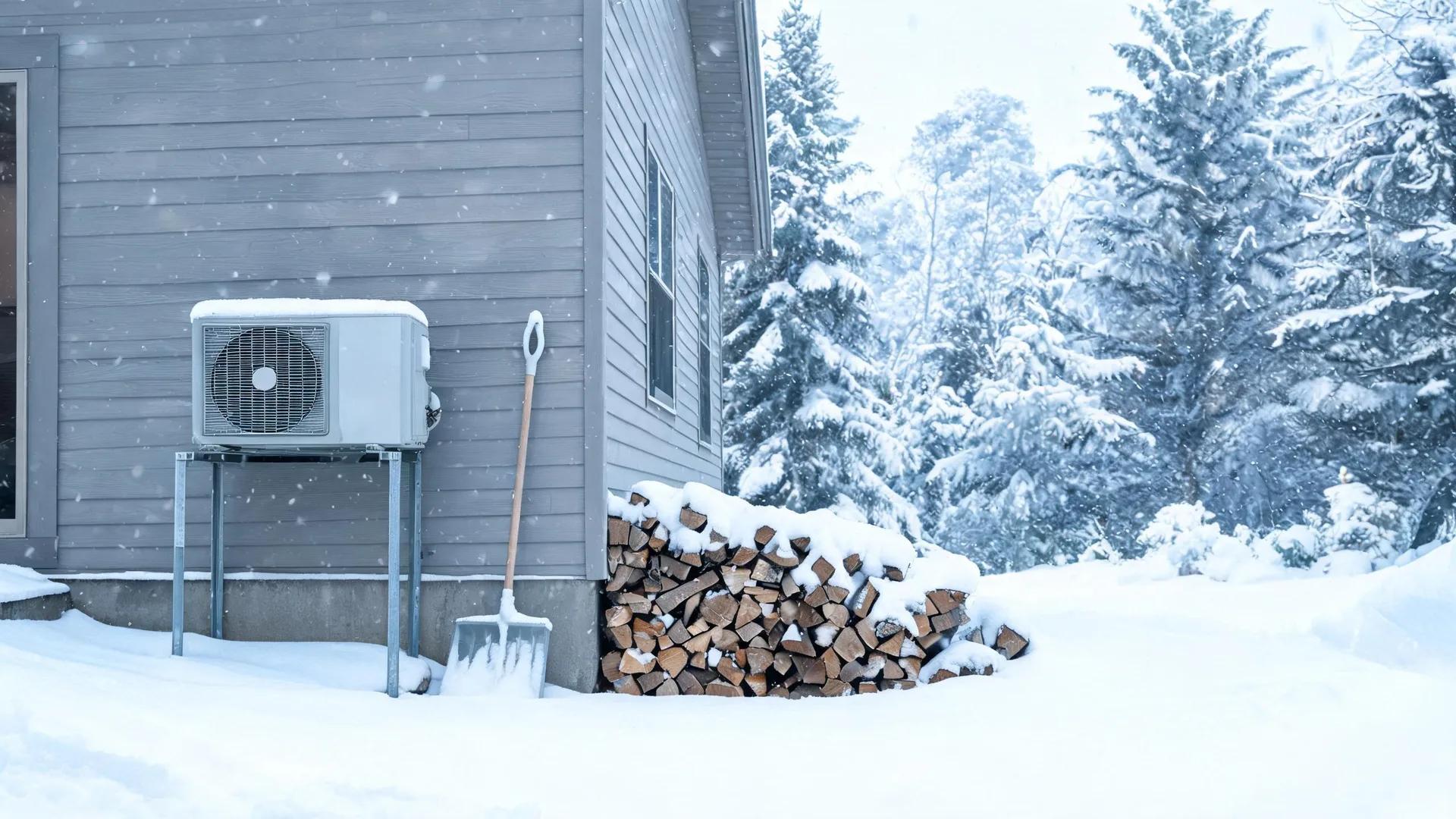
A residential heat pump outdoor unit mounted on a concrete pad next to a house with gray vinyl siding.

Hours on the unit, not just years on the calendar

Winter storms hit Polk County 21 times between 2015 and 2024, and wind and hail add another few hundred strikes on top of that. The time-lapse above shows one day. String enough days like it together, in weather like that, and a heat pump doesn't get much of a break to recover between runs. When a breakdown comes after a stretch like this, the cause usually isn't one bad afternoon. It's the accumulated running time catching up with a part that was already wearing thin. Worth having someone trace it back to the actual part before deciding what the fix is.

The reversing valve is often the first thing to go

A heat pump switches between heating and cooling by reversing refrigerant flow through a valve built for that job. It cycles every time the system changes mode, season after season, and the solenoid that drives it wears out before most other parts. A valve stuck mid-position shows up as weak heat, weak cooling, or the system running one mode when you asked for the other.
A failing capacitor shows up as a hum, not silence

The compressor and fan motors need a capacitor to start and keep running smoothly. A weak one still lets the unit try to start, so you get a hum or a click instead of a system that just stays quiet. Left alone, the motor it's feeding strains every time it starts and that shortens its life too. It's a small part, but it's worth checking before anyone condemns the compressor itself.

Most heat pump problems announce themselves before the system quits outright. Weak airflow from the vents, air that isn't as warm or cool as it should be, or a unit that runs long stretches without shutting off are all signs something's working harder than it should. Ice building up on the outdoor coil in weak weather is another one. A little frost in defrost cycles is normal, but a coil caked in ice means the defrost cycle isn't doing its job or refrigerant is low. Listen for it too. A clicking at startup that doesn't resolve into a run, a hum with no fan movement, or a new rattle from the outdoor unit all point to a specific part giving out, not the whole system failing at once. Short cycling, where the unit starts and stops over and over instead of running a full cycle, wears on the compressor every time it happens. None of these mean the system is done. They mean something inside it needs attention before the part it's straining pushes another one past its limit too.

The data plate inside the outdoor unit's access panel has the manufacture date on it, and that's worth checking before any repair call turns into a replacement conversation. It's a better answer than guessing from how long you've owned the house, since the unit and the house don't always share a birthday. A compressor or control board failing under storm stress means something different on a unit with years of service life ahead of it than on one that's been running since the house was built. Either way, the part that failed is the part worth fixing first. Age only matters once you know it, not before.