A row of dark-sided single-story houses with gray shingled roofs behind large leafy trees, a trimmed hedge at left and mown lawn with a narrow walkway in front.

Heat Pump Repair in Dubuque, IA

Tell us about the job

Takes about a minute. No obligation.

RepairHeat PumpDubuque County, IA
Step 1 of 2

What ZIP code is the job in?

September is when a weak heat pump shows itself

Heat in Dubuque County runs October through May. Once the switch away from cooling happens, a heat pump that was already struggling gets asked to carry real load for the first time in months, and whatever was marginal tends to fail right then.


Get it looked at before the cold settles in

A unit acting up in September is worth calling about before October, not after. Waiting means living with a bad heat pump through the first cold stretch, and a problem caught early is usually a smaller repair than one that's been run hard for weeks.

8 months
October through May, your system heats
3 months
June through August, it cools
15°F
the average winter night it heats against
81°F
the average summer afternoon it cools against
Isometric grayscale illustration of a cutaway two-story house showing interior ductwork, an indoor air handler unit, and an outdoor condenser unit on a pad beside the building.
Your system heats October through May and cools June through August.

NOAA nClimDiv, 1991–2020 normals

Dubuque County sits in a cool climate zone where heating carries the bigger load most of the year.

A heat pump here works hardest in the cold months, so a repair call usually points to ordinary wear, not anything unusual about the area.

A diagnostic call starts outside at the unit itself, checking that the fan spins free and the coil isn't blocked or iced over. From there it's gauges on the line set to check refrigerant pressure, since low pressure points to a leak and high pressure points somewhere else entirely. Inside, the tech checks the air handler, the filter, and the electrical connections at the contactor and capacitor, since a loose wire or a failing capacitor can mimic a much bigger problem. Readings get compared against what the system should be running at for the outdoor temperature that day. The goal isn't just finding what's wrong, it's finding the one thing that explains everything you've noticed, not just the first thing that looks off.

A heat pump running wrong costs you every month

Electricity in Iowa ran 13.40 cents per kilowatthour in 2024, and a heat pump that's struggling pulls more of it just to keep up. A unit running wrong now costs you every month it stays that way.

Find a contractor
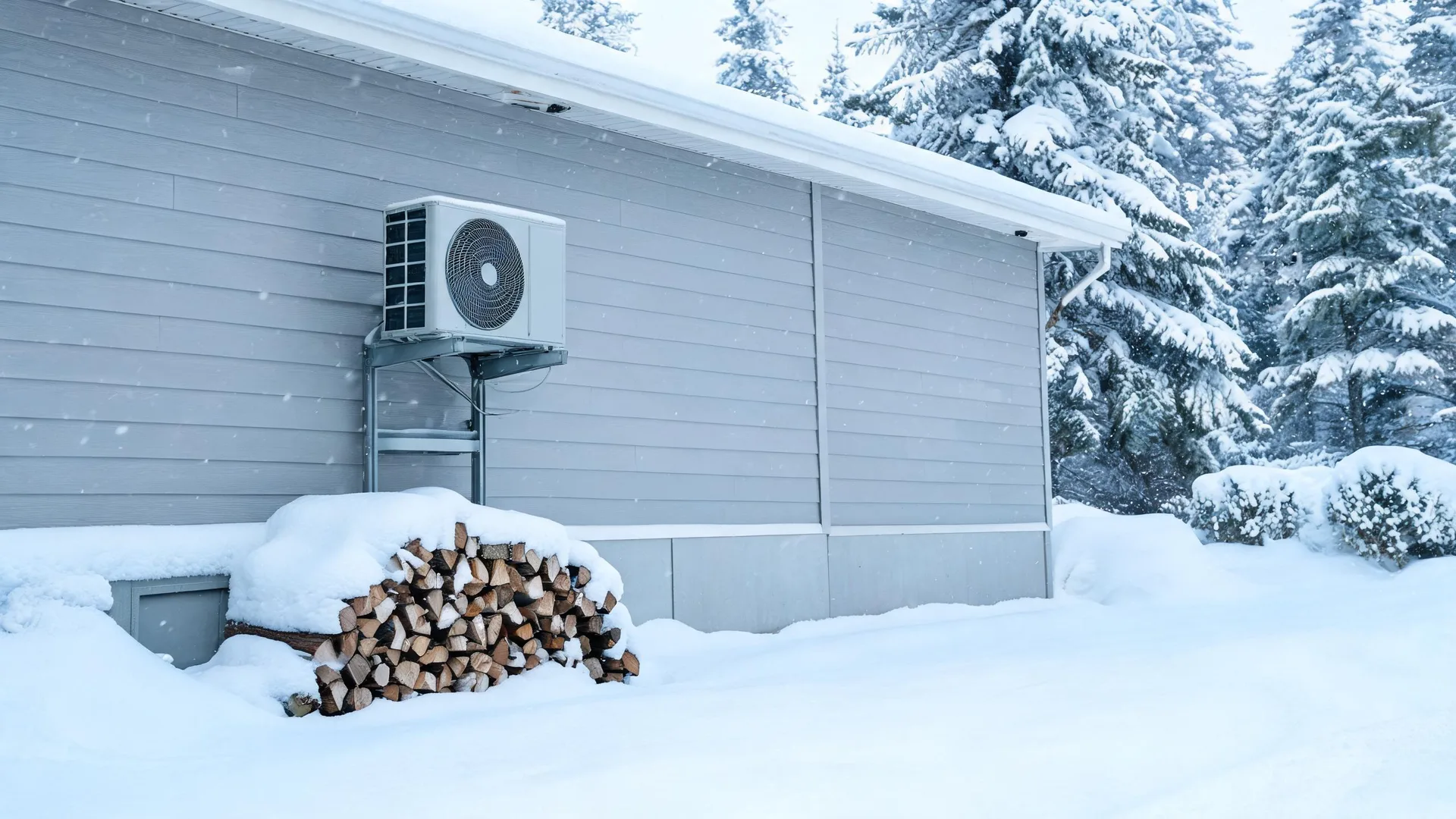
A gray heat pump outdoor unit mounted on a concrete pad next to a residential house with lap siding and stone accents.

Ask for the age before you fix it

A technician can find the age on the compressor nameplate or the air handler's data tag in a few minutes. Ask for that number before agreeing to a repair. If the unit is old enough that this isn't its first repair, weigh that against what a new system would mean for the years ahead.

A refrigerant leak does not stay small

A heat pump low on refrigerant makes the compressor work harder to move heat from outside air into the house. Run it that way for weeks and the compressor is what fails, not just the leak. What started as a slow leak in the line set can end as a compressor replacement.

Ice on the outdoor coil feeds on itself

A heat pump defrosts itself by reversing cycle every so often to melt frost off the outdoor coil. If that defrost cycle stops working right, ice builds instead of clearing, and ice blocks the airflow the coil needs to pull in heat. The unit keeps running while the coil keeps icing, and the system loses what capacity it had left.

Before you call, check the thermostat first. Make sure it's set to heat and set a few degrees above room temperature, since a stuck setting is an easy thing to rule out. Go outside and look at the unit. If the outdoor coil is caked in ice or buried in leaves, that's worth noting, but don't chip at the ice or try to clear it yourself. Inside, pull the air filter and hold it up to light. If you can't see light through it, swap it, since a clogged filter starves the system of airflow and can look like a much bigger problem than it is. Check that both the indoor and outdoor breakers haven't tripped. None of this fixes a bad compressor or a refrigerant leak, but it tells you what you're dealing with before someone shows up.

A heat pump that needs a second repair in a couple of years is telling you something a single breakdown doesn't. Compressors and reversing valves are built to run the life of the system, and when one of those fails, the cost usually sits close to what a new unit runs. A failed capacitor or a bad contactor is a different story, cheap parts that fail on their own without saying anything about the rest of the system. The question worth asking isn't just what this repair costs, it's whether the unit has been reliable up to now or whether this is the latest in a pattern. A heat pump that's needed something every winter is past the point where another repair makes sense.