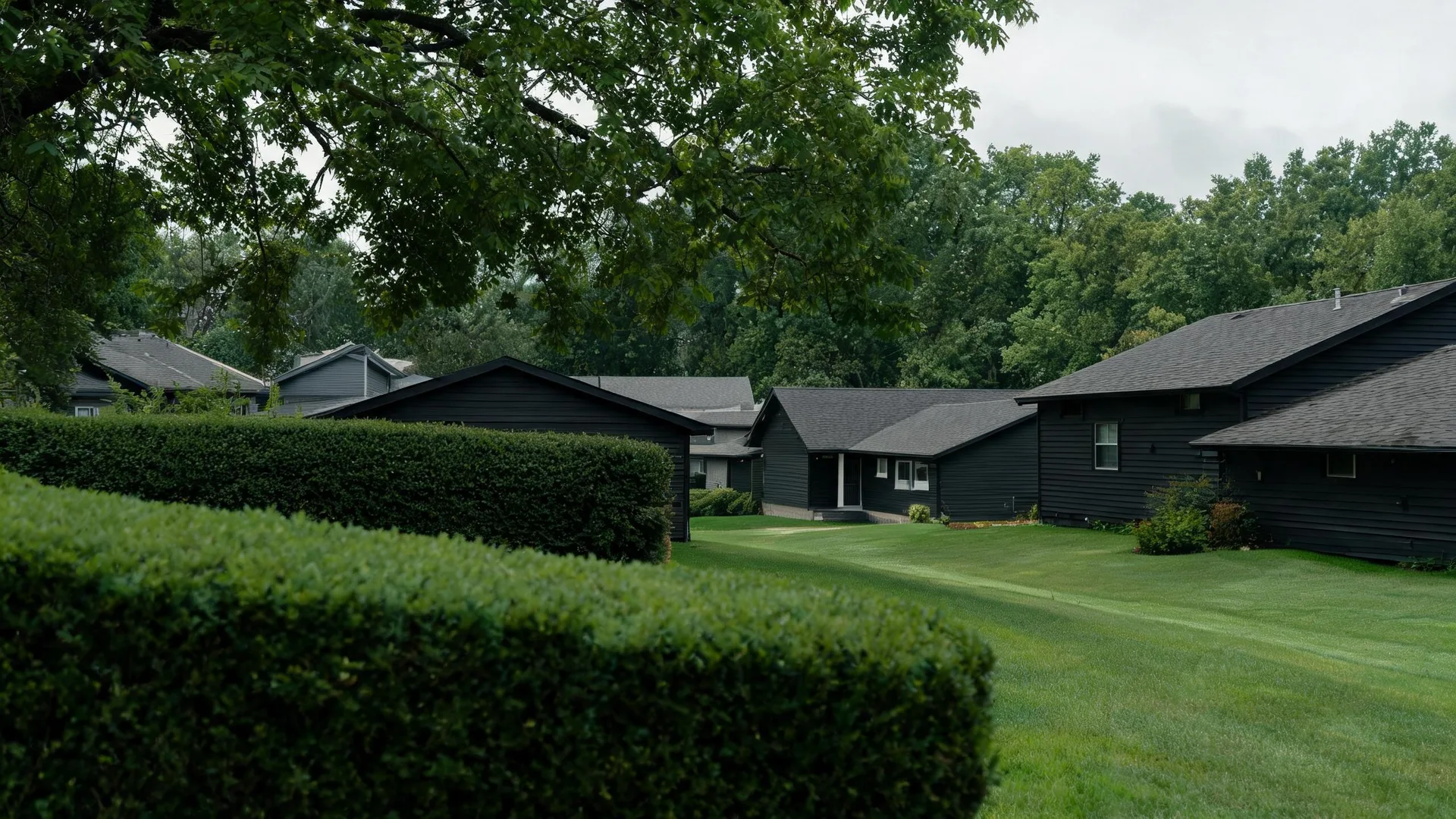






Dark-painted single-story houses with gray shingle roofs behind a trimmed green hedge and mown lawn, surrounded by leafy trees under an overcast sky.

Heat Pump Repair in Fort Dodge, IA

Tell us about the job

Takes about a minute. No obligation.

RepairHeat PumpWebster County, IA
Step 1 of 2

What ZIP code is the job in?

Fort Dodge winters mean your heat pump works hard, with overnight lows averaging 13°F through December, January and February. That's a normal load for a heat pump built for this zone, not a strain that points to anything unusual. If yours is struggling to keep up or running constantly without warming the house, the cause is more likely a worn part or a refrigerant issue than the cold itself. The same goes for a unit that's iced over or short cycling. Those are common problems with a known fix, and a tech who works on heat pumps regularly will have seen it before.

8 months
October through May, your system heats
3 months
June through August, it cools
13°F
the average winter night it heats against
82°F
the average summer afternoon it cools against
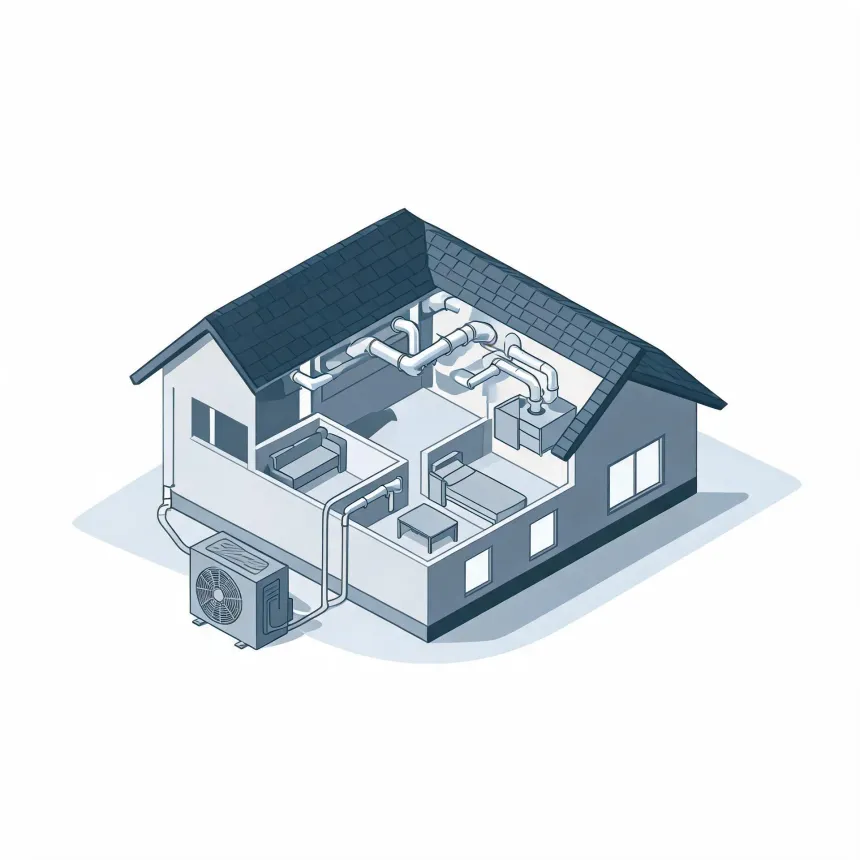
Isometric cutaway illustration of a house showing attic ductwork, an indoor air handler, furnished rooms, and an outdoor condenser unit connected by lines along the exterior wall.
Your system heats October through May and cools June through August.

NOAA nClimDiv, 1991–2020 normals

Heat pumps in Webster County run from October through May.

September is worth a check, since a weak part is most likely to fail once the first cold snap puts the load on it.

Half the homes in Webster County are old enough that their heat pump may be near the end of its life

Half the homes here were built by 1957
50 hail events from 2015 to 2024
31 winter storms from 2015 to 2024
Webster county weather isn't why your heat pump needs a repairWeather here is ordinary for Iowa. 140 severe weather events hit the county between 2015 and 2024, nothing out of line with a normal heat pump's working life.

Iowa electricity ran 13.40 cents per kilowatthour in 2024, and a heat pump racks up a lot of hours over a Fort Dodge winter. A unit working the way it should is already one of the cheaper ways to heat a house. One that's low on refrigerant or running on a weak part loses that edge fast, since it has to run longer to put out the same heat. That shows up on the bill before it shows up as a breakdown. The longer a problem like that sits, the more it costs you every month it's not fixed.

A heat pump running on a weak part costs more every month it's not fixed

At 13.40 cents a kilowatthour, the extra runtime from a low charge or a worn part adds up fast over a Fort Dodge winter. Getting it looked at now stops that loss before it keeps eating into next month's bill too.

Find a contractor
A man in a dark long-sleeved shirt and tan pants, seen from behind, carries a worn canvas tote bag as he climbs wooden steps toward a dark green front door flanked by a potted shrub.
A gray heat pump outdoor unit mounted on a concrete pad next to the stone-accented exterior wall of a house.

Find out how old the unit is before you fix it

If your heat pump came with the house, find out how old it actually is before paying for a repair. A tech can check the nameplate and tell you what shape the compressor and coil are in. That number decides whether a repair is worth it or whether the money is better put toward a new unit.

A frozen coil only gets worse by running

Once frost builds up on the outdoor coil, the unit can't pull heat from the air the way it should, so it runs longer to make up for it. That longer runtime feeds more moisture across a coil that's already cold, and the ice thickens. Left alone, it can block airflow completely and put the compressor under load it wasn't built for.
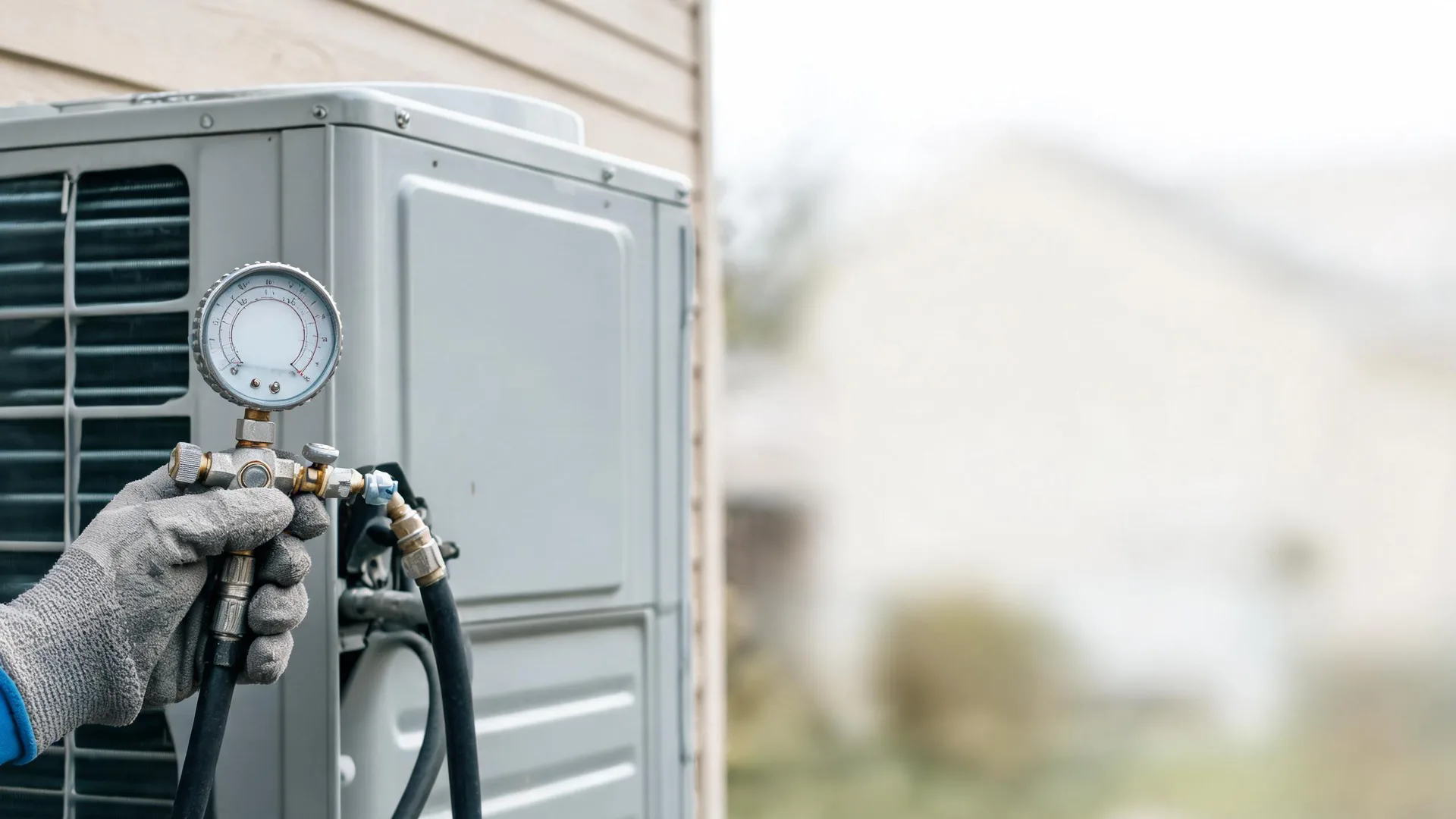
A low refrigerant charge strains the compressor

The compressor is built to pump a specific amount of refrigerant, not whatever happens to be left in the lines. Run it low on charge and it works harder to move less heat, and it runs hotter doing it. That heat breaks down the oil that keeps the compressor's moving parts alive, so a small leak left alone can end with a compressor that has to be replaced.

Most heat pump failures trace back to one of a few parts. The reversing valve is a common one. It switches the unit between heating and cooling, and when it sticks, the system can get stuck blowing cold air or stop responding to the thermostat at all. The capacitor is another. It gives the compressor and fan motors the jolt they need to start. A weak one causes the outdoor unit to hum without starting, or to shut off on its own partway through a cycle. Contactors wear out too. That's the switch that feeds power to the outdoor unit, and when the contacts pit and burn, the unit can fail to start even though power is reaching it. Any of these can look the same from inside the house, a system that runs but doesn't heat, or doesn't run at all. The part at fault is only obvious once someone opens the cabinet and tests it.

Age is the first thing to weigh, but it's not the only one. A compressor failure on an old unit is usually the end of the road, since the cost of that part alone starts to compete with a new system. A bad capacitor or contactor is a different story. Those are wear parts, cheap to replace, and fixing one tells you nothing bad about the rest of the unit. The real question is whether the repair is fixing something that broke on its own or something that broke because the unit is wearing out all over. A tech can usually tell the difference once the cabinet is open. If the coil is clean and the compressor still pulls the amps it should, a repair is money well spent. If the compressor is weak or the coil is corroding, that same repair bill is just a deposit on a bigger one later.